Research School for Economic and Social History

Author: René van Weeren

  • Vacancy: Postdoc ERC Synergy project TASTADE (IISH; 2 years) – deadline 29 June 2026

    Vacancy: Postdoc ERC Synergy project TASTADE (IISH; 2 years) – deadline 29 June 2026

    The research team of the ERC-funded project The Trans-Atlantic Slave Trade and the Development of Europe (TASTADE) is looking for a postdoctoral researcher.

    TASTADE aims to build the largest possible repository of names and biographical information about investors in the trans-Atlantic slave trade. After completion, it will comprise tens of thousands of names for the entire period of the trade’s duration (16th-19th centuries) and all the regions involved (Europe, Africa, the Americas). This database lays the foundations for re-examining key analytical questions about the nature, social embedding and long-term impact of the slave trade from a truly trans-national perspective.

    The two-years postdoctoral position is geared towards participating in and overseeing the first phase of data collection and data organization. The postdoctoral candidate will steer a team of 4-6 junior researchers based in the Netherlands gathering data on investors in the Dutch slave trade and Dutch investors in the slave trade of other nations. The postdoctoral candidate will function in an international team with two other postdoctoral candidates leading similar teams of junior researchers in France and Brazil. Because the postdoctoral candidate is based in Amsterdam where the development of the digital infrastructure of this project takes place, the candidate is also expected, with the four principal investigators, to act as the conduit between the three data gathering teams and the digital designers working on the further development of the database.

    Applications should be submitted ultimately 29 June 2026.

    FULL INFO

  • Call for applications Postgraduate Summer School Fondazione 1563 (Turin, Italy, 17-19 Sep 2026) – EXTENDED deadline 16 June 2026

    Call for applications Postgraduate Summer School Fondazione 1563 (Turin, Italy, 17-19 Sep 2026) – EXTENDED deadline 16 June 2026

    The Fondazione 1563 per l’Arte e la Cultura (hereinafter “Fondazione 1563”) welcomes applications for the Postgraduate Summer School ‘Needs, Justice, and the Wealth of Nations: The Moral and Material Foundations of Political Economy in the European World (1500-1800)’, that will be held on 17-19 September 2026 in Turin, Italy.

    The emergence of political economy in early modern Europe was not the product of a single intellectual breakthrough, but of sustained attempts to reconcile material expansion with moral, legal, and political constraints. From the management of scarcity and subsistence to the governance of trade, empire, and population, early modern thinkers confronted a central question: how should wealth be created, distributed, and justified within society?

    This Summer school explores the debates and policies that gave rise to political economy as a field of inquiry. Rather than treating it as a precursor to modern economics, participants will examine political economy as a historically situated set of practices and arguments, embedded in specific institutional, imperial, and ecological contexts. These took related yet disparate forms, ranging from the much-maligned shorthand of “mercantilism” to self-conscious traditions such as Cameralism, Colbertism, Physiocracy, and economia civile.

    Bringing together approaches from intellectual history, economic history, and the history of science, the Summer School will focus on three interconnected axes:
    1. Subsistence, Sociability, and the Problem of Order
    2. Production, Power, and the Uneven Wealth of Nations
    3. Rights, Justice, and the Legitimacy of Economic Life

    The Summer School programme includes lectures by: Lasse Andersen (Institute for Intellectual History, University of St. Andrews, UK), Felicia Gottmann (Northumbria University, UK), Sophus Reinert (Harvard Business School, US), Pernille Røge (University of Pittsburgh, US), and John Shovlin (New York University, US).

    The summer school is open to doctoral students and early-career researchers working on the history of political economy and related fields. The default language will be English.

    Applications should be submitted ultimately by the extended deadline of 22 June 2026, 10:00 PM CET. Details on how to submit an application and the application link can be found in the full call via the button below.

    FULL CALL

  • Call for book proposals new book series on Historical Demography

    Call for book proposals new book series on Historical Demography

    Central European University Press (CEU Press) and Amsterdam University Press (AUP) are announcing the launch of a new book series on Historical Demography, published under the auspices of the European Society for Historical Demography. Series editors are Tim Riswick, Assistant Professor of Economical, Social and Demographic History at Radboud University and Michel Oris, Professor of investigation at the Spanish Research Council, at the Institute of Economics, Geography, and Demography, both fellows of the N.W. Posthumus Institute.

    This book series provides a forum for research on population dynamics between 1750 and 2000. Historical Demography includes both monographs and edited volumes and welcomes manuscripts from emerging and advanced scholars alike. Particular attention is given to work that connects these demographic patterns to wider historical developments, including industrialization, economic change, colonisation, and the formation of welfare states in order to situate population change within broader historical processes.

    Book proposals can be submitted to Commissioning Editor Lea Greenberg.

    MORE INFO

  • Posthumus Summer School 2026 ‘Crises and History’: Theme and dates announced – EXTENDED deadline registration 15 June 2026

    Posthumus Summer School 2026 ‘Crises and History’: Theme and dates announced – EXTENDED deadline registration 15 June 2026

    After two successful previous editions, the N.W. Posthumus Institute will once more offer the Posthumus Summer School on ‘Crises and History’ on 6-10 July 2026.

    Crises are not a new phenomenon: past societies also faced them. How these societies coped with crises, or why they failed to do so, is a topic that increasingly draws attention from historians. During this one-week summer school students acquire the knowledge and skills to develop their own research ideas on this theme and select and use the methods and sources to carry out the research. The Summer School approaches crises as multi-faceted processes that important social and economic aspects (such as the unequal impact on employment or wealth or the phenomenon of scapegoating specific social groups), but also political elements (consider the relation between crises and political stability or regime type) and cultural aspects (for example the role of religion in the handling of crises or the way in which they are remembered).

    At the end of this one-week course (valued at 2-3 EC), the students will have a thorough insight in the central debates, theories and concepts related to the theme of the summer school, have developed a research idea contributing to these debates and applying appropriate theories and concepts, and will be able to select and use suitable methods and sources to carry out this research.

    Participation is free of charge; the course will start if at least 5 students will be participating. Participants should register ultimately by the extended deadline of 15 June 2026.

    MORE INFO

  • Call for abstracts ESTER RDC 2026 (KU Leuven, Belgium, 26-28 October 2026) – deadline abstracts 15 June 2026

    Call for abstracts ESTER RDC 2026 (KU Leuven, Belgium, 26-28 October 2026) – deadline abstracts 15 June 2026

    On 26 to 28 October 2026 the 2026 edition of the ESTER Research Design Course (RDC) will be held. This year’s edition will be hosted by the KU Leuven under the guidance of Maïka De Keyzer (photo), head of the Medieval History Research Group at KU Leuven. The N.W. Posthumus Institute (as secretariat of the ESTER Network) and the local organisers of KU Leuven welcome abstracts for this RDC.

    The Research Design Course is a format promoted by ESTER (The European graduate School for Training in Economic and Social Historical Research, a European platform for postgraduate teaching involving over 60 universities throughout Europe) since the late 1990s. The RDC assists candidates in setting up a high quality and well-designed plan for their dissertation under the guidance of a team of senior researchers and research design specialists whose task it is to provide comments and feedback. Thus, the RDC is not a “course” in which an instructor will give a lecture or that you will discuss historical theories in a seminar setting. Instead, it is focused on presentations of individual projects and the ensuing discussions on how to improve them.

    Therefore, selected participants will be asked to write a paper in which the design of your research will be discussed. The aim of this methodological reflection is to investigate the scientific procedures that historians use to reach scientific explanations and to combine all analytical elements into a synthetic and coherent historical account. In this paper, the participant will also prepare a detailed work plan for the dissertation.

    Candidates wishing to participate are requested to send in their application and abstract no later than 15 June 2026 via the registration form (see button below).

    Please note that in case a selection between suitable applications is needed, PhDs currently enlisted in the PhD Training Programme of the N.W. Posthumus Institute will have priority.

    FULL CALL (PDF)

    REGISTRATION

  • Moving Humanities Conference 2026 – Call for Proposals – deadline 31 July 2026

    Moving Humanities Conference 2026 – Call for Proposals – deadline 31 July 2026

    The organisers of the Moving Humanities Conference 2026 welcome proposals for presentations and expositions.

    On 26 and 27 November 2026, the Moving Humanities Conference 2026 will be hosted by Radboud University in Nijmegen. The conference is co-organised by Radboud University and the University of Groningen and will be hosted by Radboud University and offers a podium to graduate students from all disciplines in the humanities, and aims to promote cross-disciplinary collaborations. The centarl theme of the 2026 edition is ‘Crossing(s)’, taken in its broadest sense.

    Alongside talks and posters, the conference will feature a debate (all attendees will have the opportunity to take part) and a special panel discussion during which experienced academics will share their wisdom with the next generation.

    The organisers welcome submissions from (research) master and PhD students, and will give special consideration for those which fit the broad theme of Crossing(s). Proposals should be submitted ultimately by 31 July 2026; directions on how to submit are to be found in the full call (via the button below).

    FULL INFO

  • PhD Defence Posthumus alumnus Cécile Bruyet

    PhD Defence Posthumus alumnus Cécile Bruyet

    On 26 June 2026, Posthumus alumnus Cécile Bruyet will defend the PhD thesis ‘A Taste for Land: How Access to Land Shaped Access to Food in Late Medieval Antwerp (1430-1530)’ at the University of Antwerp. Supervisors are Preofessors Tim Soens and Peter Stabel (both University of Antwerp).

    This thesis contributes to long-lasting debates on food provisioning, challenging, however, their macro-scale approach through a study of short food chains and access to land. These last have only been considered for smaller towns, yet, to what extent were they part of the foodscape of urban dwellers in larger towns as well? And, most importantly, of which urban dwellers? Antwerp in the fifteenth and sixteenth centuries offers a unique case study as the city grew from a medium-sized town to the commercial gateway of the North Sea grain trade, generating rapid processes of urbanisation and demographic growth. The results of this thesis invite to rethink town-countryside relationships and past urban foodprint in light of the unequal access to land, and provide knowledge to historicise present-day solutions on how to feed a growing urban population.

    Those who wish to attend the defence in person, should inform Cécile by e-mail ultimately by 19 June 2026. Please note that the defence ceremony will be at the location Kattenstraat 10 in Antwerp.

    The N.W. Posthumus Institute staff wishes Cécile a successful defence!.

  • Vacature: 2 Junior Onderzoekers in project TASTADE over investeerders slavenhandel (VU Amsterdam) – deadline 22 juni 2026

    Vacature: 2 Junior Onderzoekers in project TASTADE over investeerders slavenhandel (VU Amsterdam) – deadline 22 juni 2026

    ~ because of required proficiency in Dutch only ~

    Het onderzoeksteam van het ERC-gefinancierde project TASTADE (The Trans-Atlantic Slave Trade and the Development of Europe) zoekt twee junior onderzoekers.

    Taak van de junior onderzoekers zal zijn het identificeren van investeerders in de slavenhandel vanuit Nederland (van de zestiende tot de negentiende eeuw), en het verzamelen van gegevens over hun zakelijke, politieke en culturele functies en connecties. Beide onderzoekers zullen werken onder begeleiding van een postdoctoraal onderzoeker en een team van ervaren wetenschappers uit Nederland, Frankrijk, Brazilië en Groot-Brittannië.

    Deze vacature staat open voor studenten met een afgeronde of zo goed als afgeronde Master opleiding Geschiedenis. Sollicitaties dienen uiterlijk 22 juni 2026 ingediend te zijn. Wijze van solliciteren en een link naar het sollicitatieportal van de VU Amsterdam zijn te vinden in de volledige vacature (zie knop hieronder).

    MEER INFO

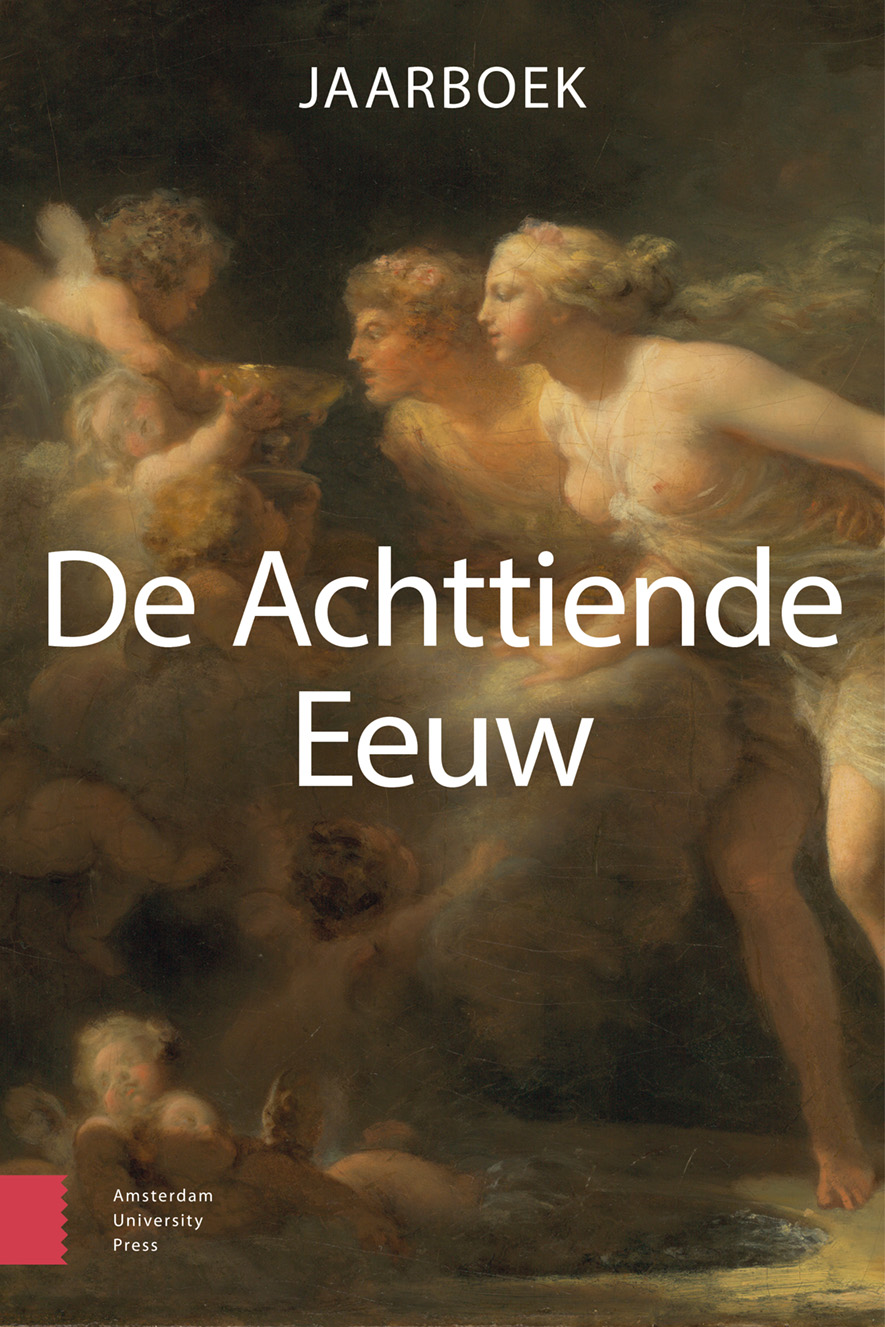
  • Call for papers Jaarboek De Achttiende Eeuw 2027 – deadline abstracts 31 juli 2026

    Call for papers Jaarboek De Achttiende Eeuw 2027 – deadline abstracts 31 juli 2026

    ~ because of scope in Dutch only ~

    De Werkgroep Achttiende Eeuw publiceert sinds 2017 jaarlijks in het najaar het jaarboek De Achttiende Eeuw als opvolger van het sinds 1968 verschenen gelijknamige tijdschrift. Voor de editie van 2027, met als gastredacteur Posthumus fellow Alberto Feenstra, nodigt de redactie uit tot het inzenden van abstracts voor artikelen rond het thema ‘Geld en krediet: van John Law tot Greshams Law’.

    Onderwerpen kunnen variëren van de rol van bankiers, geldschieters en de media tot die van de overheid als producent van muntgeld en regulerend orgaan dat economische stabiliteit en vertrouwen bevorderde, toezicht hield op het economische verkeer en fraude bestreed. Bijdragen over financiële crises (zoals de Mississippibubbel of de South Seabubbel, waaraan de naam van John Law nauw verbonden blijft) en speculatiedrift zijn welkom. Ook verwelkomt de redactie cultuurhistorische bijdragen over economie, geld en krediet en hun weerslag in de literaire, wetenschappelijke en kunsthistorische wereld van de achttiende eeuw.

    Abstracts met voorstellen voor artikelen (max. 300 woorden, met korte bio van de auteur) dienen uiterlijk 31 juli 2026 toegezonden te zijn per e-mail aan zowel gastredacteur Alberto Feenstra als aan het redactieadres.

    MEER INFO

  • Successful PhD Defence Posthumus alumnus Max-Quentin Bischoff

    Successful PhD Defence Posthumus alumnus Max-Quentin Bischoff

    On 10 June 2026, Posthumus alumnus Max-Quentin Bischoff successfully defended the PhD thesis ‘Merchants’ Futures: Plans and expectations in the Tucher family company, c.1520-c.1550′ at the FelixArchief. Supervisor was Jeroen Puttevils (University of Antwerp).

    Drawing on the annotation and analysis of 178 letters, the dissertation explores how the Tuchers anticipated, discussed, and managed future developments in commerce, organisation, and family strategy. The research demonstrates that almost half of an average business letter concerned future actions or events, revealing a predominantly short-term and action-oriented future horizon shaped by both practical concerns and rhetorical conventions.

    The dissertation further examines internal planning processes within the company, ranging from servant coordination and organisational adaptation to the long-term education of sons intended to secure the continuity of the family business. Finally, it analyses market expectations surrounding interest rates, exchange rates, and saffron prices, as well as the controversial attempt by servant Christof Kurz to develop a prognostic system combining astrology and market mechanisms.

    The N.W. Posthumus Institute staff congratulates Max-Quentin with the successful defence!