Research School for Economic and Social History

Category: Agenda

  • 12th Tensions of Europe Conference (Eindhoven, 8-10 July 2026)

    12th Tensions of Europe Conference (Eindhoven, 8-10 July 2026)

    The organisers of the 12th Tensions of Europe (ToE) Conference call for abstracts for this conference with as central theme ‘The meaning of the past in sustainable futures’.

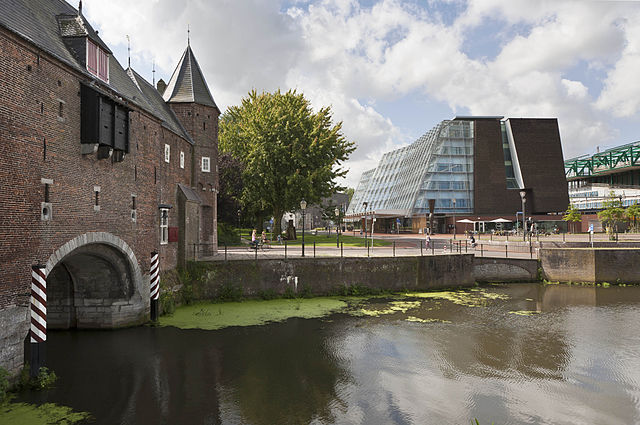
    This conference will be held on 8-10 July 2026 at the campus of Eindhoven University of Technology (TU/e) and will be organised by the Eindhoven History Lab, part of the Technology Innovation and Society research group of TU/e in collaboration with the 4TU History of Technology center (uniting Delft University of Technology, Eindhoven University of Technology, the University of Twente, and Wageningen University & Research). Eindhoven and seeks to explore and discuss what it means for European and non-European scholars to write ‘European’ histories of ‘technology’ in a pluriverse world. The aim of the conference is to co-develop fresh ideas on how a European historiography of technology can inform and contribute to current agendas for inclusive and green transitions. At this conference, one of the main questions will be: in what ways do aspirations for equitable and inclusive relations intersect with legacies of the past?

    Proposals can be submitted for several types of contributions, e.g. individual papers, full sessions, and contributions to sessions. A full list of these types and their respective characteristics can be found in the full call (see button below).

    Proposals should be submitted ultimately by the newly extended deadline of 1 February 2026.
    MORE INFO

  • Symposium ‘Archeologie en de stad’ – registreer uiterlijk 28 maart 2025

    Symposium ‘Archeologie en de stad’ – registreer uiterlijk 28 maart 2025

    ~ because of scope, in Dutch only ~

    Op vrijdag 4 april 2025 organiseert de werkgroep Stedengeschiedenis een bijeenkomst bij de Rijksdienst voor het Cultureel Erfgoed (RCE, Smallepad 5, Amersfoort) onder de titel ‘Archeologie en de stad’. De studiedag is gratis voor eenieder toegankelijk, aanmelden via mail is noodzakelijk uiterlijk 27 maart 2025. Verzoek is om daarbij aan te geven of de deelname het ochtendprogramma (+ lunch) en/of het middagprogramma betreft.

    Programma

    10:00-12:00 Excursie door de middeleeuwse stad Amersfoort, onder leiding van archeoloog dr. Roos van Oosten en architectuur- en stadshistoricus dr. Reinout Rutte
    12:00-13:00 Lunch bij RCE
    13:00-13:30 Drs. Erik Peters (stadsarcheoloog Breda) – Van stadspoort, sluis en struikel-kuilen
    13:30-14:00 Discussie
    14:00-14:30 Drs. Patrick Ploegaert (senior archeoloog bij Archeologie Rotterdam) – In de voetsporen van de Dienst Wederopbouw Rotterdam (DIWERO). Archeologisch onderzoek naar de laatmiddeleeuwse sluizen en bewoning aan de Hoogstraat te Rotterdam.
    14:30-15:00 Discussie
    15:00-15:30 Koffie en thee
    15:30-16:00 Drs. Peter Stokkel (hoofd archeologie Den Haag) – Het begin van Den Haag
    16:00-16:30 Discussie
    16:30-slot Nazit

    DOWNLOAD PROGRAMMA (PDF)

  • Symposium ‘Colonial Archives and Meaningful Digital Infrastructure’

    Symposium ‘Colonial Archives and Meaningful Digital Infrastructure’

    On 24 January 2025, preceding the inaugural lecture of Professor Matthias van Rossum, the symposium ‘Colonial Archives and Meaningful Digital Infrastructure’ will take place at Radboud University. This symposium brings together researchers and practitioners to discuss the challenges and opportunities of working with digitized colonial records.

    The symposium explores challenges, questions, and examples surrounding digital access and enrichment of shared resources related to the colonial past, such as:

    • How can digital infrastructure contribute to making unique information about the people and societies affected by or resisting colonialism findable and researchable?
    • How can multiple perspectives and the many voices in these archives be made more visible?
    • How can we ethically employ new techniques?
    • And who are the true beneficiaries of advanced access and research infrastructure?
    • Who should these initiatives serve, and how can global stakeholders beyond Dutch and professional users be reached (such as the descendants of colonized societies and of those societies whose pasts can be reconstructed using these archives)?

    The symposium is free of charge, but registration is required. The symposium can be attended on-site as well as online.

    FULL INFO

  • Masterclass ‘Decolonizing Feminist Futures: What kind of economies do we want?’ by Dr Gisela Carrasco-Miró – register before 20 Dec. 2024

    Masterclass ‘Decolonizing Feminist Futures: What kind of economies do we want?’ by Dr Gisela Carrasco-Miró – register before 20 Dec. 2024

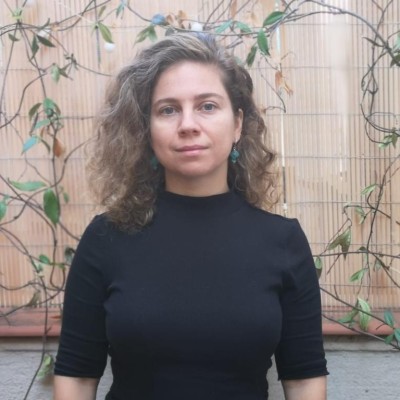
    On 14 January 2025 the Netherlands Research School of Gender Studies (NOG) is organising a masterclass with Dr. Gisela Carrasco-Miró (Escola Massana, Autonomous University of Barcelona) on the topic of ‘Decolonizing Feminist Futures: What kind of economies do we want?’ Please note that this masterclass is closely related to the book talk ‘Decolonizing Feminist Economics: Possibilities for Just Futures’ on the preceding day.

    This masterclass will explore the imagination as an economic faculty. Imagination is understood here not as an individual capacity, but a social, common practice, creating relationships of meaning. What can imagination be, as a practice of decolonizing feminist economic transformation, in conditions of growing crisis and isolation?

    With the aim of addressing this question, this masterclass invites the participants to imagine new, better economies and to vindicate shared feminist futures looking at the projects of post-extractivism, ecofeminism and post-growth/degrowth from a decolonizing feminist perspective.

    The participants will be encouraged to share their research, practices and interests. Together, we will create space for confabulative dialogues activating feminist imaginaries of the future in the present. Suggested reading (text will be made available upon registration): Carrasco-Miró, G. 2025. Glossary for confabulating futures. Decolonizing Feminist Economics: Possibilities for Just Futures. Bristol: Bristol University Press.

    Registration by e-mail closes Friday 20 December 2024, 17:00h. (R)MA and PhD students are eligible to receive 2 ECTS for active participation in both the masterclass and the lecture as well as for writing a 1000-words (max.) entry of the glossary that will be discussed during the masterclass. Please specify in your registration email whether you would like to receive credits.

    MORE INFO

  • Book Talk ‘Decolonizing Feminist Economics: Possibilities for Just Futures’ – register before 20 Dec. 2024

    Book Talk ‘Decolonizing Feminist Economics: Possibilities for Just Futures’ – register before 20 Dec. 2024

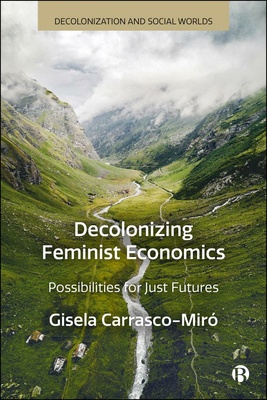
    On 13 January 2025 the Netherlands Research School of Gender Studies (NOG) is organising a book talk with Dr Gisela Carrasco-Miró (Escola Massana, Autonomous University of Barcelona) on Gisela’s forthcoming publication Decolonizing Feminist Economics: Possibilities for Just Futures (Bristol University Press, March 2025).

    What are the power dynamics of what we are theorizing as feminist economics, and what changes does it generate? To what extent does it promote control and exploitation, to what extent does it promote radical socio-economic transformation, post-capitalist imaginaries and decolonization? The book takes seriously these questions, not settling for mere criticism, but developing a map for a decolonizing feminist economics approach. In its chapters, the suppression and devaluation of non-modernist and post-capitalist economic knowledges by the dominant economic epistemology is denounced, in addition to investigating feminist and decolonizing tools and proposals around the world to illuminate our hijacked present and to imagine a decolonizing feminist economic landscape that is under transformation.

    The book talk will be a conversation between Gisela, Kathrin Thiele, and Ana Maria Miranda Mora. The book talk will be moderated by Adriano Habed. Please note that the book talk is closely related to the Masterclass ‘Decolonizing Feminist Futures: What kind of economies do we want?’, which will take place the next day.

    Registration by e-mail closes Friday 20 December 2024, 17:00h.

    MORE INFO

  • Inaugural lecture Professor Matthias van Rossum

    Inaugural lecture Professor Matthias van Rossum

    On 24 January 2025 Posthumus fellow and Posthumus course coordinator Matthias van Rossum will deliver his inaugural lecture as Professor by special appointment Global Histories of Labour and Colonialism at Radboud University. Matthias was appointed on 1 February 2024 to this special chair, jointly established by Radboud University and the International Institute of Social History.

    The chair focuses on the history of slavery, forced labour and resistance in relation to colonial expansion. The chair aims to gain new insights into the Dutch and European colonial past by studying sources and perspectives from below. The research agenda of the chair is strengthened by a number of projects led by Matthias van Rossum. For instance, the NWO project Resisting Enslavement and the ERC Consolidator project Voices of Resistance investigate forms of resistance, the voices and perspectives of enslaved people in the Indian Ocean, Indonesian archipelago and Atlantic world. This contributes to the Exploring Slave Trade in Asia project, which aims to reconstruct the slave trade in Asia using an international database. The infrastructure project GLOBALISE enables new ways of research for the digitised VOC archives. Together, these projects seek to understand the colonial and slavery past in new ways.

    Attendance is possible on location after prior registration or online via a livestream.

    The N.W. Posthumus Institute congratulates Matthias with this appointment.

    REGISTRATION PAGE AND LIVESTREAM LINK

  • Masterclass ‘Rich and Poor in Societies Past and Present’ with Professor Guido Alfani – deadline abstracts 16 December 2024

    Masterclass ‘Rich and Poor in Societies Past and Present’ with Professor Guido Alfani – deadline abstracts 16 December 2024

    The Centre for Historical Research at University of Groningen, in collaboration with the N.W. Posthumus Institute, organises a masterclass by Professor Guido Alfani on the topic ‘Rich and Poor in Societies Past and Present’ on Wednesday 12 February 2025. The organisers offer a limited number of (Research) Masters students, PhD candidates and post-docs the opportunity to present their research to Professor Alfani by engaging with his latest book As Gods Among Men: A History of the Rich in the West (Princeton, 2023) from the perspective of their own research. In particular, papers in the fields of economic and social inequality, distribution and concentration of wealth, social mobility, poverty and charity, and the conflation of political and economic interests are welcome.

    Professor Guido Alfani is professor of Economic History at Bocconi University, Milan. His areas of interest include economic history and demography, with a focus on long-term dynamics, on economic inequality and social mobility, and on the history of epidemics, pandemics and famine. He is currently a member of the scientific committee of the Datini Foundation, of the international advisory board of the Posthumus Institute-Research School for Economic and Social History and of the board of trustees of the European Historical Economics Society (EHES). In his latest book he shows how the rich historically justified themselves by helping their societies in times of crisis, why they no longer do, and what that may mean for social stability. Next to the masterclass, Professor Alfani will also deliver a public lecture at the University of Groningen (further details to be announced in due time).

    Those interested in participating in this masterclass should send a paper proposal (250 words max.) to both organisers Arie van Steensel and Bart Danon ultimately 16 December 2024.

    DOWNLOAD FULL CALL (PDF)

  • CEPR Workshop ‘Public Health Interventions in the Long Run: Causes and Consequences’

    CEPR Workshop ‘Public Health Interventions in the Long Run: Causes and Consequences’

    Daniel Gallardo-Albarrán, fellow of the N.W. Posthumus Institute, cordially invites paper proposals to express interest in attending the CEPR workshop ‘Public Health Interventions in the Long Run: Causes and Consequences’, which will take place on 27 and 28 March 2025 at Wageningen University.

    The workshop aims to bring together leading researchers on the topic from various fields, such as economic history, economics, historical political economy, demography or public health history. Kenote speaker will be Professor Melissa Thomasson (Miami University/NBER).

    Submissions deadline closed 15 December 2024.

    FULL INFO

  • FRESH workshop ‘Empire and Economic Development’

    FRESH workshop ‘Empire and Economic Development’

    On 28 February 2025, Utrecht University will host a FRESH workshop on Empire and Economic Development. Frontier Research in Economic and Social History (FRESH) meetings are aimed at researchers in any field of economic and social history. The purpose of the meetings is to enable scholars to present their ongoing research at an early stage to an audience of interested peers.

    The keynote speaker of this particular meeting will be Tirthankar Roy, Professor of Economic History at the London School of Economics. Organisers of the meeting are Maanik Nath and John Tang (both Utrecht University) in association with Sandra de Pleijt (Frontier Research in Economic and Social History series organiser. This meeting is made possible thanks to funding made available by the European Historical Economics Society (EHES) and the N.W. Posthumus Institute.

    For an overview of the programme and selected speakers, you may download the program as pdf below.

    FULL PROGRAMME (PDF)

  • Symposium ‘The Montreal Moment’ (RIAS and Utrecht University)

    Symposium ‘The Montreal Moment’ (RIAS and Utrecht University)

    The Roosevelt Institute for American Studies (RIAS) and Utrecht University are now welcoming papers for the jointly organized symposium ‘The Montreal Moment: Ozone Depletion and the Rise of International Environmental Governance’, which will be held in Middelburg from 5-6 June 2025.

    After years of campaigning and confrontation, in 1985 twenty countries signed the Vienna Convention, which established a framework for international regulations on ozone-depleting substances and paved the way for the Montreal Protocol. Finalized in 1987, this document represented a landmark multilateral environmental agreement, regulating the production and consumption of dangerous compounds and setting standards in international environmental governance that are still regarded as paramount.

    The ways in which the Montreal Protocol was achieved, the discussions and negotiations it unleashed and entailed, the questions and issues it raised on multiple scales invite historians to further reflect on its origins and legacies vis-à-vis the contemporary rise and consolidation of a complex international environmental governance system. Was the Montreal Protocol an end point of a longer history of international efforts at managing the environment? Or was it the harbinger of new forms of multilateral cooperation? What does its trajectory reveal about similar attempts to regulate global environmental problems like climate change, soil erosion, or pollution? What was the role that non-state actors and nongovernmental organizations played in getting it signed? By converse, how did corporations react to its development and against its provisions? And how did governments position themselves in the broader debates around international environmental safeguard that the Montreal Protocol embodied? How was scientific evidence understood, conveyed, interpreted, and managed in this context? And finally, how did systemic and external variables such as economic volatility and industrial development impact on the international environmental politics of the 1970s and 1980s?

    The organisers invite proposals that address (some of) these questions and that put the Montreal Protocol within the broader framework of environmental internationalism in the 1970s and 1980s. Local, national, regional, and transnational perspectives are mostly welcomed, as well as contributions that shed further light on the politics and diplomacy of the agreement.

    Abstracts (300 words max.) accompanied by a short bio should be submitted via e-mail to the RIAS ultimately 15 December 2024.

    FULL INFO