Research School for Economic and Social History

Category: Agenda

  • Posthumus PhD Seminar I to be held in Maastricht, 12-13 December 2024

    Posthumus PhD Seminar I to be held in Maastricht, 12-13 December 2024

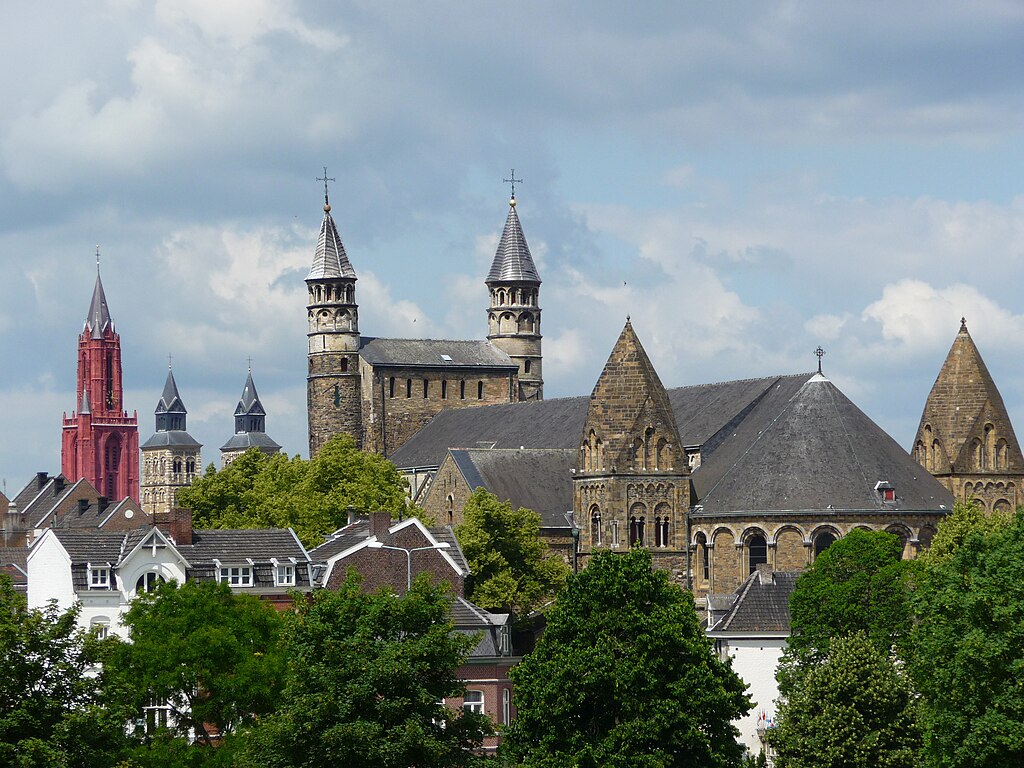
    The N.W. Posthumus Institute is happy to announce that Seminar I, ‘My research in a nutshell’, to be attended by the PhDs enlisted in cohort 2024 of the N.W. Posthumus PhD Training Programme, will be hosted by Maastricht University on 12 and 13 December 2024 under the guidance of Dr Joris Roosen, Assistant Professor of Regional History at FASoS and head of research and vice-director at the Centre for the Social History of Limburg (SHCL).

    Through this one- or two-days seminar, the new cohort PhD students get to know each other and their projects. The seminar provides a forum to present initial ideas and get feedback from both other starting researchers and two Posthumus fellows. Prior to the meeting every participant writes a short research note (in English) about the historiographical background and the substance of the project: ‘My project in a Nutshell’, in order to position the project in the academic debate. Participants will read and discuss each other’s notes.

    Those already enlisted will be informed by e-mail. Please note that signing up for the 2024 cohort is still possible until the deadline of 15 October 2024.

    We are looking forward to welcome our new PhDs to Maastricht in December!

    Image credits: Image created by CumulusNL from NL Wikimedia, published under Creative Commons license BY-SA 3.0

  • PhD Defence Posthumus alumna Ingrid Schepers (University of Antwerp)

    PhD Defence Posthumus alumna Ingrid Schepers (University of Antwerp)

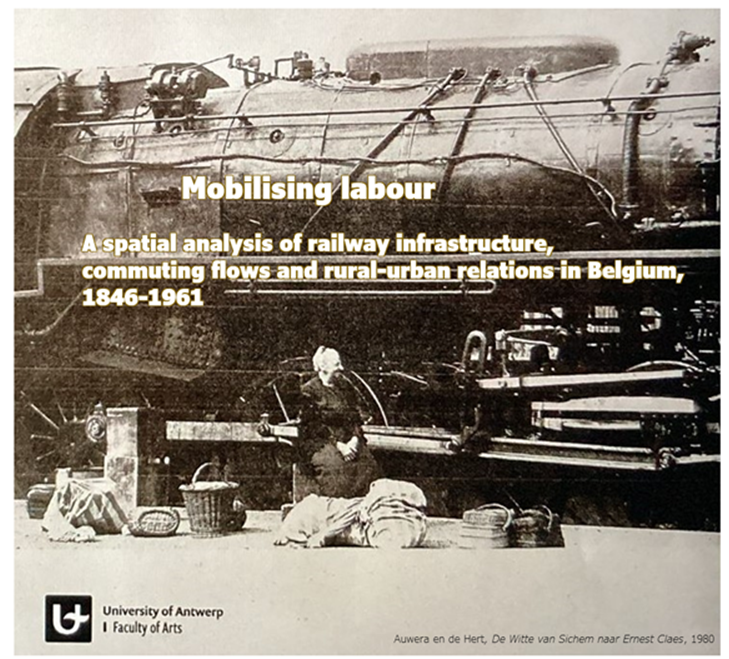
    On 11 June 2024, Posthumus alumna Ingrid Schepers successfully defended the thesis ‘Mobilising labour: A spatial analysis of railway infrastructure, commuting flows and rural-urban relations in Belgium, 1846-1961’ at the University of Antwerp. Promotors were Professors Greet De Block and Ann Verhetsel (both University of Antwerp).

    The N.W. Posthumus staff congratulates Ingrid with the successful defence!

  • Workshop ‘A peek into the neighbour’s garden’ (University of Antwerp)

    Workshop ‘A peek into the neighbour’s garden’ (University of Antwerp)

    The Centre for Urban History (University of Antwerp) and the N.W. Posthumus network Economy and Society of the Pre-Industrial Low Countries in a Comparative Perspective jointly organise the workshop ‘A peek into the neighbours’ garden’ on Friday 15 November 2024.

    The intention of this workshop is to provide a forum for work in progress or recently finished work on the Low Countries and to approach these new research developments from a comparative angle.

    The deadline for abstracts passed on 15 August 2024. Participants just wanting to attend without presenting are admitted on a first come, first served basis, space permitting.

    FULL CALL (PDF)

  • PhD Course ‘The Versatile Interior’ (Royal Danish Academy of Fine Arts, 27-11 November 2024)

    PhD Course ‘The Versatile Interior’ (Royal Danish Academy of Fine Arts, 27-11 November 2024)

    The PhD School of the Royal Danish Academy of Fine Arts is offering the PhD course ‘The Versatile Interior’ on 27-29 November 2024.

    This PhD course aims to explore interiors as versatile, ambiguous and complex phenomena. Through architectural history, social history, design, art, and anthropology, multifaceted and even sometimes paradoxical aspects of interiors will be unfolded. How such complex phenomena can be grasped and comprehended will be discussed through genuine and rigorous analytical discourse. Several examples will be presented forming the basis of the course and these will be studied through academic texts. In addition, there will be an excursion to a local museum where interiors are reconstructed to further inform the discussion. Participants are asked to submit a draft paper describing examples of versatile interiors that will be discussed in a group format. Two central questions will be addressed:

    • How can interiors be comprehended in all their complexity?
    • How can the ambiguity of interiors be framed through theoretical perspectives?

    The versatile interiors to be studied are: hoarder homes, homes with glossy surfaces and white walls, architects’ and artists’ homes as well as home workspaces. Furthermore, the course will focus on design principles in historical interiors, i.e., within the early modern period. Theses such as diffuse or limitless boundaries of space and cases where the exterior, urban space and landscape are drawn into the interior are to be disucssed.

    Participation in the course will be awarded with 3 EC. For participants form outside of Denmark, a participation fee may apply.

    Abstracts should be submitted by 15 September 2024; a full paper of maximum 2,000 words and an image should be submitted by 15 October 2024. Applicants must relate their papers to their PhD research and the theme of the course.

    FULL CALL (PDF)

  • Successful PhD Defence Posthumus alumna Aditi Dixit

    Successful PhD Defence Posthumus alumna Aditi Dixit

    On 17 May 2024, Posthumus alumna Aditi Dixit successfully defended her thesis ‘Asian Divergence in an Age of Globalisation: Textile Manufacturing, Trade, and the State in India and Japan, ca. 1890-1940’ at Utrecht University. Promotors were Professor Elise van Nederveen Meerkerk (Utrecht University) and Professor Christina Moll-Murata (Ruhr University, Bochum).

    We congratulate Aditi with her PhD!

  • Seminar ‘CAPASIA: The Asian Origins of Global Capitalism’ (University of Amsterdam and hybrid)

    Seminar ‘CAPASIA: The Asian Origins of Global Capitalism’ (University of Amsterdam and hybrid)

    On 21 May 2024, a hybrid seminar will be held jointly by the participants in the CAPASIA and GLOBALISE projects on the topic ‘CAPASIA: The Asian origins of global capitalism’. Confirmed speakers are Maarten Draper and Sebastian Majstorovic, both Research Associates with the European University Institute. Referent will be Luc Bulten, Postdoc Researcher at Radboud University.

    The CAPASIA project analyzes approximately 150 European ‘factories’ established in maritime Asia between 1500-1800. It views these not just as trade locations, but as vibrant hubs of material and information exchanges between Asians and Europeans. The project uses the factories as a lens to explore the Asian origins of global capitalism. In their talk, Maarten Draper and Sebastian Majstorovic will provide an overview of the aims and methodology of the CAPASIA project, including
    the development of a comprehensive database of these factories. They will also discuss how the CAPASIA and GLOBALISE projects align and build upon each other.


    CAPASIA is a five-year ERC-funded project hosted at the European University Institute in Florence. Its deliverables include a user-friendly website that will serve as a repository for data on the factories, a meeting place for scholars, and a medium for decolonising histories of global capitalism. GLOBALISE, a five-year NWO-funded
    project based at the Huygens Institute in Amsterdam, focuses on making the VOC archives more accessible to researchers.

    The seminar can be attended on location or online; the Zoomlink is displayed in the header of this post or via the button below.

    SEMINAR LINK

  • ESTER Research Design Course 2024

    ESTER Research Design Course 2024

    Please note the deadline has closed 1 July 2024!

    From 30 September until 2 October 2024 the ESTER Research Design Course (RDC) 2024 will be held at the University of Münster. The 2024 RDC will be hosted by Dr Christine Fertig and her colleagues in close cooperation with the N.W. Posthumus Institute. ESTER is the acronym of the European graduate School for Training in Economic and social historical Research, a Europe-wide network of leading scholars in the field of social and economic history, established in 1991 by the N.W. Posthumus Institute, currently involving 60 universities, offering high-level research training for PhD candidates in an international context. PhD candidates in economic and social history are invited to submit a paper for presentation at the RDC. Please note that the deadline has passed 1 July 2024 (extended deadline).

    Successful participation in the ESTER RDC is valued at 8 EC.

    MORE INFO

  • Call for papers Economic History Society PhD Thesis Workshop (September 2024, exact date tba; online)

    Call for papers Economic History Society PhD Thesis Workshop (September 2024, exact date tba; online)

    The Economic History Society (EHS) invites submissions to its PhD Thesis Workshop, to be held for the third time via Zoom in September 2024. Participants will share thesis papers or chapters-in-progress with fellow doctoral colleagues in economic and social history, and give and receive feedback on each other’s work. The workshop aims to provide opportunities for PhD students to develop their research and peer reviewing skills, as well as the chance to build horizontal networks with fellow early career scholars. Last two workshops have been well-attended and participants welcomed the opportunity to receive detailed feedback on their research and also network with fellow doctoral students. Participants will be expected to read and prepare feedback on all of their colleagues’ papers, and each paper will also have one doctoral student discussant to lead the conversation. Preference will be given to applicants in the second or later year of their research. The Workshop will be held on Zoom during an afternoon in September (UK time) to enable participation from researchers in a wide variety of time zones.

    Submissions from all doctoral researchers in economic and/or social history are welcomed. Especially encouraged are applications from graduate students from backgrounds traditionally underrepresented in academia. Applicants should email a short abstract (250–300 words) as PDF file to the organising student representatives of the EHS ultimately by 31 May 2024. Accepted presenters will be notified by mid-June and will be asked to upload a paper of no more than 5,000 words for circulation to fellow speakers by 7 July 2024.

    FULL CALL

  • Conference ‘Recolonising Empires during the Cold War’ (hybrid) – register asap for attendance in person

    Conference ‘Recolonising Empires during the Cold War’ (hybrid) – register asap for attendance in person

    On 30 and 31 May 2024, the (In)Equality Platform of Institutions for Open Societies at Utrecht University will organise a conference on ‘Recolonising Empires during the Cold War: Transitional Social Movements and Social Policy in Post-Colonial Areas’. Main organisers are Professor Marco van Leeuwen (Utrecht University) and Dr Michele Mioni (University of Bamberg).

    You can attend this conference on location or via specific Teams links. On the conference webpage, you will find the complete program, including the names of the various international scholars presenting.

    The organisers recommend those who want to attend the conference on site, to register as soon as possible, as seating is limited. You can register via the link on the conference webpage.

    CONFERENCE WEBPAGE

  • Masterclass with Professor Francesca Trivellato

    Masterclass with Professor Francesca Trivellato

    The Huizinga Research Network Archives of Power/The Power of Archives invites PhD students, early-stage postdocs and advanced RMA students affiliated with either the Huizinga Institute or the N.W. Posthumus Institute working on themes such as the (culture of) economic markets and trade, labour relations, slavery, networks and migration to discuss their own research with Professor Francesca Trivellato. Professor Trivellato is Andrew W. Mellon Professor at the School of Historical Studies of the Institute of Advanced Studies and is regarded as one of the most imaginative historians of the early modern world.

    This opportunity is offered to a maximum of 5-6 participants. Participants should be affiliated with either the Huizinga Institute or the N.W. Posthumus Institute as PhD, early-stage postdoc fellow, or as RMA-student. Selection of applications will be based on a letter of motivation and a short (300 words max.) abstract of the paper you would like to discuss at the workshop; this paper (4,000-5,000 words, c. 10 pages A4) can be (part of) a draft chapter, short paper or project presentation.

    Applications should be submitted ultimately 7 April 2024. Accepted participants should submit their full paper by 17 May 2024. For all criteria and further info, please visit the relevant webpage of the Huizinga Institute via the button below.

    FULL INFO