Research School for Economic and Social History

Category: Agenda

  • Conference ‘Commodities and Environments in Early Modern Global Asia, 1400 – 1800’

    Conference ‘Commodities and Environments in Early Modern Global Asia, 1400 – 1800’

    The organisers of the international conference ‘Commodities and Environments in Early Modern Global Asia, 1400–1800’ call for papers. This conference is organised under the auspices of the European Research Council (ERC) Advanced Grant Project, CAPASIA ‘The Asian Origins of Global Capitalism’, and will be hosted at the European University Institute in Florence, Italy on 13-15 November 2024. The conference explores the relationship between environments and commodities in early modern Global Asia between 1400 and 1800. It investigates the environmental consequences in these regions of the extraction, production and trade in commodities.

    This conference aims to integrate multiple historiographies which have sometimes operated in mutual isolation: (i) the literature on material culture and commodities in global history; (ii) the growing field of environmental history; and (iii) studies in the history of science which have examined how the natural sciences and ethnography served Europe’s quest for trade, profit, and colonial domination.

    Keynotes will be given by Professor Jakobina Arch (Whitman College) and Professor Sujit Sivasundaram (Cambridge University).

    Proposals from scholars at all career stages, including early career, are welcome. Papers will be selected on the basis of proposals submitted, and with the aim of ensuring a broad spread of topics for the conference. Abstracts should be submitted ultimately 20 February 2024.

    MORE INFO

  • Workshop ‘The Histories of (Post-)Colonial Universities in the Netherlands’ (WUR)

    Workshop ‘The Histories of (Post-)Colonial Universities in the Netherlands’ (WUR)

    On 29 and 30 August 2024, the Workshop ‘The Histories of (Post-)Colonial Universities in the Netherlands’ will be held at Wageningen University & Research. This workshop and the keynote is made possible thanks to the generous funding of Wageningen University & Research.

    The historiographies of universities, in the Netherlands and elsewhere, have so far remained focused on their institutional histories within the context of the nation state. At least some Dutch universities (Leiden, Utrecht, Delft and Wageningen to begin with) nevertheless functioned as institutions of higher learning for the colonial state in the 19th and 20th centuries, producing civil servants and experts who would develop colonial careers. Dutch universities also facilitated the training of indigenous elites. In the Dutch colonies itself European scientific methods and academic knowledge, moreover, was not passively adopted, but rather adapted and applied to existing traditions. Expertise that was gained during the colonial period, partly with the aid of these adaptations, generated lasting centers of global expertise in the Netherlands, thereby informing knowledge regimes for decades to come. Examples of this are the expertise on Asian history and culture in Leiden and on tropical agriculture in Wageningen, as well as companies that emerged from such knowledge hubs (Shell, Boskalis, Deltares and others).

    This 2-day workshop therefore responds to that gap in our knowledge. The workshop will explore the colonial and postcolonial entanglements of higher education in the Netherlands, with room for comparative explorations focused on higher education across the global north and south, exploring parallels to and linkages with colonial centers of knowledge across empires and from the early-modern to the modern era. The aim is to bring together researchers and professionals already working on similar projects relating to the colonial and postcolonial histories of universities in the Netherlands, while also inviting new perspectives. The purpose is to create a forum for in-depth discussion amongst researchers and professionals working on the topic who may have not otherwise encountered one another. This is based on the observation that a number of universities in the Netherlands and elsewhere have now started to explore research into their colonial pasts, but, that, so-far there has been a lack of coordinated discussion on the topic within and between these universities.

    The workshop aims to bridge studies on the history of knowledge production, colonial histories and the histories of universities in the Netherlands. The workshop also wants to contribute to a broader discussion about the role of universities in post-colonial societies, both in the Netherlands and elsewhere, including issues connected to racial discrimination, diversity and inclusion. For this reason, a number of the speakers will be invited. The keynote will be delivered jointly by Sabine Cadeau and Nicholas Bell-Romero, who both worked as research fellows at the University of Cambridge Legacies of Enslavement Inquiry.

    The deadline for submitting a paper has passed on 19 January 2024.

    DOWNLOAD FULL CALL (PDF)

  • PhD Career Day 2023

    PhD Career Day 2023

    latest update: 20 October 2023, 2:20pm

    N.W. Posthumus Institute, the Huizinga Institute, the Research School Political History and the Research School for Medieval Studies jointly would like to invite their PhD candidates and recently promoted PhDs to the PhD Career Day 2023. This event will be held on Friday 10 November at the Buys Ballot building in Utrecht Science Park.

    We offer you an interesting day programme, with speakers from various sectors in society, who will shed their light on your options in ‘life after promotion’. Many of them are alumnus of one of the research schools involved and therefore know from their own experience which chances, choices and complications you might be facing as future or recently promoted PhD.

    The day programme offers not only speeches, but also offers you the opportunity to bring forward your own questions and experiences. For example, the extensive lunch break will offer you opportunities to network and to have your CV reviewed by experts.

    You can participate free of charge, but because of catering and room capacity we kindly ask you to register beforehand via this form.

    REGISTER HERE!

    Programme

    10:00-10:05 Plenary introduction, welcome and some practicalities
    10:05-10:35 Keynote (Suze Zijlstra)
    10:35-10:50 Crossroads in your career: what questions and doubts do you hope to be addressed today? (Henk Looijesteijn)
    11:00-11:45 Lecture sessions 1 (some speed dates are scheduled parallel)
    a) Academic sector
    b) Heritage and museums
    c) Entrepreneurship
    12:00-12:45 Lecture sessions 2 (some speed dates are scheduled parallel)
    d) Government (including advisory bodies)
    e) Private sector
    f) Publishers / Press / Media
    13:00-14:15 Walking lunch & speed dates
    14:30-15:15 Lecture sessions 3 (some speed dates are scheduled parallel)
    a) Academic sector
    b) Heritage and museums
    c) Entrepreneurship
    15:30-16:15 Lecture sessions 4 (some speed dates are scheduled parallel)
    d) Government (including advisory bodies)
    e) Private sector
    f) Publishers / Press / Media
    16:30-17:00 Round table (Henk Looijesteijn)
    17:00-18:00 Drinks

    Confirmed speakers

    a) Academic sector: Janna Coomans & Jessica Dijkman (Utrecht University)
    b) Heritage and museums: Ruben Schalk & Jinna Smit (Rijksdienst voor Cultureel Erfgoed), Fred van Kan (Gelders Archief)
    c) Entrepreneurship: Henk Looijensteijn & Suze Zijlstra
    d) Government: Eline Van Onacker (Vlaamse Overheid, departement Werk en Sociale Economie) & Jaap Ligthart (Algemene Rekenkamer)
    e) Private sector: Rogier van Kooten (formerly Achmea)
    f) Publishers – Press – Media: Mirte Libregts (Walburgpers) & Astrid Verburg (IISG / TSEG)

    Participation

    Participation is reserved for PhDs from the Research Schools involved and free of charge.

    Directions

    Access to building
    We recommend you to enter the building complex via the Minnaert Café, accessible via the characters on the front of the Minnaert building, where our staff will provide further guidance.

    Public Transport
    by bus – From Utrecht Central Station, take bus 28 in the direction of Utrecht Science Park P+R and exit at stop Botanische Tuinen; after exiting the bus, the Minnaert Building is on your right.
    by tram – From Utrecht Central Station, take line 20, 21 or 22 in the direction of Utrecht Science Park P+R and exit at stop Padualaan; after exiting the tram, cross the tram lane and then straight on along bus stop Botanische Tuinen to see the Minnaert Building in front of you.

    Parking
    All info on parking in Utrecht Science Park can be found via this link. The closest parking spaces for this event are P9 Boedapestlaan and P6 Padualaan. Please note parking fees apply.

    You can find a map of Utrecht Science Park on Google Maps.
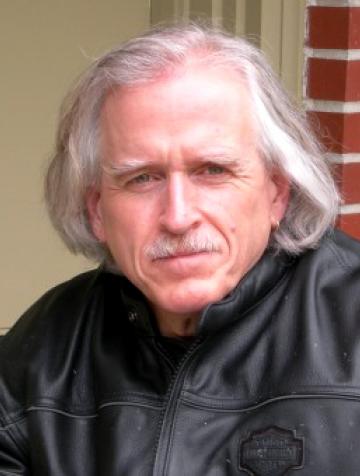
  • Posthumus fellow Selin Dilli one of speakers at Betweterfestival 2023

    Posthumus fellow Selin Dilli one of speakers at Betweterfestival 2023

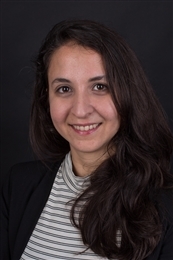
    Posthumus Fellow and member of our Education Committee Selin Dilli is one of the invited speakers at the annual Betweterfestival. The Betweterfestival is an annual event, organised by Utrecht University in close cooperation with numerous partner organisations and is open to anyone who wants to know how the world works, who is nog easily scared by new experiences and who likes to be surprised. Researchers, artists and visitrors mingle in a relaxed festival setting, while thinking about tomorrow’s world and the big questions of today.

    Sociologist and historian Dr Selin Dilli’s talk is entitled: ‘Let’s talk about female entrepeneurship’. Selin studies the evolution of female entrepreneurship from 1900 to present. One out of three businesses in the Netherlands are female-owned. What challenges and obstacles do women entrepreneurs still face? What can we learn from the past 100 years to further close the gender gap?

    Tickets are available via the Betweterfestival website.

    ABOUT THE LECTURE
     
    FESTIVAL WEBSITE

  • 15th Conference of Young Demographers

    15th Conference of Young Demographers

    The Young Demographers, in cooperation with the Association for Young Historical Demographers (AYHD), the Geographical Institute and the Department of Demography and Geodemography of the Faculty of Science, Charles University, invite you to the 15th Conference of Young Demographers. The conference is scheduled for 7–9 February 2024, and will take place at the Faculty of Science, Charles University, Albertov 6, Prague 2. Although the conference is mainly focused on (historical) demography, all young (in mind) researchers from various fields of population studies (sociology, epidemiology or maybe even economy) are welcome. The working language of the conference is English.

    MORE INFO

  • 13e Jacob van Lenneplezing – ‘De ontdekking van Insulinde: op reis in Nederlands-Indië in de negentiende eeuw’

    13e Jacob van Lenneplezing – ‘De ontdekking van Insulinde: op reis in Nederlands-Indië in de negentiende eeuw’

    ~ because of scope in Dutch only ~

    Op 5 oktober 2023 vindt bij SPUI25 in samenwerking met de Werkgroep de Moderne Tijd en de Faculteit Geesteswetenschappen van de Universiteit van Amsterdam de 13e Jacob van Lenneplezing plaats. Spreker Rick Honings zal dan spreken over het onderwerp ‘De ontdekking van Insulinde: op reis in Nederlands-Indië in de negentiende eeuw’.

    In de vroege negentiende eeuw, na de ondergang van de VOC, werd Indië voor het eerst een echte kolonie van Nederland. Vanaf dat moment gingen allerlei soorten reizigers op pad om de binnenlanden van Java, Sumatra en de ‘buitengewesten’ te verkennen: natuuronderzoekers, predikanten, zendelingen, taalgeleerden, ambtenaren, militairen en gelukszoekers, en later ook vrouwen en toeristen. Zij schreven volop reisverhalen om het ‘moederland’ te informeren over het koloniale project. Hoe reisden ze in die periode in Indië?

    In deze lezing volgt Rick Honings drie negentiende-eeuwers op hun reis door de kolonie. De natuuronderzoeker Caspar Georg Carl Reinwardt was een van de eersten die na het Engels Tussenbestuur in 1816 de Indonesische archipel verkende. De Oostenrijkse wereldreiziger Ida Pfeiffer begaf zich met gevaar voor eigen leven tussen de ‘koppensnellers’ op Borneo. En de sigarenfabrikant en schrijver Justus van Maurik bezocht Java als een vroege toerist. Welke woorden gebruikten ze om uiting te geven aan hun ervaring van de tropen? Hoe presenteerden ze zichzelf in hun werk? En wat zeggen de publicaties van deze negentiende-eeuwers over hun manier van denken?

    De lezing is vrij toegankelijk, maar aanmelding vooraf via de website van SPUI25 is gewenst. De Jacob van Lennep-lezing keert jaarlijks op de eerste donderdag van oktober terug en beoogt de Nederlandse literatuur en cultuur van de negentiende eeuw onder de publieke aandacht te brengen.

    MEER INFO

  • Workshop ‘Future Thinking and Practices in Premodern Economy, Society, and Culture’

    Workshop ‘Future Thinking and Practices in Premodern Economy, Society, and Culture’

    The organisers of the workshop ‘Future Thinking and Practices in Premodern Economy, Society, and Culture’, to be held at the University of Antwerp on 23 and 24 November 2023, call for additional papers, exclusively for (max. 6) participants of Dutch National Research Schools (in addition to other participants already invited).

    This November, The ‘Back to the Future’ research team organises a two-day international workshop that welcomes PhD students who deal with past futures from social, cultural and socioeconomic perspectives to apply. Focus is the pre-modern world. The organisation aims to unite diverse perspectives on the history of the time to come. To create a collaborative platform where various ideas converge, researchers from European universities outside of the Benelux will participate as well.

    This workshop forms part of the research project ‘Back to the Future. Future Expectations and Actions in Late Medieval and Early Modern Europe, c.1400-c.1830’ at the Centre for Urban History of the University of Antwerp. The event is also made possible by contributins from the Huizinga Institute and the N.W. Posthumus Institute.

    Theme and content

    Conducting research on historical future thinking and practice sheds light on how people in the past conceptualised and coped with what lay ahead. Exploring this facet offers insights into how individual and societal perspectives, aspirations, and concerns were projected onto the future.

    In recent decades, the theme of time, temporality and the future has gained significant popularity within various academic disciplines. Understanding how different cultures and eras perceive and manipulate time enhances our comprehension of historical context. It enables us to grasp how people structured their narratives of development, anticipated change and grappled with uncertainty.

    Programme

    The event offers a platform for PhD students to showcase their work through 25 to 30-minute presentations, followed by engaging group discussions. Each PhD participant will give a presentation and participate in the round table discussions. 1.5 hours are reserved for every two attendees, ensuring a thoughtful and engaging experience. The tentative programme can be found below:

    Thursday, 23 November
    09:30 – 10:00 Coffee & Tea
    10:00 – 10:30 Welcome
    10:30 – 12:00 2 Speakers & Roundtable
    12:00 – 13:00 Lunch
    13:00 – 14:30 2 Speakers & Roundtable
    14:30 – 15:00 Break
    15:00 – 16:30 2 Speakers & Roundtable
    16:30 – 17:00 Conclusions / Summary of the Day
    19:00 – 21:00 Workshop Dinner (optional)
    Friday, 24 November
    09:30 – 10:00 Coffee & Tea
    10:00 – 10:30 Presentation by ERC Project ‘Back to the Future’
    10:30 – 12:00 2 Speakers & Roundtable
    12:00 – 13:00 Lunch
    13:00 – 14:30 2 Speakers & Roundtable
    14:30 – 15:00 Break
    15:00 – 16:30 2 Speakers & Roundtable
    16:30 – 17:00 Conclusions / Summary of the Day


    DOWNLOAD CALL AS PDF

  • Online Summer School ‘Exploring Open Large-Scale Historical Demographic Databases’

    Online Summer School ‘Exploring Open Large-Scale Historical Demographic Databases’

    The Italian Society of Historical Demography (Società Italiana di Demografia Storica; SIDeS) organises an online summer school on ‘Exploring Open Large-Scale Historical Demographic Databases’. The sessions are scheduled for 8 September, 15 September, 22 September, 29 September, 6 October 2023. All sessions will be held online from 3 pm until 5 pm (UTC+2).

    About the summer school

    This online summer school is aimed at scholars (junior and senior), doctoral students and anyone with research interests in the field of historical demography. This year’s edition will focus on sources that have been (or are in the process of being) made into large-scale databases that are or will be publicly available for research. At the end of the course, participants will understand the challenges of creating large-scale databases using diverse types of sources that are suitable for research, understand their potential for allowing new research topics to be studied and will have acquired some preliminary information on how to work with them. The course will feature experts (among whom several Posthumus fellows) discussing several projects that illuminate different contexts, needs, challenges and opportunities using European sources, and a final session focusing on the Italian case.

    How to participate

    To enroll, participants must be a member of the Italian Society of Historical Demography. Those not yet member of SIDeS can simultaneously apply to join our society and attend the summer course. Registration requests must be received by 5 September 2023. For more information, contact the SIDeS secretary, Gabriele Ruiu.

    DOWNLOAD PROGRAM (PDF)
     
    WEBSITE SIDES

  • Masterclass with Thomas Safley: ‘Actors and institutions in the pre-Modern Economy’

    Masterclass with Thomas Safley: ‘Actors and institutions in the pre-Modern Economy’

    VUB research group HOST (Historical Research into Urban Transformation Processes) in collaboration with the N.W. Posthumus Institute is hosting the masterclass ‘Actors and institutions in the pre-Modern Economy’ with Professor Thomas Safley on 2 October 2023.

    About the speaker

    Thomas Max Safley is Professor of Early Modern European History (Emeritus) at the University of Pennsylvania. He specialises in the economic and social history of early modern Europe between 1450 and 1750, on which he has published extensively. His publications include Matheus Miller’s Memoirs: A Merchant’s Life in the Seventeenth Century (Palgrave Macmillan, 2000) and Family Firms and Merchant Capitalism in Early Modern Europe: The Business, Bankruptcy and Resilience of the Hoechstetters of Augsburg (Taylor & Francis, 2019).

    About the Masterclass

    The masterclass ‘Actors and Institutions in the Pre-Modern Economy’ offers PhD candidates and early career researchers the opportunity to present and discuss their work with an expert in the field. It focusses on the actors (specifically merchants and families) and institutions (the state/authorities and households) that shaped the pre-modern economy of the Low Countries. During the masterclass a maximum of 6 participants will offer 10-minute presentations based on a pre-submitted project outline such as a paper/chapter abstract. Afterwards, Professor Safley and the participants will be able to provide detailed feedback on the presentation/proposal and discuss the topic. The goal is to help the researcher as well as the other participants in shaping/developing an argument or theory.

    How to participate

    Researchers working on Actors and Institutions in the Pre-Modern Economy are invited to send an abstract (c. 300 words) with a brief biographical note to both HOST and organiser Yannis Skalli Housseini by 1 September 2023. All candidates will be notified of the outcome by 7 September.

    DOWNLOAD CALL (PDF)

  • Datini-ESTER Advanced Seminar 2024: ‘Social and Geographical Mobility

    Datini-ESTER Advanced Seminar 2024: ‘Social and Geographical Mobility

    Fondazione Istituto Internazionale di Storia Economica “F. Datini” and the European School for Training in Economic and Social Historical Research (ESTER) will organise their seventh jointly-organized Datini-ESTER Advanced Seminar for economic and social historians on 12-18 May 2024, in Prato (Italy) on the theme of ‘Social and Geographical Mobility’

    The organisers

    ESTER, established in 1991, is an international postgraduate network incorporating more than 60 European Universities. ESTER organises research training in the form of both the annual Research Design Course for starting PhD-students and a series of Advanced Seminars on special themes within economic and social history.

    “F. Datini” International Institute of Economic History was founded in 1967 by Federigo Melis and Fernand Braudel. The aim of the Institute is the study of pre-industrial economic history (thirteenth-eighteenth centuries) and the creation on the topic of a space for historical culture, making comparison between different methodologies and schools of research easier and supporting young scholars during their formative years.

    Theme

    The topic of the seminar is closely related to the theme of the congress organized yearly by the “F. Datini” International Institute of Economic History, which in 2024 is devoted to ‘Social Mobility in pre-industrial societies: tendencies, causes and effects (13th-18th centuries)’. The 2024 Datini-Ester seminar will deal with Social and Geographical Mobility.

    More info

    Deadline for submitting abstracts for the 2024 edition closed on 15 October 2023. If accepted for participation, the final paper will be due on 15 March 2024. For info on the seminar in general, you may contact Dr Jaco Zuijderduijn (Lund University).

    DOWNLOAD FULL CALL (PDF)