Research School for Economic and Social History

Category: Agenda

  • CLARIAH & NDE Annual Conference 2022

    CLARIAH & NDE Annual Conference 2022

    On Thursday 24 November 2022, CLARIAH and Netwerk Digitaal Erfgoed (NDE) jointly organise their annual conference in Utrecht. This year’s theme will be ‘Heritage meets Digital Humanities’. The focus will be on the CLARIAH digital humanities infrastructure and its use by researchers and other professionals from the heritage field. The program includes lectures, debates, interactive presentations, workshops, poster sessions and networking opportunities.

    The conference will be led by chairperson Kirsten Paulus, TV presenter, presentation coach and chairperson. The keynote lecture will be delivered by Dr Kathryn Eccles, Senior Research Fellow at the Oxford Internet Institute and Pembroke College. She will talk about her work at the intersection of research and digital heritage.

    Free registration for the event has opened on a first come, first served basis, up to a maximum of 150 participants.

    FULL INFO AND REGISTRATION

  • Datini-ESTER Advanced Seminar 2023: ‘Economic Exchanges’

    Datini-ESTER Advanced Seminar 2023: ‘Economic Exchanges’

    Fondazione Istituto Internazionale di Storia Economica “F. Datini” and the European School for Training in Economic and Social Historical Research (ESTER) will organise their sixth jointly-organized Datini-ESTER Advanced Seminar for economic and social historians on 14-20 May 2023, in Prato (Italy) on the theme of “Economic Exchanges”

    The organisers

    ESTER, established in 1991, is an international postgraduate network incorporating more than 60 European Universities. ESTER organizes research training in the form of both the annual Research Design Course for starting PhD-students and a series of Advanced Seminars on special themes within economic and social history.

    “F. Datini” International Institute of Economic History was founded in 1967 by Federigo Melis and Fernand Braudel. The aim of the Institute is the study of pre-industrial economic history (thirteenth-eighteenth centuries) and the creation on the topic of a space for historical culture, making comparison between different methodologies and schools of research easier and supporting young scholars during their formative years.

    Theme

    The topic of the seminar is closely related to the theme of the congress organized yearly by the “F. Datini” International Institute of Economic History, which in 2023 is devoted to ‘Alternative Currencies. Commodities and Services as Exchange Currencies in the Monetarized Economies of the 13th to 18th Centuries’. The 2023 Datini-Ester seminar will deal with Economic Exchanges. The organisers particularly welcome papers on the exchange of goods and services, on the role of markets, monies, trade, transaction costs and institutional contexts, which might foster market integration or, alternatively, constrain economic performance. Purpose is to clarify the role of the economic exchange and market in past economies. Papers can cover any relevant aspect and any period from Antiquity until today.

    More info

    Abstracts for the 2023 edition are due by 15 November 2022 (extended deadline). If accepted for participation, the final paper will be due on 15 March 2023. For info on the seminar in general, you may contact Dr Jaco Zuijderduijn (Lund University).

    The full call can be found as pdf via this link.

    APPLICATION FORM

  • Save the date! Inaugural Lecture Professor Hilde Bras

    Save the date! Inaugural Lecture Professor Hilde Bras

    On 26 May 2023, Professor Hilde Bras, Professor of Economic and Social History, with special attention to Global Demography and Health at the History Department of the University of Groningen, will deliver her inaugural lecture.

    More details will follow in due time, but do already save the date!

    PERSONAL WEBSITE

  • Terra Incognita Lecture by Professor Kapil Raj – Circulation as Relational History (Leiden, 6 December 2022)

    Terra Incognita Lecture by Professor Kapil Raj – Circulation as Relational History (Leiden, 6 December 2022)

    On 6 December 2022, the day before Professor Kapil Raj’s masterclass at the Institute for History at Leiden University, Professor Raj will deliver the Annual Terra Incognita Lecture, entitled ‘Circulation as Relational History’. This lecture will be open to all interested.

    About the keynote speaker

    Professor Kapil Raj, Research Professor at École des Hautes Études en Sciences Sociales in Paris, is an historian who writes on intercultural interactions and the making of scientific knowledge and the global dimensions of local knowledge production. His publications include Relocating modern science: circulation and the construction of knowledge in South Asia and Europe, 1650-1900 (2007), “Mapping knowledge go-betweens in Calcutta, 1770-1820” (2009), and “Thinking Without the Scientific Revolution: Global Interactions and the Construction of Knowledge” (2017).

    About the lecture

    Ever since its institutionalisation as a university discipline in the course of the 19th century, history — along with the vast majority of social sciences — have been entrapped in “methodological nationalism”, the assumption that nations are the natural units for study, thus equating society with the nation-state, and conflating national interests with the purposes of the social sciences. Questions thus very often get reduced to explanations limited to national parameters without taking account of broader dynamics. In the context of nations that gained independence from European colonialist in the post-WW II era, Postcolonial Studies have sought to engage with this nationalist straightjacket by attempting to situate their histories, especially during the colonial period, as a process of resistance to European imperial domination and imposition of the latter’s outlook and values. However, a number of questions and issues are thus blindsided in this systematically agonistic perspective, or for that matter in its opposite, a free-flowing diffusionist model based on a simple-minded Whiggish model of progress. In light of the fact that human societies, past and present, are constantly interacting with each other together with the phenomenon of human migrations, a number of new historiographical approaches that attempt to engage with these “relational” processes have emerged in the last decades.

    This talk will start with a presentation of some of the most prominent amongst such propositions – comparative history, histoire carrefour, histoire croisée, connected history, circulatory history… – before developing the last one, including its areas of applicability, in some detail. As an illustration of the workings of this approach, the talk will focus on a case-study in the context of the European encounter with South Asia – the making of the monumental Hortus Indicus Malabaricus commissioned in the 1670s by the military commander of the then Dutch colony of Kochi, and its iterations in subsequent Indo-European interactions.

    Download abstract as pdf
  • Public Lecture Beat Kümin: Managing Memory through Tower Ball Deposits in the German Lands

    Public Lecture Beat Kümin: Managing Memory through Tower Ball Deposits in the German Lands

    A day before Professor Beat Kümin’s Masterclass at the Vrije Universiteit Brussel, Professor Kümin will deliver a public lecture there, entitled ‘”To dear posterity”: Managing Memory through Tower Ball Deposits in the German Lands’.

    About the lecture

    Since the late Middle Ages, urban and rural communities of different confessions have marked the completion of prominent buildings by placing chronicles and objects into golden spheres located on top of towers. In this liminal position between earth and heaven, the archives remain inaccessible and sometimes forgotten until the next major repairs, when new items are often added by successive generations. How can we make sense of this peculiar, ‘bottom-up’ and regionally circumscribed custom and what can it tell us about local memory cultures more generally? A public lecture, just ahead of an important day of remembrance in Belgium and many other countries, investigates.

    About the speaker

    Beat Kümin is Professor of Early Modern European History at the University of Warwick and author of e.g. Drinking Matters: Public Houses and Social Exchange in Early Modern Central Europe and The Communal Age in Western Europe c. 1100-1800 , as well as ‘Nachrichten für die Nachwelt. Turmkugelarchive in der Erinnerungskultur des deutschsprachigen Europa’. He serves as an academic lead of Warwick’s interdisciplinary Global Research Priority on Food and coordinates the Warwick Network for Parish Research.

    How to participate

    This public lecture is open to all and free of charge. No prior reservation is required.

    FULL INFO

  • Boekpresentatie Marjolein ‘t Hart – ‘Oorlog en ongelijkheid’

    Boekpresentatie Marjolein ‘t Hart – ‘Oorlog en ongelijkheid’

    ~ because of scope only in Dutch ~

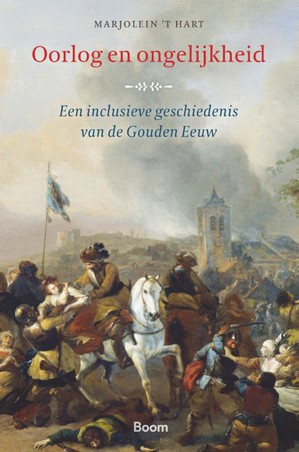
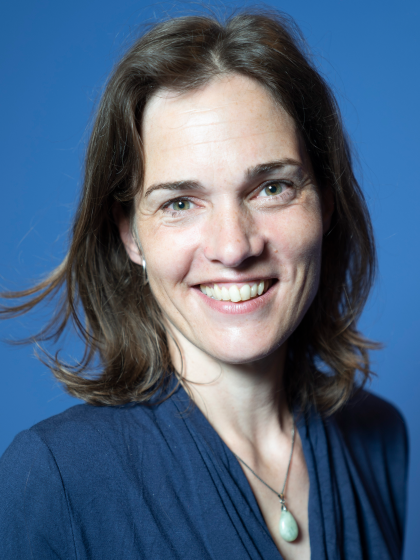
    Op zaterdag 29 oktober a.s. om 15.00 uur in Boekhandel Blokker, Binnenweg 138, 2101 JP Heemstede, vindt de presentatie plaats van het boek Oorlog en Ongelijkheid. Een inclusieve geschiedenis van de Gouden Eeuw, verschenen bij Uitgeverij Boom Amsterdam van Posthumus fellow emerita professor Marjolein ’t Hart. Roelof van Gelder, historicus en vroeger redacteur Boeken van de NRC, zal een vraaggesprek met haar houden.

    Over de publicatie

    Alle oorlogen in de zestiende en zeventiende eeuw leidden tot economische neergang, behalve de Tachtigjarige Oorlog. Deze leidde juist tot een periode van enorme bloei – zonder Tachtigjarige Oorlog geen Gouden Eeuw. Die grote rijkdom bereikte echter niet iedereen. In de wingewesten overzee werden mensen op grote schaal uitgebuit, en ook binnen de Republiek zelf groeide de ongelijkheid. Katholieken, plattelanders, vissers, de lagere en de middenklasse in de steden: allemaal gingen ze er tijdens de Gouden Eeuw op achteruit.

    Met het leger en de vloot was de overheid de grootste werkgever en de grootste consument. Door een efficiënte troepenmacht, een breed gedragen staatskrediet en een vergaande commercialisatie in de logistiek van oorlogvoering werd de Gouden Eeuw vooral een Hollandse Gouden Eeuw. Nog steeds profiteert de Nederlandse economie van de vermogens die toen zijn vergaard. Niet eerder is verklaard waarom vooral de Hollandse economie van de oorlog heeft geprofiteerd. Oorlog en ongelijkheid doet dat wel. Door systematisch te laten zien dat de glorie vele schaduwzijden kende, presenteert Marjolein ’t Hart de eerste inclusieve geschiedenis van de Gouden Eeuw.

    Meer info

  • Masterclass Beat Kümin ‘Remembering From Below’

    Masterclass Beat Kümin ‘Remembering From Below’

    The VUB research group Historical Research into Urban Transformation Processes (HOST) in collaboration with the N.W. Posthumus Institute and the Fernandes Fellowship scheme of the University of Warwick is hosting the masterclass ‘Remembering From Below: New Directions in Memory Studies’ delivered by Professor Beat Kümin (University of Warwick, UK) on 11 November 2022.

    About the speaker

    Beat Kümin is Professor of Early Modern European History at the University of Warwick and author of e.g. Drinking Matters: Public Houses and Social Exchange in Early Modern Central Europe and The Communal Age in Western Europe c. 1100-1800 , as well as ‘Nachrichten für die Nachwelt. Turmkugelarchive in der Erinnerungskultur des deutschsprachigen Europa’. He serves as an academic lead of Warwick’s interdisciplinary Global Research Priority on Food and coordinates the Warwick Network for Parish Research.

    How to participate

    Applicants should send an abstract (c. 300 words) with a brief biographical note to both Host and Dr Marjolein Schepers by 14 October 2022. All candidates will be notified of the outcome by 20 October. A full working paper should then be submitted no later than 4 November.

    FULL CALL (PDF)

  • Inaugural lecture Professor Jutta Bolt (University of Groningen)

    Inaugural lecture Professor Jutta Bolt (University of Groningen)

    On 4 November 2022, Professor Jutta Bolt, member of the General Board of the N.W. Posthumus Institute, will deliver her inaugural lecture as Professor in Global Economic History at the Faculty of Economics and Business of the University of Groningen, entitled ‘Living standards and wellbeing in Africa, an economic history perspective’.

    The lecture will also be streamed online, for the link check the full info via the button below.

  • IASC2023 Conference ‘The Commons We Want: Between Historical Legacies and Future Collective Actions’

    IASC2023 Conference ‘The Commons We Want: Between Historical Legacies and Future Collective Actions’

    The IASC has been shaping the debate on alternative development pathways by way of putting the commons center stage. In times of profound crises, we have seen states being caught up in emergency mode. This unfolds, among others, in a tendency to respond within national borders, and it has brought the importance of building genuine resilience that leaves no one behind.

    In all its diversity, the African continent is particularly exposed to shocks, and the risk of losing decades of development accomplishments is conspicuous. Therefore, in the context of the pandemic, building resilience for a broad range of society has become ever more pertinent, but the framework conditions to do so remain under-discussed. The global IASC conference will open up a space to mobilize this very debate. Taking place at the University of Nairobi, but co-organized with Centre for Integrated Training and Research in ASAL Development CETRAD, the University of Bern (Institute of Social Anthropology ISA, Centre for Development and Environment CDE), and the Swiss Tropical and Public Health Institute Swiss TPH, Basel, Switzerland) and the Swiss Society for African Studies (SSAS), the discourse on commons and commoning will be prominently staged so as to broadly explore the contributions of the concept of the commons to build resilience in and beyond crises.

    The conference provides a much-needed link to future-oriented research and practice perspective with a look back, since many legal and structural legacies predetermine possible development pathways. This reflection shall help to position the commons debate in the context of the Agenda 2030 and contribute to making the transformation towards the SDGs a more commons-oriented and participatory endeavor.

    full info

  • Workshop ‘Exploring the Links between Genetics and Historical Demography’ – deadline registration 30 September 2022

    Workshop ‘Exploring the Links between Genetics and Historical Demography’ – deadline registration 30 September 2022

    On 7 October 2022 the Nature & Nurture-workshop ‘Exploring the Links between Genetics and Historical Demography’ will take place in Leuven, Belgium. This workshop is made possible by funding from the HiDo Scientific Network for Historical Demography. The full program can be found here (pdf). Participation, either at location or online, in the workshop is free of charge, but registration is compulsory. You can register here. The deadline for registration is 30 September 2022.

    FULL INFO