Research School for Economic and Social History

Category: Agenda

  • Seminar and Workshop ‘Trust, institutions and capitalism in early modern Europe’ – keynote Prof. Craig Muldrew

    Seminar and Workshop ‘Trust, institutions and capitalism in early modern Europe’ – keynote Prof. Craig Muldrew

    On Thursday 23 April and Friday 24 April 2026, the section Economic, Social and Demographic History of Radboud University, supported by the N.W. Posthumus Institute, will host the international seminar and workshop on “Trust, institutions, and capitalism in early modern Europe”. The keynote lecture at this event will be delivered by Professor Craig Muldrew (University of Cambridge).

    Thursday 23 April: Keynote lecture

    On the first day of the event, Professor Craig Muldrew will present his new book The Capitalist Self: the Social Origins of Financial Capitalism in Early Modern Britain (Cambridge University Press, 2025), at the ESDG seminar of Radboud University in room 9.14 of the Erasmus building from 15:30-17:00. The seminar will be followed by drinks and dinner with the speaker.

    Friday 24 April: Workshop

    The workshop on the second day of the event is open to early-career researchers (MA/PhD/Postdoc) who wish to receive feedback on their (ongoing) research. The workshop wants to explore the relationship between the behaviours and norms of economic actors and the accumulation of credit and capital in early modern Europe.

    The organisers call for papers to be presented at the workshop: four participants will be invited to present their work in short presentations, after which the floor is open for feedback and discussion. Please consult the Call for Papers for more information on participation in the workshop.

    Participation

    Participation in the seminar and the workshop is free of charge. Participants are welcome to attend only one of the events, but participants in the workshop are especially encouraged to also attend the lecture during the seminar. For further details or questions about participation, please contact organiser Marte Stoffers.

    For participation in the seminar on Day 1, you can register via the button below

    For submitting a paper proposal, make sure to submit your abstract (500 words max.) and a one-page CV to organiser Marte Stoffers ultimately by 6 March 2026.

    FULL INFO

  • Workshop and Conference ‘Sowing the Seeds VIII’ (London, UK, 5-6 Nov 2026) – deadline 31 March 2026

    Workshop and Conference ‘Sowing the Seeds VIII’ (London, UK, 5-6 Nov 2026) – deadline 31 March 2026

    On 5 and 6 November, the Department of Economic History of the London School of Economics (LSE) and the Centre for Late Antique and Medieval Studies will jointly organise the workshop ‘Swoing the Seeds VIII’; this workshop will also act as the 13th Annual Conference of the Research Group for Late Medieval Economic History. The first day will be hosted at the premises of LSE, the second day will take place at King’s College in London.

    The conference brings together two research communities: the UK-based Sowing the Seeds network and the Continental European Research Group for Late Medieval Economic History, creating a space for dialogue concerning the range of sources and methodologies used in medieval economic history. As a conference shared between LSE and KCL, the organisers also aim to bridge generalist history departments and specialised economic history programs, to foster interdisciplinary conversation and support innovative (and collaborative) scholarship.

    This conference will provide a supportive environment for presenting work-in-progress and workshopping new methodologies, where participants can receive constructive feedback from scholars working across diverse theoretical and methodological approaches. The event is designed to foster lasting research networks between UK and Continental European scholars, facilitating the kind of focused, cross-regional and interdisciplinary discussions that deepen our understanding of medieval economies and societies and build opportunities for collaboration. The keynote lecture will be delivered by Professor Oliver Volckart (London School of Economics).

    Proposals (300 words max.) for attending this conference should be sent ultimately by 31 March 2026 to Spike Gibbs at LSE.

    FULL INFO

  • International conference ‘Studying Non-Elites in the Medieval Caucasus’ – register before 11 March 2026

    International conference ‘Studying Non-Elites in the Medieval Caucasus’ – register before 11 March 2026

    The SHOC Research Group at Vrije Universiteit Brussel, in association with the Medieval Caucasus Network and the National Association for Armenian Studies and Research, will organise the international conference ‘Studying Non-Elites in the Medieval Caucasus’ on 13 and 14 March 2026 at the premises of the VUB Campus in Elsene, Belgium. The conference can also be attended online.

    The conference features two days of papers on a variety of topics, from the Caucasian slave trade, to the place of women in medieval Armenian society, to the bioarchaeology of the medieval Caucasus. The keynote speakers are Nik Matheou (University of Edinburgh) and Irina Arzhantseva (Insitute of Archaeology, Russian Academy of Sciences). The organisers welcome anyone, including academics, students and members of the public, with an interest in the history of the Caucasus or in methodologies for studying the experience of non-elite groups, such as women, peasants, or enslaved people.

    Registration is now open until 11 March 2026 via the online registration form. A participation fee of 20 euros applies for postdoctoral and permanent staff members, for members of the public, students, and PhD candidates a reduced fee of 10 euros applies.

    FULL INFO

  • Verwacht: Boekpresentatie ter gelegenheid van 100 jaar UHSK

    Verwacht: Boekpresentatie ter gelegenheid van 100 jaar UHSK

    ~ because of scope in Dutch only ~

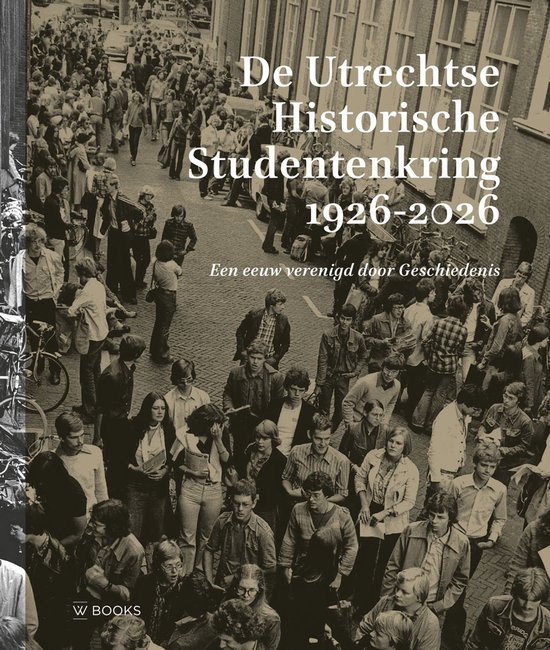
    Omslag boekIn 2026 viert de Utrechtse Historische Studentenkring (UHSK) het honderdjarig bestaan. Ter gelegenheid hiervan verschijnt in maart van dit jaar bij uitgeverij WBooks de publicatie De Utrechtse Historische Studentenkring 1926 – 2026: Een eeuw verenigd door Geschiedenis. Aan deze jubileumpublicatie werkten naast Posthumus fellow Elise van Nederveen Meerkerk als auteurs Mette Bruinsma en Jorrit Steehouder en twee redactieassistenten van de UHSK, Jasmijn Cox en Chiara Evans mee, ondersteund door drie stagiairs voor de dataverzameling voor het boek: Lieke Loman, Aigui Thewissen en Zita Zwart.

    Op 14 maart 2026 vindt de boekpresentatie plaats in de Theaterzaal van de Neudebibliotheek (Neude 11, Utrecht). Vanwege de beschikbare ruimte wordt belangstellenden gevraagd zich vooraf aan te melden.

    MEER INFO EN AANMELDEN

  • Young Demographers Conference 2026 – registration closes 28 January 2026

    Young Demographers Conference 2026 – registration closes 28 January 2026

    On 4-6 February 2026, the he Association for Young Historical Demographers will hold its annual meeting at Charles University (Prague, Czech Republic). Next to several paper and poster sessions, there will be keynote lectures by Katarina Luise Matthes, titled ‘Born during the 1918-20 Pandemic: What Historical Data Reveal About Neonatal Health and Later Mortality’, and by Marie-Pier Bergeron Boucher, titled ‘Can Simple Measures Capture Complex Realities?’.

    Registration for non-presenting participants closes 28 January 2026.

    FULL INFO

  • Successful PhD Defence Posthumus alumnus Arnoud Jensen

    Successful PhD Defence Posthumus alumnus Arnoud Jensen

    On 12 February 2026, Posthumus alumnus Arnoud Jensen successfully defend the PhD thesis ‘Boeren als rentmeesters: Pacht tussen winst, macht en natuur in de Lage Landen, 1200-1400’ [transl.: ‘Peasants into Stewards: Leasehold between profit, power and nature in the Low Countries, 1200-1400’] at the University of Antwerp. Supervisors were Professor Tim Soens (University of Antwerp) and Professor Thijs Lambrecht (Ghent University).

    Arnoud’s research examined short-term leasing in the Low Countries between 1200 and 1400. From the thirteenth century onward, leasehold became the dominant form of land management, and it is usually associated with profit maximisation and risk management. This study also highlights its role in sustainable management of natural resources by linking medieval leasing practices to the modern concept of environmental stewardship, understood as the responsible management of natural resources by temporary users.

    Lease contracts contained a wide range of clauses regulating land use and natural resources. By analysing these provisions, the research investigated how profit-seeking, risk mitigation, and environmental management interact within leasing systems across five regions: Inland Flanders, Coastal Flanders, Artois–Cambrésis, Liège, and the Dutch River Area.

    The findings contribute to four debates. First, the research suggests that leasing emerged earlier than previously assumed, with private individuals also active on the lease market quite early. Second, lease prices revise our understanding of the Late Medieval crisis: with new insights into the impact and timeline of the crisis. Third, the contracts reveal how profit-seeking, risk mitigation, and environmental management were structurally intertwined. Fourth, leasing had a clear ecological dimension, as contracts could encourage sustainable land use, even if primarily driven by non-ecological interests of lessors. Finally, the study reflects on the contemporary ecological crisis and modern lease legislation. Medieval contracts demonstrate that legal frameworks can promote responsible engagement with natural resources. Today, however, such a framework is largely absent, resulting in the underutilisation of leasing as an instrument for maintaining soil quality.

    The N.W. Posthumus Institute congratulates Arnoud with obtaining the PhD!

  • Research Day 2026 organised by IOS Platform ‘Bottom-Up Institutions for Societal Change’ – registration requested

    Research Day 2026 organised by IOS Platform ‘Bottom-Up Institutions for Societal Change’ – registration requested

    On 19 March 2026, the Platform Bottom-up-initiatives for Societal Change of Utrecht University’s Institutions for Open Societies network will organise the Research Day 2026.

    Tine De Moor, Professor of Social Enterprise and Institutions for Collective Action at the Rotterdam School of Management at Erasmus University Rotterdam, will deliver the keynote lecture this day.

    Researchers affiliated with our platform will present their work. The aim of this Research Day is to facilitate the interdisciplinary sharing of expertise on our main research topics and to help to create (new) networks and collaborations.

    This event in particular offers young researchers a unique chance to bring forward their research and to expand their academic network.

    Attendance is free of charge. Because of the room capacity and catering, registration is requested via the link below before 1 March 2026.

    REGISTRATION FORM

  • Jaarcongres Werkgroep ‘De Nieuwe Tijd’ 2026

    Jaarcongres Werkgroep ‘De Nieuwe Tijd’ 2026

    ~ because of scope in Dutch only ~

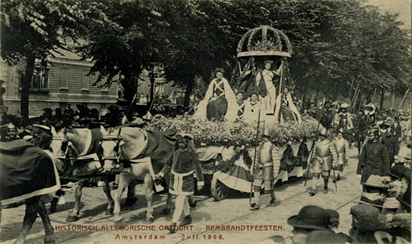
    De werkgroep De Moderne Tijd organiseert op 20 maart 2026 in Amsterdam een jubileumcongres met als thema ‘Feest! Jubilea en herdenkingen, 1780-1940’. Deze editie markeert het vijftigjarig bestaan van de werkgroep, eerder ook bekend onder de Werkgroep De Negentiende Eeuw.

    Feesten, jubilea en herdenkingen vormen een rode draad in de Nederlandse en Belgische geschiedenis. In het revolutietijdvak waren feesten hét middel om politieke groepen te mobiliseren. Revolutionairen dansten rond de vrijheidsboom, Oranjegezinden ontwierpen hun eigen vrijheidssymboliek. In de lange negentiende eeuw werden jubilea onder meer aangegrepen om de trots van de natie te vieren. Zulke feesten werkten even verbindend als polariserend. Ze werden gebruikt om de eigen groepsidentiteit te versterken en andere uit te sluiten. In dit jaarcongres van Werkgroep de Moderne Tijd van 2026 wil de werkgoep de feestcultuur in de lage landen, inclusief de koloniën in oost en west, in al haar verschijningsvormen onderzoeken. Wat werd er gevierd, door wie, hoe en waarom?

    Toehoorders kunnen zich tot uiterlijk 15 maart 2026 inschrijven per e-mail. Er geldt een deelnemersbijdrage, voor studenten geldt een gereduceerd tarief.

    VOLLEDIG PROGRAMMA (PDF)

  • Workshop ‘From Matrimonial Ads to Dating Apps: Unraveling the Partnering Market’

    Workshop ‘From Matrimonial Ads to Dating Apps: Unraveling the Partnering Market’

    The organisers of the Workshop ‘From Matrimonial Ads to Dating Apps: Unraveling the Partnering Market’ call for paper abstracts for this workshop, to be held on 4 and 5 June at the Center for Demographic Studies in Barcelona, Spain.

    Partner selection is often seen as a private decision, but its implications stretch far beyond the individual and couple, affecting families, communities, and society at large. It shapes and reflects social inequalities, with the potential to either challenge or reinforce existing structures. Understanding how partnering markets work—and why and how they evolve over time—is vital for scholars from a wide range of disciplines, including demographers, historians, sociologists, biologists, and geneticists. While much of the research on partner selection has focused on couple data, new data sources—from historical matrimonial advertisements to contemporary dating apps—provide exciting opportunities to explore the underlying dynamics of mate choice. These insights have the potential to illuminate patterns of assortative mating, gender imbalances, and other structural inequalities within relationships and society.

    This call for papers invites scholars from all disciplines to explore how partnering markets operate across diverse contexts and the far-reaching consequences of these dynamics, including their impact on relationship stability, social mobility, health, and family structures.

    Participants should submit a paper proposal abstract (300-350 words max.) aligned with the workshop’s objectives ultimately by 15 April 2026 via email to both Paul Puschmann and Joana Maria Pujadas Mora

    FULL CALL (PDF)

  • ‘The Environmental History of Mining in Southern Africa, 1870-2020’

    ‘The Environmental History of Mining in Southern Africa, 1870-2020’

    Between the 25 and 27 August, the Boom to Dust project (funded by the Dutch Research Council (NWO) and the African Studies Centre Leiden) will be hosting a workshop at Mulungushi University near Kabwe, Zambia. For this workshop scholars are invited to present papers on themes relating to the environmental histories of mining and mineral resource extraction. In particular encouraged are historically grounded explorations of the relationship between mining and vegetation, mining and animals and mining and water landscapes.

    Those wanting to attend the workshop should send a paper abstract (max 300 words) and a biographical statement (max 100 words) ultimately by 15 February 2026 via e-mail.

    FULL INFO