Research School for Economic and Social History

Category: Agenda

  • PhD Career Day 2025 – register before 1 November 2025

    PhD Career Day 2025 – register before 1 November 2025

    The Research School Political History, the N.W. Posthumus Institute, the Huizinga Institute, and the Research School for Medieval Studies warmly invite PhD candidates and recent graduates to the PhD Career Day 2025. This event will be at the IISH in Amsterdam.

    This day offers an inspiring programme with speakers who all hold a PhD in history and have built careers across a wide variety of sectors. They will share their insights on life after the PhD. Many of them are alumni of the organising research schools and can speak from personal experience about the opportunities, choices, and challenges facing early-career historians.

    Participation is free of charge, but because of catering and room capacity prior registration is requested ultimately by 31 October 2025.

    MORE INFO
     
    REGISTRATION

  • Successful PhD defence Posthumus alumnus Alberto Concina

    Successful PhD defence Posthumus alumnus Alberto Concina

    On 29 September 2025, Posthumus alumnus Alberto Concina successfully defended the thesis ‘Tilting the scale of life: A multidimensional study of living standards between peasant and rural market societies in North-Western Italy, 1650-1800’ [transl.: ‘Herkalibratie van de weegschaal van het leven. Een multidimensionele studie van de levensstandaarden in rurale “peasant” en markteconomieën in Noord-West-Italië, 1650-1800’] at the KU Leuven. Supervisor was Professor Maïka De Keyzer.

    Alberto’s research aims to test whether economic growth had a positive influence on prosperity levels in the past. Growth has long been seen as a precondition for high prosperity. However, through the use of GNP figures and real wages, indicators that only record commercial transactions, commercialized companies with economic growth will automatically emerge as more prosperous. By developing a new multidimensional prosperity index, to measure all essential dimensions of prosperity of different types of historical societies, Alberto’s research aims to be the first to perform a systematic comparison of the prosperity levels of two fundamentally different societies on the two sides of the growth spectrum that coexisted in Piedmont during the early modern period. They will be studied from a long-term perspective (1650-1800), to test what kind of society was able to develop and maintain the highest overall levels of prosperity in the long term.

    The N.W. Posthumus Institute congratulates Alberto with this successful defence!

    MORE INFO

  • Jaarsymposium Vereniging Gelre ‘Maakbare boeren en boerinnen?’ – deadline aanmelding 22 oktober 2025

    Jaarsymposium Vereniging Gelre ‘Maakbare boeren en boerinnen?’ – deadline aanmelding 22 oktober 2025

    ~ because of scope in Dutch only ~

    Op vrijdag 31 oktober organiseert de Vereniging Gelre haar jaarlijkse symposium. Met dit symposium wil Vereniging Gelre historische context bieden bij de huidige debatten over de landbouwsector. Het thema van dit jaar luidt: ‘Maakbare boeren en boerinnen? Landbouw en platteland in Gelderland tijdens de wederopbouwjaren’.

    Tijdens de wederopbouw tachtig jaar geleden werd de landbouw, zeker op de kleine bedrijven op de zandgronden, als achterhaald en inefficiënt beschouwd, en de woonomstandigheden als onacceptabel. Landbouw en platteland moesten vernieuwd worden. Dat gebeurde door ruilverkaveling en mechanisatie om zo de productiefactoren efficiënter te maken. Maar ook de mensen moesten veranderen, ze moesten hun ‘traditionele’ ideeën opgeven en gevormd worden tot moderne burgers. De boerenbevolking werd als maakbaar beschouwd, zoals historicus Erwin Karel het heeft uitgedrukt.

    Op het symposium wordt ingegaan op de middelen die werden ingezet om dat doel te bereiken, zoals landbouwvoorlichtingsfilms en landbouwhuishoudonderwijs, en op verzet tegen de modernisering, zoals bij de discussies over doelmatige boerderijbouw. Dit offensief was uiteindelijke succesvol en de gevolgen ervan zijn nog steeds merkbaar: een hoogproductieve landbouwsector, die helaas ook vervuilend is, en moeilijk te veranderen.

    Het symposium zal plaatsvinden bij Wageningen Universiteit & Research. Sprekers zijn Peter Veer (landschapsarchitect en audiovisueel programmamaker), Sophie Elpers (onderzoeker etnologie bij het Meertensinstituut en hoogleraar Immaterieel Erfgoed en Etnologie aan de Universiteit Antwerpen), Jeanne van Poppel (oral history onderzoeker) en Piet van Cruyningen (senior onderzoeker Landbouwgeschiedenis Wageningen University & Research).

    Aanmelden voor dit symposium kan tot uiterlijk 22 oktober per e-mail. Er geldt een toegangsbijdrage, voor studenten is de toegang gratis.

    MEER INFO

  • Najaarsbijeenkomst 2025 SGvdO in teken 80-jarig bestaan FIOD

    Najaarsbijeenkomst 2025 SGvdO in teken 80-jarig bestaan FIOD

    ~ because of scope in Dutch only ~

    Op 4 november 2025 organiseert de Stichting Geschiedenis van de Overheidsfinanciën (SGvdO) de Najaarsbijeenkomst 2025, die in het teken zal staan vanm het tachtigjarig bestaan van de Fiscale Inlichtingen- en Opsporingsdienst (FIOD).

    Naast aandacht voor de geschiedenis van de FIOD zal er aandacht zijn voor de rol van onderzoeksjournalistiek in fraudebestrijding. Sprekers zijn Leo Boer (voormalig programmamanager FIOD Onderzoek), Jan Molenaar (specialist anti-witwaspraktijken van de FIOD) en Bart de Koning (onderzoeksjournalist en docent aan de Politieacademie).

    Deelname is gratis, maar aanmelding vooraf per e-mail is wel nodig.

    MEER INFO

  • NEHA Symposium ‘Naar een meer inclusieve economische- en bedrijfsgeschiedenis’

    NEHA Symposium ‘Naar een meer inclusieve economische- en bedrijfsgeschiedenis’

    Op 28 november 2025 organiseert het Nederlands Economisch-Historisch Archief (NEHA), in samenwerking met de Stichting Bedrijfsgeschiedenis (BSG), een bijeenkomst met als thema ‘Naar een meer inclusieve economische en bedrijfsgeschiedenis’.

    Deze bijeenkomst vindt plaats bij het Internationaal Instituut voor Sociale Geschiedenis (IISG) in Amsterdam en krijgt de vorm van een symposium, met onder meer een publiekslezing door prof. dr. Jan Hein Furnée (hoogleraar Cultuurgeschiedenis aan de Radboud Universiteit en voorzitter van het Koninklijk Nederlands Historisch Genootschap (KNHG)), en bronnentafels met een aantal prachtige voorbeeldcollecties.

    Deelname is gratis, maar aanmelding vooraf per e-mail wordt gevraagd.

    MEER INFO

  • Workshop ‘Human Development and Its Outliers’

    Workshop ‘Human Development and Its Outliers’

    The organisers of the Workshop ‘Human Development and Its Outliers’ welcome abstract for papers to be presented at this workshop, to be held on 26 and 27 March 2026 at Leiden University. The workshop forms part of the project ‘Human Development and Its Outliers: A Global Microhistory’, funded by a starters’ grant of the Dutch Government.

    The workshop brings together scholars working on the history of human development, inequality, and exceptional cases or ‘outliers’ that challenge dominant patterns. The organisers invite contributions that explore these themes from a variety of perspectives, including economic, social and demographic history.

    Abstracts (300-400 words max.) should be submitted ultimately 1 November 2025 via e-mail to Dr Brianne Wesolowski.

    FULL INFO

  • Workshop ‘Socio-economic inequalities in mortality over time’

    Workshop ‘Socio-economic inequalities in mortality over time’

    The Health & Society group of Wageningen University & Research invites paper proposals for a one-day workshop, supported by GREATLEAP COST Action.

    There is evidence that the relationship between socioeconomic status and health, particularly mortality, is not constant. Depending on the context, inequalities in mortality have emerged, widened, or decreased over the past two centuries. It is not yet clear why this is the case. This workshop will bring together demographers, historians, economists, and other scholars to understand how socioeconomic inequalities in mortality change over time, exploring the changing dynamics. This one-day workshop is designed as a forum for in-depth discussion and feedback, aiming to bring together early-career and senior researchers working on aligned questions. As follow-up, the organisers foresee a collaborative output, either as a joint paper or as a special issue of a journal.

    The keynote will be delivered by Professor Sean Clouston, Professor at the Department of Family, Population, and Preventive Medicine of Stoney Brooke Medicine. The workshop will center on discussing and testing the four-stage model proposed by Clouston et al. (2016), in which the following stages are described:

    1. natural mortality – characterized by little or no population-level understanding of disease risk factors or treatments;
    2. producing inequalities – marked by unequal access to new knowledge, technologies, or treatments;
    3. reducing inequalities – as innovations become more widely accessible;
    4. reduced mortality/disease elimination – where prevention and treatment are effective and broadly distributed.

    Those wanting to participate should submit an abstract of 500 words max. via the submission form. Especially welcome are papers examining:

    • the timing and mechanisms through which socio-economic inequalities in mortality emerge and evolve;
    • the diffusion of medical, behavioral, or public health innovations and their differential uptake;
    • whether and when Clouston et al. (2016)’s framework applies when considering different causes of death, time periods, and national or regional contexts;
    • interactions between social policy, health systems, and population health inequalities.

    Abstracts should be submitted ultimately 1 October, notification of acceptance is to be expected by mid-October 2025.

    SUBMISSION FORM
  • Workshop ‘Spaces of Formal and Informal Diplomacy in the Premodern Mediterranean’ – pre-registration requested

    Workshop ‘Spaces of Formal and Informal Diplomacy in the Premodern Mediterranean’ – pre-registration requested

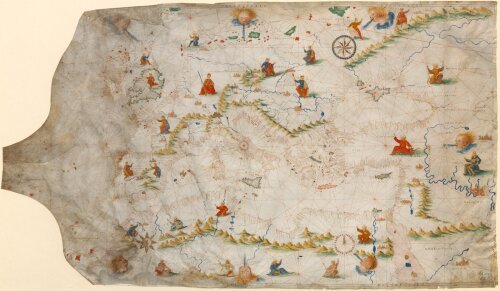
    The members of the DiplomatiCon Project (Power in History: Centre for Political History, and Centre for Urban History), in cooperation with the Research Network ‘Routes and Roots in Colonial and Global History’ of the N.W. Posthumus Institute are glad to announce the two-day interdisciplinary workshop on ‘Spaces of formal and informal diplomacy in the Premodern Mediterranean’, to be held on 18 and 19 September 2025 in Antwerp. Among the presenters will be a considerable number of Posthumus PhDs and Posthumus fellows. Keynote speaker will be Professor Zoltán Biedermann (University College London).

    This workshop aims to reappraise the Mediterranean space, taking into consideration the various actors and institutions that have been in contact or have been involved with the sea during the medieval and early modern periods. The goal is to question and nuance the great narratives of the Sea, and to break this single space into appropriate units of analysis. Several aspects have been looked at in the definition or delimitation of this Mediterranean space—geography, ecology, politics, religion or economy—that are usually taken separately and independently of each other. This workshop aims to bring nuance to the issue by shifting the perspective from monolithic concepts to actor-oriented emergent patterns. Instead of imposing definitions from the outside, it seeks to identify various spaces and their limits from within. The focus will be on exploring how spaces were produced and experienced by the actors themselves, the institutions and structures that facilitated this production, how these spaces were perceived and communicated to a broader audience, and potential variation in the permanence of different types of spaces and their uses; the workshop aims to complement traditional research by applying quantitative methods, spatial analysis, and GIS.

    Participation in the workshop is free, but prior registration is requested. You can register by sending an e-mail to the Diplomaticon project.

    FULL INFO AND PROGRAM

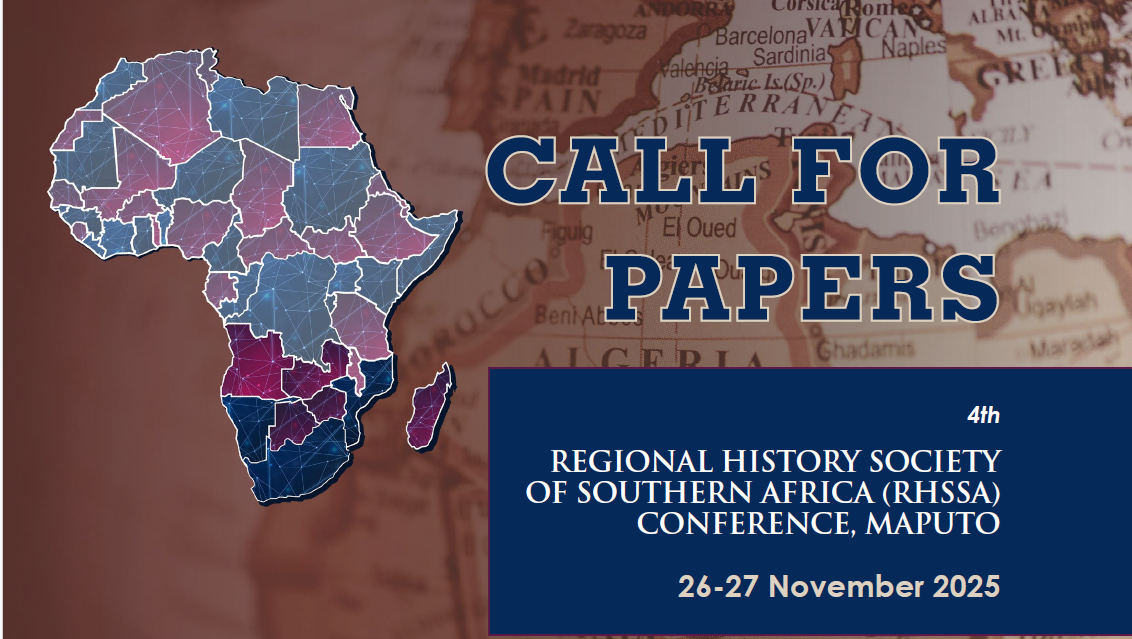
  • 4th Regional History Society of Southern Africa Conference

    4th Regional History Society of Southern Africa Conference

    The Regional History Society of Southern African (RHSSA) is hosting a conference on the theme ‘Independences and post-colonialism in Southern Africa’. This year’s theme is closely related to the jubilee of independence of Mozambique and Angola.

    The organisers call for paper proposals for this conference. Abstracts (250 words max.) should be submitted ultimately 30 June 2025 via the conference website.

    Especially welcomed are submissions that address any aspects of the following sub-themes:

    • Reassessing the historiography of liberation struggle in Southern Africa
    • Independence, wellbeing and human dignity
    • State and society in post-colonial southern Africa
    • Democracy, political legitimacy, and state building, accountability
    • Meanings of independence (economic; political; cultural),
    • Regional integration
    • State religion and society in Southern Africa
    • History and education curricula in Southern Africa
    • Climate, Environment, and societies in Southern Africa
    • Women and Audiovisual Sources in the Colonial Periodical Press
    • Archives and the politics of memory
    • Southern Africa in global politics: warfare and state building
    • Decolonization and the land question in post-colonial southern Africa

    Keynote speaker will be Arlindo Chilundo, who holds a PhD degree by the University of Minnesota, USA, in African Social and Economic History, with a comparative area in Agriculture and Applied Economics. He is currently a freelancer consultant.

    CONFERENCE WEBSITE

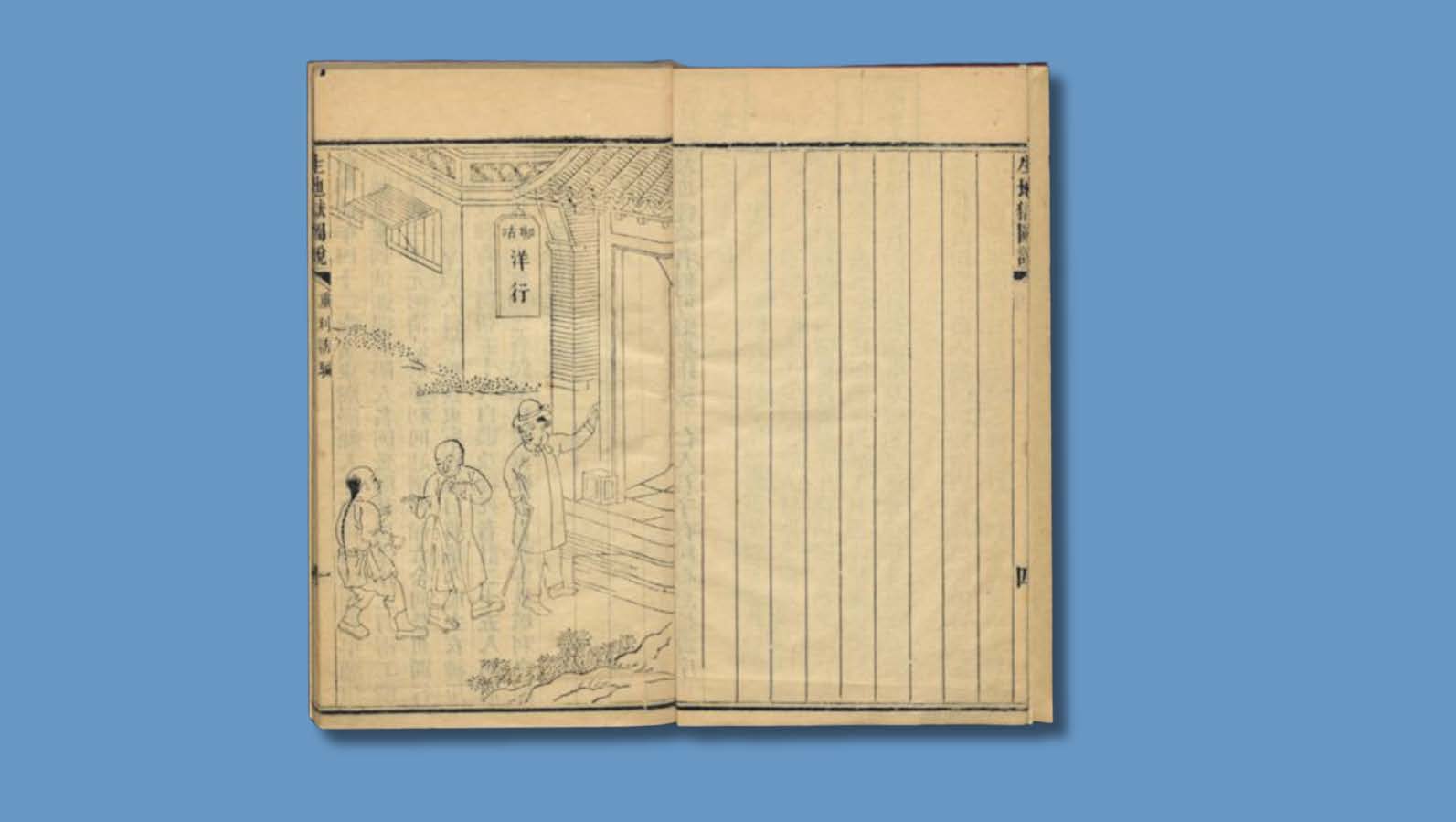
  • Seminar ‘Sources, silence and the senses in the study of the history of global Chinese Labour’

    Seminar ‘Sources, silence and the senses in the study of the history of global Chinese Labour’

    Jens Aurich (junior researcher at the IISH), Koen van der Lijn (Johan Huizinga Fellow at Rijksmuseum Amsterdam) and Fresco Sam-Sin (founder and creative lead of the Things That Talk Foundation), both connected to the Contract Labourers and Collective Action project at IISG, organise the seminar ‘Sources, silence and the senses in the study of the history of global Chinese Labour’, to be held at 18 August 2025 at the IISH in Amsterdam. The opening lecture will be delivered by Professor Evelyn Hu-DeHart, Professor of History and American Studies at Brown University, who will also act as key listener at this seminar.

    A critical engagement with archival material is fundamental to understanding the history of labour in colonial contexts. Central to this inquiry are our reading strategies — both against and along the grain of the archives — which serve as essential tools in navigating and interrogating these sources. This seminar aims not only to contextualise such strategies within the framework of global Chinese labour history — particularly by considering issues such as multilingualism, intermediaries and transcultural dynamics — but also to examine the potential contributions of non-archivalsources. Special attention will be given to material culture, silence, and the senses.

    Participants are expected to prepare a presentation consisting of three case studies in total. Goal is to foster collective reflection and opportunities to advance one another’s research. More info on the format of the presentation is to be found in the full call (see button below). Those interested to participate should send an e-mail with a few lines about their research interest in the study of the history of global Chinese Labour to Fresco Sam-Sin before 4 July 2025.

    DOWNLOAD FULL CALL (PDF)