Research School for Economic and Social History

Category: News

  • The N.W. Posthumus Institute congratulates PhD Basic Training graduates

    The N.W. Posthumus Institute congratulates PhD Basic Training graduates

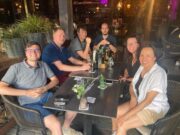
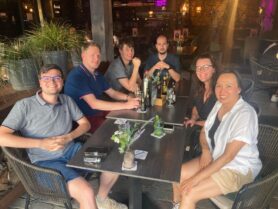
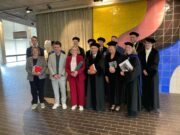
    At the Posthumus Conference 2025 in Nijmegen, the PhD students present who completed the Posthumus PhD Basic Training Programme received their diploma during the Conference Dinner.

    The N.W. Posthumus Institute congratulates these PhDs and also those who completed the programme but were not at the conference, with successfully completing the PhD Basic Training Programme!

    As the structure of the PhD Training Programme has changed per the start of cohort 2024, the members of cohort 2023 were the last to complete the previous version of the training programme, which used to exist of a basic and an Advanced Part. As of the start of cohort 2024, PhDs will now follow one integral Programme; after completing this, students can use additional optional training facilities, such as the Writing Retreat.

  • Posthumus Writing Retreat in Abdij van Berne (Berne Abbey)

    Posthumus Writing Retreat in Abdij van Berne (Berne Abbey)

    From 16 until 21 June 2025, seven Posthumus PhD candidates gathered in Berne Abbey in Heeswijk-Dinther for the annual Writing Retreat of the N.W. Posthumus Institute. This five-day retreat offers students the opportunity to work on their dissertation or paper in progress with 8-10 of your colleagues in a quiet place, away from all the hustle and bustle of everyday life. In addition to reflection, focus and concentration, there was also time for relaxation and abbey beer from time to time.

  • Change of coordinators Posthumus Research Network ‘Roots and Routes in Colonial and Global History’

    Change of coordinators Posthumus Research Network ‘Roots and Routes in Colonial and Global History’

    At the end of this academic year, Professor Ulbe Bosma (IISH) will complete his task in the coordinating team of the Posthumus Research Network ‘Roots and Routes in Colonial and Global History’. Ulbe was one of the founders and initiators of this network and has managed, in close cooperation with his fellow coordinators, to create a strong and extensive network of Dutch and Flemish scholars, whose aim it is to combine a global approach with a sensitivity for local and emic perspectives. The N.W. Posthumus Institute owes Ulbe many thanks for his efforts over the past years.

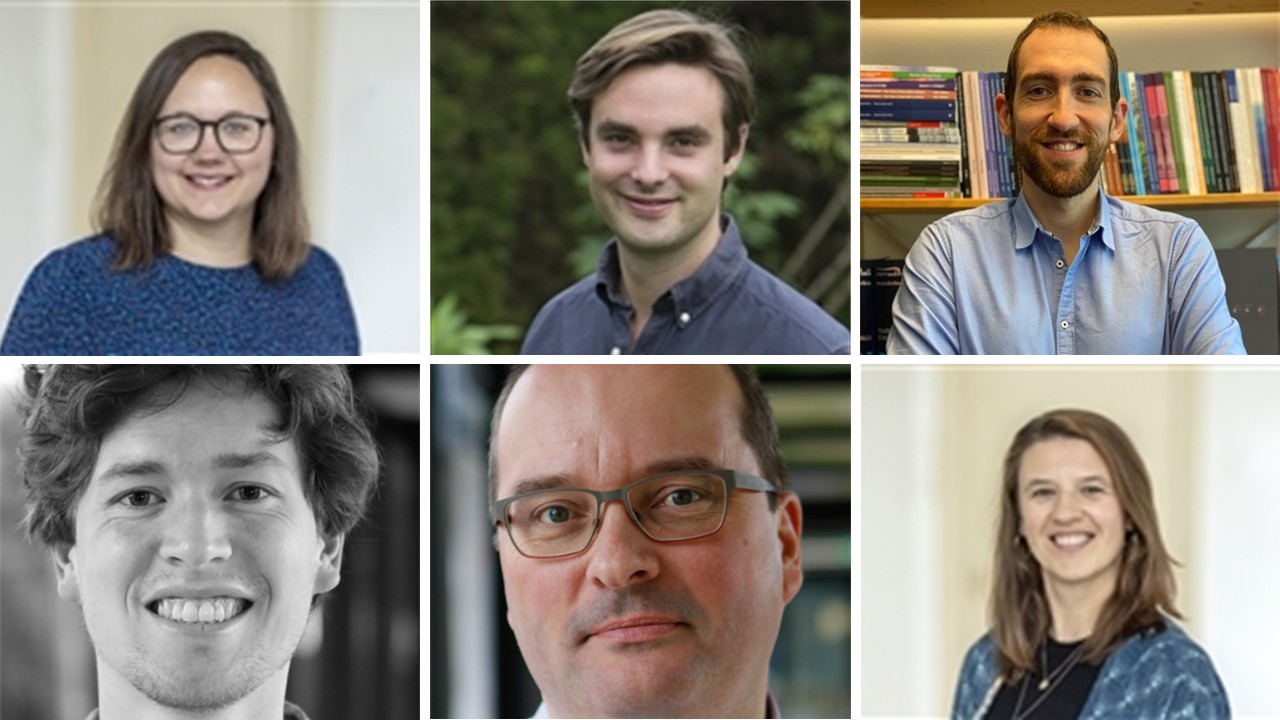
    As of the start of the new academic year, Dr Margot Luyckfasseel (University of Antwerp) will join the current other coordinators Dr Dries Lyna (Radboud University) and Dr Elisabeth Heijmans (moving from the University of Antwerp to IISH this summer) as new member of the coordination team of the research network. Margot specialises in Congolese history from below (late 19th century to the present), with a thematic focus on urban-rural relations, language ideologies, and debates on “authenticity”. Additionally, she is developing an interest in socio-economic themes such as slavery, labor, and trade. The N.W. Posthumus Institute is glad to welcome her as new network coordinator.

    NETWORK INFO

  • PhD Defence Posthumus alumnus Dániel Moerman

    PhD Defence Posthumus alumnus Dániel Moerman

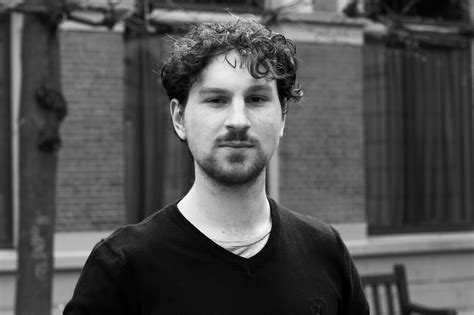
    On 11 September 2025, Posthumus alumnus Dániel Moerman will defend the PhD thesis ‘A hydrosocial history of drought and societal resilience in the cities of Deventer and Zutphen, 1500-1900’ at the Vrije Universiteit Amsterdam. Supervisors are Professor Petra van Dam (VU Amsterdam), Dr Milja van Tielhof (Huygens Institute), and Dr Bob Pierik (VU Amsterdam).

    The main aim of Dániel’s study was to find out to what extent premodern urban societies in the eastern Netherlands developed risk-mitigating strategies to alleviate the possible damaging effects of drought-induced water shortages, and whether this displays a certain level of resilience, using two cities in the eastern Netherlands: Deventer and Zutphen, between 1500 and 1900 as case studies.

    The research provided valuable insights into the specific effects of drought on the micro-infrastructures of urban water provisioning and the development of risk-mitigating strategies, which serve as an indicator of resilience to drought over time. The implementation of risk-mitigation strategies, such as deepening wells and pumps, restricting the use of water for certain purposes, and storing water in barrels and reservoirs for emergency use, ensured that water shortages and their societal effects generally remained limited.

    The N.W. Posthumus Institute wishes Dániel a successful defence!

    MORE INFO

  • Several Posthumus fellows receive NWO-XS Grant

    Several Posthumus fellows receive NWO-XS Grant

    The Dutch Research Council (NWO) has awarded several fellows of the N.W. Posthumus Institute an NWO XS Grant. This grant is awarded for ideas with a maximum budget of 50,000 euro that hold great promise and aim to enable proposals for curiosity-driven, innovative research in the research fields covered by the NWO Domain Social Sciences and Humanities.

    The laureates are (in alphabetical order):

    Dr Corinne Boter (Utrecht University)

    Corinne’s research project ‘Technological change and gender inequality: A comparison between a Dutch and an Italian textile company, 1870-1920’ investigates how the technological advancements of the Industrial Revolution affected the extent of gendered occupational segregation and the gender wage gap, by studying company-level developments. The project employs comparative methods to investigate to what extent similar technological advancements in textile companies in different cultural contexts (the Netherlands and Italy), had similar or different effects.

    Dr Swantje Falcke (Utrecht University)

    Swantje’s research project ‘Environmental change and migration patterns in the Netherlands: A long term view’ investigates the long-term relationship between environmental change and migration in the Netherlands from 1812 to 2023. The central question to the project is who migrates in response to environmental change, and why. The findings aim to inform policy interventions to protect vulnerable populations and advance the academic understanding of environmental migration.

    Dr Felix Meier zu Selhausen (Utrecht University)

    Felix’ project ‘Colonial origins of African population growth? Evidence from missionary church registers in Tanzania’ will collect unexplored historical church registers of the earliest ten Lutheran mission stations in Tanzania to reconstruct and examine child mortality and fertility change under colonial rule. This will significantly improve the understanding of the historical origins of African population growth and shed new light on when and why health improved in the world’s poorest region.

    Dr Daniel Gallardo Albarrán (Wageningen University and Research)

    Daniels project ‘Cholera Contagion: The Role of Climate and Mobility in European Pandemics’ uses interdisciplinary techniques – from history, demography and epidemiology — to study how climate and human mobility shaped cholera diffusion in Europe before 1914, when major epidemics occurred. The project informs debates on how climate affected people’s health in history, and how it may influence future diarrheal disease outbreaks.

    Dr Matthias Rosenbaum-Feldbrügge (Radboud Institute for Culture & History)

    Matthias is researching family ties among enslaved people in Surinam between 1848 and 1863. By drawing connections within the recently published slave registers, family ties through the mother’s side can be reconstructed of approximately 60,000 individuals. Moreover, together with two student assistants he researches paternal family networks on four plantations, based on missionary sources. The project offers unique insights into family networks and survival strategies, and helps descendants discover their family history.

    Dr Coen van Galen (Radboud Institute for Culture & History

    The focus of Dr van Galen’s research project is on how many people lived in slavery in Surinam between 1650 and 1863. He is developing a new demographic model to estimate the total number of enslaved people. Existing models were not suitable due to the extremely high death rates at plantations. Thanks to numerous historical sources from Surinam, this research project offers an important contribution to the social and scientific debate around slavery.

    The N.W. Posthumus Institute congratulates all grantees!
  • New publication by Peer Vries

    New publication by Peer Vries

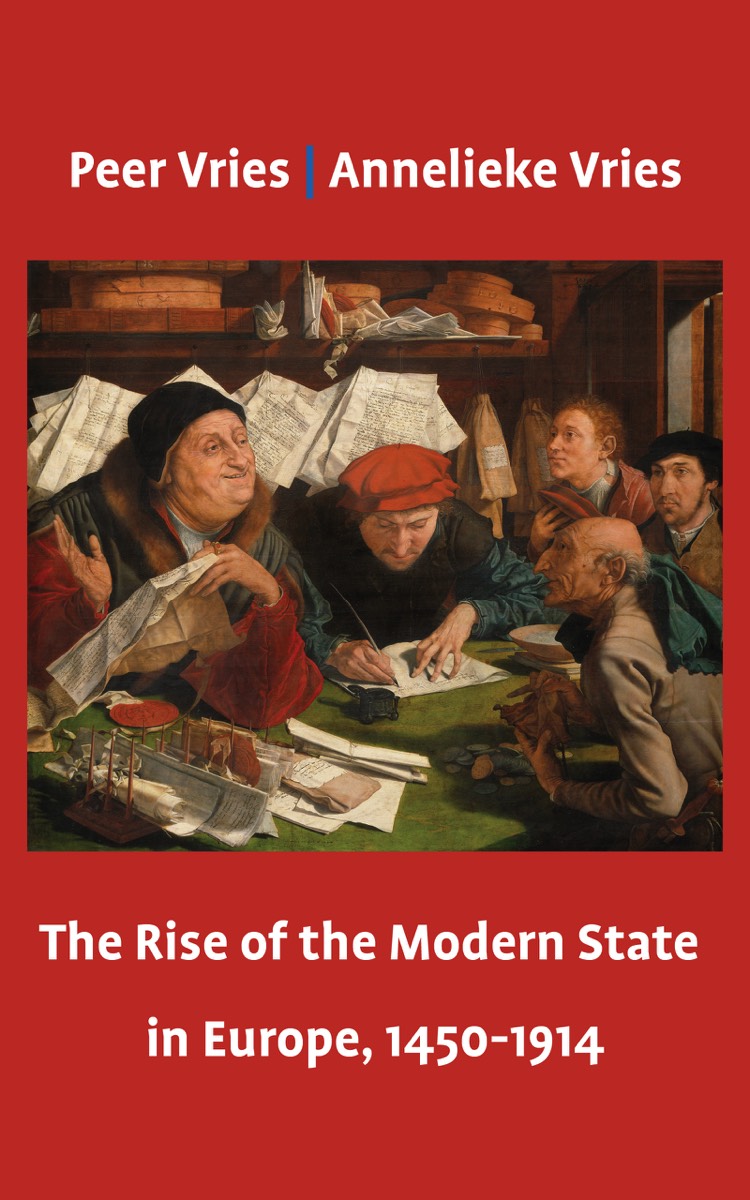
    Posthumus Fellow emeritus Professor Peer Vries and Annelieke Vries-Baaijens recently published their book The rise of the modern state in Europe, 1450-1914.

    Whereas the current world consists of states with their own, demarcated, usually contiguous territory, and recognised authority, in the Late Middle Ages legitimacy of government authority was not based on institutionalised participation by broad sections of the population and that population did not regard itself as a nation. In this book Peer and Annelieke Vries describe how, in Europe, the modern state came into being between the Late Middle Ages and the first decades of the twentieth century.

    The book is published as self-managed edition and can be ordered via Amazon in paperback or Kindle format.

    BOOK INFO

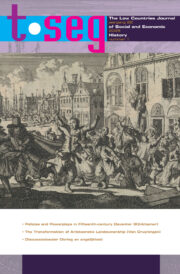
  • New issue of TSEG – The Low Countries Journal of Social and Economic History out now

    New issue of TSEG – The Low Countries Journal of Social and Economic History out now

    Recently, Leuven University Press has issued a new edition of TSEG – The Low Countries Journal of Social and Economic History, the Dutch-Flemish academic journal on social and economic history.

    The latest edition contains a lot of interesting articles, some authored by Posthumus fellows, among which an article by Reinder Klinkhamer on the response of the Deventer city authorities in the 15th century on moving a Hanseatic trade post from Bruges to their city, as well as an article by Piet van Cruyningen on the effects of the Napoleontic occupation on the land-owning nobility in Guelders and Overijssel.

    The journal also includes thematic dossiers, which may be helpful to teachers and others interested for starting academic discussions on how issues can be viewed from several different points of view. In this edition, the main dossier is about the recent publication of Oorlog en ongelijkheid, een inclusieve geschiedenis van de Gouden Eeuw by Posthumus board member Marjolein ‘t Hart. The dossier comprises reflections by several historians on Marjolein’s publication, discussing how the Eighty Years’ War affected various parts of the population and the inclusiveness of ‘t Harts publication.

    The TSEG is available online as a peer-reviewed open access journal on TSEG’s website; hard copy examples can be ordered from Leuven University Press. The journal contains articles in Dutch and in English, depending on the authors’ preferences.

    CURRENT ISSUE

  • Successful PhD Defence Posthumus alumna Robin Rose Southard

    Successful PhD Defence Posthumus alumna Robin Rose Southard

    On 23 June 2025, Posthumus alumna Robin Rose Southard successfully defended the PhD thesis ‘Biting the hand that feeds: contesting the food guilds in 18th-century Brussels’ at Vrije Universiteit Brussel. Supervisor was Professor Wouter Ryckbosch (Vrije Universiteit Brussel).
    The N.W. Posthumus staff congratulates Robin Rose with obtaining the PhD!

  • Successful PhD Defence Posthumus alumna Heleen Blommers

    Successful PhD Defence Posthumus alumna Heleen Blommers

    On 2 June 2025, Posthumus alumna Heleen Blommers successfully defended the PhD thesis ‘Deconstructing the War on Poverty: why a failure narrative became entrenched in American political discourse, 1964–1974’ at the Vrije Universiteit Amsterdam. Supervisors were Professor Karel Davids (Vrije Universiteit Amsterdam), Dr Dienke Hondius (Vrije Universiteit Amsterdam), and Professor Damian Pargas (Leiden University).

    Heleen’s dissertation focuses on the War on Poverty, a large-scale domestic anti-poverty program in the United States in the 1960s. Soon after the program was launched in 1964, it was criticized from both left and right and by the mid-1980s, the general narrative had become that the War on Poverty failed. Today, historians and economists argue that the anti-poverty program was actually quite effective in various ways. Yet, the idea that the War on Poverty failed is still entrenched.

    The dissertation answers the question why and how the failure narrative of the War on Poverty came into being in the United States. It looks at the implementation of the program on the ground in Georgia, eastern Kentucky and Baltimore and analyzes how local controversies developed into a general belief of failure.

    It shows that that not only conservative resentments about the program, but also the discontent of the poor themselves and of a diverse group of people helping to fight the War on Poverty existed. Their frustrations were rooted in conflicting interests and existing ideas about the deservingness of the poor and culminated into a failure narrative.

    The N.W. Posthumus Institute congratulates Heleen with obtaining the PhD.

  • Successful Posthumus Conference 2025 in Nijmegen!

    Successful Posthumus Conference 2025 in Nijmegen!

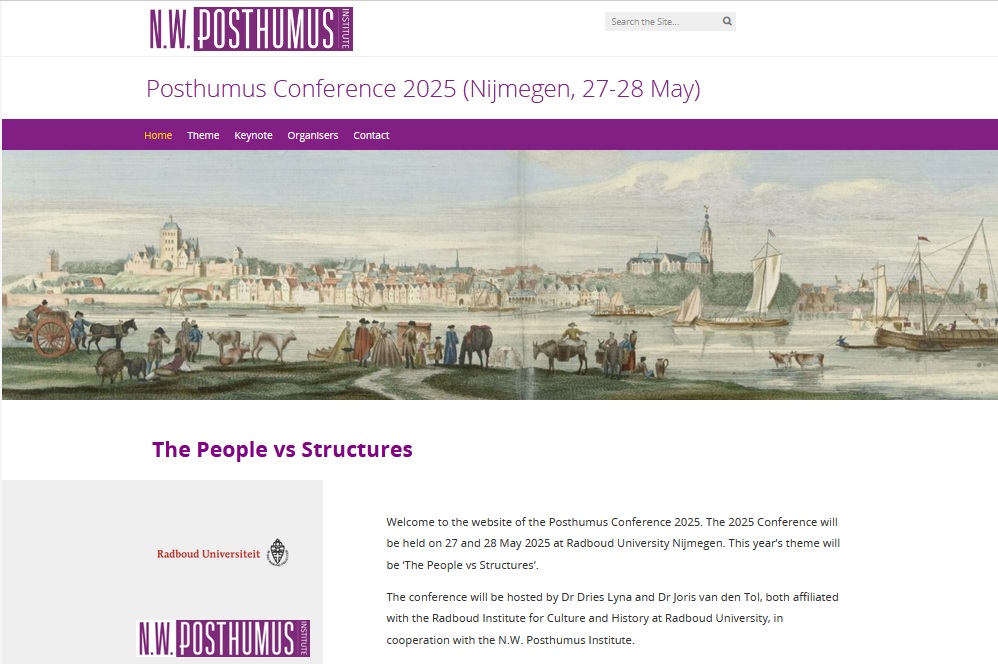
    On 27 and 28 May 2025, the Posthumus Conference 2025 was held in Nijmegen at Radboud University, hosted by Dr Dries Lyna and Dr Joris van den Tol and visited by c. 140 participants.

    This year’s conference was on the central theme ‘The People vs Structures’ with a reflection on how legal systems, institutions, and practices have influenced social and economic conditions, as well as how people have influenced these legal regimes.

    The conference consisted of various thematic sessions, composed by the various Research Networks of the N.W. Posthumus Institute, where both PhDs and Posthumus fellows presented their research and received valuable feedback.

    A new element in this year’s edition was the Poster Presentation by PhDs from the 2024 cohort; the posters can still be viewed online.

    The keynote lecture at the Posthumus Conference 2025 was by Professor Tamar Herzog, Monroe Gutman Professor of Latin American Affairs at Harvard University and Affiliate Professor of the Harvard Law School.

    The N.W. Posthumus Institute thanks hosts Dries Lyna and Joris van den Tol, as well as the student assistants from Radboud University (Camiel Beekers, Jonathan Cramer, Bart van Duijvenbode, and Emma Zijp) for their support!

    CONFERENCE WEBSITE