Research School for Economic and Social History

Category: News

  • Posthumus fellow Dr Kristof Loockx receives FWO Senior Postdoctoral Fellowship

    Posthumus fellow Dr Kristof Loockx receives FWO Senior Postdoctoral Fellowship

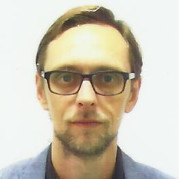
    The Research Foundation Flanders (FWO) has awarded a FWO Senior Postdoctoral Fellowship to Dr Kristof Loockx, fellow of the N.W. Posthumus Institute and postdoctoral researcher a the University of Antwerp. This fellowship is awarded to selected researchers who have completed their PhD a few years ago to further specialise in their research discipline. With the help of this fellowship, a postdoctoral researcher can develop their own research line while simultaneously acquiring additional academic skills through training and mobility, among other means. In this way, the FWO aims to provide young researchers with optimal opportunities to build an independent international research career, either within an academic context or beyond.

    Kristof’s research project examines how merchant seafaring households during the steam era adapted to the pressures and transformations driven by industrialisation. While most research has focused on land-based families, this study turns to the often-overlooked maritime world. Through a comparison of officer and non-officer households, the project investigates how household dynamics and coping mechanisms were shaped by differences in household characteristics, occupational identities and access to social support networks. It uses Antwerp and Boston, MA, two major Atlantic port cities with distinct historical trajectories in terms of industry, trade and urban development, as case studies to examine how local labour markets, community ties and economic conditions influenced household strategies.

    The N.W. Posthumus Institute congratulates Kristof with this grant.
    PROFILE PAGE

  • Posthumus fellow Dr Charris Desmet receives FWO Junior Postdoctoral Fellowship

    Posthumus fellow Dr Charris Desmet receives FWO Junior Postdoctoral Fellowship

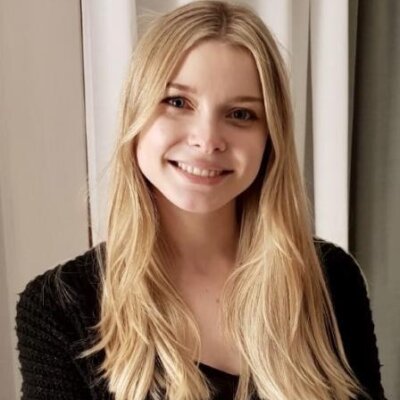
    The Research Foundation Flanders (FWO) has awarded a FWO Junior Postdoctoral Fellowship to Dr Charris De Smet, fellow of the N.W. Posthumus Institute and postdoctoral researcher at the Department of History as well as affiliated to the Centre for Political History (PoHis) of the University of Antwerp. This fellowship is awarded to selected researchers who have recently obtained their doctorate and aim to pursue an independent research career.

    Charris’ research project revisits female political agency in the mainstream, non-militant Parisian women’s press, and questions how fashion journals functioned as a forum for women editors and writers as well as a disenfranchised female readership to engage with politics between 1815 and 1851. Through an in-depth and comparative discourse analysis of a representative corpus of Parisian women’s magazines, Charris will examine how they engaged in ‘political communication’ under the innocent cover offered by the French fashion magazine during the Restoration, the July Monarchy and the Second Republic, on topics as diverse as citizenship, the nature of political authority and women’s access to the public sphere.

    The N.W. Posthumus Institute congratulates Charris with this grant.

    PROFILE PAGE

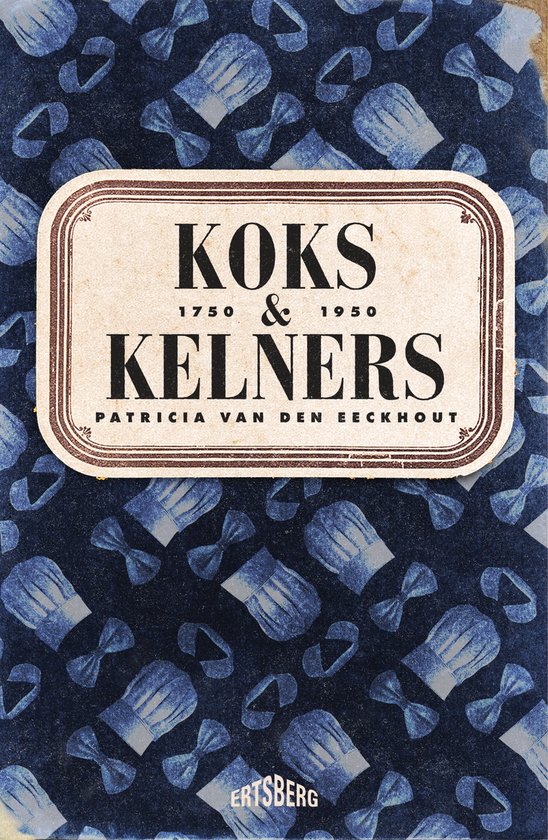
  • Nieuwe boekpublicatie van Posthumus fellow Patricia Van den Eeckhout

    Nieuwe boekpublicatie van Posthumus fellow Patricia Van den Eeckhout

    ~ because of scope in Dutch only ~

    Bij Uitgeverij Ertsberg is onlangs het boek Koks & Kelners 1750-1950 van emeritus professor Patricia Van den Eeckhout, fellow van het N.W. Posthumus Instituut, verschenen.

    Dit boek vertelt de geschiedenis van het alomtegenwoordige, maar ‘onzichtbare’ horecapersoneel. Koks waren letterlijk, maar ook het zaalpersoneel in zekere zin onzichtbaar. In de klassensamenleving van voor de Tweede Wereldoorlog werd van hen een dienstvaardige ondergeschiktheid gevraagd. Van 1750 tot aan de Tweede Wereldoorlog en met focus op Brussel, Amsterdam, Parijs, Londen, Berlijn en Wenen, vertelt Patricia Van den Eeckhout hoe het horecapersoneel leefde, werkte, at, sliep, ruziede en zijn brood verdiende.

    INFO UITGEVER

  • Bijeenkomst Werkgroep Stedengeschiedenis: ’Nieuw onderzoek uit Amsterdam: stedelijke ruimte, water en erfgoed’

    Bijeenkomst Werkgroep Stedengeschiedenis: ’Nieuw onderzoek uit Amsterdam: stedelijke ruimte, water en erfgoed’

    ~ because of scope in Dutch only ~

    Op 10 oktober 2025 organiseert de werkgroep Stedengeschiedenis een bijeenkomst bij de Rijksdienst voor het Cultureel Erfgoed onder de titel ‘Nieuw onderzoek naar Amsterdam: stedelijke ruimte, water en erfgoed’.

    Dagvoorzitter is dr. Roos van Oosten (universitair docent Universiteit Leiden). Bevestigde sprekers zijn dr. Clé Lesger (historicus, Universiteit van Amsterdam), dr. Rob Pierik (postdoc onderzoeker VU Amsterdam) en dr. Laura van Hasselt (docent en onderzoeker, Universiteit van Amsterdam).

    De studiedag is gratis voor eenieder toegankelijk, maar aanmelding vooraf is noodzakelijk (registratieformulier bereikbaar via onderstaande knop)

    PROGRAMMA (DOWNLOAD PDF)
     
    REGISTRATIEFORMULIER

  • Prof. Em. Carl Nightingale delivers lecture 2025 Raymond van Uytven Chair 2025 – register by 30 June 2025

    Prof. Em. Carl Nightingale delivers lecture 2025 Raymond van Uytven Chair 2025 – register by 30 June 2025

    The Centre for Urban History and the Urban Studies Institute of the University of Antwerp invite you to the public lecture of the 2025 Raymond van Uytven Chair for Urban History by Emeritus Professor Carl Nightingale, on Wednesday 2 July 2025.

    Carl Nightingale is Professor Emeritus of Urban History and World History at the University at Buffalo and Co-Coordinator of the Global Urban History Project (GUHP). Most recently he is the author of synthetic work on cities and the planet, including Earthopolis; A Biography of Our Urban Planet(Cambridge, 2022) and Our Urban Planet in Theory and History (Cambridge Elements in Global Urban History 2024). He is working on an online lecture series entitled “Urban History in Earth Time” that draws on work in numerous fields to contextualize the story of cities within the recent story of our home planet.

    Professor Nightingales lecture is titled ‘Urban History and Earth Time: Five Big Stories About Cities and Their Planet’ and offers five large stories about global urban history in Earth Time and aims to explore what urban historians can offer to Our Time. The first is ‘Earth Time’ itself, the story of the polyrhythmic ebb and flow of life-giving solar energy on our home planet. The second, ‘Energy In’, traces how we gathered that energy for the purpose of building cities, creating urban hinterlands, or ‘power grids’ on Earth’s surface. The third, ‘Cities and Power’, shows how building cities augmented human power by harnessing spatial design to political complexity. The fourth, ‘Power Out’, explores the spaces that cities thus made possible, measuring the growth and retreat of our built habitat, action, and planetary impact against the polyrhythms of Earth Time. The last story is a mediation on ‘Rising and Falling under our Urban Condition’ – what global urban history tells us about cities and Earth Time to come.

    Those wanting to attend this lecture, should register ultimately by 30 June 2025.

    REGISTRATION FORM

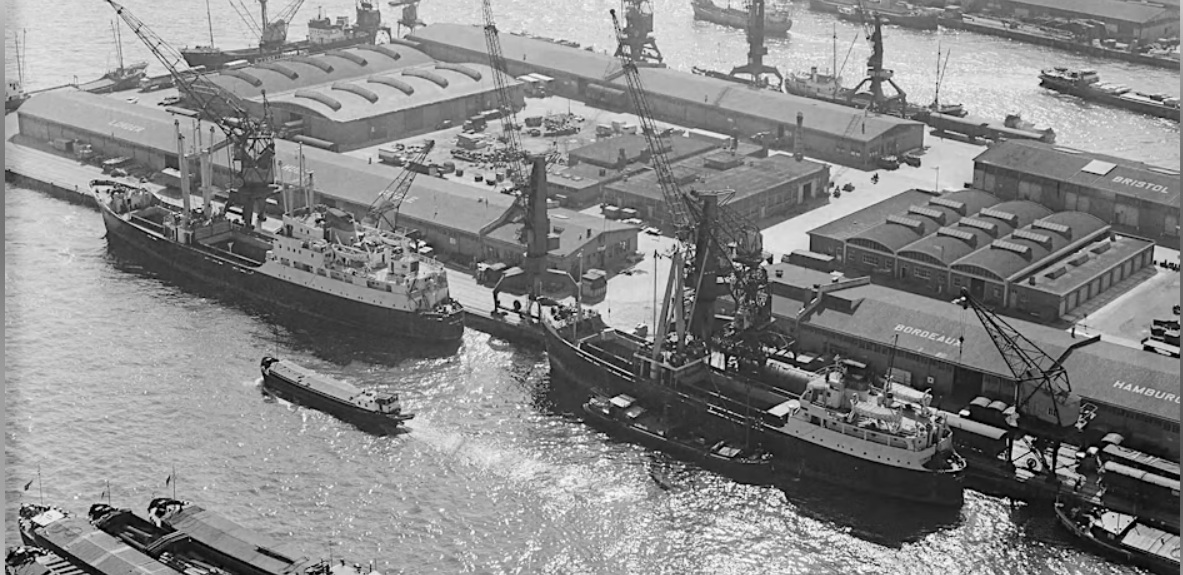
  • Talk and Film Screening on ‘Legacy and transitions: Rotterdam’s port in a global sustainability context’

    Talk and Film Screening on ‘Legacy and transitions: Rotterdam’s port in a global sustainability context’

    On 2 June 2025, the Deep Transitions Lab (supported by UGlobe and the Strategic Theme Institutions for Open Societies of Utrecht University), organises an event on the theme ‘Legacy and transitions: Rotterdam’s port in a global sustainability context’, addressing both its history and the challenges it faces in transitioning to a sustainable port. The organisers seek to explore what this means for the Netherlands and, more broadly, how the impacts of local history on a global scale can be understood.

    The event will start off with a talk by Johan Schot, Professor of Global History and Sustainability Transitions at the Utrecht University Centre for Global Challenge, followed by a panel of interdisciplinary scholars:

    • Johan Schot, Professor of Global History and Sustainability Transitions, an historian on the port of Rotterdam with a focus on global sustainability transitions.
    • Jana Cox, Assistant Professor in Environmental Hydrology (Copernicus Institute of Sustainable Development, Utrecht University), researching the (interacting) influence of human interventions and climate change on estuaries and river deltas with a specific focus on the Rhine-Meuse.
    • Geert Buelens, professor of Modern Dutch Literature, researching cultural aspects of the Anthropocene and the Great Acceleration.

    The evening will be closes by a screening of the documentary Een kano naar zee, directed by Andre van der Hout (Dutch spoken, but subtitled in English).

    Participation in this event is free of charge, prior registration is however required.

    MORE INFO AND RESERVATION

  • Gerda Henkel Foundation awards grant to project ‘Economies of Trust’

    Gerda Henkel Foundation awards grant to project ‘Economies of Trust’

    The Gerda Henkel Foundation has awarded a grant of 253k euro to ‘Economies of Trust? A New Digital Infrastructure on the Urban Poor in the Cape Colony’.

    This project, administered by Radboud University, is a two-year project led by  Dr Dries Lyna (assistant professor at the Radboud Institute for Culture and History and member of the General Board of the N.W. Posthumus Institute and Principal Investigator of the ‘Economies of Trust’ project), Dr Eva Marie Lehner (postdoc researcher at the Bonn Centre for Slavery and Dependency Studies) and Dr Wouter Ryckbosch (assistant professor at Vrije Universiteit Brussel and also member of the General Board of the N.W. Posthumus Institute). The project will also involve three postdoc researchers, who will be recruited in the near future.

    This historical research project aims to construct and expand a digital infrastructure to facilitate future social and economic research regarding the eighteenth-century Cape Colony. The project also comprises a large outreach-component, aiming at art projects in cooperation with local museums and galleries (e.g., Iziko South African National Gallery en A4 Arts Foundation Cape Town), knowledge videos in cooperation with Blindspot Films Stellenbosch, as well as a community mapping-project with students from South-Africa in cooperation with the iDiscover company. The project is currently in the preparatory phase and will have its formal start in 2026.

    The N.W. Posthumus Institute congratulates Dries, Wouter, and Eva Marie with this grant.

    MORE INFO

  • Successful PhD Defence Posthumus alumnus Bas Spliet

    Successful PhD Defence Posthumus alumnus Bas Spliet

    On 14 May 2025, Posthumus alumnus Bart Spliet successfully defended the PhD thesis ‘The Demand of the Invisible Hand. The Consumer Revolution and Social Inequality in the (Pre)Modern Metropolis’ at the University of Antwerp. Supervisors were Professor Bruno Blondé (University of Antwerp) and Professor Wouter Ryckbosch (Vrije Universiteit Brussel).

    Bas’ dissertation confronts two schools of thought in the literature on social and economic history of northwestern Europe in the early modern era: the consumer revolution and social inequality. The first is grounded in research showing that the consumer patterns and material comfort of a growing share of the (urban) population in this region expanded in each subsequent generation during this transitional period. The second is less optimistic and with the observation of increasing income and wealth inequality strengthens the bleak image of low living standards in the centuries preceding the industrial revolution known from the literature on real wages. In this thesis, Bas Spliet analyses consumer developments in the most important commercial metropoles of the era: in the first place Amsterdam, but also Antwerp and London. In the final analysis, Bas Spliet re-establishes increased choice – first emphasised by Jan de Vries – as a core defining characteristic of nascent consumer societies. He argues that the consumer revolution was characterised by growing diversity and individuality as much as by increasing uniformity and persistent inequality. Both from the perspective of consumer agency and in the social spread of consumer goods, Bas concludes that the consumer revolution alleviated the social impact of augmented economic inequality – but only under the precondition of stable purchasing power.

    The N.W. Posthumus Institute staff congratulates Bas with this achievement!

  • Conference ‘How did we lift the burden? Infectious Disease Mortality in the Western and Non-Western World (1800-now)’

    Conference ‘How did we lift the burden? Infectious Disease Mortality in the Western and Non-Western World (1800-now)’

    On 28 and 29 August 2025, the researchers involved in COST-Action network GREATLEAP, in collaboration with the Radboud University Nijmegen, the HiDo network, and the IUSSP Panel ‘Epidemics and Contagious Diseases: The Legacy of the Past’, organise the conference ‘How did we lift the burden? Infectious Disease Mortality in the Western and Non-Western World (1800-now)’ . Keynote speaker at this conference is Professor Sheilagh Ogilvie (University of Oxford).

    The conference is not only a closing event of the NWO-funded research project ‘Lifting the burden of disease. The modernisation of health in the Netherlands: Amsterdam, 1854-1926‘, but it also marks the end of the academic career of Professor Angélique Janssens, who directed the aforementioned project. The conference will therefore be concluded by a farewell reception.

    Registration for the conference and/or the keynote is required.

    MORE INFO

  • Farewell event and reception Professor Angelique Janssens

    Farewell event and reception Professor Angelique Janssens

    On the occasion of her retirement, the Radboud Group for Historical Demography and Family History is hosting a farewell event and reception for Professor Angélique Janssens on 29 August 2025.

    Angélique Janssens is endowed Professor of Historical Demography at Radboud University Nijmegen. Her chair, located at Maastricht University, was devoted to topics relating to gender and labour. She is specialised in the history of mortality, medical history and causes of death. She was the principal investigator in three major project over the past years: the SHiP Project, the NWO project ‘Lifting the burden of disease’, and the Citizen Science project for the History of Health. She is also former Scientific Director of the N.W. Posthumus Institute.

    You are kindly invited to join the celebrations for her retirement. For catering purposes, prior registration is requested.

    Please note that this event will be preceded by the two-day symposium ‘How did we lift the burden? Infectious Disease Mortality in the Western and Non-Western World (1800-now)’ with a keynote lecture by Professor Sheilah Ogilvie (University of Oxford).

    The N.W. Posthumus Institute thanks Professor Janssens for the efforts made by her for the N.W. Posthumus Institute.

    REGISTRATION