Research School for Economic and Social History

Category: News

  • Valedictory lecture Professor Hein Klemann

    Valedictory lecture Professor Hein Klemann

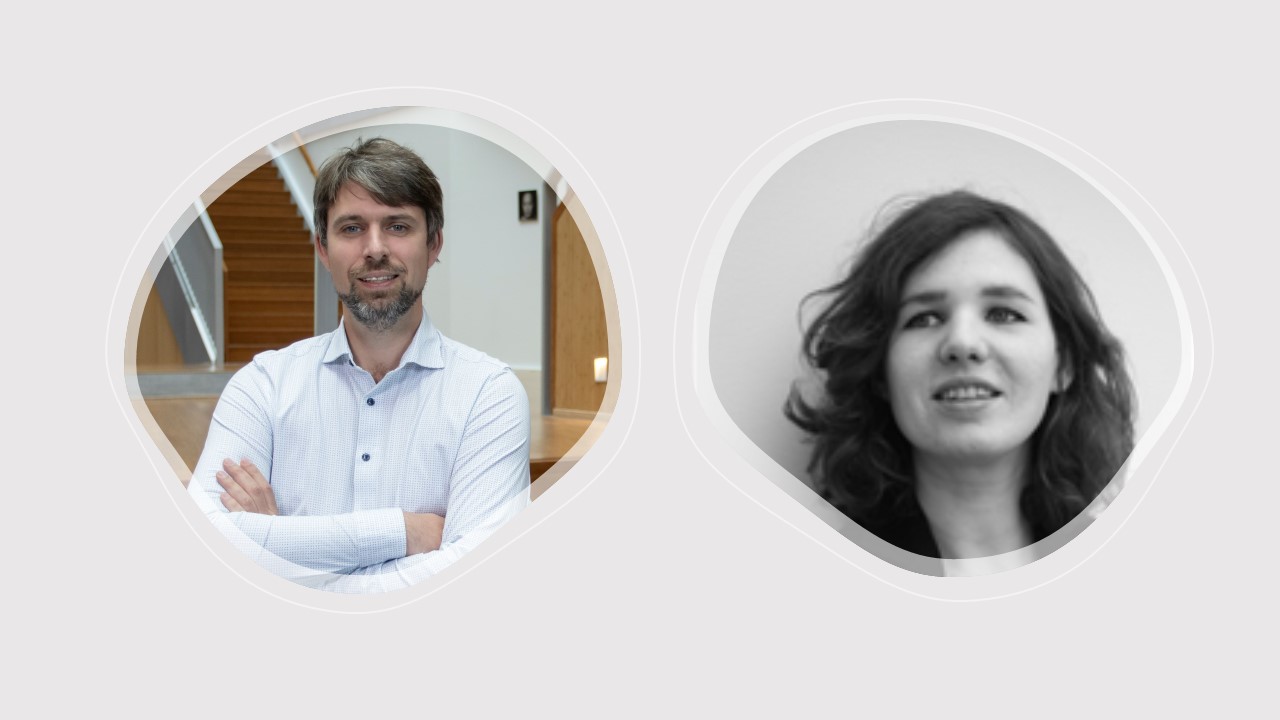
    On 7 February 2025, Professor Hein Klemann, Professor of Economic History and International Relations at the Erasmus School of History, Culture and Communication, and former board member of the N.W. Posthumus Institute will deliver his public valedictory lecture, entitled ‘Dutch Shipbuilding and Colonies’.

    The lecture will be followed by a public reception at the same location.

    Those unable to attend in person can follow the lecture online (see link in header section).

    The N.W. Posthumus Institute expresses its gratitude to Professor Klemann for his effort and activities for our organisation.

    Full invitation (pdf)

  • 12th Tensions of Europe Conference (Eindhoven, 8-10 July 2026)

    12th Tensions of Europe Conference (Eindhoven, 8-10 July 2026)

    The organisers of the 12th Tensions of Europe (ToE) Conference call for abstracts for this conference with as central theme ‘The meaning of the past in sustainable futures’.

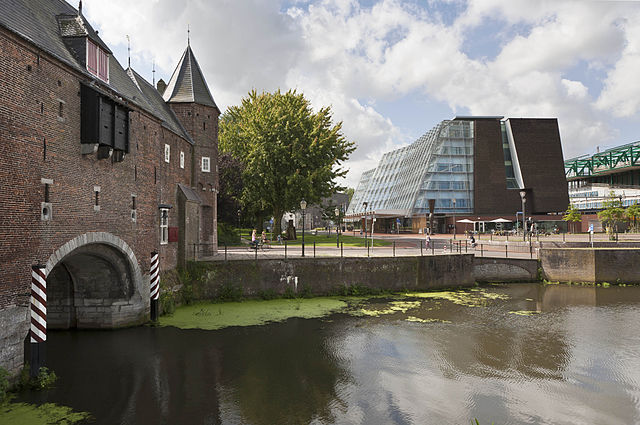
    This conference will be held on 8-10 July 2026 at the campus of Eindhoven University of Technology (TU/e) and will be organised by the Eindhoven History Lab, part of the Technology Innovation and Society research group of TU/e in collaboration with the 4TU History of Technology center (uniting Delft University of Technology, Eindhoven University of Technology, the University of Twente, and Wageningen University & Research). Eindhoven and seeks to explore and discuss what it means for European and non-European scholars to write ‘European’ histories of ‘technology’ in a pluriverse world. The aim of the conference is to co-develop fresh ideas on how a European historiography of technology can inform and contribute to current agendas for inclusive and green transitions. At this conference, one of the main questions will be: in what ways do aspirations for equitable and inclusive relations intersect with legacies of the past?

    Proposals can be submitted for several types of contributions, e.g. individual papers, full sessions, and contributions to sessions. A full list of these types and their respective characteristics can be found in the full call (see button below).

    Proposals should be submitted ultimately by the newly extended deadline of 1 February 2026.

    MORE INFO

  • Janna Coomans new coordinator of Research Network ‘Economy and Society of the Pre-industrial Low Countries in Comparative Perspective’

    Janna Coomans new coordinator of Research Network ‘Economy and Society of the Pre-industrial Low Countries in Comparative Perspective’

    Over the past years, Professor Pepijn Brandon, together with Dr Wout Saelens, coordinated the Research Network ‘Economy and Society of the Pre-industrial Low Countries in Comparative Perspective’ of the N.W. Posthumus Institute. Because of his obligations at VU Amsterdam and his new function at BMHN / KNHG, Pepijn has decided to hand over his tasks as network coordinator.

    We are pleased to announce he has found Dr Janna Coomans to take his place as of January 2025 and join Wout Saelens as Network Coordinator.  Janna is Assistant Professor at the department of Medieval History. Her research focuses on social history and public health in premodern cities. Her dissertation (cum laude) was published in 2021 as Community, Urban Health and Environment in the Late Medieval Low Countries (Cambridge University Press). Between 2018-2021, she was a post doctoral researcher in the ERC-project ‘Healthscaping Urban Europe’. She currently works on the VENI (Dutch Research Council) project ‘Inflammable cities: how fire risks transformed the Low Countries, 1250-1600’.

  • Symposium ‘Archeologie en de stad’ – registreer uiterlijk 28 maart 2025

    Symposium ‘Archeologie en de stad’ – registreer uiterlijk 28 maart 2025

    ~ because of scope, in Dutch only ~

    Op vrijdag 4 april 2025 organiseert de werkgroep Stedengeschiedenis een bijeenkomst bij de Rijksdienst voor het Cultureel Erfgoed (RCE, Smallepad 5, Amersfoort) onder de titel ‘Archeologie en de stad’. De studiedag is gratis voor eenieder toegankelijk, aanmelden via mail is noodzakelijk uiterlijk 27 maart 2025. Verzoek is om daarbij aan te geven of de deelname het ochtendprogramma (+ lunch) en/of het middagprogramma betreft.

    Programma

    10:00-12:00 Excursie door de middeleeuwse stad Amersfoort, onder leiding van archeoloog dr. Roos van Oosten en architectuur- en stadshistoricus dr. Reinout Rutte
    12:00-13:00 Lunch bij RCE
    13:00-13:30 Drs. Erik Peters (stadsarcheoloog Breda) – Van stadspoort, sluis en struikel-kuilen
    13:30-14:00 Discussie
    14:00-14:30 Drs. Patrick Ploegaert (senior archeoloog bij Archeologie Rotterdam) – In de voetsporen van de Dienst Wederopbouw Rotterdam (DIWERO). Archeologisch onderzoek naar de laatmiddeleeuwse sluizen en bewoning aan de Hoogstraat te Rotterdam.
    14:30-15:00 Discussie
    15:00-15:30 Koffie en thee
    15:30-16:00 Drs. Peter Stokkel (hoofd archeologie Den Haag) – Het begin van Den Haag
    16:00-16:30 Discussie
    16:30-slot Nazit

    DOWNLOAD PROGRAMMA (PDF)

  • Call to support applications for the MSCA Postdoctoral Fellowships 2025 (CISPAC)

    Call to support applications for the MSCA Postdoctoral Fellowships 2025 (CISPAC)

    The Centro de Investigación Interuniversitario das Paisaxes Atlánticas Culturais – Interuniversity Research Centre for Atlantic Cultural Landscapes (CISPAC) is launching a call to support applications for the MSCA Postdoctoral Fellowships 2025, with estimated publication and submission dates in April and September 2025, respectively. CISPAC is a new generation inter-university research center in social and human sciences that is part of the Galician University System (SUG). Its mission is to investigate in order to provide systemic answers to contemporary challenges on the territory, through a transdisciplinary scientific confluence, intertwined with the whole of citizenship, to generate knowledge, innovation and change. At CISPAC, researchers aspire to research and promote solutions related to socioeconomic, cultural and environmental transformations that are reflected in the landscape, through research, to generate knowledge, and transfer, to generate action. We seek sustainable solutions to the ecological crisis.

    Candidates must prepare a research proposal to be carried out during the fellowship within the framework of one of the 5 research fields included in CISPAC’s scientific agenda, as well as the three strategic axes.

    FULL INFO (PDF)

  • Successful Seminar I in Maastricht

    Successful Seminar I in Maastricht

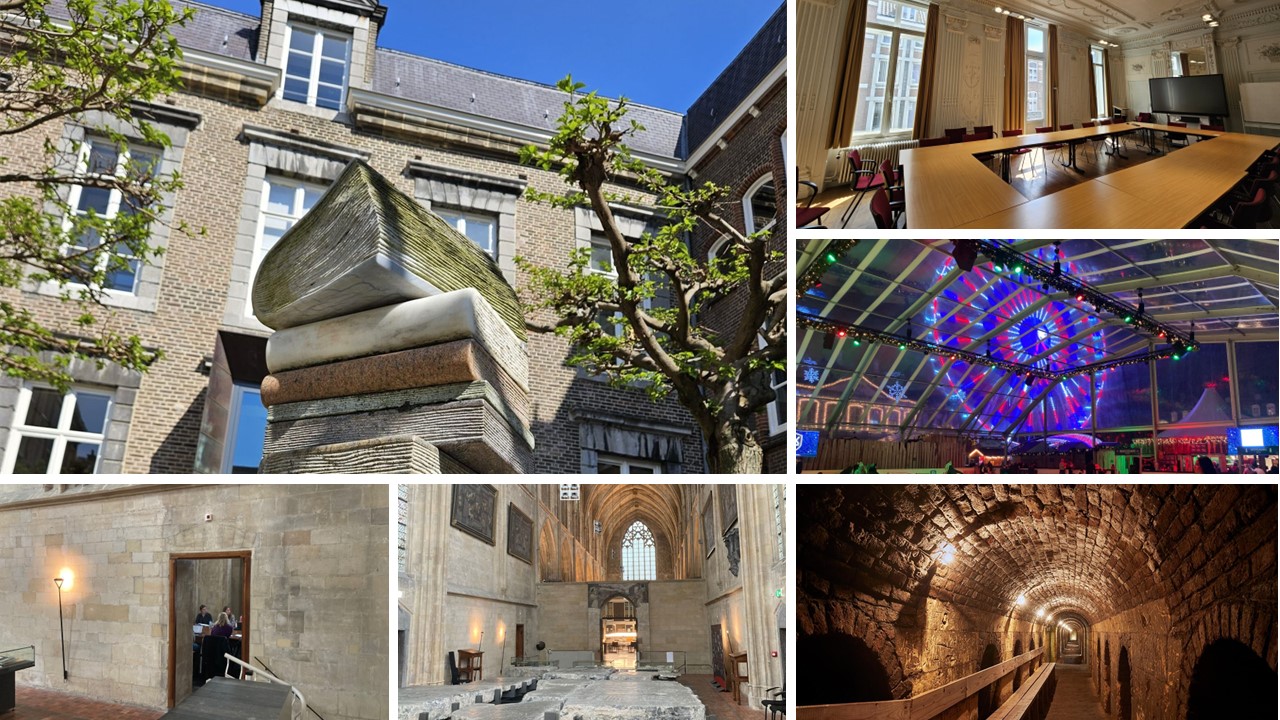
    On Thursday 12 and Friday 13 December the N.W. Posthumus Institute had the pleasure of time welcoming 35 new PhD students of cohort 2024 (the largest cohort ever) in our PhD programme. We thank director Nico Randeraad and deputy director Joris Roosen of FASoS Research Institute and Sociaal Historisch Centrum voor Limburg for their hospitality and commitment. We are also grateful for the assistance and support of many Posthumus fellows who, from as far as Groningen, joined the seminar and provided comments on one or more papers. The next seminar will be held on on 10 and 11 April 2025 at the Eindhoven University of Technology.

  • Symposium ‘Colonial Archives and Meaningful Digital Infrastructure’

    Symposium ‘Colonial Archives and Meaningful Digital Infrastructure’

    On 24 January 2025, preceding the inaugural lecture of Professor Matthias van Rossum, the symposium ‘Colonial Archives and Meaningful Digital Infrastructure’ will take place at Radboud University. This symposium brings together researchers and practitioners to discuss the challenges and opportunities of working with digitized colonial records.

    The symposium explores challenges, questions, and examples surrounding digital access and enrichment of shared resources related to the colonial past, such as:

    • How can digital infrastructure contribute to making unique information about the people and societies affected by or resisting colonialism findable and researchable?
    • How can multiple perspectives and the many voices in these archives be made more visible?
    • How can we ethically employ new techniques?
    • And who are the true beneficiaries of advanced access and research infrastructure?
    • Who should these initiatives serve, and how can global stakeholders beyond Dutch and professional users be reached (such as the descendants of colonized societies and of those societies whose pasts can be reconstructed using these archives)?

    The symposium is free of charge, but registration is required. The symposium can be attended on-site as well as online.

    FULL INFO

  • New Coordinator Research Network ‘Globalisation, Inequality, and Sustainability in Long-Term Perspective’

    New Coordinator Research Network ‘Globalisation, Inequality, and Sustainability in Long-Term Perspective’

    As per 1 January 2025, Pim de Zwart will be succeeded as coordinator of the Research Network ‘Globalisation, Inequality, and Sustainability in Long-Term Perspective’ of the N.W. Posthumus Institute by his colleague Daniel Gallardo Albarrán. The N.W. Posthumus Institute is very grateful to Pim voor his efforts for the Research Network and for the N.W. Posthumus Institute over the past years and of course welcomes Daniel as new coordinator.

    Daniel currently works as assistant professor at the Economic and Environmental History Group at Wageningen University Research. His research focuses on the historical roots of global health inequality and their implications for global welfare disparities. His publications consider the effect of sanitary infrastructures on public health; the impact of Dutch colonialism on health outcomes in Java; the link between health and welfare (19th and 20th century); and how health improves productivity. Also, he studied the determinants of economic performance (19th and 20th century). Currently, he is conducting two projects. The first considers the determinants of clean water, sanitation since 1850 from a global perspective and it is funded by the Dutch Research Council. The second analyses the uneven establishment of healthcare and sanitation in colonial Africa, ca 1900-1960, funded by the Swedish Research Council. He also manages Long-Run Health Matters, a research portal summarizing important work on the origins of global health inequality.

  • Masterclass ‘Decolonizing Feminist Futures: What kind of economies do we want?’ by Dr Gisela Carrasco-Miró – register before 20 Dec. 2024

    Masterclass ‘Decolonizing Feminist Futures: What kind of economies do we want?’ by Dr Gisela Carrasco-Miró – register before 20 Dec. 2024

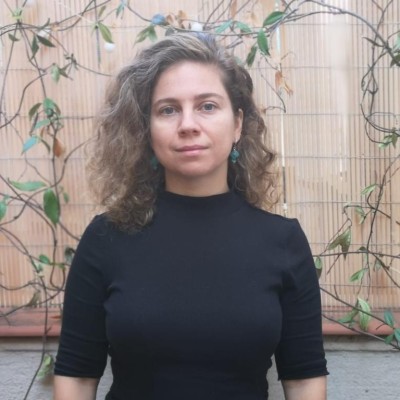
    On 14 January 2025 the Netherlands Research School of Gender Studies (NOG) is organising a masterclass with Dr. Gisela Carrasco-Miró (Escola Massana, Autonomous University of Barcelona) on the topic of ‘Decolonizing Feminist Futures: What kind of economies do we want?’ Please note that this masterclass is closely related to the book talk ‘Decolonizing Feminist Economics: Possibilities for Just Futures’ on the preceding day.

    This masterclass will explore the imagination as an economic faculty. Imagination is understood here not as an individual capacity, but a social, common practice, creating relationships of meaning. What can imagination be, as a practice of decolonizing feminist economic transformation, in conditions of growing crisis and isolation?

    With the aim of addressing this question, this masterclass invites the participants to imagine new, better economies and to vindicate shared feminist futures looking at the projects of post-extractivism, ecofeminism and post-growth/degrowth from a decolonizing feminist perspective.

    The participants will be encouraged to share their research, practices and interests. Together, we will create space for confabulative dialogues activating feminist imaginaries of the future in the present. Suggested reading (text will be made available upon registration): Carrasco-Miró, G. 2025. Glossary for confabulating futures. Decolonizing Feminist Economics: Possibilities for Just Futures. Bristol: Bristol University Press.

    Registration by e-mail closes Friday 20 December 2024, 17:00h. (R)MA and PhD students are eligible to receive 2 ECTS for active participation in both the masterclass and the lecture as well as for writing a 1000-words (max.) entry of the glossary that will be discussed during the masterclass. Please specify in your registration email whether you would like to receive credits.

    MORE INFO
  • Book Talk ‘Decolonizing Feminist Economics: Possibilities for Just Futures’ – register before 20 Dec. 2024

    Book Talk ‘Decolonizing Feminist Economics: Possibilities for Just Futures’ – register before 20 Dec. 2024

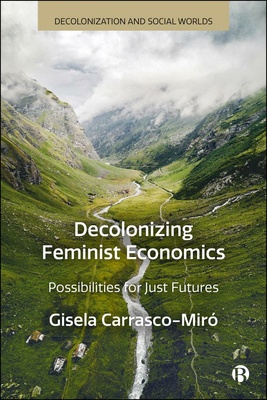
    On 13 January 2025 the Netherlands Research School of Gender Studies (NOG) is organising a book talk with Dr Gisela Carrasco-Miró (Escola Massana, Autonomous University of Barcelona) on Gisela’s forthcoming publication Decolonizing Feminist Economics: Possibilities for Just Futures (Bristol University Press, March 2025).

    What are the power dynamics of what we are theorizing as feminist economics, and what changes does it generate? To what extent does it promote control and exploitation, to what extent does it promote radical socio-economic transformation, post-capitalist imaginaries and decolonization? The book takes seriously these questions, not settling for mere criticism, but developing a map for a decolonizing feminist economics approach. In its chapters, the suppression and devaluation of non-modernist and post-capitalist economic knowledges by the dominant economic epistemology is denounced, in addition to investigating feminist and decolonizing tools and proposals around the world to illuminate our hijacked present and to imagine a decolonizing feminist economic landscape that is under transformation.

    The book talk will be a conversation between Gisela, Kathrin Thiele, and Ana Maria Miranda Mora. The book talk will be moderated by Adriano Habed. Please note that the book talk is closely related to the Masterclass ‘Decolonizing Feminist Futures: What kind of economies do we want?’, which will take place the next day.

    Registration by e-mail closes Friday 20 December 2024, 17:00h.

    MORE INFO