Research School for Economic and Social History

Category: News

  • Inaugural lecture Professor Matthias van Rossum

    Inaugural lecture Professor Matthias van Rossum

    On 24 January 2025 Posthumus fellow and Posthumus course coordinator Matthias van Rossum will deliver his inaugural lecture as Professor by special appointment Global Histories of Labour and Colonialism at Radboud University. Matthias was appointed on 1 February 2024 to this special chair, jointly established by Radboud University and the International Institute of Social History.

    The chair focuses on the history of slavery, forced labour and resistance in relation to colonial expansion. The chair aims to gain new insights into the Dutch and European colonial past by studying sources and perspectives from below. The research agenda of the chair is strengthened by a number of projects led by Matthias van Rossum. For instance, the NWO project Resisting Enslavement and the ERC Consolidator project Voices of Resistance investigate forms of resistance, the voices and perspectives of enslaved people in the Indian Ocean, Indonesian archipelago and Atlantic world. This contributes to the Exploring Slave Trade in Asia project, which aims to reconstruct the slave trade in Asia using an international database. The infrastructure project GLOBALISE enables new ways of research for the digitised VOC archives. Together, these projects seek to understand the colonial and slavery past in new ways.

    Attendance is possible on location after prior registration or online via a livestream.

    The N.W. Posthumus Institute congratulates Matthias with this appointment.
    REGISTRATION PAGE AND LIVESTREAM LINK

  • NWO XS Grant awarded to Posthumus fellow Swantje Falcke

    NWO XS Grant awarded to Posthumus fellow Swantje Falcke

    The Dutch Research Council (NWO) has awarded Dr Swantje Falcke, Posthumus fellow, currently affiliated with the Department of History at Utrecht University, an XS Grant for the project ‘Environmental change and migration patterns in the Netherlands: A long term view’.

    Swantje’s project investigates the long-term relationship between environmental change and migration in the Netherlands from 1812 to 2023. The central question to the project is who migrates in response to environmental change, and why. A comprehensive dataset will be created combining information on various environmental changes with individual-level migration data. Migration patterns in response to sudden and gradual environmental shifts will be analysed, taking into account socioeconomic and institutional changes over time. The findings aim to inform policy interventions to protect vulnerable populations and advance the academic understanding of environmental migration.

    The N.W. Posthumus Institute staff congratulates Swantje with this award!

  • Register now for our Research Master Course ‘Data Management for Historians’ – deadline 10 January 2025

    Register now for our Research Master Course ‘Data Management for Historians’ – deadline 10 January 2025

    From February until May 2025 the N.W. Posthumus Institute organises the Research Master Course ‘Data Management for Historians’.

    This 5 EC online research course will be supervised by Dr Rick Mourits (IISH) and will consist of a series of online sessions with a final closing session at the IISH.

    The course will allow master students within economic and social history to process their own rudimentary data and enable reuse according to the FAIR data principles and instructs them on the basics of quantitative data management. It introduces the quantitative research cycle, programming in R and SPARQL, and how to report on data questions.

    Registration is open until 10 January 2025 to all Research Master students via our online form. Interested but not a Research Master student? Do contact us via e-mail and we will talk about the options.

    MORE INFO

  • Successful PhD Defence Posthumus alumna Charris De Smet

    Successful PhD Defence Posthumus alumna Charris De Smet

    On 10 December 2024 Posthumus alumna Charris De Smet successfully defended her PhD thesis ‘Framing French costumers into citizens. A comparative discourse analysis of debates on luxury and consumption in French parliament and the press in the age of revolution (1789-1848)’ at the University of Antwerp. Promotors were Professor Ilja Van Damme and Professor Marnix Beyen (both University of Antwerp) and Professor Natacha Coquery (University Lumière Lyon 2).

    Charris’ dissertation has reconstructed and comparatively investigated French parliamentary politics of luxury consumption in three revolutionary years, i.e. 1789, 1830 and 1848. Drawing the idea that consumption became depoliticized in this period into question, it has demonstrated that consumption was an important topic of discussion under different modern French political regimes. The close reading of the parliamentary debates has revealed that the contemporary development of consumerism in France was seen as inextricably tied to broader issues of citizenship, representation, political identity and national belonging between 1789 and 1848. Therefore, these topics constituted important political questions that warranted debate in the national legislative bodies on how to harness, encourage or remodel existing consumer behaviour and commodity culture for the sake of the wellbeing of the state and its citizens.

    The N.W. Posthumus Institute congratulates Charris with obtaining her PhD!

  • Introducing Foraging: a podcast in environmental humanities

    Introducing Foraging: a podcast in environmental humanities

    The FORAGENCY project has developed a side-project called ‘Foraging. A Podcast in Environmental Humanities’. Its first season consists in in-depth interviews with four historians and anthropologists. The podcasts will be made available via the FORAGENCY website, Apple podcasts and Spotify. The first episodes scheduled concern:

    • Episode 1.01. Diogo De Carvhalo Cabral on history beyond the human (25 November 2024)
    • Episode 1.02 Kwame Edwin Otu on the queerness of waste (2 December 2024)
    • Episode 1.03 Emelien Devos on multispecies anthropology (9 December 2024)
    • Episode 1.04 Iva Peša on the histories of pollution (16 December 2024)

    MORE INFO

  • NWO XS Grant awarded to Posthumus fellow Felix Meier zu Selhausen

    NWO XS Grant awarded to Posthumus fellow Felix Meier zu Selhausen

    The Dutch Research Council (NWO) has awarded Dr Felix Meier zu Selhausen, Posthumus fellow and alumnus, currently affiliated with the Department of History at Utrecht University, an XS Grant for the project ‘Colonial Origins of African Population Growth? Evidence from Missionary Church Registers in Tanzania’.

    The scale and rapidity of Africa’s population growth is unprecedented in recorded history. Yet, the long-term development and causes of Africa’s mortality and fertility change remain poorly understood due to the lack of longitudinal individual-level data during the colonial era (c. 1890-1960). Felix’s project will collect unexplored historical church registers of the earliest ten Lutheran mission stations in Tanzania to reconstruct and examine child mortality and fertility change under colonial rule. This will significantly improve the understanding of the historical origins of African population growth and shed new light on when and why health improved in the world’s poorest region.

    The N.W. Posthumus Institute staff congratulates Felix wit this award!

  • Vragenlijst ontsluiting historische bronnen / Questionnaire unlocking historical sources (Huygens Instituut)

    Vragenlijst ontsluiting historische bronnen / Questionnaire unlocking historical sources (Huygens Instituut)

    ~ English version below ~

    Het Huygens Instituut voor Nederlandse geschiedenis en cultuur maakt bijzonder veel historische bronnen en literaire teksten digitaal toegankelijk. In de onderzoeksprojecten van het instituut wordt gewerkt aan en met allerlei verschillende bronnen uit de Nederlandse geschiedenis: van de brieven van Johan de Witt, archieven van de VOC, de resoluties van de Staten-Generaal en registratiekaarten van Nederlandse emigranten tot aan gegevens over sportverenigingen en kunstenaarscorrespondenties. Door middel van innovatieve methoden en technieken (vaak ondersteund door AI, zoals Handwritten Text Recognition-software) worden historische bronnen verrijkt en de geschiedenis van Nederland en daarbuiten ontsloten.

    Het Huygens Instituut maakt deze bronnen graag zo veel mogelijk toegankelijk voor zowel onderzoekers als het brede publiek. In het project ‘Werk aan Uitvoering’ werkt het instituut aan een nog betere infrastructuur om al deze verschillende bronnen aan elkaar te linken, te contextualiseren, doorzoekbaar te maken en te delen met geïnteresseerden.

    Onderzoekers die wel eens gebruik maken van historische bronnen voor studie, werk of uit hobbyisme worden opgeroepen mee te helpen de ontsluiting van deze bronnen te verbeteren! Ga via de knop hieronder naar de korte vragenlijst (5-7 min).

    NAAR ENQUÊTE (NL VERSIE)

    The Huygens Institute for Dutch history and culture provides digital access to numerous historical sources and literary works. Research projects are working on and with a wide range of historical sources concerning the history of the Netherlands, e.g., the correspondence of Johan de Witt, the VOC archives, the resolutions of the States General, and registration cards of Dutch emigrants, but also data on sport clubs and the correspondence of artists. Innovative methods and techniques (often AI-supported, for example by using Handwritten Text Recognition software) are being used to enrich historical sources and to unlock the history of the Netherlands and abroad.

    The Huygens Institute aims to provide access to such sources to both academics as well as to the general public as much as possible. Through the project ‘Werk aan Uitvoering’ [‘Work in Progress’], the institute strives to improve inter-linkage between these various sources, to make them searchable, and to provide context and access to these sources to all persons interested.

    The Huygens Institute calls upon researchers who make use of historical sources (be it either for study, research, or out of hobbyism) to help improving the unlocking of these sources! Please use the button below and fill out a short (5-7 min.) questionnaire.

    TO QUESTIONNAIRE (ENGLISH VERSION)

  • FRESH workshop ‘Empire and Economic Development’

    FRESH workshop ‘Empire and Economic Development’

    On 28 February 2025, Utrecht University will host a FRESH workshop on Empire and Economic Development. Frontier Research in Economic and Social History (FRESH) meetings are aimed at researchers in any field of economic and social history. The purpose of the meetings is to enable scholars to present their ongoing research at an early stage to an audience of interested peers.

    The keynote speaker of this particular meeting will be Tirthankar Roy, Professor of Economic History at the London School of Economics. Organisers of the meeting are Maanik Nath and John Tang (both Utrecht University) in association with Sandra de Pleijt (Frontier Research in Economic and Social History series organiser. This meeting is made possible thanks to funding made available by the European Historical Economics Society (EHES) and the N.W. Posthumus Institute.

    For an overview of the programme and selected speakers, you may download the program as pdf below.

    FULL PROGRAMME (PDF)

  • VIDI Grant awarded to Pim de Zwart

    VIDI Grant awarded to Pim de Zwart

    Dr Pim de Zwart, Posthumus fellow and research director of our research network ‘Globalisation, Inequality and Sustainability in Long-Run Perspective’,  received a Vidi Grant from the Dutch Research Council (NWO) for his project entitled: ‘Tragedy of the Tropics: Colonialism, Commodities, and Commons in Southeast Asian Deforestation since 1850’.

    Halting tropical deforestation is central to combat both global warming and biodiversity decline. Yet despite numerous international agreements ‘to stop and halt deforestation’ since the early 2000s, forest losses across the tropics continued to rise. This Vidi project explores which structural factors inhibit the transition to more sustainable land and forest use and how these have emerged historically. More specifically, it investigates how trade and colonialism affected deforestation rates in insular Southeast Asia and in what ways these relationships were shaped by local land rights and sociopolitical inequalities since 1850. To do so, it pioneers a new approach to assess long-run changes in historical forest area using Geographic Information Systems (GIS) and combining colonial-era vegetation and topographic maps with statistical and qualitative sources to construct a detailed picture of the spatial transformation of insular Southeast Asia. Drawing on political ecology, trade and institutional theories for its analytical framework, and collecting socioeconomic, demographic and institutional evidence, the project explains the observed patterns of land-use change.

    The N.W. Posthumus Institute congratulates Pim with this grant!

  • Publicatie boek ‘Energie, emigratie en ecologie’ bij emeritaat professor Eric Vanhaute

    Publicatie boek ‘Energie, emigratie en ecologie’ bij emeritaat professor Eric Vanhaute

    ~ because of scope in Dutch only ~

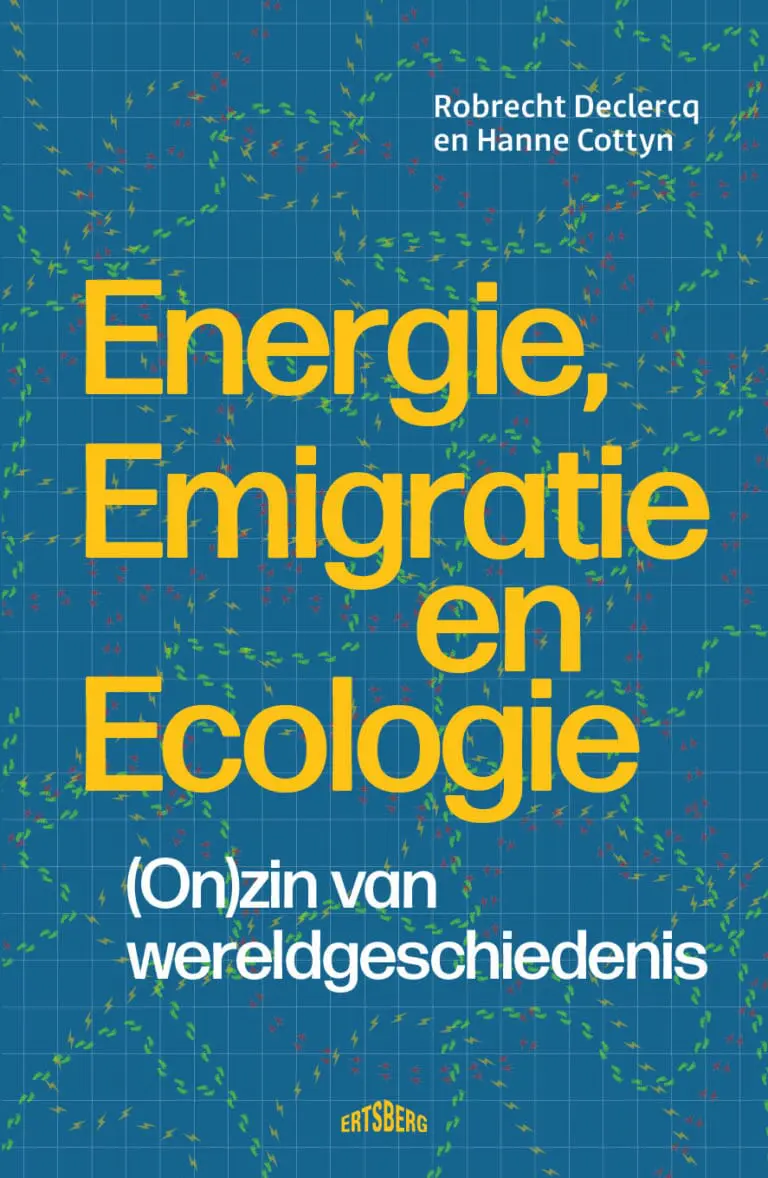
    Vanwege het emeritaat van emeritus professor Eric Vanhaute (Universiteit Gent), in het verleden vele jaren tevens betrokken bij het N.W. Posthumus Instituut, hebben redacteuren Robrecht Declercq and Hanne Cottyn, beiden voormalige promovendi van professor Vanhaute het boek Energie, emigratie en ecologie. (On)zin van Wereldgeschiedenis samengesteld, dat onlangs bij Uitgeverij Ertsberg is verschenen.

    Zoals de uitgever meldt, stelt dit boek ‘essentiële en grote vragen. En zoekt antwoorden in vaak kleine verhalen en onverwachte connecties, wars van universele pretenties en eenzijdige perspectieven. Over West-Vlaamse mussenfeesten en klimaatverandering, boeren in Madagaskar, een Nieuw Oostende in Argentinië: de omgang van de mens met zijn omgeving staat centraal. In Energie, Emigratie en Ecologie werpen historici een nieuw licht op de geschiedenis van drie mondiale thema’s: de ecologische crisis, het platteland in een verstedelijkte wereld, en de menselijke mobiliteit.’

    Het N.W. Posthumus Instituut dankt professor Eric Vanhaute uiteraard voor al zijn inzet in het verleden!

    INFO UITGEVER