Research School for Economic and Social History

Category: News

  • Save the date: 4TU History of Technology kick-off event ‘Environmental Histories of Technology in a Digital Age’

    Save the date: 4TU History of Technology kick-off event ‘Environmental Histories of Technology in a Digital Age’

    On Friday 6 December, the establishment of the new 4TU Centre History of Technology will be celebrated with a kick-off event on Environmental Histories of Technology in a Digital Age. The 4TU Centre History of Technology aims to identify and explore resonances, joint concerns, possible synergies and identify opportunities to collaborate in research, teaching and engagement; and to discuss how the new interuniversity centre can stimulate and facilitate these.

    The 4TU Centre History of Technology aims to facilitate and coordinate collaborations – within and beyond the four Dutch technical universities (Eindhoven University of Technology, Wageningen University & Research, Delft University of Technology, and University of Twente) – on historical research, teaching and engagement relevant to major societal challenges, notably the so-called twin green and digital transition, bringing into conversation related fields such as history of technology, history of architecture and urban planning, water history, agricultural and landscape history, history of science, environmental history, digital history, energy history, mobility history etc.

    Keep an eye on the centre’s website more info on the event will be available in due time.
    WEBSITE

  • Annual Report N.W. Posthumus Institute 2023 available

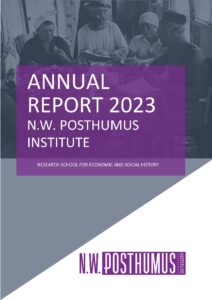
    Annual Report N.W. Posthumus Institute 2023 available

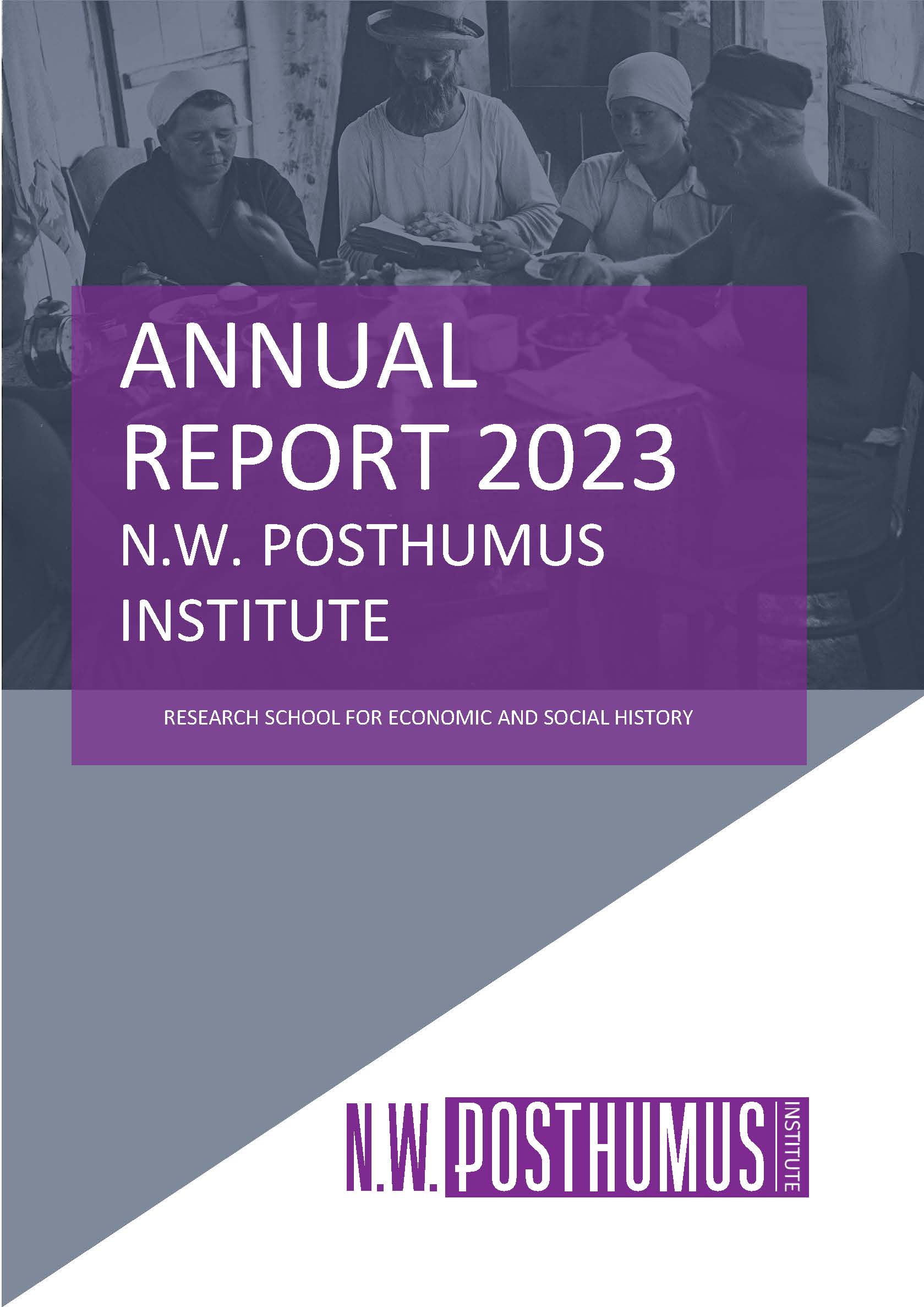
    The General Board of the N.W. Posthumus Institute is happy to present you the N.W. Posthumus Institute Annual Report 2023. The report provides you with an overview of activities, results and developments regarding the N.W. Posthumus Institute in 2023.

    DOWNLOAD (PDF, 4.5 MB)

  • Conference of Young Demographers (Charles University, Prague)

    Conference of Young Demographers (Charles University, Prague)

    The 2025 annual International Conference of Young Demographers will be held at the Faculty of Science, Charles University in Prague on 5-7 February 2025.

    The conference organisers aim to create a relaxed and welcoming environment where especially early career researchers can share their work in progress and thoughts with their peers. The conference is supported by the Research Network ‘Life-courses, Family, and Labour’ of the N.W. Posthumus Institute.

    Abstracts for this conference can be submitted ultimately 28 October 2024.

    MORE INFO

  • Workshop ‘Since 1624: Studying the Impact of the VOC in Taiwan’

    Workshop ‘Since 1624: Studying the Impact of the VOC in Taiwan’

    As follow-up of the publication ‘Since 1624: Taiwanese-Dutch Relations’ (2024), this workshop will delve into the historical influence of the Dutch East India Company (VOC) on Taiwan, focusing on how this period continues to shape academic inquiry. Scholars will engage in discussions about contemporary and future research approaches that explore Taiwan’s social, economic, and cultural transformations during the Dutch era (1624-1662). The workshop aims to highlight new methodologies, emerging perspectives, and interdisciplinary frameworks that are enhancing our understanding of this pivotal chapter in the history of both Taiwan and the Netherlands, shedding light on its enduring legacy and relevance today. During the workshop scholars will present their work, followed by general discussion with the commentators and the audience.

    The workshop is co-organized and co-funded by the Taipei Representative Office, the research network ‘Routes and Roots in Colonial and Global History’ of the N.W. Posthumus Institute, and the Department of History, Art History and Classics at Radboud University.

    Programme

    13:00-13:15 Coffee and tea
    13:15-13:30 Welcome
      Tim Riswick (Radboud University)
    13:30-14:00 Dutch Formosa Goes GLOBALISE
      Ann Heylen (National Taiwan Normal University)
    14:00-14:30 Forgotten Resistance: Diaspora Chinese Rebellion in Taiwan Sealed in Dutch Archives
      Tzu-Yi Hsu (VU Amsterdam)
    14:30-15:00 Writing Historical Fiction on Taiwan’s Dutch Episode
      Joyce Bergvelt
    15:00-15:30 Coffee and tea
    15:30-16:00 Leveraging GLOBALISE and digital maps for new histories of the VOC in Taiwan
    Lodewijk Petram (Huygens Institute KNAW)
    16:00-16:30 “This thriving republic”. Political institutions and social capital in Dutch Tayouan (1655-1662)
    Maarten F. van Dijck (Erasmus University Rotterdam)
    16:30-16:40 Reflection
    Leonard Blussé (Leiden University)
    16:40-16:45 Closing
    Tim Riswick (Radboud University)
    16:45-17:30 Drinks at Cultuurcafé

    How to participate

    The event is open for everyone who registers. Registration is possible until 11 December 2024 via the registration form (see button below).

    REGISTRATION FORM

  • Workshop ‘The Financial History of (De)Colonisation in the 19th and 20th Centuries’ (U. of Antwerp)

    Workshop ‘The Financial History of (De)Colonisation in the 19th and 20th Centuries’ (U. of Antwerp)

    On 16 and 17 May 2025, the University of Antwerp and the University of Groningen will jointly organise a workshop dedicated to exploring the financial dimensions of colonisation and decolonisation. This event is the first in a series of workshops, with this edition taking place at the University of Antwerp.

    This workshop aims to foster a comprehensive dialogue on the diverse ways in which colonial economies have been structured, and how these structures ultimately influenced varying patterns of post-colonial growth. We are particularly interested in research that investigates the intricate interplay between imperialist policies, colonial institutions, and financial markets across the 19th and 20th centuries.

    Submissions of both descriptive studies and analytical papers are welcome. The workshop encourages scholars at all career stages and diverse backgrounds to participate. Abstracts deadline passed on 1 December 2024.

    FULL CALL

  • Important changes curriculum PhD Training Programme

    Important changes curriculum PhD Training Programme

    In the most recent board meeting, the General Board of the N.W. Posthumus Institute agreed to implement some changes in the PhD Training Programme.

    The most significant changes are:

    1. Instead of a Basic Training and an Advanced Training, the Posthumus Institute now offers a single PhD Training Programme. This includes all activities previously part of the Basic Training plus participation in the Posthumus Conference. The conference now is the ‘closing event’ for all PhD students enrolled in the programme.
    2. The various training opportunities that were previously part of the Advanced Training will still be offered, but as separate, optional modules.
    3. PhD students are expected to participate in the Posthumus Conference in every year of the PhD Training Programme – in year 1, PhD students will present a poster, in year 2 they will act as peer-reviewer, and in year 3 they will present a research paper. PhD students who feel up to it, may also choose to act as both reviewer and presenter in year 2.

    These changes will be implemented for the first time for cohort 2024, starting from December 2024. PhD candidates from cohort 2023 and earlier will still follow the ‘old’ programme.

    PHD TRAINING PROGRAMME

    OTHER TRAINING OPPORTUNITIES

  • Najaarsbijeenkomst SGvdO: ‘Blijvend belast. Openbare financiën, roof en rechtsherstel in en na de oorlog’

    Najaarsbijeenkomst SGvdO: ‘Blijvend belast. Openbare financiën, roof en rechtsherstel in en na de oorlog’

    ~ because of scope, in Dutch only ~

    De SGvdO (Stichting Geschiedenis van de Overheidsfinanciën) organiseert op 8 november 2024 haar najaarsbijeenkomst. Het thema van deze bijeenkomst luidt ‘Blijvend belast. Openbare financiën, roof en rechtsherstel in en na de oorlog’. Op deze middag staat de vraag centraal hoe de Duitse fiscale maatregelen tijdens de bezetting in de Tweede Wereldoorlog op lange termijn doorwerkten aan de hand van een drietal thematische voordrachten. Tezamen tonen deze drie thema’s dat de fiscale effecten van de bezetting deels blijvend waren.

    Programma

    Inloop vanaf 13:00, vanaf 13:30 starten de lezingen
     
    Alberto Feenstra (onafhankelijk onderzoeker)Opening
     
    Peter Essers (Universiteit van Tilburg)Belastingen als instrument van de nazi’s tijdens de bezetting van Nederland
     
    Bert van Stiphout-Kramer (Centraal Planbureau)De Vennootschapsbelasting 1942. Een blijvend effect op bedrijfsfinanciering?
     
    Christiaan Ruppert (begeleidingscommissie herkomstonderzoek RCE)Joodse bewindvoeringen in het rechtsherstel
     
    Vragen en afronding

    Registratie

    Deelname is gratis, aanmelding vooraf per mail is noodzakelijk. Houdt u er rekening mee dat voor de toegang tot de Universiteitsbibliotheek uit voorzorg uw legitimatie gevraagd kan worden in verband met recente bezettingsacties.

    MEER INFO

  • NWO Veni Grant awarded to Tim Riswick

    NWO Veni Grant awarded to Tim Riswick

    In July 2024, Dr Tim Riswick, Posthumus fellow and member of the Educational Committee of the N.W. Posthumus Institute, was granted a Veni Grant by the Dutch Research Council (NWO) for his project ‘Unravelling Health Inequalities: The Historical Roots of Inequality in Death and Disease in West-European Port Cities, 1850-1950’.

    Social inequality in health is a continuous and urgent societal challenge. This inequality, influencing our everyday-life, has deep historical roots. Understanding the causes of this historic inequality is currently hindered by the use of inadequate sources, a merely national focus and an almost exclusive emphasis on death rates.

    In his project, Tim Riswick challenges the issues mentioned above by using a comparative approach, investigating three main West-European port cities: Amsterdam, Copenhagen, and Glasgow, over the period of 1850-1950. For all three cities digitised certificates on death causes and patient registers are available, enabling research on both mortality and morbidity, using unique data at an individual level. Also, all three cities had a high burden due to disease, a high level of population circulation, severe economic changes and progression in the field of public health in the periode concerned, making these cities representative examples of the developments throughout Western Europe at the time. The comparison between these three cities will allow research on the question whether and if so, how and why specific determinants contributed to health inequalities, related to the causes of death.

    The N.W. Posthumus Institute congratulates Tim with this award!

    PERSONAL WEBSITE

  • Conference ‘The Netherlands a Tax Paradise? Complexities of Corporate Tax Avoidance’ (Rotterdam, 29 Nov. 2024)

    Conference ‘The Netherlands a Tax Paradise? Complexities of Corporate Tax Avoidance’ (Rotterdam, 29 Nov. 2024)

    The local organising committee invites you to the international conference on corporate taxation and its avoidance at the Erasmus University in Rotterdam on 29 November 2024: ‘The Netherlands a Tax Paradise? Complexities of Corporate Tax Avoidance’. This conference is part of a larger international historical project financed by the German Volkswagen Foundation.

    The conference addresses the historical interplay of growing capital mobility, an expanding fiscal state and tax competition and it asks what lessons this may hold for policy. It does so by focusing on the Netherlands as an important host and home country for transnational companies funneling international capital flows since the 1920s. It addresses the questions of when, how and why the Netherlands emerged as a Tax Haven, how it evolved and what its current status is. It focuses on the interaction and tensions between Dutch tax authorities on the one hand and financial institutions, entrepreneurs and MNEs on the other. The conference aims to bring together a wide range of scholars (legal, economic, historical), professionals, business leaders and policy makers to discuss the past, present and future of Dutch corporate tax strategies and other national tax regimes within a larger international context. Further background details on the project and the conference can be found in the pdf, downloadable via the button below.

    If you would like to join the conference and participate in the debates, please register before 1 November 2024 via the dedicated form, see button below. After registration you will receive the program. The conference is free of charge and a lunch is included but you will have to make your own travelling and hotel arrangements if travelling from abroad.

    TO REGISTRATION FORM

    FULL INFO (PDF)

  • New PhD Representatives

    New PhD Representatives

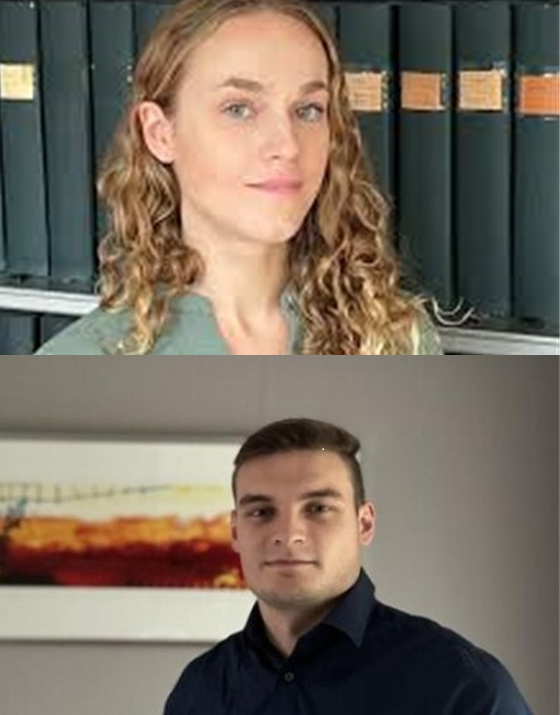
    At the General Board meeting of the N.W. Posthumus Institute of 24 September 2024 two new PhD representatives were welcomed.

    Silke Baas will take the place of her namesake Silke Geven. Silke Geven is now focusing on the completing of her PhD trajectory at the University of Antwerp. We thank Silke for her efforts for the N.W. Posthumus Institute and wish her success in obtaining her PhD. Silke Baas is a PhD candidate working in the Economic and Social History department since March 2022. Before joining her colleagues in Utrecht, she studied at the University of Amsterdam, where she earned a bachelor’s in Sociology and completed a research master’s in Social Sciences. Her academic interests center around gender (in)equality within Dutch society, women in the labour market, and the organization of gender-inclusive healthcare.

    PROFILE PAGE SILKE BAAS

    Jeroen Kole joined the PhD representative as new fifth PhD. Jeroen obtained his master’s degree from the University of Antwerp in 2022 with a master’s thesis on the vocabularies of consumption and consumer mentalities on the secondary markets of eighteenth-century Amsterdam and Antwerp. He is currently a PhD candidate at the Centre for Urban History at the University of Antwerp where he is preparing a doctoral thesis on material culture and social inequality in nineteenth-century Antwerp. His research focuses on developing a multidimensional approach to understanding social inequality, considering various strategies of social distinction.

    PROFILE PAGE JEROEN KOLE

    The N.W. Posthumus Institute welcomes both new PhD representatives!