Research School for Economic and Social History

Category: News

  • PhD defence Luc Bulten (Radboud University Nijmegen)

    PhD defence Luc Bulten (Radboud University Nijmegen)

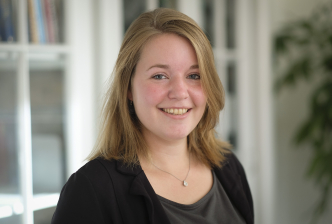
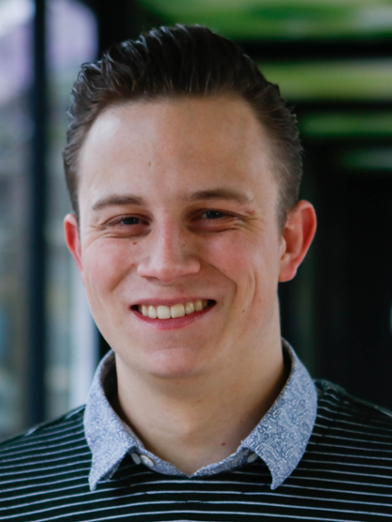
    On 20 April 2023, Posthumus alumnus Luc Bulten will publicly defend his dissertation titled ‘Reconsidering Colonial Registration. Social Histories of Lives, Land, and Labour in Eighteenth-Century Sri Lanka’. The ceremony will be held at the Auditorium of the Radboud University, but can also be followed via a livestream ().

    Luc’s dissertation considers roughly a century and a half of Sri Lanka’s history, with special attention for the second half of the eighteenth century. During this time, a significant segment of the population of this South Asian island found themselves governed by the self-appointed reign of the Dutch East India Company. In their reign, the Company in practice had to count on the activities of a true army of clerks, servants and bureaucrats who, on their behalf, registered thousands of indigenous families and their lands. This process of registration was aimed at exploiting the caste-related labour duties that these families had to perform, and the agricultural products (such as rice) that traditionally had to be supplied to the state. However, this thesis shows that such registration processes, and bureaucratisation in general, were anything but unidirectional developments. Local actors, customs, and categories each had a significant impact on the way people’s lives, land, and labour were documented. Moreover, the documents resulting from this process of bureaucratisation – such as the ‘thombo’ land and population registers – were used by local agents to secure their social status, their possessions, and their estates, especially when utilised as evidence in legal conflicts. This case stands to show the extent to which Lankan communities could take advantage of, or even appropriate, colonial institutions like the thombo registers, the rural courts, and the offices of VOC officials in an effort to make the colonial system work for them.
    PROFILE PAGE
     
    LIVE STREAM

  • Symposium ‘Lives in slavery: Exploring the slave registers of Suriname and Curacao, 1830-1863’ – register before 16 March 2023

    Symposium ‘Lives in slavery: Exploring the slave registers of Suriname and Curacao, 1830-1863’ – register before 16 March 2023

    The research group Historical Database of Suriname and Curacao (HDSC) at Radboud University Nijmegen published the first releases of the Surinamese and the Curacao slave registers, in which the individual enslaved persons are linked between different series and owners.

    To celebrate this milestone, the HDSC organises a one-day research symposium in Nijmegen on 16 March 2023 to explore the research possibilities of these newly released datasets. The aims of the symposium are to intensify the research on lives of enslaved individuals from a cultural, social, legal, and demographic history perspective and to facilitate partnerships and future comparative work on the history of slavery in tropical societies in the decades before emancipation in 1863.

    Participants can join this symposium either on campus or online. Prior registration however is required.

    For questions please contact Dr Matthias Rosenbaum-FeldbrĂŒgge.

    FULL INFO

  • Masterclass Dr CĂ©line Regnard – ‘A place in the city. Migrant police, policy & housing in the 19th and 20th centuries’

    Masterclass Dr CĂ©line Regnard – ‘A place in the city. Migrant police, policy & housing in the 19th and 20th centuries’

    The Centre for Urban History at the University of Antwerpin collaboration with the N.W. Posthumus Institute is hosting the masterclass ‘A place in the city. Migrant police, policy & housing in the 19th and 20th centuries’, delivered by Dr. CĂ©line Regnard (Aix-Marseille UniversitĂ©) on 10 May 2023 at Antwerp University.

    About the speaker

    CĂ©line Regnard is a lecturer in modern history at the Aix-Marseille UniversitĂ©, and director of the Maison mĂ©diterranĂ©enne des sciences de l’homme at l’UMR TELEMMe. She has written extensively on the history of migration, crime and labor in the modern period, with most recently a book on transnational history of Syrian transit migration, En Transit. Les Syriens Ă  Beyrouth, Marseilles, Le Havre, New York (1880-1914) (Anamosa, 2022).

    Aims of the masterclass

    The aim of the masterclass is to discuss (post-)doctoral research on the place of migrants in the 19th and 20th century city through 3 interlinked perspectives: police, policy and housing. During the masterclass a maximum of 5 participants can present their work through a short presentation (c. 10 minutes). The presentation should include the basic premises of the research, as well as some points of discussion (both difficulties and possible opportunities).

    How to participate

    Early Career Researchers working on migration in the nineteenth and twentieth century are invited to apply by sending an abstract (c. 300 words) before 24 March 2023 to organiser Jasper Segerink.

    Selected candidates will be notified by 31 March 2023. The presentations should be submitted no later than a week before the masterclass (3 May 2023).

    Mail organiser

  • Work and Wellbeing in History FRESH Meeting

    Work and Wellbeing in History FRESH Meeting

    Work is central to human wellbeing, but job quality has received comparatively little attention in economic history and historical wellbeing studies. The inclusion of ‘decent work’ in the Sustainable Development Goals and the recent profusion of present-day job quality metrics provide an opportunity for historical social science to contribute to discussions about the development of job-related wellbeing and the determinants of good work. The Work and Wellbeing in History FRESH Meeting (8–9 June 2023) will bring together research on labor and quality of life in the past. The meeting will welcome economic and social historians, work researchers, and wellbeing scholars to share papers on work in the past, historical wellbeing, and the relationship between the two. We are delighted to welcome Professor Leandro Prados de la Escosura (Universidad Carlos III de Madrid) and Professor Amy Erickson (University of Cambridge), who are world-leading experts in the study of historical wellbeing and labor, to deliver keynote lectures.

    <p.Researchers interested in presenting should send an abstract of 250–300 words and a brief (1–2 page) CV to by e-mail by 10 March 2023. Early career scholars and researchers from backgrounds traditionally underrepresented in the academy are especially encouraged to apply.

    FULL INFO

  • Global Conference ‘Legacy of Slavery and Indentured Labour’ 3

    Global Conference ‘Legacy of Slavery and Indentured Labour’ 3

    Various departments of the Anton de Kom University of Suriname and the Directorate of Culture (Ministry of Education, Science and Culture), organisers of the third conference on the Legacy of Slavery and Indentured Labour welcome proposals for this Global Conference on Slavery, Indentured Labour and their impact on present societies. The aim of the conference is to connect historical specificities of slavery, indentured labour and migration to contemporary issues of globalization, Diaspora, identity formation, interculturalism, nationalism and transnationalism. At the same time the organisers want to promote new perspectives and approaches in the study of forced and free migration and their impact on the society. By bringing scholars together from various parts of the world – senior scholars as well as new promising talents – they hope to stimulate exchange of ideas, set up new networks and strengthen existing ones.

    A registration fee applies for participants.


  • PhD Promotion Posthumus alumna Mayra Murkens

    PhD Promotion Posthumus alumna Mayra Murkens

    On 31 January 2023, Posthumus alumna Mayra Murkens succesfully defended her PhD thesis ‘Unequal paths to the grave? Time lags and inequalities in the Dutch health transition, the case of Maastricht, 1864-1955’ at the University of Maastricht. Mayra’s research focusses upon the health transition in Maastricht during the late nineteenth and early twentieth century. The research is part of a joint project from Maastricht University and the Center for the Social History of Limburg (Dutch: Sociaal Historisch Centrum Limburg, SHCL). Her supervisors were Professor AngĂ©lique Janssens and Dr Willibrord Rutten.

    VIEW ONLINE RECORDING

  • Conference ‘Food, Rules and the City’

    Conference ‘Food, Rules and the City’

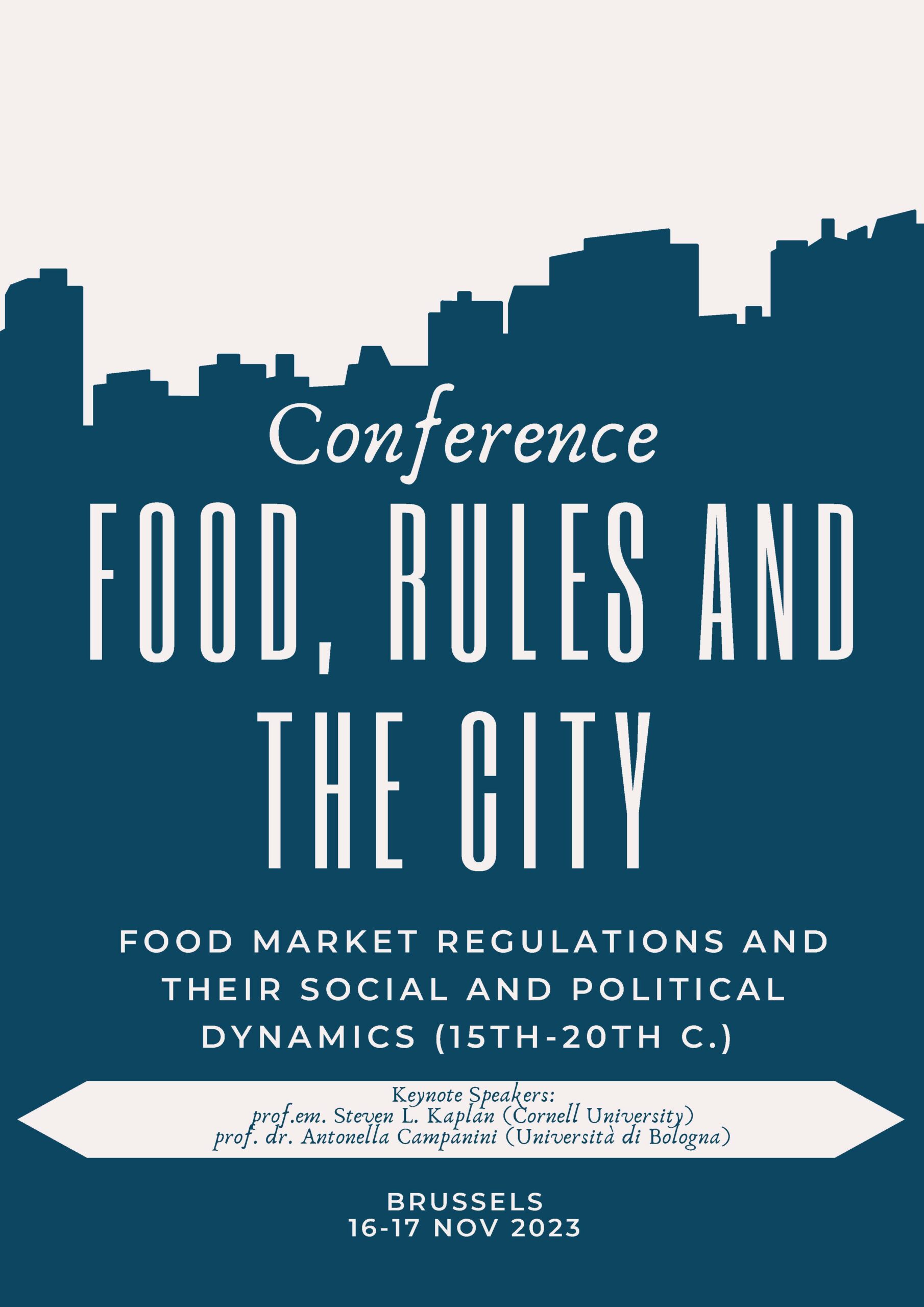
    On 16 and 17 November 2023, Posthumus alumni Dennis De Vriese (Vrije Universiteit Brussel), Nicholas Brunmayr (UniversitĂ© Libre de Bruxelles) and Robin Rose Southard (VUB) organise an international conference, entitled ‘Food, Rules and the City: Food Market Regulations and Their Social and Political Dynamics (15th-20th C.)’. Keynote speakers are emeritus Professor Steven L. Kaplan (Cornell University) and Professor Antonella Campanini (UniversitĂ  di Bologna).

    Seeking to adopt such a long-term perspective and to explore more fully than before the social and political dynamics underlying these regulations, this conference will bring together recent research into motivations, reasoning and strategies applied by economic actors in the making of food market regulations in European cities from the 15th to the 20th century. Through its wide chronological and geographical scope, the conference seeks to confront different methodologies to study the ever-present matter of food market regulation as well as different approaches of various historical actors, institutions, and contexts in handling
    enduring concerns.

    For the program and registration, please visit the conference website via the button below.

    CONFERENCE WEBSITE

  • Conference ‘Making Households Count’

    Conference ‘Making Households Count’

    The organisers of the two-day conference ‘Making Households Count’ invite paper proposals. This conference is also the closing event for the ERC-funded project ‘Race to the bottom? Family labour, household livelihood and consumption in the relocation of global cotton manufacturing’, led by Professor Elise van Nederveen Meerkerk (Utrecht University). The conference will be hosted by the Koninklijke Nederlands Instituut Rome.

    Most scholars researching historical living standards have used men’s urban wages as a proxy for household income because they are globally available for the past 500 years and thus allow for regional and temporal comparisons. However, focusing on urban male breadwinners for research on household living standards is misleading for at least three reasons. First, access to subsistence resources, notably land, has historically been the most important determinant of living standards. Second, women and children in most world regions worked for wages, among others in the rapidly expanding textile industries of the nineteenth and twentieth centuries. Third, households rarely relied on wages alone. Households’ income composition depended on local labour market structures, access to land, social norms, life-cycle changes, and wage rates.

    This conference aims to move beyond the use of men’s real wages and instead use household income to reconstruct historical living standards, and to bring together scholars from different disciplines working on household income diversification during the past 250 years. In our contemporary world, the estimation of the “informal” part of the economy, is a particular challenge, as looking at formal national accounts and aggregate per capita income may not capture actual standards of living and economic development. The organisers want to explore how our historical and present-day images of economic growth and inequality within and between societies changes when looking at total household income as opposed to formal, full-time male wages. We encourage contributions from both the Global North and the Global South that approach this topic from a comparative perspective.

    The organisers welcome contributions on household income diversification, the combination of textile/craft work and/or other crafts and services with other forms of labour and more generally on gender relations and labour allocation between different generations. This workshop aims to bring all these elements together to generate fruitful discussion between historians, (development) economists, anthropologists, sociologists, and others working on these topics with an interdisciplinary publication as the end result.

    Applicants should send their abstract (circa 400 words) before 30 January 2023 (EXTENDED deadline) to Dr Sarah Carmichael.

    CALL FOR PAPERS

  • Symposium: ‘From science to society: evidence-based lessons for (cooperative) social enterprises’

    Symposium: ‘From science to society: evidence-based lessons for (cooperative) social enterprises’

    Preceding the inaugural lecture by Professor Tine De Moor, the Research Team Institutions for Collective Action, based at the Erasmus School of History, Culture and Communication, organises the Symposium: ‘From science to society: evidence-based lessons for (cooperative) social enterprises’.

    The team has invited eleven fellow-scientists from various universities and different disciplines to talk about their research findings. What is the meaning of their research for society, particularly for citizen collectives, commons, and cooperative social enterprises. What insights from science can people put into practice on a daily basis?

    The team kindly invites you to attend the symposium. Prior registration (free of charge) is requested, use the button below to obtain your tickets.

    REGISTER

  • ERC Starting Grant awarded to Dr Fenneke Sysling

    ERC Starting Grant awarded to Dr Fenneke Sysling

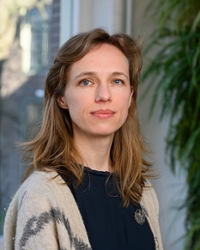
    Dr Fenneke Sysling, one of the research directors of the Posthumus Research Network ‘Routes and Roots in Colonial and Global History’ was recently awarded an ERC Starting Grant for her research on what medical ethics was like in colonial times.

    In her research, she focuses on medical experiments carried out in colonised areas without the explicit consent of the test subject. Data are collected from historical medical records. Questions on the unequal balance of power between coloniser and the local population, as well on the current use of data collected in the past without consent, will be addressed.

    We congratulate Fenneke with this achievement!

    MORE INFO