Research School for Economic and Social History

Author: René van Weeren

  • Publication ‘Frontiers of Finance’ from Posthumus fellow Alberto Feenstra published

    Publication ‘Frontiers of Finance’ from Posthumus fellow Alberto Feenstra published

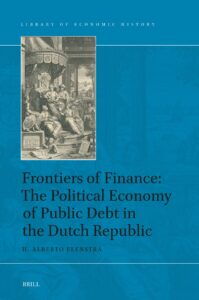
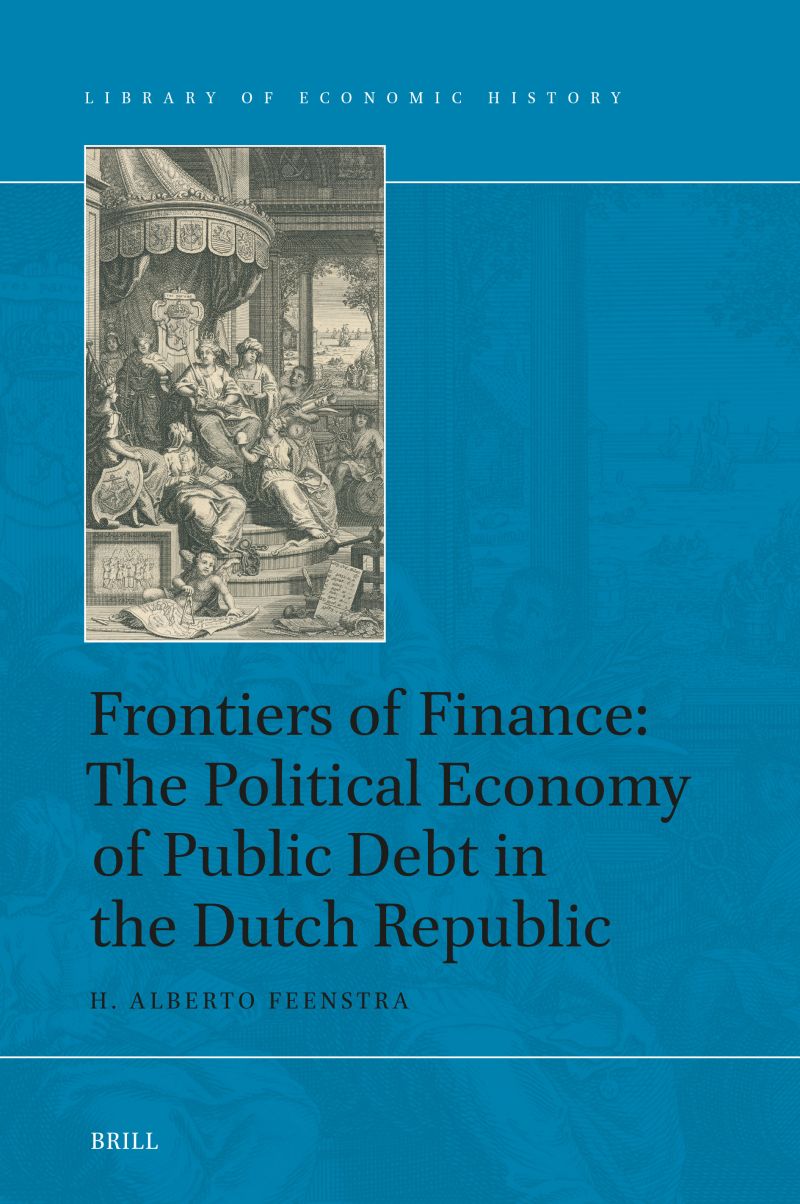
    On 18 December 2025, Brill Publishers published ‘Frontiers of Finance: The Political Economy of Public Debt in the Dutch Republic’, authored by Posthumus fellow Alberto Feenstra.

    In this book, Alberto analyses the political economy of provincial public debt within the federal Dutch Republic. The book shows that the domestic effect of Holland’s financial revolution and Amsterdam’s subsequent rise to an international financial centre was limited. Instead, the fiscal and legal fragmentation caused differences in risk, capital supply, transaction costs and, consequently, borrowing costs. The merits of Holland’s financial revolution were thus not transferable to another context. The results are relevant for wider debates about the role of institutions and the financial sector for economic growth.

    BOOK INFO

  • Recent changes PhD Representatives N.W. Posthumus Institute

    Recent changes PhD Representatives N.W. Posthumus Institute

    Recently, there have been some changes in the group of PhD Representatives of the N.W. Posthumus Institute.

    Hannelore Braeken will take the place of Dinos Sevdalakis. Dinos is now focusing on the completion of the PhD trajectory at the University of Groningen. We are thankful for the efforts Dinos made for the N.W. Posthumus Institute and wish Dinos success in obtaining the PhD. Hannelore Braeken is a PhD candidate at the Economic and Social History section of Leiden University. She is researching loneliness with individuals with mild intellectual disabilities. Hannelore studied history at KU Leuven and the Universidad de Cádiz, and obtained her master’s degree in 2024 with a thesis on Belgium’s response to the Softenon crisis (1959-2009).

    PROFILE PAGE HANNELORE BRAEKEN

    As the current cohorts of the N.W. Posthumus Institute comprise a significant number of external PhDs (buitenpromovendi), Wouter Raaijmakers has been asked to join the group of PhD representative as new fifth PhD, with a special focus on the needs and interests of the external PhDs. Wouter works as external PhD in Economical, Social and Demographic History at Radboud University. Prior to this, Wouter completed a bachelor’s degree in History with a thesis on colonial legal history and graduated cum laude from the research master’s programme in Historical Studies with a thesis on slavery history. After graduating, he developed a broader interest in colonialism and its aftermath. In this capacity, he researches colonial legal histories of Dutch and early British South Africa and Sri Lanka.

    PROFILE PAGE WOUTER RAAIJMAKERS

    The N.W. Posthumus Institute welcomes both new PhD representatives!

  • Yearbook of Women’s History 2025 ‘Women and Ports’

    Yearbook of Women’s History 2025 ‘Women and Ports’

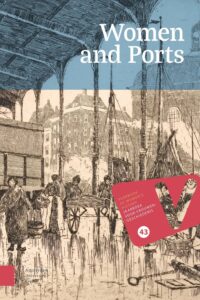
    Amsterdam University Press has just announced the upcoming publication of the 34th edition of the Yearbook of Women’s History. This year’s edition focuses on the role of women in the maritime sector.

    Diverting from the image of women passively waiting for men to return, this edition of the Yearbook of Women’s History argues that women shaped port-life as much as men. It highlights that women were important social and economic actors. Contributions in this Yearbook show women as stevedores, wharf owners, inn-keepers and union-leaders. They cover the period from the seventeenth century up until the present, and range from Finland to Curaçao, Wilhemshaven to Colonial America. Using visual, written, and oral sources, this Yearbook brings together authors from different countries and backgrounds to shed a new light on the women that were indispensable to port life.

    This year’s edition is edited by Posthumus alumna Claudia Hacke and co-editors Kirsten Kamphuis, Charlotte Meijer, Marleen Reichgelt, Iris van der Zande, and Irene Jacobs, and will be published both in paperback as in an online Open-Access version.

    BOOK INFO

  • LeidenGlobal course ‘Methodologies in the Social Sciences and Humanities’ (Feb-June 2026) – deadline 15 January 2026

    LeidenGlobal course ‘Methodologies in the Social Sciences and Humanities’ (Feb-June 2026) – deadline 15 January 2026

    The Leiden University Institute for Area Studies in collaboration with LeidenGlobal offers a twelve-week course ‘Methodologies in the Social Sciences and Humanities’. This course will allow beginning scholars to develop a critical understanding of methodologies in the social sciences and humanities (SSH). The course will run from February until June 2026.

    Methodology refers to the logical and developed coherence between research question, theory and methods. Rather than a fixed set of rules, methodology is based in an ongoing conversation among scholars in the SSH on data collection and analysis. During this course participants engage in this conversation with their peers as well as experienced researchers in the SSH. In this course, based on conversations with each other and with experienced scholars, students learn about epistemological debates and choices available to them in their own research.

    At the end of the course, students will be able to reflect on and motivate their individual methodological choices within the broader context of methodologies in SSH. Guest lectures by established scholars, class discussion and state-of-the-art literature help participants form a critical basis for both current and future research.

    Successful participation is valued at 10 EC. Registration is open to Research Master students (who are required to register via MyStudyMap), as well as PhD students (who should register via the LeidenGlobal webpage). Deadline for registering is 15 January 2026.

    MORE INFO AND PHD REGISTRATION FORM

  • Blog ‘Historisch eten en koken’ van Posthumus fellows Patricia Van den Eeckhout en Peter Scholliers online

    Blog ‘Historisch eten en koken’ van Posthumus fellows Patricia Van den Eeckhout en Peter Scholliers online

    ~ because of scope in Dutch only ~

    Posthumus-fellows Patricia Van den Eeckhout en Peter Scholliers (emeriti hoogleraren Vrije Universiteit Brussel) zijn gestart met een blog over de geschiedenis van de eetcultuur in West-Europa sedert de late 18e eeuw, ‘Historisch eten & koken’.

    Korte stukken van ongeveer 500 woorden behandelen thema’s die niet of amper aan bod komen in hun boeken en (wetenschappelijke) artikelen. Momenteel zijn tien artikelen beschikbaar en elke week komen er twee bij. Thema’s zijn bijvoorbeeld ‘Saucisse met een reukje’, ‘Brooddiefstal tijdens de Groote Oorlog’, ‘Een Hollander in Parijs’ en ‘Driegangenmenu met conserven in Congo’. Toegankelijke titels voor laagdrempelige artikelen, maar alle artikelen gaan natuurlijk over de belangrijke dingen des levens, zoals voedselveiligheid, honger, gastronomisch tafelen en voedselbevoorrading.

    BLOG

  • Nieuwe publicatie Posthumus fellow Dries Lyna : ‘Slavernij en de koloniale ketens van ‘s-Hertogenbosch’

    Nieuwe publicatie Posthumus fellow Dries Lyna : ‘Slavernij en de koloniale ketens van ‘s-Hertogenbosch’

    ~ because of scope in Dutch only ~

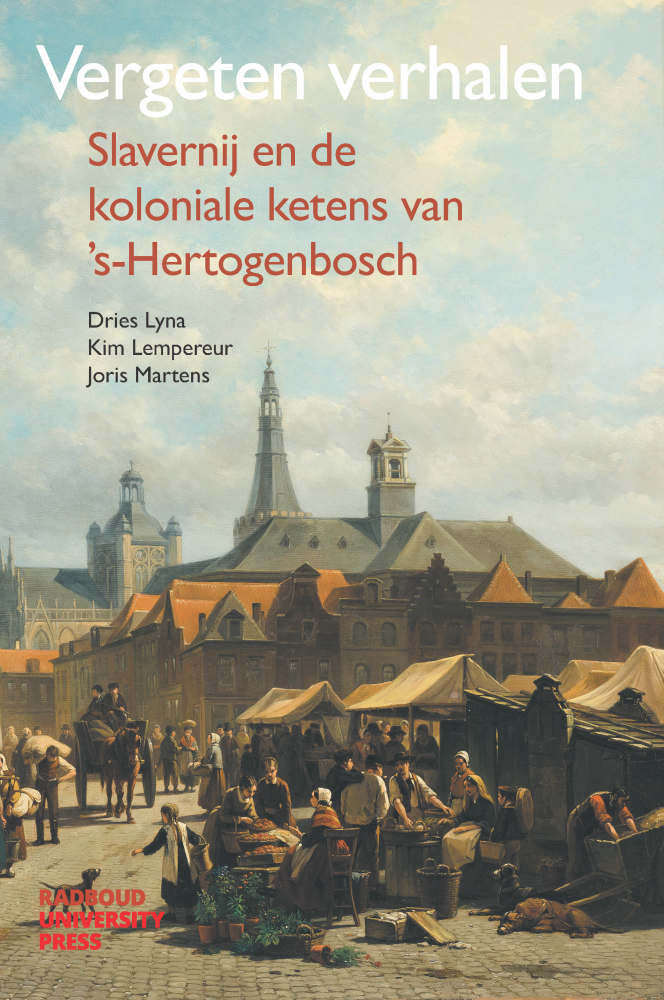
    Posthumus-fellow en -bestuurslid Dries Lyna schreef samen met co-auteurs Kim Lempereur en Joris Martens het boek Vergeten verhalen: Slavernij en de koloniale ketens van ’s-Hertogenbosch, onlangs verschenen bij Radboud University Press.

    Stap voor stap ontrafelt dit boek hoe het kolonialisme de stedelijke bestuurders, bedrijven en gewone burgers uit de stad verbond met de verste uithoeken van het Nederlandse rijk. Hoe slavernij niet slechts een verre werkelijkheid was, maar een onlosmakelijk onderdeel vormde van dit economische systeem. En hoe die slavernij, die zich afspeelde in Oost en West, gaandeweg ook zichtbaar werd in het straatbeeld van ’s-Hertogenbosch.

    Het boek is Open Access te downloaden via Radboud University Press, maar verschijnt ook in paperback.

    INFO UITGEVER

  • Workshop ‘Channeling Middle-Class Savings, 1850-1940’

    Workshop ‘Channeling Middle-Class Savings, 1850-1940’

    On 29 and 30 June 2026 the University of Antwerp and the Paris School of Economics will host the workshop ‘Channeling Middle-Class Savings, 1850-1940’, exploring the investment of middle-class savings between the second half of the nineteenth-century and the Second World War.

    The organisers call for papers that deal with the expansion of savings banks and other financial institutions competing to attract household savings, the government’s involvement in the management and use of savings, as well as the investment decisions of individual households. Submissions of both descriptive studies and analytical papers are encouraged; scholars at all career stages and diverse backgrounds are invited to participate in this workshop.

    Submissions, either as extended abstracts (5-10 pages) or as full paper drafts, should be submitted ultimately on 5 January 2026 via e-mail.

    FULL CALL (PDF)

  • Workshop ‘Networks in History’ (Huizinga Institute & N.W. Posthumus Institute)

    Workshop ‘Networks in History’ (Huizinga Institute & N.W. Posthumus Institute)

    The Huizinga Institute and the N.W. Posthumus Institute are offering a 3-day workshop on ‘Networks in History’, to be held on 21-23 January 2026 at the International Institute of History in Amsterdam.

    Description and aim

    Historical network analysis as a mode of enquiry is gaining traction in the humanities. Embedded in the interdisciplinary field of network sciences, and digital humanities, scholars have utilised the approach in a great variety of subfields and subjects within the historical discipline. This thematic course aims to enable early-career researchers to consider the purpose, potential and procedure of historical network analysis for their research projects. Sessions are taught by researchers from different backgrounds who use historical network analysis in their work. The classes will treat the process and steps of reasoning prior to adopting a specific programme to enter and analyse the data. The focal point is historical network analysis but other approaches to studying networks in history will also be discussed. Before moving onto the practical ‘how’, ample attention is paid to the theoretical and conceptual ‘why’.

    Preliminary programme

    Day 1

    09:30-12:30
    Session 1
    Introduction to networks in history & Conceptual reflections – Instructor: Christophe Verbrugge
    13:30-17:00
    Session 2
    Methods and concepts (part I) – Instructor: Christophe Verbrugge

    Day 2

    09:30-12:30
    Session 3
    Methods and concepts (part II) – Instructor: Nina Geerdink
    13:30-17:00
    Session 4
    Methods and concepts (part III) – Instructor: Ivo Zandhuis

    Day 3

    09:30-12:30
    Session 5
    Hands-on workshop – Instructor: Liliana Melgar
    13:30-17:00
    Session 6
    Reflection and application – Instructor: Rick Mourits

    Participation

    The workshop is open to research master students and PhD students who are considering employing a network approach in their research. The minimum number of participants is 5, the maximum 15 participants. The course will be in English.

    Assessment and EC

    Students will be assessed on their preparation in reading the course materials and formulating questions, their participation in and contributions to the general discussions, and class attendance. After the workshop, students should write a reflection paper (1500 words max.) on the decision to adopt or not adopt the method of historical network analysis in the students’ own research. This paper should be submitted a week after the course. The final score will be on a pass/fail basis. Passing this course successfully is valued at 2 EC.

    Application procedure

    You can apply for this course via this form. Applications will be dealt with on a first-come first-served basis; in case there are more applications than places available, students already enrolled in a programme of the Huizinga Institute or the N.W. Posthumus Institute will have priority. Within a week after the deadline, all applicants will be notified about the outcome of their application.

    Course coordination

    This course is jointly offered and supported by the Huizinga Institute and the N.W. Posthumus Institute in cooperation with the International institute of History (IISH). The course is coordinated by Dr Rick Mourits (IISH) in cooperation with Eva Seuntjens and Merel Blok (both PhD candidates at IISH).

    More info

    For more info, contact Eva Seuntjens.
  • 2nd Workshop The Economic and Financial History of Colonialism

    2nd Workshop The Economic and Financial History of Colonialism

    On 26 and 27 March 20-26, the Faculty of Business and Economics of the University of Groningen and the University of Antwerp will jointly organise the second edition of the workshop series ‘The Economic and Financial History of Colonialism’ at the University of Groningen.

    This year’s theme, ‘Diversity in Development: Colonial Legacies and Varied Paths of Growth’, invites new perspectives on how colonial economic and financial systems shaped long-term development trajectories across regions. The workshop aims to foster comparative and interdisciplinary dialogue on the mechanisms through which colonial institutions, fiscal regimes, and financial structures influenced the diversity of post-colonial growth experiences.

    The organisers encourage submissions that examine how different colonial models – whether extractive or developmental, centralized or decentralized, formal or informal – produced distinctive economic outcomes. We particularly welcome comparative contributions across empires and regions, from the relatively diversified colonial economies of East Asia or the settler dominions to the more extractive or commodity-dependent cases in Africa, the Caribbean, and Southeast Asia. Both descriptive and analytical papers, including case studies and comparative research are welcomed.

    Those interested in participating in this workshop, should submit an extended abstract (500–800 words) or a full paper ultimately 15 December 2025 by e-mail.
    DOWNLOAD FULL CALL (PDF)

  • Conference ‘Becoming Local? Forgotten Lineages of Displaced Communities Across the Indian Ocean World, 1650-1850’ – keynotes by Professors Sue Peabody and Jennifer L. Gaynor

    Conference ‘Becoming Local? Forgotten Lineages of Displaced Communities Across the Indian Ocean World, 1650-1850’ – keynotes by Professors Sue Peabody and Jennifer L. Gaynor

    On 10 and 11 December 2025, the international conference ‘Becoming Local? Forgotten Lineages of Displaced Communities Across the Indian Ocean World, 1650-1850’ will be held at Leiden University. Organisers are Dries Lyna and Pouwel van Schooten in cooperation with Sanayi Marcelline (all three Posthumus affiliates within the research network Routes and Roots in Colonial and Global History) and Nira Wickramasinghe (Radboud University).

    ‘Becoming Local?’ pioneers the notion of forgetting to analyze centuries-long processes of self- and community-making in the Indian Ocean world. This two-day conference traces the paths through which generations of displaced individuals and their descendants under colonial regimes gradually or abruptly changed their relationship to their home country, (un)willingly erased or even forgot their past, and became local subjects. It seeks to move away from a conceptual approach that unproblematically projects colonial social categories of the more recent past – Cape Coloured, Malay, Burgher, Kaffir, Moor, Orang Borgo or Mardijkers – back in time, and opts for studying the everyday making of forms of belonging over two centuries. With an explicit intergenerational approach the conference aims to track down the revolving doors of individual/family/community forgetting, writing contiguous microhistories to reinvent the historiography of empires and global connections.

    Keynote lectures will be delivered by Professor Sue Peabody (Washington State University): ”Little’ Stories in ‘Big’ Histories. Families, Mobility, and Identity in the Indian Ocean’ and Professor Jennifer L. Gaynor (University at Buffalo, State University of New York): ‘Remembering and Forgetting in Two Worlds. Writing Histories of Forced Displacement and Submerged Genealogy’.

    The keynote lectures are open to the general public. Those wanting to attend the whole conference should contact de organisers via e-mail.

    This conference forms part of the larger project Forgotten Lineages. Afterlives of Dutch Slavery in the Indian Ocean World, funded by the Dutch Research Council (NWO).

    MORE INFO