Research School for Economic and Social History

Author: René van Weeren

  • Historicidagen 2026 (Leiden, 27-29 August 2026)

    Historicidagen 2026 (Leiden, 27-29 August 2026)

    On 27-29 August 2026, the 2026 edition of the Historians’ Days [in Dutch: Historicidagen] will be jointly organised by the Royal Netherlands Historical Society (KNHG) and Leiden University in the city of Leiden.

    The Historians’ Days 2026 revolve around the theme of ‘Future of history’, and actively promote diversity within participants, audience, program, stories, methods and presentations.

    CONFERENCE WEBSITE

  • Several Posthumus affiliates contributing authors of ‘The Cambridge Urban History of Europe’

    Several Posthumus affiliates contributing authors of ‘The Cambridge Urban History of Europe’

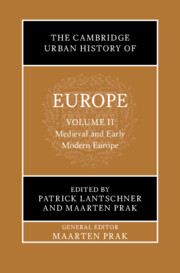
    Cambridge University Press has announced the forthcoming publication of ‘The Cambridge Urban History of Europe’, a series of 3 volumes. The printed version is expected to be available from 20 November 2025, the online version is expected to be available from January 2026 onward.

    Volume I offers a broad perspective on urban culture in the ancient European world. It begins with chronological overviews which paint in broad brushstrokes a picture that serves as a frame for the thematic chapters in the rest of the volume. Volume II charts European urbanism between 700–1850, the millennium during which Europe became the world’s most urbanised region. Volume III, finally, uncovers the radical transformations of European cities from 1850 until the twenty-first century. The volume explores how modern developments in urban environments, socio-cultural dynamics, the relation between work and leisure, and governance have transformed urban life.

    The three volumes comprise contributions by several Posthumus affiliates: Marjolein ’t Hart (‘The Dutch Republic’), Justyna Wubs-Mrozewicz (‘The Hanseatic World and Scandinavia’), Jessica Dijkman (‘Consumption’), Manon van der Heijden (‘Violence and Crime’), Leo Lucassen (‘Migration as Urban DNA: Cities as Engines of Mobility and Integration’). Long-standing Posthumus fellow Maarten Prak is the general editor of all three volumes.

    PUBLISHER’S INFO

  • Robrecht Declercq ends task as Research Network coordinator

    Robrecht Declercq ends task as Research Network coordinator

    Because of his recent appointment as Expert Resources and Sustainable Development with the Federal Institute for Societal Development, Robrecht Declercq unfortunately had to decide to end his work as coordinator of the Research Network ‘Globalisation, Inequality and Sustainability in Long-Term Perspective’. The coordination of this network will be continued by his fellow coordinators Frank Veraart and Daniel Gallardo Albarrán.

    The N.W. Posthumus Institute thanks Robrecht for his efforts for the research network and the N.W. Posthumus Institute over the past years and congratulates him with his new appointment.

  • Successful PhD Defence Posthumus alumnus Alexander van der Meer

    Successful PhD Defence Posthumus alumnus Alexander van der Meer

    On 23 October 2025, Posthumus alumnus Alexander van der Meer successfully defended the thesis ‘Colonial Calvinism: Colonial Ideologies of Dutch Clergymen in Batavia, ca. 1700-1850’ at Leiden University. Supervisors were Dr Alicia Schrikker and Professor Jos Gommans (both Leiden University).

    Alexander’s dissertation examines the colonial ideology of Dutch Reformed ministers and missionaries in Batavia between 1700 and 1850, showing how it was forged in the colonial frontier itself—through daily interactions with local Christians, non-Christians, colonial elites, enslaved people, and the powerful presence of Islam. Colonial ideology is understood here as both the ideas of what the colonial church should be and the practices that gave it form.

    The study argues that a distinct colonial ecclesial culture emerged: Colonial Calvinism. More than a transplant of European orthodoxy, it was a locally rooted order marked by pragmatism, strategic ambiguity, and unwritten norms. Clergymen upheld a façade of Dutch Reformed orthodoxy and cultural ‘Dutchness’, while in practice accommodating syncretic practices of local Christians and tolerating the deviant behavior of colonial elites. Crucially, through the diaconate and ecclesial discipline this culture became deeply entangled with slavery and with the reproduction of colonial hierarchies of race, class, gender, and rank.

    By tracing the endurance of this order across the supposed rupture around 1800—when the VOC gave way to the colonial state and the first missionaries of the Dutch Missionary Society (Nederlandsch Zendeling Genootschap, NZG) arrived—this dissertation highlights the resilience of Colonial Calvinism and the influence of local actors who shaped it. This study contributes to ongoing scholarly and societal debates on the entanglements of religion, slavery, and colonialism, and reveals how the ideological foundations of Dutch empire were shaped not in The Hague or Amsterdam, but in the colonial frontier itself.

    The N.W. Posthumus Institute congratulates Alexander with the successful defence!
  • Successful PhD Defence Posthumus alumnus Philip Post

    Successful PhD Defence Posthumus alumnus Philip Post

    On 23 October 2025, Posthumus alumnus Philip Post succesfully defended the thesis ‘Constructing Colonial Legitimacy in the Moluccas, 1750-1870’ at Leiden University. Supervisors were Dr Alicia Schrikker and Professor Jos Gommans (both Leiden University).

    Philip’s dissertation examines how Dutch colonial officials in Ambon and Ternate justified their authority between 1750 and 1870. At its core lies a paradox: nineteenth-century administrators criticised the Dutch East India Company (VOC) as corrupt and promised enlightened reform, yet in practice they continued to rely on the Company’s laws, routines, and traditions. The shift from Company to colonial state rule was therefore less a break than a reshaping of old patterns under a new story. In the VOC era, governors exercised enormous power. They ruled as administrators, commanders, judges, and protectors of the church, and defended this authority through elaborate narratives. The Company was portrayed not only as a trading enterprise but also as guardian of the spice monopoly, mediator between rival rulers, and defender of the Christian faith. The nineteenth-century colonial state adopted a different tone. Officials distanced themselves from the VOC, denounced its abuses, and spoke the language of civilisation, welfare, and progress. Their rhetoric suggested the birth of a new, more humane age. Yet behind these claims, various forms of continuity can be perceived in practice. In diplomacy, slavery, and land policy, colonial governance remained rooted in VOC traditions—revealing how exploitation could be reframed as reform, a legacy that continues to shape debates about Dutch colonialism today.

    The N.W. Posthumus Institute congratulates Philip with this successful defence!

  • Successful PhD Defence Posthumus alumna Vicky Vanruysseveldt

    Successful PhD Defence Posthumus alumna Vicky Vanruysseveldt

    On 21 October 2025, Posthumus alumna Vicky Vanruysseveldt succesfully defended the thesis ‘Onderweg met amusement. Inkomensstrategieën en mobiliteit bij ambulante entertainers in Brabant (1750-1914)’ [transl. ‘On the road with entertainment. Income strategies and mobility among itinerant entertainers in Brabant (1750-1914)’ at Vrije Universiteit Brussel. Supervisor was Professor Anne Winter (Vrije Universiteit Brussel).

    The N.W. Posthumus Institute congratulates Vicky with the successful defence!
  • Posthumus fellow Janna Coomans wins Libris Geschiedenis Prijs for book ‘Dievenland’

    Posthumus fellow Janna Coomans wins Libris Geschiedenis Prijs for book ‘Dievenland’

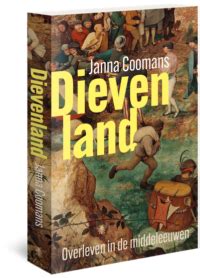
    cover book Dievenland by Janna Coomans

    The Libris Geschiedenis Prijs 2025 has been awarded to Janna Coomans, Assistant Professor at Utrecht University, fellow of the N.W. Posthumus Institute and coordinator of our Research Network ‘Economy and Society of the Pre-industrial Low Countries in Comparative Perspective’ for her publication Dievenland – overleven in de Middeleeuwen [transl. Country of Thieves – surviving in the Middle Ages].

    The prize is annually awarded to the best history book aimed at a general public. The book is selected by an expert jury based on the criteria of having an original concept, being pleasant to read and being based of solid historical research. According to the jury report, ‘By using confessions and official reports Janna Coomans brings a world to life, one hardly reads about: the underclass of society in the late Middle Ages. Janna draws a picture of crime and jutice in the Low Countries, but also sheds light on the social structures and the importance of material goods in those times, which sharply contrasts with our current-day ‘throwaway society’. Coomans’ drive for research has produced a book that is as craftfull as it is compelling, specifically making the atypical people in the Middle Ages interesting’.

    The N.W. Posthumus Institute congratulates Janna with this award!

    MORE INFO (IN DUTCH)

    PUBLISHER’S INFO (IN DUTCH)

  • Lezing Posthumus PhD Chris Vlam over opkomst Kruisverenigingen Noord-Holland en Utrecht, 1875-1945

    Lezing Posthumus PhD Chris Vlam over opkomst Kruisverenigingen Noord-Holland en Utrecht, 1875-1945

    ~ because of scope in Dutch only ~

    Historicus en Posthumus PhD Chris Vlam houdt op 30 november 2025 de lezing ‘Voor allen, door allen!’ over de opkomst van de kruisverenigingen in Noord-Holland en Utrecht tussen 1875 en 1945. Chris bespreekt in deze lezing de ontwikkeling van kruisverenigingen in Noord-Holland en Utrecht. Aan de hand van jaarverslagen van provinciale koepelverenigingen analyseert Chris hoe deze organisaties ontstonden, zich organiseerden, en hun impact op de toegang tot gezondheidszorg tussen 1875 en 1945.

    Deze lezing vindt plaats in Het Utrechts Archief en in samenwerking met de Beroepsvereniging voor Verpleegkundigen & Verzorgenden Nederland.

    Deze lezing is gratis toegankelijk voor geïnteresseerden, vanwege een maximaal aantal plaatsen is reserveren vooraf wel noodzakelijk via de website van Het Utrechts Archief (bereikbaar via onderstaande knop).

    MEER INFO EN REGISTRATIE

  • 17th EAUH Conference (Barcelona, 2-5 September 2026)

    17th EAUH Conference (Barcelona, 2-5 September 2026)

    The 17th conference of the European Association for Urban History (EAUH) will be held on 2-5 September 2026 in Barcelona, the capital of Catalonia.

    The conference’s central theme is ‘City Networks in Europe and Beyond’. City networks have played a strategically important role in both the past and the present. Cities and the connections between them have been just as influential—if not more so—than states in shaping Europe and extending its influence beyond the continent, especially through colonial relationships. Although the history of Europe is often identified with states and nations, it is largely the history of its networked cities.

    The (extended) deadline for the submission of paper proposals was 17 November 2025.

    FULL CALL

  • Book presentation new open access publication, edited by Posthumus fellow Davide Cristoferi

    Book presentation new open access publication, edited by Posthumus fellow Davide Cristoferi

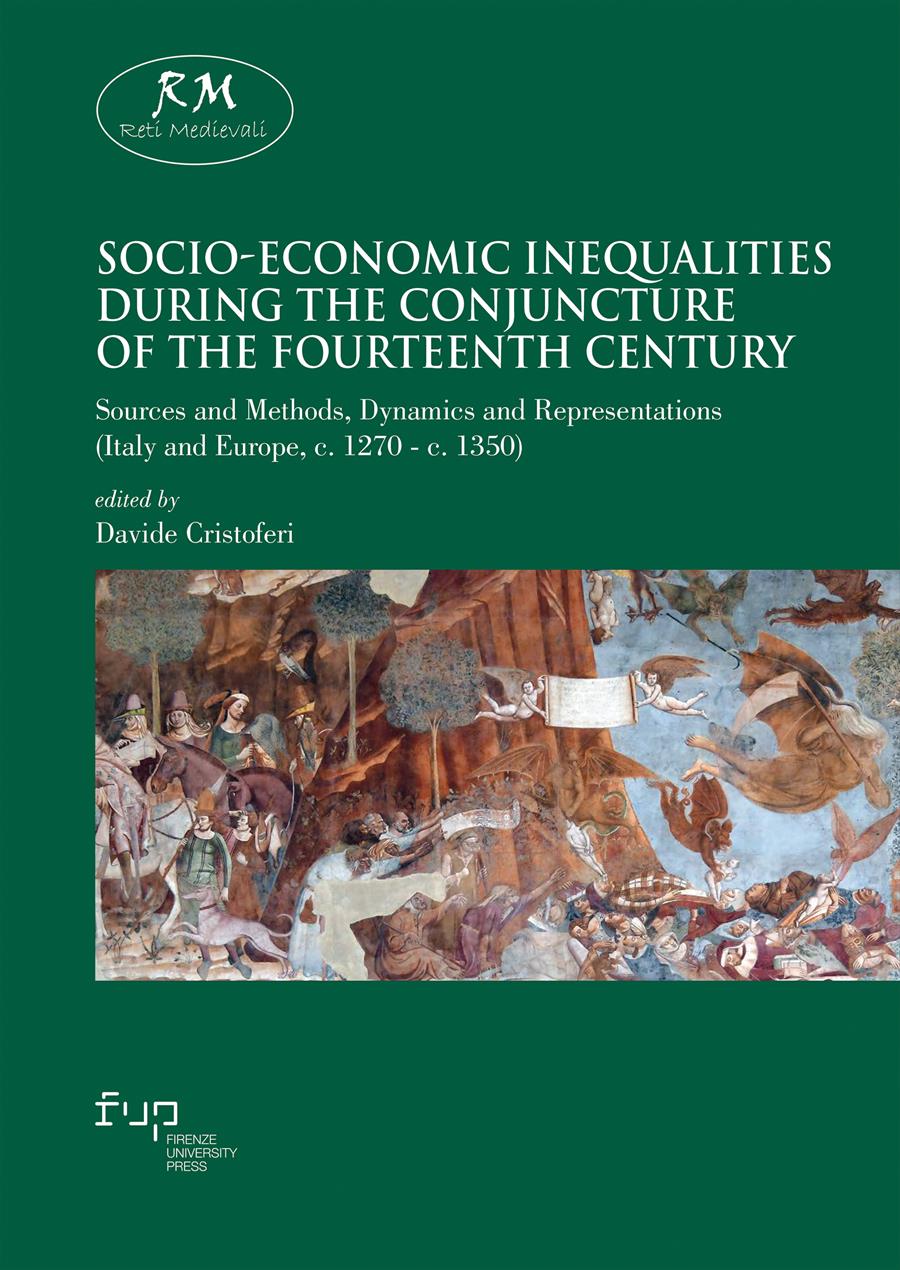
    Posthumus fellow Dr Davide Cristoferi (Ghent University) is the editor of the recently published open access publication Socio-Economic Inequalities during the Conjuncture of the Fourteenth Century: Sources and Methods, Dynamics and Representations (Italy and Europe, c. 1270 – c. 1350). This volume, to which other Posthumus members from Ghent University, ULB, and the University of Antwerp have also contributed, is the result of the FWO-FNRS EI-MED project, led by Davide.

    This volume aims to bring together, discuss and further develop the findings and perspectives of two relevant debates in medieval and economic history – the fourteenth-century conjuncture and pre-industrial inequality – through nineteen original and state-of-the-art contributions in English and Italian by established scholars and promising young researchers.

    Focusing on Central-Northern Italy and Western Europe between c. 1270 and c. 1350, the volume aims to understand why, how and to what extent medieval society was unequal in the seventy years before the Great Plague of 1347-52, presenting a wide range of sources and methods, exploring and discussing the causal mechanisms of socio-economic inequalities, and examining how these differences were perceived, represented and dealt with in the late Middle Ages, extending the investigation in some cases to the post-Black Death period.

    The publication is available online via the website of Firenze University Press.

    ONLINE VERSION

    Book presentation

    This publication will be presented at a seminar at the Université Libre de Bruxelles on 23 October. Professor Mathieu Arnoux, director of studies at the École des Hautes Études en Sciences Sociales and a senior member of the Institut universitaire de France, and Professor Tim Soens of the University of Antwerp will discuss the new publication with the editor of this volume, Davide Cristoferi.

    Participation in this seminar is free of charge, but prior registration is requested via e-mail.

    SEMINAR FLYER (PDF)