Research School for Economic and Social History

Author: René van Weeren

  • New publication on occasion of Professor Angelique Janssens’ retirement

    New publication on occasion of Professor Angelique Janssens’ retirement

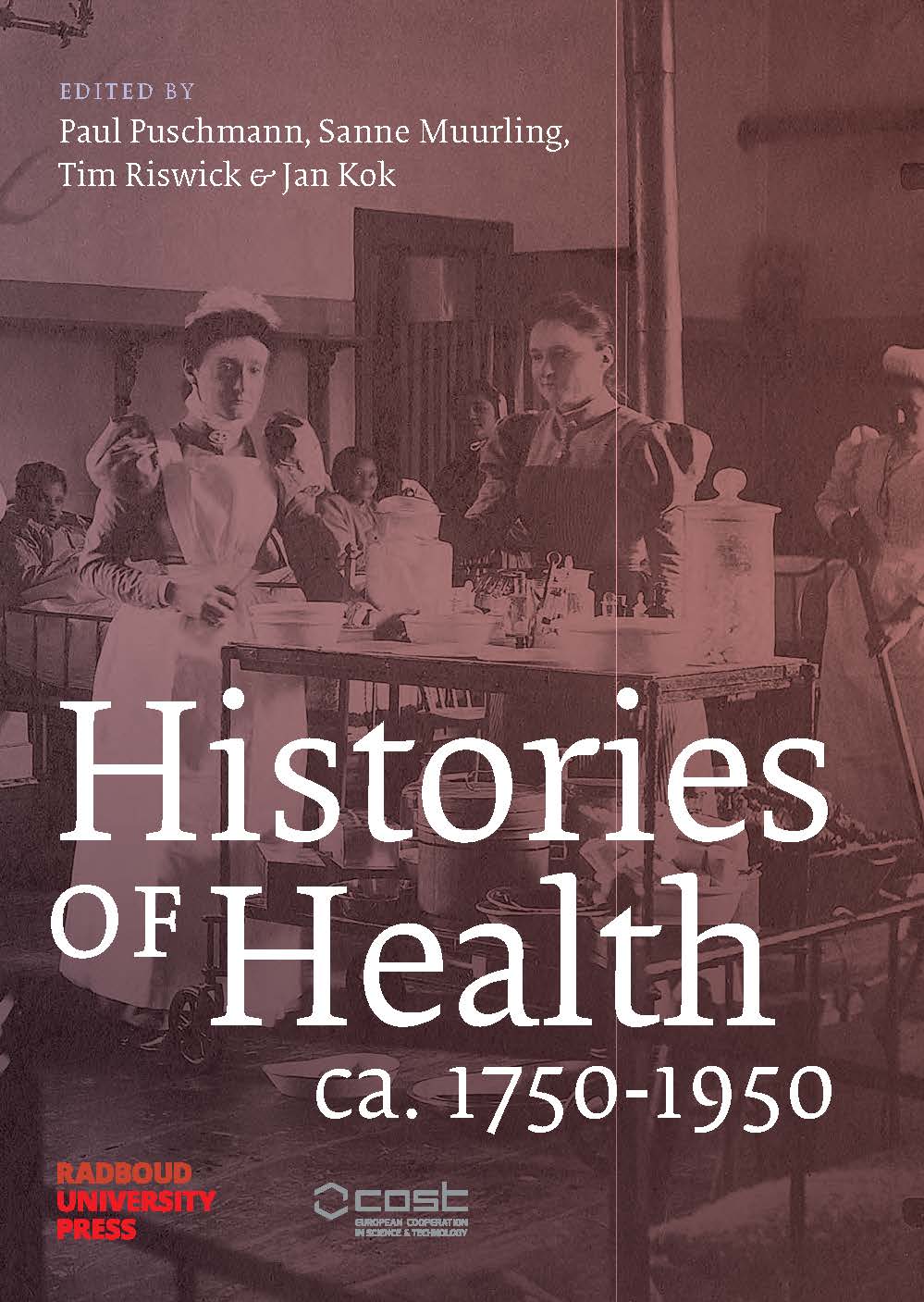
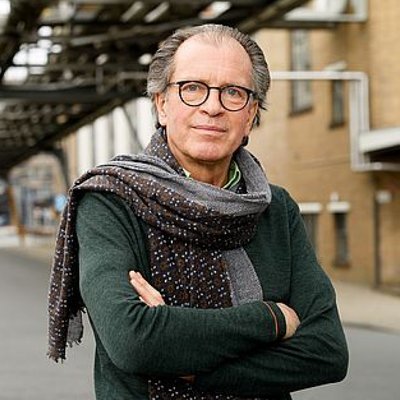
    On 29 August 2025, Professor Angelique Janssens retired from her chair in historical demography at the Faculty of Arts and Social Sciences at Maastricht University and the Department of Economic, Social and Demographic History at Radboud University. At the symposium, organised for this occasion, a special issue dedicated to Professor Angelique Janssen, was published, titled Histories of Health ca. 1750-1950.

    Over the past two and a half centuries, the global population has witnessed significant improvements in health and longevity, with life expectancy at birth more than doubling in many regions. This transformation ranks among the greatest achievements in human history. This volume brings together studies that reveal the complexity behind this transformation and provide a broad exploration of how these histories of health have evolved across different social and geographic contexts. The contributions explore how mortality and morbidity were recorded, understood, and experienced, focusing on the roles of social class, migration status, and sex, as well as demographic shifts and local conditions in shaping patterns of infant, childhood, and adult mortality. Collectively, these studies demonstrate that the history of health cannot be understood as a straightforward narrative of continuous linear progress. Instead, they demonstrate it is a multifaceted process marked by societal challenges, unequal access to resources, and ongoing efforts by individuals and communities to adapt and survive in a changing world.

    The publication is not only dedicated to the former scientific director of the N.W. Posthumus Institute, but also contains contributions by a considerable number of Posthumus PhDs, alumni and PhD fellows; the editors of this publication (Paul Puschmann, Sanne Muurling, Tim Riswick, and Jan Kok all are currently active members of the N.W. Posthumus Institute.

    The publication is published as Open Access publication with Radboud University Press.
    ONLINE VERSION

  • In memoriam: Harry Lintsen (1949-2025)

    In memoriam: Harry Lintsen (1949-2025)

    portret Harry Lintsen

    Recentelijk ontving het N.W. Posthumus Instituut het droeve bericht dat emeritus hoogleraar prof.dr.ir. Harry Lintsen op dinsdag 12 augustus 2025 op 76-jarige leeftijd is overleden.

    Professor Lintsen was de grondlegger van de ontwikkeling van het vakgebied techniekgeschiedenis in Nederland. Vanaf het begin van zijn loopbaan richtte hij zich op het opbouwen en organisatorisch inbedden van het vakgebied techniekgeschiedenis in Nederland. In 1988 initieerde hij de oprichting van de Stichting Historie der Techniek (SHT), die uitgroeide tot hét nationale platform voor techniekgeschiedenis. Als redactievoorzitter en adviseur van de SHT en hoogleraar aan zowel de Technische Universiteit Eindhoven als de Technische Universiteit Delft gaf hij richting aan de nationale onderzoeksprogramma’s Geschiedenis van de Techniek in Nederland. De wording van een moderne samenleving 1800-1890 en Techniek in Nederland in de twintigste eeuw (TIN 19 en TIN 20). Beide programma’s waren ingebed in het onderzoeksprogramma van het Posthumus Instituut. Hij werkte daarnaast mee aan talloze promotieprojecten, publicaties, conferenties en tentoonstellingen.

    Voor Harry Lintsen ging het bij techniekgeschiedenis om zingeving door het vertellen van een groot verhaal. In een periode dat de grote verhalen ter discussie werden gesteld in de wetenschap, was hij juist op zoek naar zo’n verhaal. Geschiedenis gaat niet alleen om de feiten, of zelfs juist niet om de feiten. Het gaat om het plaatsen van die feiten in een groter geheel dat zin geeft aan de geschiedenis: voor hem was de industrialisatie en modernisering van Nederland een optimistisch verhaal over armoedebestrijding en economische ontwikkeling, over het ombouwen van een pre-moderne economie tot een wat hij noemde ‘Gouden Delta’ ofwel ‘Nieuw Atlantis’. Professor Lintsen moest echter ook onderkennen dat die Gouden Delta de laatste decennia veel van zijn glans had verloren door de ecologische crisis en weer toenemende ongelijkheid in de wereld; er was daarom een nieuwe moderniseringslag nodig waarvoor hij gebruik maakte van het begrip ‘brede welvaart’ en samen met anderen een boek publiceerde in 2018: De kwetsbare welvaart van Nederland tussen 1850-2050: naar een circulaire economie. Een baanbrekend en innovatief boek, al was het maar omdat historici niet gewend zijn naar de toekomst te kijken. Hij had die toekomst graag meegemaakt, had graag een vervolg willen schrijven over hoe Nederland het brede welvaartsidee had opgepakt. Dat was hem helaas niet gegund.

    Het N.W. Posthumus Instituut is professor Harry Lintsen dankbaar voor zijn inzet voor de Nederlandse geschiedschrijving in het algemeen en voor zijn betekenis voor het onderzoeksprogramma van het N.W. Posthumus Instituut in het bijzonder. Wij wensen zijn naasten veel sterkte.

    Bovenstaand in memoriam is grotendeels samengesteld door professor Johan Schot, hoogleraar Global History and Sustainability Transitions aan het Centre for Global Challenges van de Universiteit Utrecht en fellow van het N.W. Posthumus Instituut, die nauw samengewerkt heeft met professor Lintsen.

  • Successful PhD Defence Posthumus alumna Lena Walschap

    Successful PhD Defence Posthumus alumna Lena Walschap

    On 26 August 2025, Posthumus alumna Lena Walschap successfully defended the PhD thesis ‘All is fish that comes to the net. Peasant fishing on the English South Coast in the turbulent late Middle Ages’ at the KU Leuven. Supervisors were Professor Maïka De Keyzer (KU Leuven) and Professor Tim Soens (University of Antwerp).

    The N.W. Posthumus Institute staff congratulates Lena with obtaining the PhD.

    MORE INFO

  • In memoriam: Boudien de Vries (1951-2025)

    In memoriam: Boudien de Vries (1951-2025)

    Onlangs ontvingen we het bericht dat op 12 juli 2025 Boudien de Vries (1951-2025) is overleden .

    Boudien de Vries was oorspronkelijk opgeleid als sociaal-economisch historica en in die hoedanigheid in het verleden dan ook meerdere jaren nauw betrokken bij het N.W. Posthumus Instituut.

    Vanaf de jaren 90 van de vorige eeuw gold Boudien als een van de grondleggers van het cultuurhistorisch onderzoek betreffende de negentiende eeuw. Door kwantitatieve en kwalitatieve historische bronnen en onderzoekmethodes op inventieve wijze te combineren, leverde zij een essentiële bijdrage aan het onderzoek naar de burgerlijke cultuur, stadscultuur, culturele verenigingen, en de historie van het leesgedrag. Zij was onder meer redactielid van het tijdschrift De Negentiende Eeuw, waarin zij actief de succesvolle samenwerking tussen sociaal-, cultureel-, kunst- en literatuurhistorici promootte.

    In 2013 ontving Boudien de Vries de Professor van Winterprijs voor haar boek Een stad vol lezers. Leescultuur in Haarlem 1850-1920, waarin zij op deskundige wijze haar langdurige belangstelling en ervaring combineerde  tot een uiterst geraffineerd uitgewerkt onderzoek

    Het bestuur van het N.W. Posthumus Instituut wenst allen die haar nabij stonden veel sterkte.

    — English version —

    Recently, we were informed about that on 12 July 2025 Boudien de Vries (1951-2025) passed away.

    Originally, Boudien was trained as a socio-economic historian and therefore was closely involved with the N.W. Posthumus Institute for multiple years.

    Since the 1990s, Boudien was one of the foundational scholars in the field of nineteenth-century Dutch cultural history. Combining quantitative and qualitative sources and methods in inventive ways, she substantially contributed to the study of bourgeois culture, urban culture, cultural associations, and the history of reading. As board member and editor of De Negentiende Eeuw, she actively promoted the fruitful collaboration between social, cultural, art and literary historians. In Een stad vol lezers. Leescultuur in Haarlem 1850-1920 (Prof. van Winterprize 2013) she masterfully integrated her lifelong fascinations and expertises in a meticulously researched landmark study.

    The board of the N.W. Posthumus Institute offers its condolences to all those who stood close to her.

  • Publicaties Posthumus fellows op long-list Libris Geschiedenis Prijs 2025

    Publicaties Posthumus fellows op long-list Libris Geschiedenis Prijs 2025

    ~ because of scope in Dutch only ~

    Recent is uit een lijst van 370 historische boeken de longlist met de tien genomineerden voor de Libris Geschiedenis Prijs 2025 bekend gemaakt. Onder de genomineerde auteurs bevinden zich liefst twee Posthumus fellows: Janna Coomans is genomineerd voor haar boek Dievenland, Patricia Van Den Eeckhout voor haar publicatie Koks & Kelners 1750-1950.

    De Libris Geschiedenis Prijs bekroont historische boeken die een algemeen publiek aanspreken. Oorspronkelijkheid, leesbaarheid en historische degelijkheid zijn de belangrijkste criteria. Met deze prijs willen de initiatiefnemers een stimulans geven aan het goede historische boek in Nederland.

    De Libris Geschiedenis Prijs is een initiatief van Historisch Nieuwsblad, Libris, Nederlands Openluchtmuseum, Rijksmuseum Amsterdam, Trouw en VPRO en bestaat uit een geldbedrag van 20.000 euro. De prijs is onderdeel van de Maand van de Geschiedenis en wordt traditiegetrouw eind oktober uitgereikt.

    Het N.W. Posthumus Instituut feliciteert Janna en Patricia met hun respectievelijke nominaties.


    MEER INFO

  • Change of Coordinator Research Network ‘Inclusion, Exclusion, and Mobility’

    Change of Coordinator Research Network ‘Inclusion, Exclusion, and Mobility’

    As of the start of the academic year 2025-2026, Bart Lambert will conclude his valuable work as a coordinator of our Research Network ‘Inclusion, Exclusion, and Mobility’. We thank Bart for his successful efforts in coordinating this network over the past years!

    We are happy to announce Bart will hand over his tasks as coordinator to Dr Kristof Loockx. Kristof is postdoc researcher at the University of Antwerp. Kristof’s scholarship focuses on the intersections of social, maritime, migration and urban history in the 19th and 20th centuries. Currently, his research examines the effects of urbanization, port expansion and increasing mobility on the socioeconomic development of maritime districts, or so-called ‘sailortowns’, in Antwerp and Boston. The project is funded by the Research Foundation – Flanders (FWO), for which he was also granted a Fulbright scholarship to conduct research in Boston, MA. Recently, he was also awarded a FWO Senior Postdoctoral Fellowship by the Research Foundation Flanders (FWO).

    We welcome Kristof who will coordinate the Research Network ‘Inclusion, Exclusion, and Mobility’ in cooperation with Dr Swantje Falcke (Utrecht University).

  • Workshop ‘Spaces of Formal and Informal Diplomacy in the Premodern Mediterranean’ – pre-registration requested

    Workshop ‘Spaces of Formal and Informal Diplomacy in the Premodern Mediterranean’ – pre-registration requested

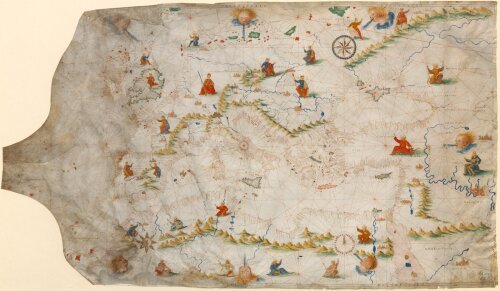
    The members of the DiplomatiCon Project (Power in History: Centre for Political History, and Centre for Urban History), in cooperation with the Research Network ‘Routes and Roots in Colonial and Global History’ of the N.W. Posthumus Institute are glad to announce the two-day interdisciplinary workshop on ‘Spaces of formal and informal diplomacy in the Premodern Mediterranean’, to be held on 18 and 19 September 2025 in Antwerp. Among the presenters will be a considerable number of Posthumus PhDs and Posthumus fellows. Keynote speaker will be Professor Zoltán Biedermann (University College London).

    This workshop aims to reappraise the Mediterranean space, taking into consideration the various actors and institutions that have been in contact or have been involved with the sea during the medieval and early modern periods. The goal is to question and nuance the great narratives of the Sea, and to break this single space into appropriate units of analysis. Several aspects have been looked at in the definition or delimitation of this Mediterranean space—geography, ecology, politics, religion or economy—that are usually taken separately and independently of each other. This workshop aims to bring nuance to the issue by shifting the perspective from monolithic concepts to actor-oriented emergent patterns. Instead of imposing definitions from the outside, it seeks to identify various spaces and their limits from within. The focus will be on exploring how spaces were produced and experienced by the actors themselves, the institutions and structures that facilitated this production, how these spaces were perceived and communicated to a broader audience, and potential variation in the permanence of different types of spaces and their uses; the workshop aims to complement traditional research by applying quantitative methods, spatial analysis, and GIS.

    Participation in the workshop is free, but prior registration is requested. You can register by sending an e-mail to the Diplomaticon project.

    FULL INFO AND PROGRAM

  • 4th Regional History Society of Southern Africa Conference

    4th Regional History Society of Southern Africa Conference

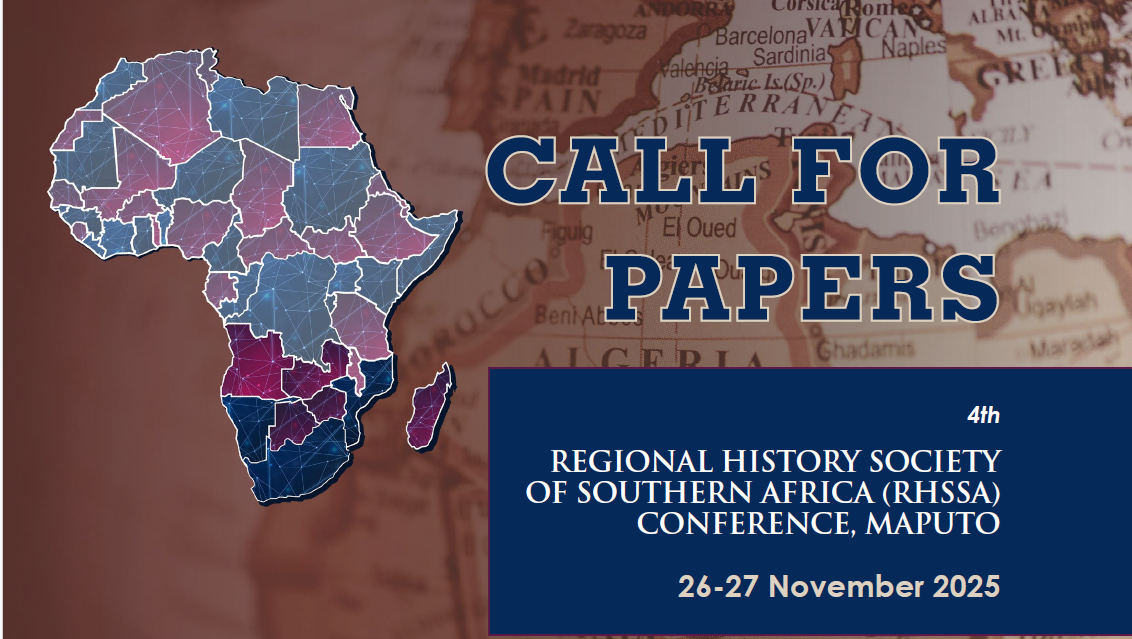
    The Regional History Society of Southern African (RHSSA) is hosting a conference on the theme ‘Independences and post-colonialism in Southern Africa’. This year’s theme is closely related to the jubilee of independence of Mozambique and Angola.

    The organisers call for paper proposals for this conference. Abstracts (250 words max.) should be submitted ultimately 30 June 2025 via the conference website.

    Especially welcomed are submissions that address any aspects of the following sub-themes:

    • Reassessing the historiography of liberation struggle in Southern Africa
    • Independence, wellbeing and human dignity
    • State and society in post-colonial southern Africa
    • Democracy, political legitimacy, and state building, accountability
    • Meanings of independence (economic; political; cultural),
    • Regional integration
    • State religion and society in Southern Africa
    • History and education curricula in Southern Africa
    • Climate, Environment, and societies in Southern Africa
    • Women and Audiovisual Sources in the Colonial Periodical Press
    • Archives and the politics of memory
    • Southern Africa in global politics: warfare and state building
    • Decolonization and the land question in post-colonial southern Africa

    Keynote speaker will be Arlindo Chilundo, who holds a PhD degree by the University of Minnesota, USA, in African Social and Economic History, with a comparative area in Agriculture and Applied Economics. He is currently a freelancer consultant.

    CONFERENCE WEBSITE

  • Seminar ‘Sources, silence and the senses in the study of the history of global Chinese Labour’

    Seminar ‘Sources, silence and the senses in the study of the history of global Chinese Labour’

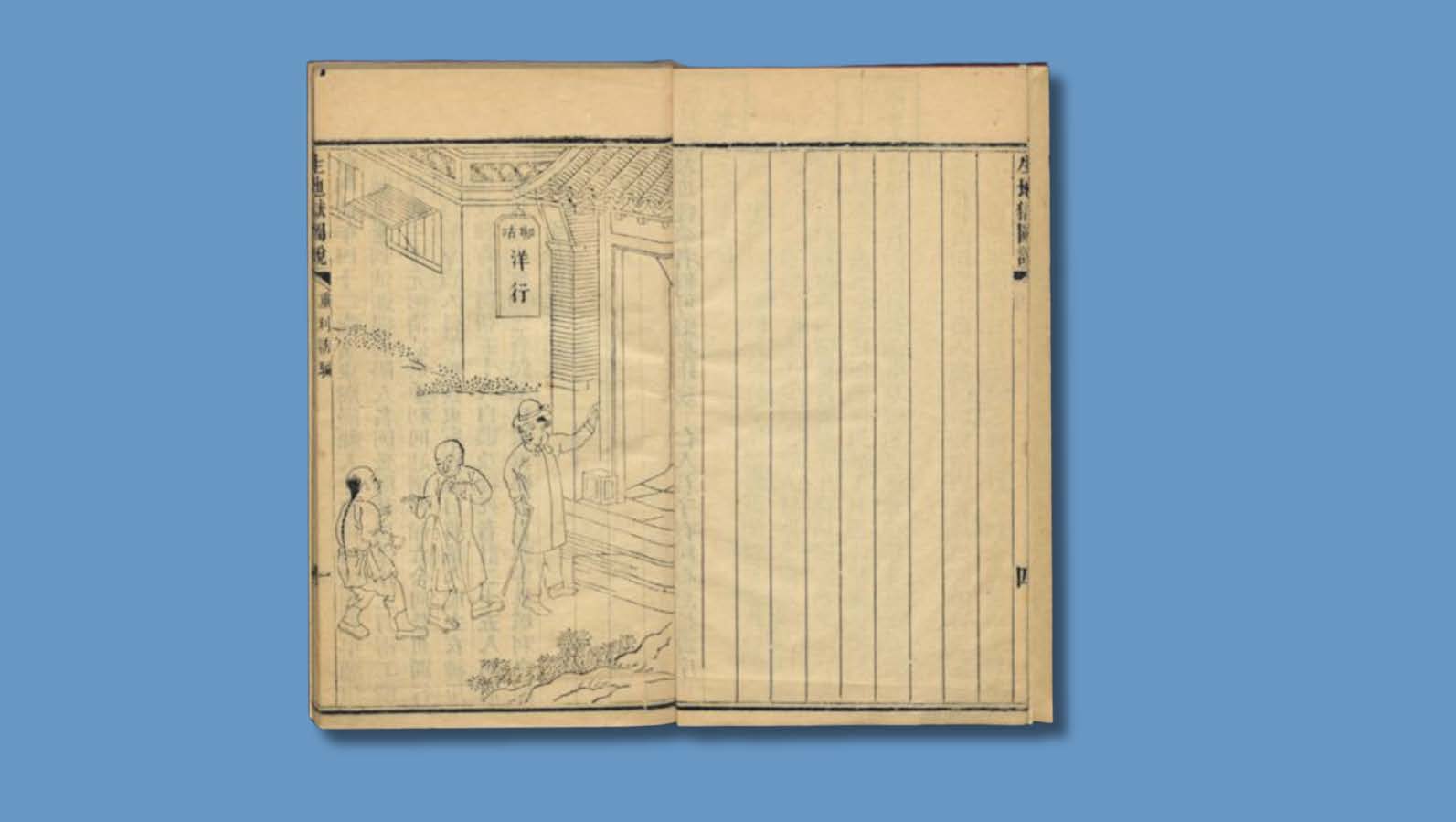
    Jens Aurich (junior researcher at the IISH), Koen van der Lijn (Johan Huizinga Fellow at Rijksmuseum Amsterdam) and Fresco Sam-Sin (founder and creative lead of the Things That Talk Foundation), both connected to the Contract Labourers and Collective Action project at IISG, organise the seminar ‘Sources, silence and the senses in the study of the history of global Chinese Labour’, to be held at 18 August 2025 at the IISH in Amsterdam. The opening lecture will be delivered by Professor Evelyn Hu-DeHart, Professor of History and American Studies at Brown University, who will also act as key listener at this seminar.

    A critical engagement with archival material is fundamental to understanding the history of labour in colonial contexts. Central to this inquiry are our reading strategies — both against and along the grain of the archives — which serve as essential tools in navigating and interrogating these sources. This seminar aims not only to contextualise such strategies within the framework of global Chinese labour history — particularly by considering issues such as multilingualism, intermediaries and transcultural dynamics — but also to examine the potential contributions of non-archivalsources. Special attention will be given to material culture, silence, and the senses.

    Participants are expected to prepare a presentation consisting of three case studies in total. Goal is to foster collective reflection and opportunities to advance one another’s research. More info on the format of the presentation is to be found in the full call (see button below). Those interested to participate should send an e-mail with a few lines about their research interest in the study of the history of global Chinese Labour to Fresco Sam-Sin before 4 July 2025.

    DOWNLOAD FULL CALL (PDF)

  • The N.W. Posthumus Institute congratulates PhD Basic Training graduates

    The N.W. Posthumus Institute congratulates PhD Basic Training graduates

    At the Posthumus Conference 2025 in Nijmegen, the PhD students present who completed the Posthumus PhD Basic Training Programme received their diploma during the Conference Dinner.

    The N.W. Posthumus Institute congratulates these PhDs and also those who completed the programme but were not at the conference, with successfully completing the PhD Basic Training Programme!

    As the structure of the PhD Training Programme has changed per the start of cohort 2024, the members of cohort 2023 were the last to complete the previous version of the training programme, which used to exist of a basic and an Advanced Part. As of the start of cohort 2024, PhDs will now follow one integral Programme; after completing this, students can use additional optional training facilities, such as the Writing Retreat.