Research School for Economic and Social History

Author: René van Weeren

  • NWO XS Grant awarded to Posthumus fellow Corinne Boter

    NWO XS Grant awarded to Posthumus fellow Corinne Boter

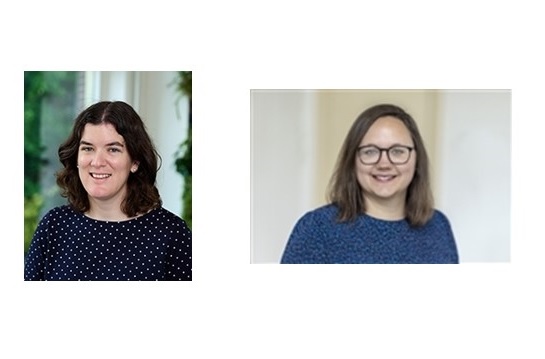
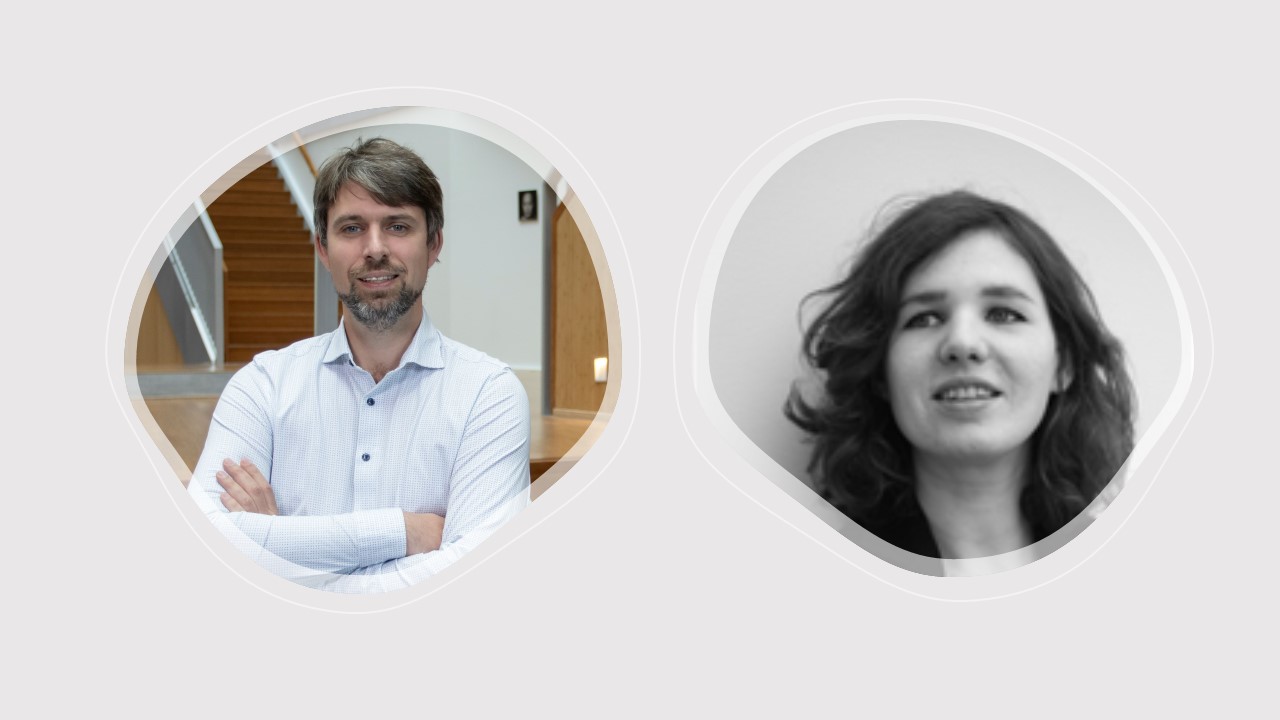
    In the 3rd round of the NWO Open Competition SSH XS, NWO has granted an XS Grant to Posthumus fellow and former Posthumus research network coordinator Dr Corinne Boter for her research proposal, entitled ‘Technological change and gender inequality: A comparison between a Dutch and an Italian textile company, 1870-1920’.

    The technological advancements of the Industrial Revolution profoundly changed work organization, with the textile industry leading the way. New technology also affected the extent of gendered occupational segregation and the gender wage gap. However, as the mechanisms behind this are not yet fully understood (as historians commonly look at macro-level developments), this project studies company-level developments. It employs comparative methods to investigate to what extent similar technological advancements in textile companies in different cultural contexts (the Netherlands and Italy), had similar or different effects on gender relations. This will elucidate the circumstances under which technology could improve or exacerbate gender inequality.

    The Posthumus staff congratulates Corinne with this award.

  • Module 2 Online Lecture Series ‘An Introduction to Inequalities in Health using Historical Causes of Death’ open for registration

    Module 2 Online Lecture Series ‘An Introduction to Inequalities in Health using Historical Causes of Death’ open for registration

    In March 2025 Module 2 of the Online Lecture Series ‘An Introduction to Inequalities in Health using Historical Causes of Death’ will start. This online lecture series is scheduled as part of the COST Project CA22116 – The Great Leapand is organised in co-operation with the N.W. Posthumus Institute. It is targeted at students and scholars at all levels interested in exploring major issues related to health inequalities from a historical point of view. There are four modules, each module comprises several lectures. Module 2 will address sources and databases. Module 3 will address methods and analyses (expected September 2025 – June 2026). Depending on the feedback from participants, modules are repeated or new modules are added to the online lecture series. For each module it will be possible to earn 1 EC.

    Module 2: Database Management

    Description

    This module is targeted at students and scholars at all levels interested in exploring (historical) database management related to health inequalities. Participants will gain detailed knowledge from six expertly-led lectures on various key topics.

    General Learning objectives

    Upon completion of the online modules, students are able to:

    • understand how different disciplines approach the study of health inequalities;
    • outline some of the major debates in the study of health inequalities;
    • explain and reflect upon important determinants of inequality in health and how they relate to broader processes of change in the period 1800-2024;
    • reflect on one specific article dealing with inequality in health and present it to an interdisciplinary group of scholars/peers.

    Program

    7 March 2025 – Tiziana Margaria (University of Limerick)
    Best practices for data management

    21 March 2025 – TBA
    Using automatic transcription for processing sources

    4 April 2025 – Angelique Janssens (Radboud University) and Isabelle Devos (Ghent University)
    The creation of cause of death databases

    25 April 2025 – TBA
    Coding historical causes of death data with Large Language Models

    16 May 2025 – Alice Reid  (University of Cambridge) / Mayra Murkens (University of Groningen)
    Historical International Classification for Diseases

    23 May 2025 – Michail Raftakis (University of Bologna), Elena Crinela Holom (Babeș-Bolyai University), Grażyna Liczbińska (Adam Mickiewicz University Poznań)
    Cause of death sources around the world

    30 May 2025 – Hannaliis Jaadla (University of Cambridge)
    Measures of inequality and SES differences in mortality

    ECs and Registration

    The lecture series is open to everyone, but PhD students who attend all six sessions and present a reflection on a specific article from the lecture series during a final meeting will be entitled to earn 1 EC (European Credits) and receive an official certificate. As co-organiser, the N.W. Posthumus Institute, Research School for Economic and Social History, currently hosted by Utrecht University will issue these official certificates to participants who have successfully participated. Please register via the button below if you would like to follow the lecture series and receive the certificate with 1 ECTS.

    Registration deadline was until 28 February 2025.

    FULL INFO

    Please note that recordings of module 1 are still available via this page (external link).
  • Change of Coordinator Research Network ‘Inclusion, Exclusion, and Mobility’

    Change of Coordinator Research Network ‘Inclusion, Exclusion, and Mobility’

    Recently, Liesbeth Rosen Jacobson concluded her valuable work as a coordinator of our Research Network ‘Inclusion, Exclusion, and Mobility’. We thank Liesbeth very much for her contribution over the past years!

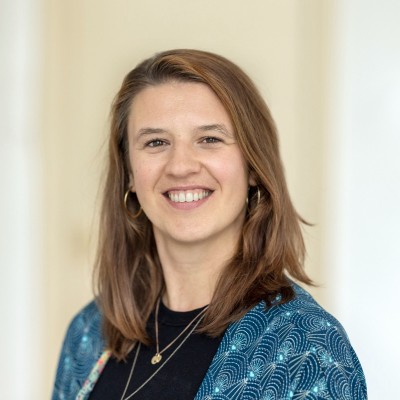
    We are happy to announce we have found a suitable successor in the person of Dr Swantje Falcke. Swantje Falcke is an Assistant Professor in Economic and Social History at Utrecht University specialised in the field of migrant integration and naturalization. Currently, Swantje is involved in a project looking at the effectiveness of integration policies for refugees’ labor market integration in the Netherlands from a long-term perspective. Next to these projects, Swantje as migration scholar with an interdisciplinary profile is currently developing a new research line analyzing the impact of environmental change on migration in a long-term perspective.

    We welcome Swantje who will coordinate the Research Network ‘Inclusion, Exclusion, and Mobility’ in cooperation with Dr Bart Lambert (Vrije Universiteit Brussel).

  • Jaarcongres De Moderne Tijd 2025 – registreer uiterlijk 14 maart 2025

    Jaarcongres De Moderne Tijd 2025 – registreer uiterlijk 14 maart 2025

    ~ because of scope, in Dutch only ~

    Op 21 maart 2025 vindt in Amsterdam het jaarcongres 2025 van Werkgroep de Moderne Tijd plaats. In dit jaarcongres van Werkgroep de Moderne Tijd van 2025 staat de vraag centraal welke rol ‘de Toekomst’ speelde in de geschiedenis van Nederland en België, inclusief de koloniën in de periode 1780-1940. Hoe kreeg de toekomst vorm in politiek, cultuur, kunst, literatuur en wetenschap? Hierbij wordt niet alleen gekeken naar de rol van avant-gardisten en andere artistieke, politieke en intellectuele voorlopers, maar wordt ook expliciet de aandacht verlegd naar de betekenis van de toekomst bij het grotere publiek, als lezer, filmkijker, consument, maar ook als dagboekschrijver en ondernemer. Dagvoorzitter is Lotte Jensen, hoogleraar Nederlandse literatuur- en cultuurgeschiedenis aan de Radboud Universiteit te Nijmegen.

    Deelnemers kunnen zich aanmelden via e-mail uiterlijk 14 maart 2025; er is een financiële bijdrage van toepassing, voor studenten en PhD-kandidaten geldt een gereduceerd tarief. Voor details, download de info als pdf via de knop hieronder.

    MEER INFO (download Pdf)

  • Inaugural lecture Professor Arthur van Riel

    Inaugural lecture Professor Arthur van Riel

    The rector magnificus of the Erasmus University Rotterdam announces that Dr A. (Arthur) van Riel, appointed as endowed Professor of Historical Political Economy at Erasmus School of History, Culture and Communication, on behalf of Stichting Erasmus Trustfonds, will publicly accept his appointment on Friday, 24 January with an inaugural lecture entitled ‘The welfare state as expectation. On sustainability and historical political economy’.

    The lecture will be followed by a public reception at the same location.

    The lecture will also be streamed via an online link (see link in header).

    FULL INVITATION (PDF)

  • Valedictory lecture Professor Hein Klemann

    Valedictory lecture Professor Hein Klemann

    On 7 February 2025, Professor Hein Klemann, Professor of Economic History and International Relations at the Erasmus School of History, Culture and Communication, and former board member of the N.W. Posthumus Institute will deliver his public valedictory lecture, entitled ‘Dutch Shipbuilding and Colonies’.

    The lecture will be followed by a public reception at the same location.

    Those unable to attend in person can follow the lecture online (see link in header section).

    The N.W. Posthumus Institute expresses its gratitude to Professor Klemann for his effort and activities for our organisation.

    Full invitation (pdf)

  • 12th Tensions of Europe Conference (Eindhoven, 8-10 July 2026)

    12th Tensions of Europe Conference (Eindhoven, 8-10 July 2026)

    The organisers of the 12th Tensions of Europe (ToE) Conference call for abstracts for this conference with as central theme ‘The meaning of the past in sustainable futures’.

    This conference will be held on 8-10 July 2026 at the campus of Eindhoven University of Technology (TU/e) and will be organised by the Eindhoven History Lab, part of the Technology Innovation and Society research group of TU/e in collaboration with the 4TU History of Technology center (uniting Delft University of Technology, Eindhoven University of Technology, the University of Twente, and Wageningen University & Research). Eindhoven and seeks to explore and discuss what it means for European and non-European scholars to write ‘European’ histories of ‘technology’ in a pluriverse world. The aim of the conference is to co-develop fresh ideas on how a European historiography of technology can inform and contribute to current agendas for inclusive and green transitions. At this conference, one of the main questions will be: in what ways do aspirations for equitable and inclusive relations intersect with legacies of the past?

    Proposals can be submitted for several types of contributions, e.g. individual papers, full sessions, and contributions to sessions. A full list of these types and their respective characteristics can be found in the full call (see button below).

    Proposals should be submitted ultimately by the newly extended deadline of 1 February 2026.

    MORE INFO

  • Janna Coomans new coordinator of Research Network ‘Economy and Society of the Pre-industrial Low Countries in Comparative Perspective’

    Janna Coomans new coordinator of Research Network ‘Economy and Society of the Pre-industrial Low Countries in Comparative Perspective’

    Over the past years, Professor Pepijn Brandon, together with Dr Wout Saelens, coordinated the Research Network ‘Economy and Society of the Pre-industrial Low Countries in Comparative Perspective’ of the N.W. Posthumus Institute. Because of his obligations at VU Amsterdam and his new function at BMHN / KNHG, Pepijn has decided to hand over his tasks as network coordinator.

    We are pleased to announce he has found Dr Janna Coomans to take his place as of January 2025 and join Wout Saelens as Network Coordinator.  Janna is Assistant Professor at the department of Medieval History. Her research focuses on social history and public health in premodern cities. Her dissertation (cum laude) was published in 2021 as Community, Urban Health and Environment in the Late Medieval Low Countries (Cambridge University Press). Between 2018-2021, she was a post doctoral researcher in the ERC-project ‘Healthscaping Urban Europe’. She currently works on the VENI (Dutch Research Council) project ‘Inflammable cities: how fire risks transformed the Low Countries, 1250-1600’.

  • Symposium ‘Archeologie en de stad’ – registreer uiterlijk 28 maart 2025

    Symposium ‘Archeologie en de stad’ – registreer uiterlijk 28 maart 2025

    ~ because of scope, in Dutch only ~

    Op vrijdag 4 april 2025 organiseert de werkgroep Stedengeschiedenis een bijeenkomst bij de Rijksdienst voor het Cultureel Erfgoed (RCE, Smallepad 5, Amersfoort) onder de titel ‘Archeologie en de stad’. De studiedag is gratis voor eenieder toegankelijk, aanmelden via mail is noodzakelijk uiterlijk 27 maart 2025. Verzoek is om daarbij aan te geven of de deelname het ochtendprogramma (+ lunch) en/of het middagprogramma betreft.

    Programma

    10:00-12:00 Excursie door de middeleeuwse stad Amersfoort, onder leiding van archeoloog dr. Roos van Oosten en architectuur- en stadshistoricus dr. Reinout Rutte
    12:00-13:00 Lunch bij RCE
    13:00-13:30 Drs. Erik Peters (stadsarcheoloog Breda) – Van stadspoort, sluis en struikel-kuilen
    13:30-14:00 Discussie
    14:00-14:30 Drs. Patrick Ploegaert (senior archeoloog bij Archeologie Rotterdam) – In de voetsporen van de Dienst Wederopbouw Rotterdam (DIWERO). Archeologisch onderzoek naar de laatmiddeleeuwse sluizen en bewoning aan de Hoogstraat te Rotterdam.
    14:30-15:00 Discussie
    15:00-15:30 Koffie en thee
    15:30-16:00 Drs. Peter Stokkel (hoofd archeologie Den Haag) – Het begin van Den Haag
    16:00-16:30 Discussie
    16:30-slot Nazit

    DOWNLOAD PROGRAMMA (PDF)

  • Call to support applications for the MSCA Postdoctoral Fellowships 2025 (CISPAC)

    Call to support applications for the MSCA Postdoctoral Fellowships 2025 (CISPAC)

    The Centro de Investigación Interuniversitario das Paisaxes Atlánticas Culturais – Interuniversity Research Centre for Atlantic Cultural Landscapes (CISPAC) is launching a call to support applications for the MSCA Postdoctoral Fellowships 2025, with estimated publication and submission dates in April and September 2025, respectively. CISPAC is a new generation inter-university research center in social and human sciences that is part of the Galician University System (SUG). Its mission is to investigate in order to provide systemic answers to contemporary challenges on the territory, through a transdisciplinary scientific confluence, intertwined with the whole of citizenship, to generate knowledge, innovation and change. At CISPAC, researchers aspire to research and promote solutions related to socioeconomic, cultural and environmental transformations that are reflected in the landscape, through research, to generate knowledge, and transfer, to generate action. We seek sustainable solutions to the ecological crisis.

    Candidates must prepare a research proposal to be carried out during the fellowship within the framework of one of the 5 research fields included in CISPAC’s scientific agenda, as well as the three strategic axes.

    FULL INFO (PDF)