 On Thursday 12 and Friday 13 December the N.W. Posthumus Institute had the pleasure of time welcoming 35 new PhD students of cohort 2024 (the largest cohort ever) in our PhD programme. We thank director Nico Randeraad and deputy director Joris Roosen of FASoS Research Institute and Sociaal Historisch Centrum voor Limburg for their hospitality and commitment. We are also grateful for the assistance and support of many Posthumus fellows who, from as far as Groningen, joined the seminar and provided comments on one or more papers. The next seminar will be held on on 10 and 11 April 2025 at the Eindhoven University of Technology.
Author: René van Weeren
-
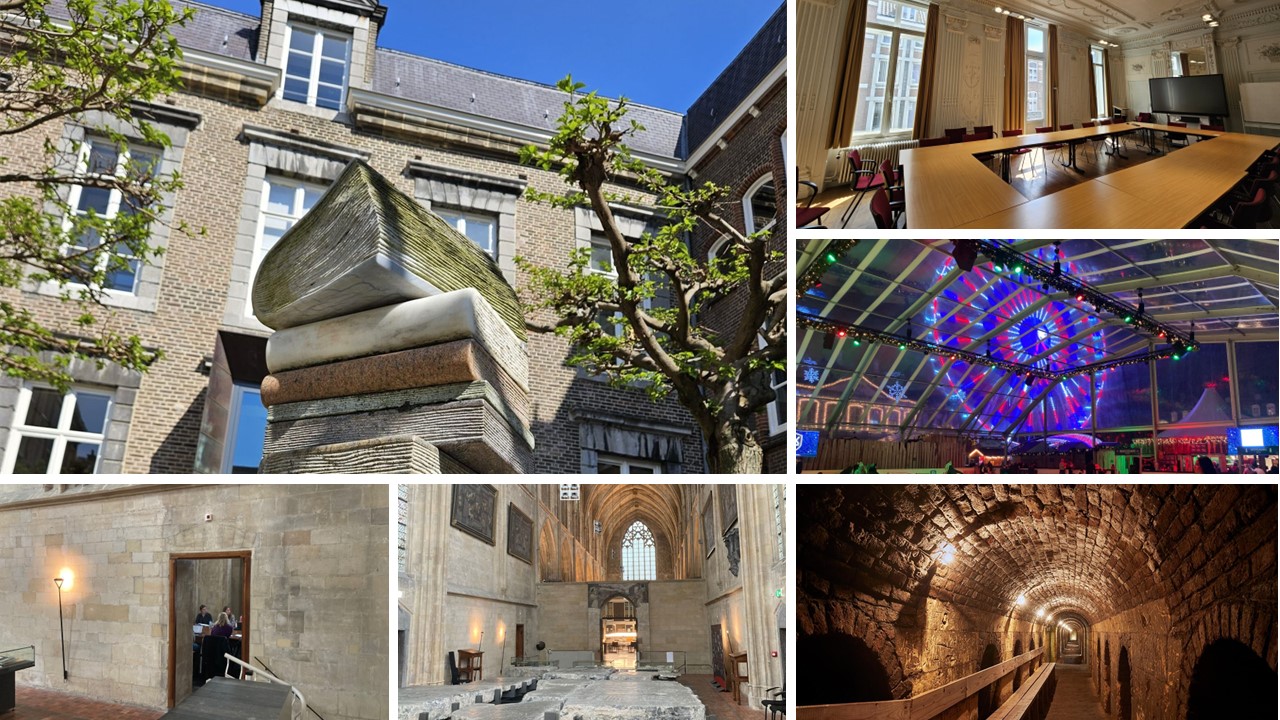
Successful Seminar I in Maastricht
-

Symposium ‘Colonial Archives and Meaningful Digital Infrastructure’
On 24 January 2025, preceding the inaugural lecture of Professor Matthias van Rossum, the symposium ‘Colonial Archives and Meaningful Digital Infrastructure’ will take place at Radboud University. This symposium brings together researchers and practitioners to discuss the challenges and opportunities of working with digitized colonial records.
The symposium explores challenges, questions, and examples surrounding digital access and enrichment of shared resources related to the colonial past, such as:
- How can digital infrastructure contribute to making unique information about the people and societies affected by or resisting colonialism findable and researchable?
- How can multiple perspectives and the many voices in these archives be made more visible?
- How can we ethically employ new techniques?
- And who are the true beneficiaries of advanced access and research infrastructure?
- Who should these initiatives serve, and how can global stakeholders beyond Dutch and professional users be reached (such as the descendants of colonized societies and of those societies whose pasts can be reconstructed using these archives)?
The symposium is free of charge, but registration is required. The symposium can be attended on-site as well as online.
-
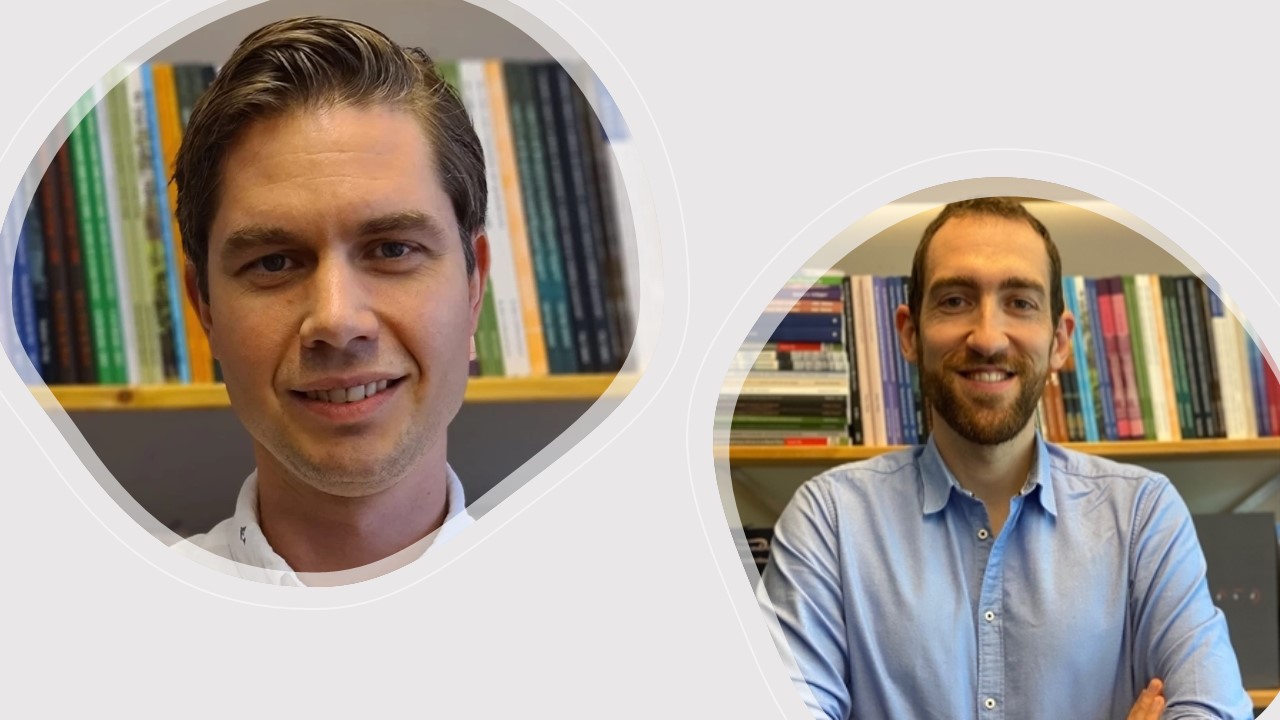
New Coordinator Research Network ‘Globalisation, Inequality, and Sustainability in Long-Term Perspective’
As per 1 January 2025, Pim de Zwart will be succeeded as coordinator of the Research Network ‘Globalisation, Inequality, and Sustainability in Long-Term Perspective’ of the N.W. Posthumus Institute by his colleague Daniel Gallardo Albarrán. The N.W. Posthumus Institute is very grateful to Pim voor his efforts for the Research Network and for the N.W. Posthumus Institute over the past years and of course welcomes Daniel as new coordinator.
Daniel currently works as assistant professor at the Economic and Environmental History Group at Wageningen University Research. His research focuses on the historical roots of global health inequality and their implications for global welfare disparities. His publications consider the effect of sanitary infrastructures on public health; the impact of Dutch colonialism on health outcomes in Java; the link between health and welfare (19th and 20th century); and how health improves productivity. Also, he studied the determinants of economic performance (19th and 20th century). Currently, he is conducting two projects. The first considers the determinants of clean water, sanitation since 1850 from a global perspective and it is funded by the Dutch Research Council. The second analyses the uneven establishment of healthcare and sanitation in colonial Africa, ca 1900-1960, funded by the Swedish Research Council. He also manages Long-Run Health Matters, a research portal summarizing important work on the origins of global health inequality.
-
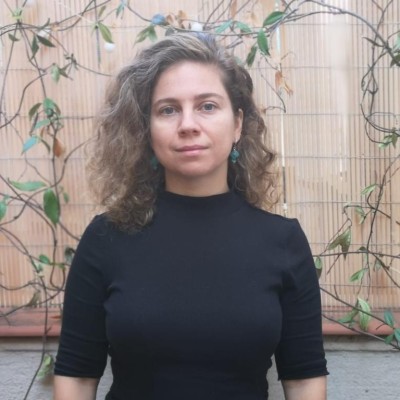
Masterclass ‘Decolonizing Feminist Futures: What kind of economies do we want?’ by Dr Gisela Carrasco-Miró – register before 20 Dec. 2024
On 14 January 2025 the Netherlands Research School of Gender Studies (NOG) is organising a masterclass with Dr. Gisela Carrasco-Miró (Escola Massana, Autonomous University of Barcelona) on the topic of ‘Decolonizing Feminist Futures: What kind of economies do we want?’ Please note that this masterclass is closely related to the book talk ‘Decolonizing Feminist Economics: Possibilities for Just Futures’ on the preceding day.
This masterclass will explore the imagination as an economic faculty. Imagination is understood here not as an individual capacity, but a social, common practice, creating relationships of meaning. What can imagination be, as a practice of decolonizing feminist economic transformation, in conditions of growing crisis and isolation?
With the aim of addressing this question, this masterclass invites the participants to imagine new, better economies and to vindicate shared feminist futures looking at the projects of post-extractivism, ecofeminism and post-growth/degrowth from a decolonizing feminist perspective.
The participants will be encouraged to share their research, practices and interests. Together, we will create space for confabulative dialogues activating feminist imaginaries of the future in the present. Suggested reading (text will be made available upon registration): Carrasco-Miró, G. 2025. Glossary for confabulating futures. Decolonizing Feminist Economics: Possibilities for Just Futures. Bristol: Bristol University Press.
Registration by e-mail closes Friday 20 December 2024, 17:00h. (R)MA and PhD students are eligible to receive 2 ECTS for active participation in both the masterclass and the lecture as well as for writing a 1000-words (max.) entry of the glossary that will be discussed during the masterclass. Please specify in your registration email whether you would like to receive credits.
-
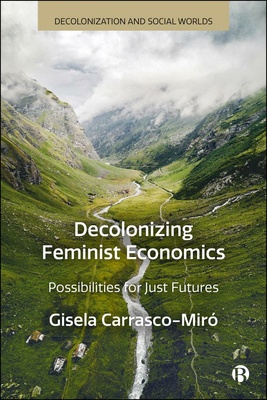
Book Talk ‘Decolonizing Feminist Economics: Possibilities for Just Futures’ – register before 20 Dec. 2024
On 13 January 2025 the Netherlands Research School of Gender Studies (NOG) is organising a book talk with Dr Gisela Carrasco-Miró (Escola Massana, Autonomous University of Barcelona) on Gisela’s forthcoming publication Decolonizing Feminist Economics: Possibilities for Just Futures (Bristol University Press, March 2025).
What are the power dynamics of what we are theorizing as feminist economics, and what changes does it generate? To what extent does it promote control and exploitation, to what extent does it promote radical socio-economic transformation, post-capitalist imaginaries and decolonization? The book takes seriously these questions, not settling for mere criticism, but developing a map for a decolonizing feminist economics approach. In its chapters, the suppression and devaluation of non-modernist and post-capitalist economic knowledges by the dominant economic epistemology is denounced, in addition to investigating feminist and decolonizing tools and proposals around the world to illuminate our hijacked present and to imagine a decolonizing feminist economic landscape that is under transformation.
The book talk will be a conversation between Gisela, Kathrin Thiele, and Ana Maria Miranda Mora. The book talk will be moderated by Adriano Habed. Please note that the book talk is closely related to the Masterclass ‘Decolonizing Feminist Futures: What kind of economies do we want?’, which will take place the next day.
Registration by e-mail closes Friday 20 December 2024, 17:00h.
-
Inaugural lecture Professor Matthias van Rossum
On 24 January 2025 Posthumus fellow and Posthumus course coordinator Matthias van Rossum will deliver his inaugural lecture as Professor by special appointment Global Histories of Labour and Colonialism at Radboud University. Matthias was appointed on 1 February 2024 to this special chair, jointly established by Radboud University and the International Institute of Social History.
The chair focuses on the history of slavery, forced labour and resistance in relation to colonial expansion. The chair aims to gain new insights into the Dutch and European colonial past by studying sources and perspectives from below. The research agenda of the chair is strengthened by a number of projects led by Matthias van Rossum. For instance, the NWO project Resisting Enslavement and the ERC Consolidator project Voices of Resistance investigate forms of resistance, the voices and perspectives of enslaved people in the Indian Ocean, Indonesian archipelago and Atlantic world. This contributes to the Exploring Slave Trade in Asia project, which aims to reconstruct the slave trade in Asia using an international database. The infrastructure project GLOBALISE enables new ways of research for the digitised VOC archives. Together, these projects seek to understand the colonial and slavery past in new ways.
Attendance is possible on location after prior registration or online via a livestream.
The N.W. Posthumus Institute congratulates Matthias with this appointment.
-
NWO XS Grant awarded to Posthumus fellow Swantje Falcke
The Dutch Research Council (NWO) has awarded Dr Swantje Falcke, Posthumus fellow, currently affiliated with the Department of History at Utrecht University, an XS Grant for the project ‘Environmental change and migration patterns in the Netherlands: A long term view’.
Swantje’s project investigates the long-term relationship between environmental change and migration in the Netherlands from 1812 to 2023. The central question to the project is who migrates in response to environmental change, and why. A comprehensive dataset will be created combining information on various environmental changes with individual-level migration data. Migration patterns in response to sudden and gradual environmental shifts will be analysed, taking into account socioeconomic and institutional changes over time. The findings aim to inform policy interventions to protect vulnerable populations and advance the academic understanding of environmental migration.
The N.W. Posthumus Institute staff congratulates Swantje with this award!
-
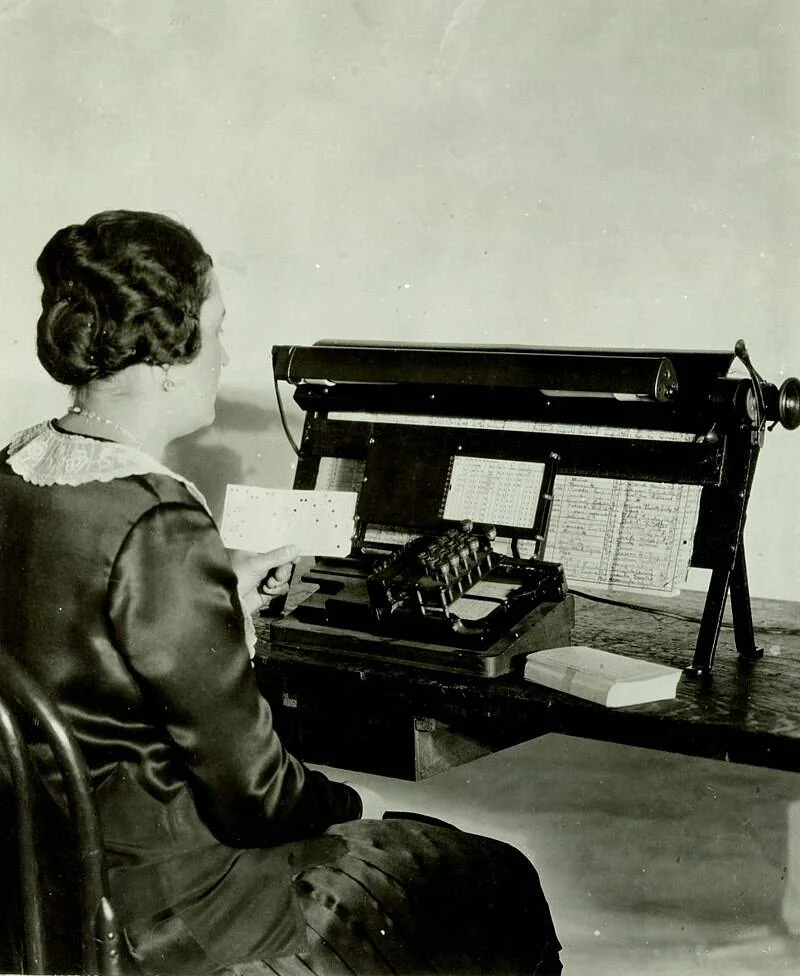
Register now for our Research Master Course ‘Data Management for Historians’ – deadline 10 January 2025
From February until May 2025 the N.W. Posthumus Institute organises the Research Master Course ‘Data Management for Historians’.
This 5 EC online research course will be supervised by Dr Rick Mourits (IISH) and will consist of a series of online sessions with a final closing session at the IISH.
The course will allow master students within economic and social history to process their own rudimentary data and enable reuse according to the FAIR data principles and instructs them on the basics of quantitative data management. It introduces the quantitative research cycle, programming in R and SPARQL, and how to report on data questions.
Registration is open until 10 January 2025 to all Research Master students via our online form. Interested but not a Research Master student? Do contact us via e-mail and we will talk about the options.
-
Successful PhD Defence Posthumus alumna Charris De Smet
On 10 December 2024 Posthumus alumna Charris De Smet successfully defended her PhD thesis ‘Framing French costumers into citizens. A comparative discourse analysis of debates on luxury and consumption in French parliament and the press in the age of revolution (1789-1848)’ at the University of Antwerp. Promotors were Professor Ilja Van Damme and Professor Marnix Beyen (both University of Antwerp) and Professor Natacha Coquery (University Lumière Lyon 2).
Charris’ dissertation has reconstructed and comparatively investigated French parliamentary politics of luxury consumption in three revolutionary years, i.e. 1789, 1830 and 1848. Drawing the idea that consumption became depoliticized in this period into question, it has demonstrated that consumption was an important topic of discussion under different modern French political regimes. The close reading of the parliamentary debates has revealed that the contemporary development of consumerism in France was seen as inextricably tied to broader issues of citizenship, representation, political identity and national belonging between 1789 and 1848. Therefore, these topics constituted important political questions that warranted debate in the national legislative bodies on how to harness, encourage or remodel existing consumer behaviour and commodity culture for the sake of the wellbeing of the state and its citizens.
The N.W. Posthumus Institute congratulates Charris with obtaining her PhD!
-
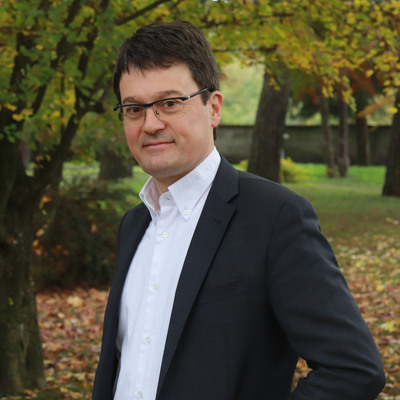
Masterclass ‘Rich and Poor in Societies Past and Present’ with Professor Guido Alfani – deadline abstracts 16 December 2024
The Centre for Historical Research at University of Groningen, in collaboration with the N.W. Posthumus Institute, organises a masterclass by Professor Guido Alfani on the topic ‘Rich and Poor in Societies Past and Present’ on Wednesday 12 February 2025. The organisers offer a limited number of (Research) Masters students, PhD candidates and post-docs the opportunity to present their research to Professor Alfani by engaging with his latest book As Gods Among Men: A History of the Rich in the West (Princeton, 2023) from the perspective of their own research. In particular, papers in the fields of economic and social inequality, distribution and concentration of wealth, social mobility, poverty and charity, and the conflation of political and economic interests are welcome.
Professor Guido Alfani is professor of Economic History at Bocconi University, Milan. His areas of interest include economic history and demography, with a focus on long-term dynamics, on economic inequality and social mobility, and on the history of epidemics, pandemics and famine. He is currently a member of the scientific committee of the Datini Foundation, of the international advisory board of the Posthumus Institute-Research School for Economic and Social History and of the board of trustees of the European Historical Economics Society (EHES). In his latest book he shows how the rich historically justified themselves by helping their societies in times of crisis, why they no longer do, and what that may mean for social stability. Next to the masterclass, Professor Alfani will also deliver a public lecture at the University of Groningen (further details to be announced in due time).
Those interested in participating in this masterclass should send a paper proposal (250 words max.) to both organisers Arie van Steensel and Bart Danon ultimately 16 December 2024.