Research School for Economic and Social History

Author: René van Weeren

  • Successful PhD Defence Posthumus alumna Aditi Dixit

    Successful PhD Defence Posthumus alumna Aditi Dixit

    On 17 May 2024, Posthumus alumna Aditi Dixit successfully defended her thesis ‘Asian Divergence in an Age of Globalisation: Textile Manufacturing, Trade, and the State in India and Japan, ca. 1890-1940’ at Utrecht University. Promotors were Professor Elise van Nederveen Meerkerk (Utrecht University) and Professor Christina Moll-Murata (Ruhr University, Bochum).

    We congratulate Aditi with her PhD!

  • FWO Postdoc Grants awarded to Posthumus alumni

    FWO Postdoc Grants awarded to Posthumus alumni

    In the most recent round (May 2024), the Research Foundation – Flanders (FWO) has awarded Postdoc Grants to several Posthumus alumni. Both Amaury de Vicq de Cumptich and Sam Geens have been granted a Junior Postdoc Fellowship, Ruben Peeters was awarded a Senior Postdoc Fellowship.

    The N.W. Posthumus Institute staff congratulates Ruben, Amaury, and Sam with this recognition.

  • PhD Defence Posthumus alumnus Björn Quanjer

    PhD Defence Posthumus alumnus Björn Quanjer

    On 1 May 2024 Posthumus alumnus Björn Quanjer succesfully defended the thesis ‘A Tale Of Tallness. A household perspective on early life determinants of male height within the Netherlands between 1850 and 1950’ at Radboud University. Promotors were Professors Jan Kok and Angelique Janssens (both Radboud University), co-promotor Dr Tassenaar (University of Groningen).

    The Posthumus staff congratulates Björn with his promotion!

  • Seminar ‘CAPASIA: The Asian Origins of Global Capitalism’ (University of Amsterdam and hybrid)

    Seminar ‘CAPASIA: The Asian Origins of Global Capitalism’ (University of Amsterdam and hybrid)

    On 21 May 2024, a hybrid seminar will be held jointly by the participants in the CAPASIA and GLOBALISE projects on the topic ‘CAPASIA: The Asian origins of global capitalism’. Confirmed speakers are Maarten Draper and Sebastian Majstorovic, both Research Associates with the European University Institute. Referent will be Luc Bulten, Postdoc Researcher at Radboud University.

    The CAPASIA project analyzes approximately 150 European ‘factories’ established in maritime Asia between 1500-1800. It views these not just as trade locations, but as vibrant hubs of material and information exchanges between Asians and Europeans. The project uses the factories as a lens to explore the Asian origins of global capitalism. In their talk, Maarten Draper and Sebastian Majstorovic will provide an overview of the aims and methodology of the CAPASIA project, including
    the development of a comprehensive database of these factories. They will also discuss how the CAPASIA and GLOBALISE projects align and build upon each other.


    CAPASIA is a five-year ERC-funded project hosted at the European University Institute in Florence. Its deliverables include a user-friendly website that will serve as a repository for data on the factories, a meeting place for scholars, and a medium for decolonising histories of global capitalism. GLOBALISE, a five-year NWO-funded
    project based at the Huygens Institute in Amsterdam, focuses on making the VOC archives more accessible to researchers.

    The seminar can be attended on location or online; the Zoomlink is displayed in the header of this post or via the button below.

    SEMINAR LINK
  • ESTER Research Design Course 2024

    ESTER Research Design Course 2024

    Please note the deadline has closed 1 July 2024!

    From 30 September until 2 October 2024 the ESTER Research Design Course (RDC) 2024 will be held at the University of Münster. The 2024 RDC will be hosted by Dr Christine Fertig and her colleagues in close cooperation with the N.W. Posthumus Institute. ESTER is the acronym of the European graduate School for Training in Economic and social historical Research, a Europe-wide network of leading scholars in the field of social and economic history, established in 1991 by the N.W. Posthumus Institute, currently involving 60 universities, offering high-level research training for PhD candidates in an international context. PhD candidates in economic and social history are invited to submit a paper for presentation at the RDC. Please note that the deadline has passed 1 July 2024 (extended deadline).

    Successful participation in the ESTER RDC is valued at 8 EC.

    MORE INFO

  • Posthumus alumnus Sam Geens awarded Thirsk-Feinstein PhD Dissertation Prize 2024 by Economic History Society

    Posthumus alumnus Sam Geens awarded Thirsk-Feinstein PhD Dissertation Prize 2024 by Economic History Society

    Posthumus alumnus Dr Sam Geens (University of Antwerp) was one of the two laureates receiving the Thirsk-Feinstein PhD Dissertation Prize 2024 at the 2024 annual conference of the Economic History Society (EHS). He received this award for his thesis ‘A Golden Age for labour? Income and wealth before and after the Black Death in the Southern Low Countries and the Republic of Florence, 1275-1550’.

    The Thirsk-Feinstein PhD Dissertation Prize is annually awarded by the EHS for outstanding PhD theses successfully defended the year before. Sam successfully defended his thesis in 2023 at the University of Antwerp; you can find more info on and the link to his thesis below.

    The N.W. Posthumus Institute staff congratulates Sam with this award!

    THESIS INFO

  • Call for papers Economic History Society PhD Thesis Workshop (September 2024, exact date tba; online)

    Call for papers Economic History Society PhD Thesis Workshop (September 2024, exact date tba; online)

    The Economic History Society (EHS) invites submissions to its PhD Thesis Workshop, to be held for the third time via Zoom in September 2024. Participants will share thesis papers or chapters-in-progress with fellow doctoral colleagues in economic and social history, and give and receive feedback on each other’s work. The workshop aims to provide opportunities for PhD students to develop their research and peer reviewing skills, as well as the chance to build horizontal networks with fellow early career scholars. Last two workshops have been well-attended and participants welcomed the opportunity to receive detailed feedback on their research and also network with fellow doctoral students. Participants will be expected to read and prepare feedback on all of their colleagues’ papers, and each paper will also have one doctoral student discussant to lead the conversation. Preference will be given to applicants in the second or later year of their research. The Workshop will be held on Zoom during an afternoon in September (UK time) to enable participation from researchers in a wide variety of time zones.

    Submissions from all doctoral researchers in economic and/or social history are welcomed. Especially encouraged are applications from graduate students from backgrounds traditionally underrepresented in academia. Applicants should email a short abstract (250–300 words) as PDF file to the organising student representatives of the EHS ultimately by 31 May 2024. Accepted presenters will be notified by mid-June and will be asked to upload a paper of no more than 5,000 words for circulation to fellow speakers by 7 July 2024.

    FULL CALL

  • Conference ‘Recolonising Empires during the Cold War’ (hybrid) – register asap for attendance in person

    Conference ‘Recolonising Empires during the Cold War’ (hybrid) – register asap for attendance in person

    On 30 and 31 May 2024, the (In)Equality Platform of Institutions for Open Societies at Utrecht University will organise a conference on ‘Recolonising Empires during the Cold War: Transitional Social Movements and Social Policy in Post-Colonial Areas’. Main organisers are Professor Marco van Leeuwen (Utrecht University) and Dr Michele Mioni (University of Bamberg).

    You can attend this conference on location or via specific Teams links. On the conference webpage, you will find the complete program, including the names of the various international scholars presenting.

    The organisers recommend those who want to attend the conference on site, to register as soon as possible, as seating is limited. You can register via the link on the conference webpage.

    CONFERENCE WEBPAGE

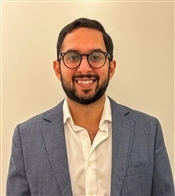
  • Posthumus fellow Maanik Nath awarded First Monograph Prize in Economic and Social History by Economic History Society

    Posthumus fellow Maanik Nath awarded First Monograph Prize in Economic and Social History by Economic History Society

    Posthumus Fellow and Assistant Professor at Utrecht University Dr Maanik Nath was awarded the First Monograph Prize in Economic and Social History by the Economic History Society (EHS) for his book Capital shortage: Credit and Indian economic development, 1920–1960. The prize was awarded at EHS’s Annual Conference dinner on 6 April 2024. Books published within 10 years of authors completing their PhDs are eligible for the prize.


    Maanik’s book, published with Cambridge University Press (CUP) in 2023, speaks to readers interested in the root causes of poverty. In terms of its scientific focus, Capital Shortage shows that a tripartite set of risks perpetuated a cycle of credit scarcity, low investment and widespread deprivation across twentieth-century India. The book spotlights the stubborn relationship between climate, law and (under) development in the tropical world.


    The N.W. Posthumus Institute staff congratulates Maanik with this award!

    BOOK INFO (CUP)

  • Masterclass with Professor Francesca Trivellato

    Masterclass with Professor Francesca Trivellato

    The Huizinga Research Network Archives of Power/The Power of Archives invites PhD students, early-stage postdocs and advanced RMA students affiliated with either the Huizinga Institute or the N.W. Posthumus Institute working on themes such as the (culture of) economic markets and trade, labour relations, slavery, networks and migration to discuss their own research with Professor Francesca Trivellato. Professor Trivellato is Andrew W. Mellon Professor at the School of Historical Studies of the Institute of Advanced Studies and is regarded as one of the most imaginative historians of the early modern world.

    This opportunity is offered to a maximum of 5-6 participants. Participants should be affiliated with either the Huizinga Institute or the N.W. Posthumus Institute as PhD, early-stage postdoc fellow, or as RMA-student. Selection of applications will be based on a letter of motivation and a short (300 words max.) abstract of the paper you would like to discuss at the workshop; this paper (4,000-5,000 words, c. 10 pages A4) can be (part of) a draft chapter, short paper or project presentation.

    Applications should be submitted ultimately 7 April 2024. Accepted participants should submit their full paper by 17 May 2024. For all criteria and further info, please visit the relevant webpage of the Huizinga Institute via the button below.

    FULL INFO