Research School for Economic and Social History

Author: René van Weeren

  • Jaarcongres Werkgroep Zeventiende Eeuw 2024: ‘Ambacht en ambachtelijkheid in de zeventiende-eeuwse Nederlanden’ – deadline voorstellen 15 mei 2024

    Jaarcongres Werkgroep Zeventiende Eeuw 2024: ‘Ambacht en ambachtelijkheid in de zeventiende-eeuwse Nederlanden’ – deadline voorstellen 15 mei 2024

    ~ because of scope, available in Dutch only. Presentations in English are however welcome, contact the organisers for more info ~

    Op vrijdag 30 augustus 2024 vindt in Antwerpen het jaarcongres van de Werkgroep Zeventiende Eeuw plaats met als thema ‘Ambacht en ambachtelijkheid in de zeventiende-eeuwse Nederlanden’.

    Voor dit congres zijn de organisatoren op zoek naar voordrachten over alle denkbare aspecten van het ambacht, ambachtslieden en ambachtelijkheid.

    Hoe werd in de zeventiende-eeuwse Nederlanden over ambachtelijkheid gereflecteerd? Hoe werden ambachtslieden opgeleid? Traden ze bij voorkeur in het voetspoor van hun ouders? Hoe zag hun wereldbeeld eruit? Op welke manier bepaalde godsdienst het leven van ambachtslieden? Welke sporen liet ‘het ambacht’ na in de literaire, schilderkunstige of muzikale productie van die tijd? Welke rol speelde ambachtelijke kennis en kunde in de geleerdenwereld of in de veranderende natuurwetenschappen? Hoe veranderde het inclusieve idee van ‘const’ als vaardigheid in de steeds meer aparte domeinen van kunst en ambacht? Welke rol speelden vrouwen in het ambachtsmilieu, en welke rol speelde ambachtelijkheid voor vrouwen in verschillende klassen? En wat valt er te zeggen over organisaties van ambachtslieden, zoals de gilden?

    Sprekers en bezoekers van het congres worden verwacht lid te zijn of te worden van de Werkgroep Zeventiende Eeuw. Daarnaast zijn er inschrijvingskosten voor het congres. Voorstellen voor presentaties (max. 200 woorden) dienen uiterlijk 15 mei 2024 per e-mail ingediend te zijn bij Julie De Groot (Universiteit Antwerpen).
    MEER INFO

  • PhDs Cohort 2022 completed Posthumus Basic Training Programme

    PhDs Cohort 2022 completed Posthumus Basic Training Programme

    No less than 31 Basic Training candidates, more than 1500 pages of documentation, 44 commentators, 6 days: the Individual Assessments cohort 2022 have been completed. Congratulations to the PhD-candidates on obtaining their Basic Training degree! We warmly invite them to the diploma ceremony during dinner at the Posthumus Conference in Leeuwarden. Our special thanks go to the 44 Posthumus fellows who agreed to facilitate the assessment of this exceptionally large cohort. We cannot emphasise enough how important their efforts and commitment are to make the Basic Training a success.

  • Voorjaarsbijeenkomst SGVDO:  Publiek krediet in Noord en Zuid in de 18e eeuw

    Voorjaarsbijeenkomst SGVDO: Publiek krediet in Noord en Zuid in de 18e eeuw

    ~ because of scope in Dutch only ~

    De voorjaarsbijeenkomst van de Stichting Geschiedenis van de Overheidsfinanciën (SGVDO) van 9 mei 2024 staat in het teken van één van de voornaamste onderdelen van de overheidsfinanciën: de uitvoering van de schuldpolitiek (de plaatsing van staatspapier en de amortisatie (vernietiging of aflossing) van schuld. In de drie voordrachten wordt voor enkele kleinere Noord Nederlandse gewesten, de Landen van Overmaze in Zuid-Limburg en het Land van Aalst in Vlaanderen ingegaan op schuldpolitiek in de achttiende eeuw. Sprekers, onder wie twee Posthumus alumni, zijn Alberto Feenstra, Eduard Dormans en Yannis Skalli-Housseini.

    Aanmelding vooraf is noodzakelijk en kan per e-mail via de SGVDO.

    MEER INFO

  • Workshop ‘Commodification, Values, and Knowledge Politics’

    Workshop ‘Commodification, Values, and Knowledge Politics’

    The coordinators of the NWO research programs Sustainability Trade-offs in the Netherlands’ Entangled Modernisation (STONEM), 1900-2020 and SOY STORIES are jointly organising a workshop on ‘Commodification, Values, and Knowledge Politics’. In this workshop, participants are invited to discuss and engage with these themes and connect this to their research ambitions. The organisers seek to discuss the merits and limits of key concepts, and explore the means and methods integrate, combine, and/or highlight underexposed actors, practices, and views.

    For full content, download the full call via the button below.

    Speakers

    How to register

    The workshop is open and free of charge to all Posthumus graduates and fellows. If you want to attend this workshop, please send an e-mail to Frank Veraart before 15 April 2024 with a short text explaining your interest, connections to your research and dietary preferences.

    Please note: The workshop will be limited to 20 persons. Enrolling will follow a fist come first serve procedure. After enrollment the organisers will notify about your registration and send you the full program and location details.

    FULL CALL (PDF)

  • Summer Training School ‘Research on health inequalities using longitudinal demographic data’ (Lund University)

    Summer Training School ‘Research on health inequalities using longitudinal demographic data’ (Lund University)

    In collaboration with the European Society for Historical Demography, the COST-Action Great Leap organises a summer training school on ‘Research on health inequalities using longitudinal demographic data’. It equips students with theories, sources and methods for analyzing inequalities in health. The course provides hands-on workshops in data management of longitudinal micro-level data, event-history analysis, and analysis of causes of death. In addition, a large part of the summer school is devoted to a team project.

    Students interested in joining this Training School are expected to be familiar with demographic and quantitative methods, historical micro-level data, and have at least intermediate level econometrics. Applicants should be enrolled in a PhD program, have recently received their PhD, or be enrolled in a MSc program.

    Applications for attending this Student Training School should be submitted via e-mail ultimately 1 April 2024. The e-mail contact address as well as specification of the required application documents can be found in the full call, to be downloaded as pdf via the button below. Please note that a participation fee applies.

    DOWNLOAD FULL CALL (PDF)

  • Kick-off Meeting of the COST-Action ‘The Great Leap’

    Kick-off Meeting of the COST-Action ‘The Great Leap’

    The network coordinators of the COST-Action initiative ‘The Great Leap. Multidisciplinary approaches to health inequalities, 1800-2022’, led by Radboud University, invite all stakeholders and all those interested to join the (hybrid) kick-off meeting of this initiative on 2 May 2024.

    ‘The Great Leap’ has been selected by the European Cooperation in Science and Technology (COST) to undertake a comprehensive exploration of the historical origins and driving factors behind health inequalities across regions and countries in Europe and beyond. The network connected to ‘The Great Leap’ includes a wide range of academic expertise in history, social sciences, life sciences and epidemiology and involves university-, research-, government- and (international) health institutes and organizations, including statistical offices and national archives. Aim of ‘The Great Leap’ is to foster collaboration, share insights, and catalyse action in addressing pressing health disparities through providing a historical long-term perspective via five consecutive subprojects.

    Attending the kick-off meeting is open to all interested, but prior registration is requested. You can register by e-mail via Dr Marieke van Egeraat at Radboud University.

    MORE INFO

  • PhD Workshop ‘Writing history in the Anthropocene’ by Professor Sandra Mass

    PhD Workshop ‘Writing history in the Anthropocene’ by Professor Sandra Mass

    Professor Peter van Dam (University of Amsterdam) and Dr Mario Daniels (Duitsland Instituut Amsterdam), in cooperation with the German Academic Exchange Service (DAAD, Deutsche Akademischer Austauschdienst) jointly call for PhD papers for a PhD Workshop with Professor Sandra Mass (Ruhr-Universität-Bochum).

    While geographers have debated for quite some time whether the Anthropocene as a geological epoch started 500, 250, or just 70 years ago, historians have only just begun to notice the epoch. Broadly defined as the era in which humans have come to constitute a geological force capable of impacting the global climate, the concept among other things challenges us to rethink the ways in which historical actors related to their environment, to people in other parts of the world, and to reconsider the timescales in which we situate our histories.

    How do we relate to the Anthropocene in our scholarship? Does the concept inspire or terrify us? Do we employ it as a conceptual framework, a loose collection of questions, or as a counterpoint to our own approach? During this workshop, it will be explored what the Anthropocene means to us in writing histories, thus probing what it means to write history at this moment of confluence of many environmental crises, to what extent present concerns productively inform our work.

    Participants of this workshop are inivited to reflect on the ways in which their work grapples with these problems and questions. The workshop takes its cue from the work of Sandra Mass, Professor of Transnational History at the Ruhr-Universität Bochum. She will present insights from her upcoming book Clio contaminated: Geschichtsschreibung im Anthropozän. Participants whose work implicitly considers the concerns which come to the fore around the notion of the Anthropocene or explicitly addresses the concept of the Anthropocene are welcome to apply. The workshop will be centered around the discussion of pre-circulated papers (no more than 5000 words) which will be due on April 16.

    If you are interested in participating, please send a title and a short outline of the paper you would like to present by e-mail to Professor Peter van Dam.

    The workshop will be hosted in conjunction with a lecture on ‘Writing history in the Anthropocene’ by Professor Sandra Mass on the preceding day, 25 April 2024, 17:00-19:00 at the academic-cultural podium Spui 25 (Spui 25, 1012 WX Amsterdam).

    DOWNLOAD CALL (PDF)

  • Succesful PhD defence Posthumus alumna Ophelia Ongena

    Succesful PhD defence Posthumus alumna Ophelia Ongena

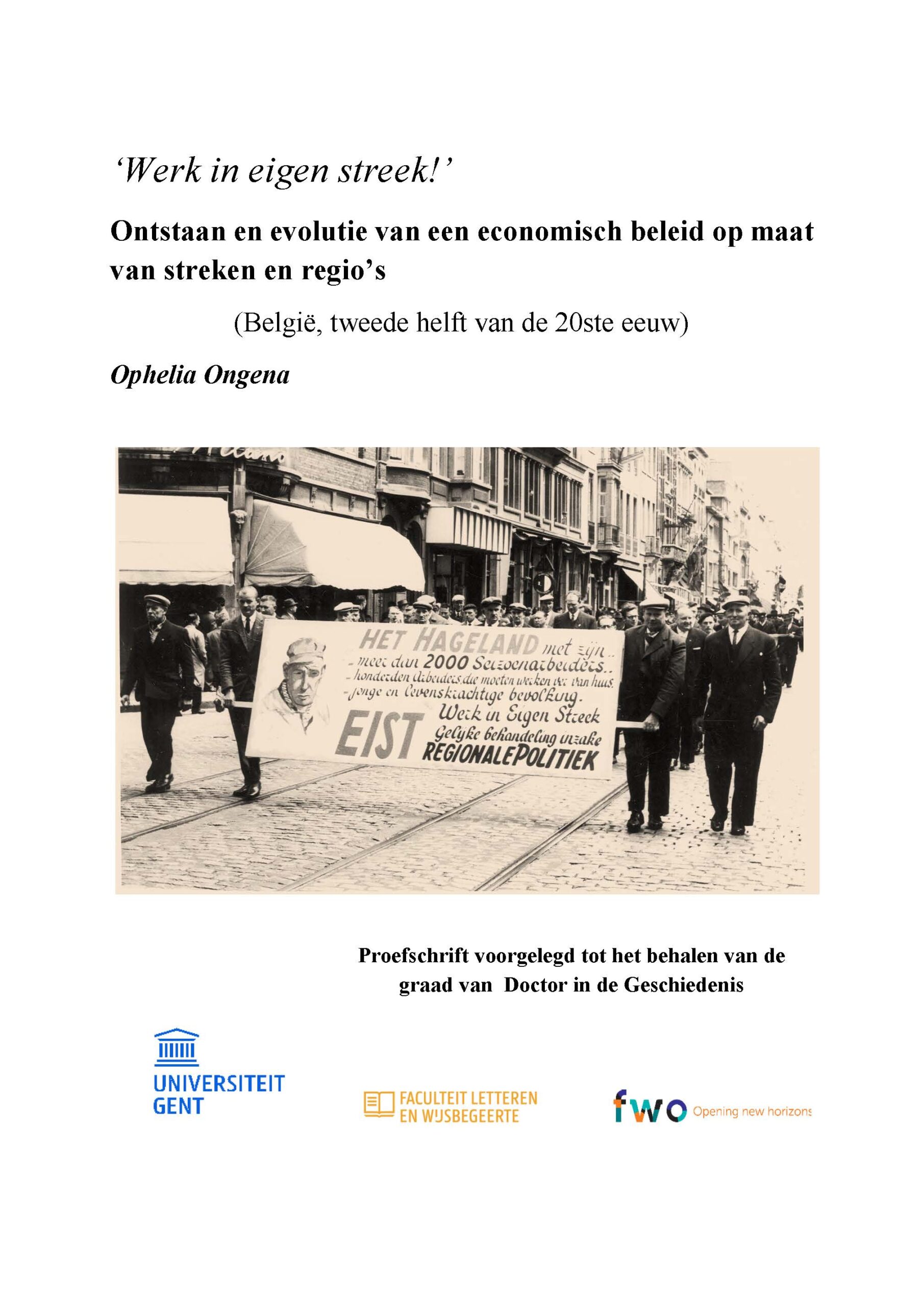
    On 16 February 2024 Posthumus alumna Ophelia Ongena succesfully defended her PhD thesis ”Werk in eigen streek!’ Ontstaan en evolutie van een economisch beleid op maat van streken en regio’s (België, tweede helft van de 20ste eeuw)’ at Ghent University. Promotors were Professor Eric Vanhaute (Ghent University) and Dirk Luyten (CegeSoma).

    In her research, Ophelia looked how the regional economic policy strategies were interpreted by policy makers, from local/sub-regional governments to the European policy level that became increasingly important in defining regional policy lines. She also studied which political strategies have tightened or weakened those policy, to what results they led to and which actors (with or without a political mandate) played an important role in it. By reconstructing the different policy strategies and visions, each with its own long-term emphasis and underlying ideas, certain fault lines and/or continuities became visible, which gave us a nuanced picture of the most important shifts and policy mechanisms.

    We congratulate Ophelia with this achievement.

    MORE INFO

  • Conference ‘Feeding the citizens? Urban land and landownership in past and present’

    Conference ‘Feeding the citizens? Urban land and landownership in past and present’

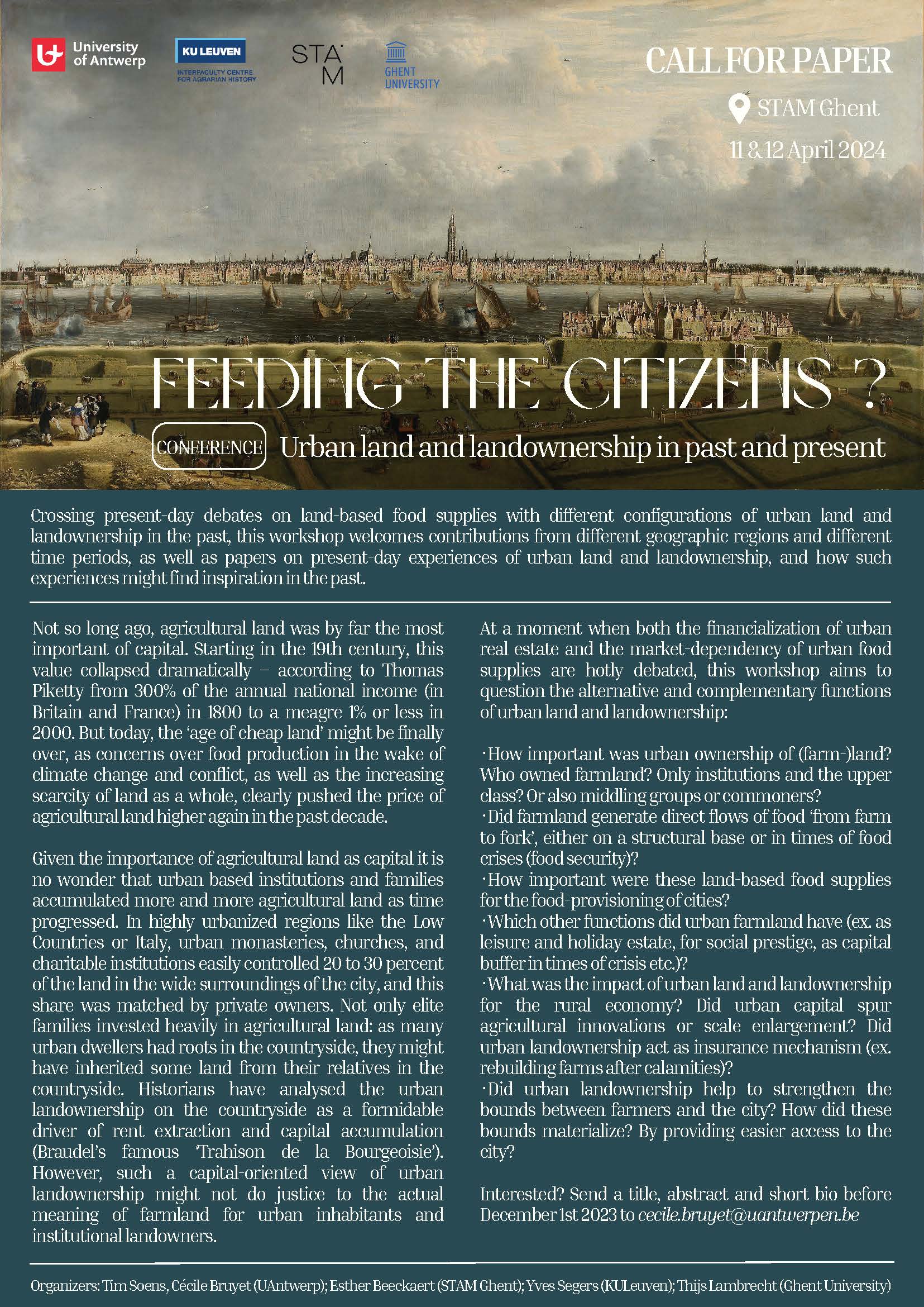
    On 11-12 April 2024, organisers Tim Soens, Cécile Bruyet (UAntwerp), Esther Beeckaert (STAM Ghent), Yves Segers (KULeuven), Thijs Lambrecht (Ghent University) welcome you at the conference ‘Feeding the Citizens? Urban land and landownership in past and present’, to be held at the premises of STAM Ghent City Museum.

    Crossing present-day debates on land-based food supplies with different configurations of urban land and landownership in the past, this workshop welcomes contributions from different geographic regions and differenttime periods, as well as papers on present-day experiences of urban land and landownership, and how suchexperiences might find inspiration in the past.

    For the full programme, please visit the conference website. Registration for non-presenting participants has opened now and is possible until 1 April 2024. Please note that a registration fee applies.

    MORE INFO

  • Book presentation ‘The World of Sugar’ by Ulbe Bosma

    Book presentation ‘The World of Sugar’ by Ulbe Bosma

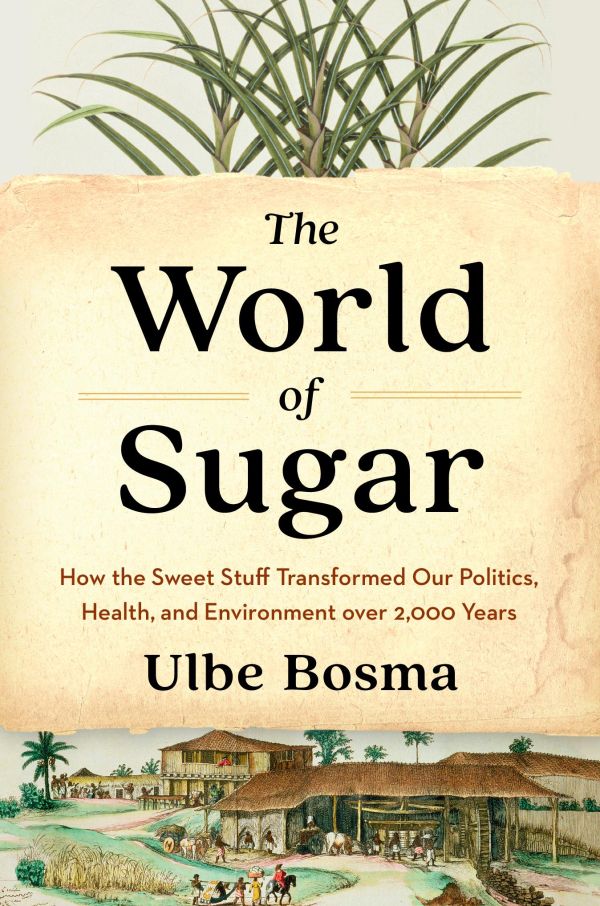
    The Food and Agricultural History Network recently hosted the book presentation of The World of Sugar. How the Sweet Stuff Transformed Our Politics, Health, and Environment over 2,000 Years (Harvard University Press, 2023), authored by Ulbe Bosma, board member of the N.W. Posthumus Institute and also one of the coordinators of our Research Network ‘Routes and Roots in Colonial and Global History’.

    In this global history, Bosma describes how sugar changed from being a luxury product in Asia to be present in most people’s diets worldwide, contributing to health crises and environmental devastation. The book starts with the earliest evidence of sugar production, leads the reader through the Middle Ages to the history of enslaved labour, and explores how sugar transformed life on every continent on political, cultural, economic and ecological levels.

    BOOK INFO