Research School for Economic and Social History

Author: René van Weeren

  • PhD Defence Posthumus alumnus Damion Bunders

    PhD Defence Posthumus alumnus Damion Bunders

    On 15 March 2024, Posthumus alumnus Damion Bunders will defend his thesis ‘Gigs of their Own: can platform cooperatives become resilient?’ at the Erasmus Research Institute of Management of Erasmus University Rotterdam.

    Damion’s dissertation is about platform cooperatives as an alternative form of organisation where gig workers own and manage a digital platform collectively. It includes an analysis of the challenges these cooperatives face to better understand the conditions under which they could become resilient organisations.

    Promotors are Professor Tine De Moor (Erasmus University Rotterdam), Professor Agnes Akkerman (University of Amsterdam), and Professor Pearl Dykstra (Erasmus University Rotterdam).

    We wish Damion a succesful defence!

  • International Workshop ‘The Fragmented City in Premodern Europe’

    International Workshop ‘The Fragmented City in Premodern Europe’

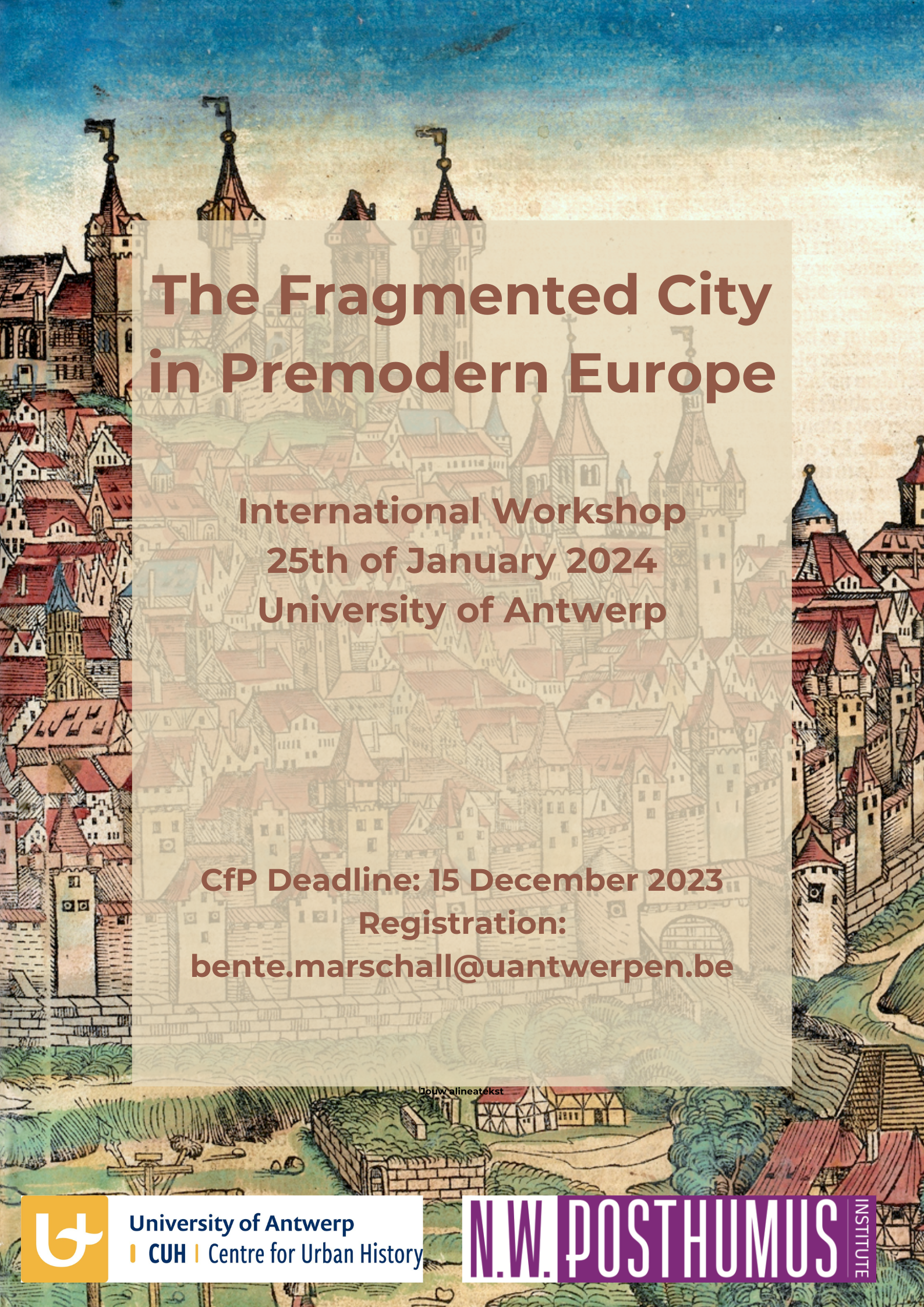
    On 25 January 2024, the Centre for Urban History of the University of Antwerp, supported by the N.W. Posthumus Institute, will host the International Workshop ‘The Fragmented City in Premodern Europe’. Organisers are Posthumus PhD Bente Marschall and Posthumus fellow Professor Peter Stabel.

    This workshop wants to explore the notion of the fragmented city. It can be defined as urban settlements with multiple and often various political, legal, cultural or social entities operating in the same space, in which the local (urban) government lacked control over the entire territory or did not encompass all social relations within the city limits. Premodern European cities were defined by a patchwork of distinct enclaves with far-reaching implications that influenced the economic, political, juridical and cultural lives of their residents. By analysing patterns of fragmentation, the workshop aims to bring together early career and advanced scholars to trace the effects of these divisions on urban cohesion and urban agency.It starts from the idea that cities did not constitute a unified whole, either as an economic unit, a political body or a cultural scene ry. It is now more widely accepted that the medieval city was polycentric, encompassing multiple power centres and distinct legal frameworks. While the subject has been predominantly explored from a political perspective, there is an increasing number of studies emphasising the social and economic consequences of extra-territoriality.

    FULL INFO

  • PhD Defence Posthumus alumnus Patrick Naaktgeboren

    PhD Defence Posthumus alumnus Patrick Naaktgeboren

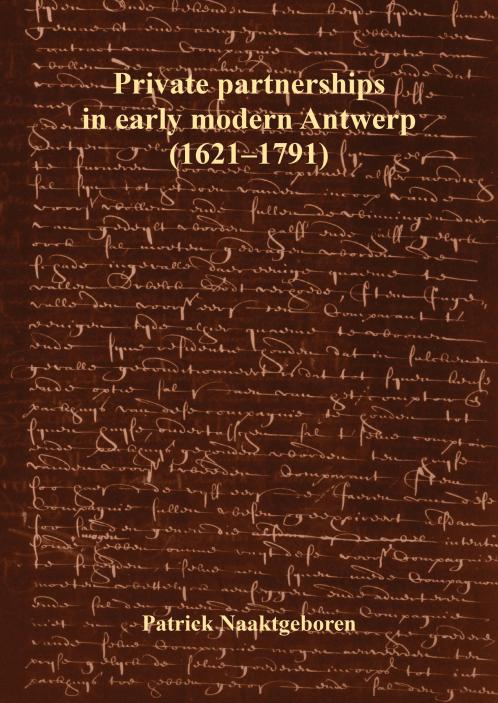
    On 11 January 2024, Posthumus alumnus Patrick Naaktgeboren successfully defended his PhD thesis ‘Private partnerships in early modern Antwerp (1621–1791) at Maastricht University. Promotores were Professor Bram Van Hofstraeten (Maastricht University) and Professor Jeroen Puttevils (University of Antwerp).

    Patricks dissertation investigates private partnerships in seventeenth- and eighteenth-century Antwerp (1621–1791) from both a legal historical and a socioeconomic perspective. Whereas the legal-historical part deals with the interaction between Antwerp customary law and learned legal literature (the ‘law in books’) related to business practices in the form of notarised and privately drafted agreements (the ‘law in practice’), the socioeconomic historical part focuses on the functions a partnership could fulfil in an early modern society. The aim of this dissertation is to gain more insight into the extent to which customary law affected business practices and the extent to which entrepreneurs adhered to the rules. Additionally, his dissertation challenges the categorisation often used in the literature whereby partnerships are grouped into ideal-types, such as general partnerships and limited partnerships. Finally, this dissertation analyses the underlying arguments for entrepreneurs to opt for a partnership. For this purpose, the city of Antwerp serves as an excellent case study because entrepreneurs were forced to adapt themselves continuously to geopolitical and socioeconomic developments in the seventeenth and eighteenth centuries.

    The PhD defense will also be broadcasted as livestream. The N.W. Posthumus staff congratulates Patrick with obtaining his PhD.

    MORE INFO

  • Conference ‘Commodities and Environments in Early Modern Global Asia, 1400 – 1800’

    Conference ‘Commodities and Environments in Early Modern Global Asia, 1400 – 1800’

    The organisers of the international conference ‘Commodities and Environments in Early Modern Global Asia, 1400–1800’ call for papers. This conference is organised under the auspices of the European Research Council (ERC) Advanced Grant Project, CAPASIA ‘The Asian Origins of Global Capitalism’, and will be hosted at the European University Institute in Florence, Italy on 13-15 November 2024. The conference explores the relationship between environments and commodities in early modern Global Asia between 1400 and 1800. It investigates the environmental consequences in these regions of the extraction, production and trade in commodities.

    This conference aims to integrate multiple historiographies which have sometimes operated in mutual isolation: (i) the literature on material culture and commodities in global history; (ii) the growing field of environmental history; and (iii) studies in the history of science which have examined how the natural sciences and ethnography served Europe’s quest for trade, profit, and colonial domination.

    Keynotes will be given by Professor Jakobina Arch (Whitman College) and Professor Sujit Sivasundaram (Cambridge University).

    Proposals from scholars at all career stages, including early career, are welcome. Papers will be selected on the basis of proposals submitted, and with the aim of ensuring a broad spread of topics for the conference. Abstracts should be submitted ultimately 20 February 2024.

    MORE INFO

  • Levend Archiefprijs 2023 awarded to Heidi Deneweth

    Levend Archiefprijs 2023 awarded to Heidi Deneweth

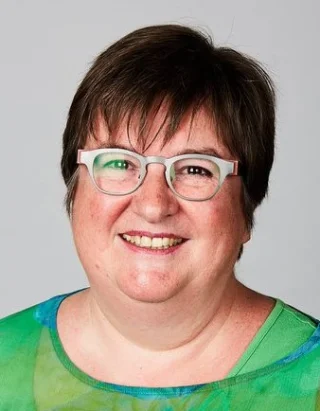
    The Levend Archief organisation, the association of supporters of the City Archives of Bruges, has awarded Posthumus board member Dr Heidi Deneweth the Levend Archiefprijs (‘Living Archives Award’), a quintennial award, for her publication Goede muren maken goede buren. Verbouwingen en buurtleven in Brugge, 1500-1800 (‘Good walls make good neighbors. Remodelling and neighborhood life in Bruges, 1500-1800). The jury report states that Heidi’s publication provides the reader with an interesting glimpse on Bruges in the period of the sixteenth to eighteenth century, a period still somewhat overlooked in historical studies. Furthermore, the jury regards Heidi to be a truely worthy laureate, as being a true ambassador for the City Archives of Bruges, leaving no stone unturned to show its archival wealth and the point out the results of the Archives’ respective research groups on housing history and material culture. The N.W. Posthumus Institute congratulates Heidi with this well-deserved honor.

    MORE INFO (IN DUTCH ONLY)

  • Workshop ‘The Histories of (Post-)Colonial Universities in the Netherlands’ (WUR)

    Workshop ‘The Histories of (Post-)Colonial Universities in the Netherlands’ (WUR)

    On 29 and 30 August 2024, the Workshop ‘The Histories of (Post-)Colonial Universities in the Netherlands’ will be held at Wageningen University & Research. This workshop and the keynote is made possible thanks to the generous funding of Wageningen University & Research.

    The historiographies of universities, in the Netherlands and elsewhere, have so far remained focused on their institutional histories within the context of the nation state. At least some Dutch universities (Leiden, Utrecht, Delft and Wageningen to begin with) nevertheless functioned as institutions of higher learning for the colonial state in the 19th and 20th centuries, producing civil servants and experts who would develop colonial careers. Dutch universities also facilitated the training of indigenous elites. In the Dutch colonies itself European scientific methods and academic knowledge, moreover, was not passively adopted, but rather adapted and applied to existing traditions. Expertise that was gained during the colonial period, partly with the aid of these adaptations, generated lasting centers of global expertise in the Netherlands, thereby informing knowledge regimes for decades to come. Examples of this are the expertise on Asian history and culture in Leiden and on tropical agriculture in Wageningen, as well as companies that emerged from such knowledge hubs (Shell, Boskalis, Deltares and others).

    This 2-day workshop therefore responds to that gap in our knowledge. The workshop will explore the colonial and postcolonial entanglements of higher education in the Netherlands, with room for comparative explorations focused on higher education across the global north and south, exploring parallels to and linkages with colonial centers of knowledge across empires and from the early-modern to the modern era. The aim is to bring together researchers and professionals already working on similar projects relating to the colonial and postcolonial histories of universities in the Netherlands, while also inviting new perspectives. The purpose is to create a forum for in-depth discussion amongst researchers and professionals working on the topic who may have not otherwise encountered one another. This is based on the observation that a number of universities in the Netherlands and elsewhere have now started to explore research into their colonial pasts, but, that, so-far there has been a lack of coordinated discussion on the topic within and between these universities.

    The workshop aims to bridge studies on the history of knowledge production, colonial histories and the histories of universities in the Netherlands. The workshop also wants to contribute to a broader discussion about the role of universities in post-colonial societies, both in the Netherlands and elsewhere, including issues connected to racial discrimination, diversity and inclusion. For this reason, a number of the speakers will be invited. The keynote will be delivered jointly by Sabine Cadeau and Nicholas Bell-Romero, who both worked as research fellows at the University of Cambridge Legacies of Enslavement Inquiry.

    The deadline for submitting a paper has passed on 19 January 2024.

    DOWNLOAD FULL CALL (PDF)

  • PhD Career Day 2023

    PhD Career Day 2023

    latest update: 20 October 2023, 2:20pm

    N.W. Posthumus Institute, the Huizinga Institute, the Research School Political History and the Research School for Medieval Studies jointly would like to invite their PhD candidates and recently promoted PhDs to the PhD Career Day 2023. This event will be held on Friday 10 November at the Buys Ballot building in Utrecht Science Park.

    We offer you an interesting day programme, with speakers from various sectors in society, who will shed their light on your options in ‘life after promotion’. Many of them are alumnus of one of the research schools involved and therefore know from their own experience which chances, choices and complications you might be facing as future or recently promoted PhD.

    The day programme offers not only speeches, but also offers you the opportunity to bring forward your own questions and experiences. For example, the extensive lunch break will offer you opportunities to network and to have your CV reviewed by experts.

    You can participate free of charge, but because of catering and room capacity we kindly ask you to register beforehand via this form.

    REGISTER HERE!

    Programme

    10:00-10:05 Plenary introduction, welcome and some practicalities
    10:05-10:35 Keynote (Suze Zijlstra)
    10:35-10:50 Crossroads in your career: what questions and doubts do you hope to be addressed today? (Henk Looijesteijn)
    11:00-11:45 Lecture sessions 1 (some speed dates are scheduled parallel)
    a) Academic sector
    b) Heritage and museums
    c) Entrepreneurship
    12:00-12:45 Lecture sessions 2 (some speed dates are scheduled parallel)
    d) Government (including advisory bodies)
    e) Private sector
    f) Publishers / Press / Media
    13:00-14:15 Walking lunch & speed dates
    14:30-15:15 Lecture sessions 3 (some speed dates are scheduled parallel)
    a) Academic sector
    b) Heritage and museums
    c) Entrepreneurship
    15:30-16:15 Lecture sessions 4 (some speed dates are scheduled parallel)
    d) Government (including advisory bodies)
    e) Private sector
    f) Publishers / Press / Media
    16:30-17:00 Round table (Henk Looijesteijn)
    17:00-18:00 Drinks

    Confirmed speakers

    a) Academic sector: Janna Coomans & Jessica Dijkman (Utrecht University)
    b) Heritage and museums: Ruben Schalk & Jinna Smit (Rijksdienst voor Cultureel Erfgoed), Fred van Kan (Gelders Archief)
    c) Entrepreneurship: Henk Looijensteijn & Suze Zijlstra
    d) Government: Eline Van Onacker (Vlaamse Overheid, departement Werk en Sociale Economie) & Jaap Ligthart (Algemene Rekenkamer)
    e) Private sector: Rogier van Kooten (formerly Achmea)
    f) Publishers – Press – Media: Mirte Libregts (Walburgpers) & Astrid Verburg (IISG / TSEG)

    Participation

    Participation is reserved for PhDs from the Research Schools involved and free of charge.

    Directions

    Access to building
    We recommend you to enter the building complex via the Minnaert Café, accessible via the characters on the front of the Minnaert building, where our staff will provide further guidance.

    Public Transport
    by bus – From Utrecht Central Station, take bus 28 in the direction of Utrecht Science Park P+R and exit at stop Botanische Tuinen; after exiting the bus, the Minnaert Building is on your right.
    by tram – From Utrecht Central Station, take line 20, 21 or 22 in the direction of Utrecht Science Park P+R and exit at stop Padualaan; after exiting the tram, cross the tram lane and then straight on along bus stop Botanische Tuinen to see the Minnaert Building in front of you.

    Parking
    All info on parking in Utrecht Science Park can be found via this link. The closest parking spaces for this event are P9 Boedapestlaan and P6 Padualaan. Please note parking fees apply.

    You can find a map of Utrecht Science Park on Google Maps.
  • N.W. Posthumus Annual Report 2022 available

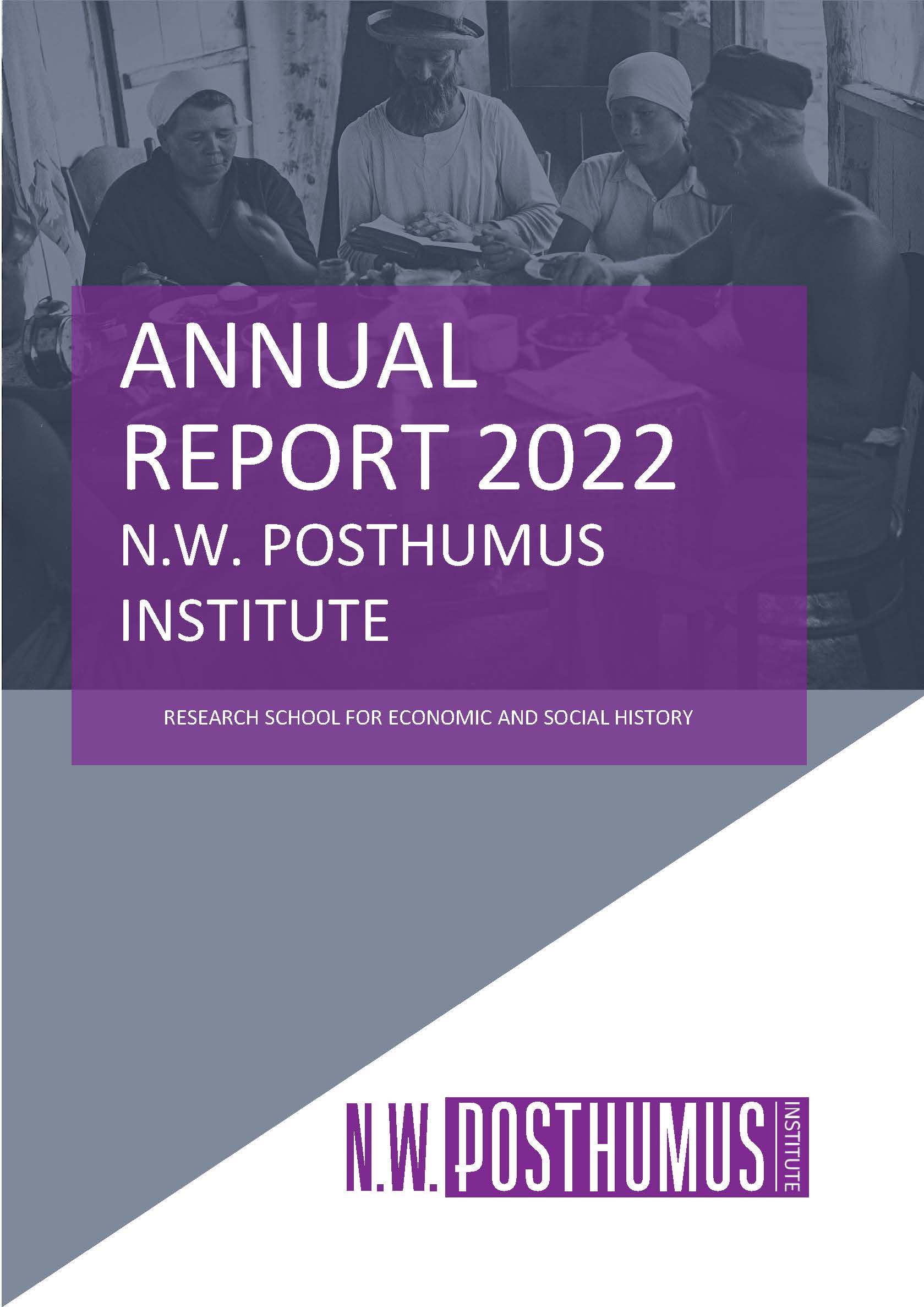
    N.W. Posthumus Annual Report 2022 available

    The General Board of the N.W. Posthumus Institute is happy to present you the N.W. Posthumus Institute Annual Report 2022. The report provides you with an overview of activities, results and developments regarding the N.W. Posthumus Institute in 2022, the first ‘regular’ year after the COVID-19 pandemic and its effects on society.


    DOWNLOAD (PDF, 3 MB)

  • Phd Defence Posthumus alumnus Mark van de Water

    Phd Defence Posthumus alumnus Mark van de Water

    On 20 September 2023, Posthumus alumnus Mark van de Water defended his PhD thesis ‘The road to drain or gain’ at the Faculty of Humanities of Leiden University. Supervisors were Professor David Henley and Dr Thomas Lindblad, promotores were Professor Henley and Dr Jeroen Touwen.

    The aim of Mark’s PhD dissertation is to explore the link between foreign investment and macroeconomic performance in the context of a colonial economic structure in Indonesia between c. 1910 and c. 1960. The main emphasis is on Dutch-owned private companies, although some attention will also be given to British investors. The target is to identify mutual effects of foreign investment and macroeconomic performance. Three specific questions are addressed: (1) How did volumes of private foreign investment change in response to business cycles in late-colonial and newly independent Indonesia? (2) To what extent did trends in profitability of foreign firms coincide with trends in macroeconomic performance? (3) What was the contribution of private foreign investment to Indonesia’s high dependence on exports of primary products and subsequent extreme vulnerability to vicissitudes in the world market? The point of departure is a series of published annual estimates of accumulated Dutch investment in colonial Indonesia from about 1910, coupled with summary statistics available in the secondary literature.

    The N.W. Posthumus Institue congratulates Mark with his promotion.

    PROFILE PAGE

  • Changes in General Board N.W. Posthumus Institute

    Changes in General Board N.W. Posthumus Institute

    Recently, the composition of the General Board of the N.W. Posthumus Institute has changed.

    Professor Hein Klemann, representative of Erasmus University Rotterdam (EUR), has resigned as Board Member because of forthcoming retirement. Professor Ben Wubs from now on is the acting representative of the EUR, Dr Jeroen Euwe taking Ben’s place as substitute board member.

    Professor Herman de Jong, representative of the Faculty of Economics and Business of the University of Groningen (RUG), also resigned as regular Board Member because of his forthcoming retirement. Professor Jutta Bolt, until now formally substitute member, now is the new regular Board Member on behalf of the Faculty of Economics and Business of RUG, Professor Abe de Jong the substitute board member on behalf of this faculty.

    Professors Erik van de Vleuten and Mila Davids have changed their positions, Professor Mila Davids now being the regular Board Member on behalf of Eindhoven University of Technology (TU/e), Professor Erik van der Vleuten now acting as substitute member on behalf of TU/e.

    The N.W. Posthumus Institute expresses its gratitutde to all new, current and former Board Members for their efforts for the N.W. Posthumus Institute.

    In addition to these changes, we also had a change in the positions of the PhD representatives; click here to view to know more

    You can view the current composition of the board here