Research School for Economic and Social History

Author: René van Weeren

  • In Memoriam: Professor Peter Hertner (1942-2023)

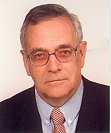
    In Memoriam: Professor Peter Hertner (1942-2023)

    Recently, we were informed that Professor Peter Hertner, member of the ESTER network, passed away on 26 April 2023.

    Born in 1942 in Ulm, Southern Germany, he studied in Heidelberg, Besançon, Basel, Strasbourg, Paris, and Marburg where he was awarded his diploma in Economics in 1968, and he also obtained his PhD in 1971, with a dissertation on the economic and social history of Strasbourg, 1650-1715.

    He was an Assistant Professor at the Department of Social and Economic History in Marburg, from 1970 until 1977. From 1977 until 1981 he was a Junior Professor (Akademischer Rat) at the Institut für Geschichte der Technischen Hochschule in Darmstadt. He joined the European University Institute in 1981, first as a Research Assistant in the HEC Department until 1986, and subsequently as a full Professor until 1988, after he received his habilitation in Darmstadt in 1986, with a thesis on the German capital export to Italy and the development of the Italian economy, 1861-1894. Between 1981 and 1989 Hertner held various teaching positions in Italy, at the Università L’Orientale, Naples, the universities of Ancona and Genoa, and at the Bocconi Business School in Milan. He was named Director of the EUI library in 1988 until 1995 and remained as an external Professor in the EUI History Department.

    In April 1995, he was appointed Professor of Economic and Social History at the Martin-Luther-Universität in Halle-Wittenberg. He was a member of the editorial board and co-editor of Italian economic history journals, a member of the Scientific Board of the German Historical Institute in Rome, of the Comité pour l’histoire de l’electricité in Paris, of the Gesellschaft für Unternehmensgeschichte and of the European Association for Banking and Financial History (EABH) both in Frankfurt and Main.

    On behalf of the ESTER network, the staff of the N.W. Posthumus Institute expresses its condolences to Professor Peter Hertner’s family, his colleagues and all that were close to him.

    This in memoriam is based on the extended obituary by Serge Noiret, Visiting Fellow at the EUI History Department.

    OBITUARY BY S. NOIRET (EUI)

  • Tweets not showing due to changes Twitter

    Tweets not showing due to changes Twitter

    As you may have noticed, the Twitter feed on our homepage shows the message ‘Nothing to see here – yet’. It appears that recent changes in Twitters management and policy are the cause of this; many other websites experience the same problem.

    Want to keep updated? Then follow us directly via our Twitter account at https://twitter.com/nwp_esh. Logging in may be required as a result of Twitter’s new policy.


    TO OUR TWITTER PAGE

  • NEW: New version of PhD brochure out now!

    NEW: New version of PhD brochure out now!

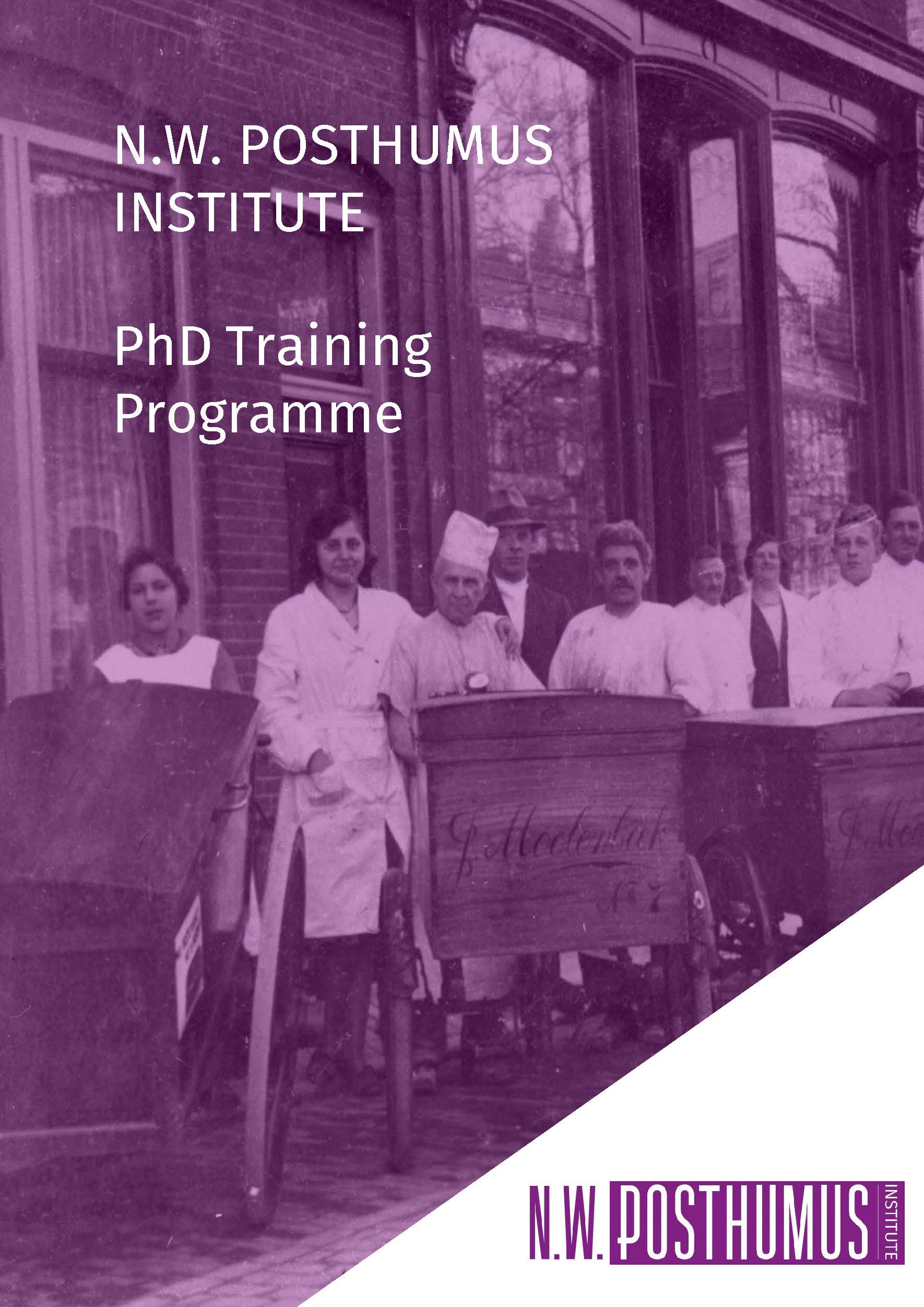
    The staff of the N.W. Posthumus Institute is happy to inform you that an updated and revised version of the PhD Training Programme oF the N.W. Posthumus Institute has just been released. In this brochure, (prospective) PhD participants will find all relevant info on the current Posthumus PhD Training Programme.

    Feel free to download the brochure and/or to distribute the link, to be found under the button below. If you want some printed copies to distribute, please contact the Posthumus secretariat by e-mail, stating your address and desired number of copies.

    DOWNLOAD PHD BROCHURE (PDF)

  • Datini-ESTER Advanced Seminar 2024: ‘Social and Geographical Mobility

    Datini-ESTER Advanced Seminar 2024: ‘Social and Geographical Mobility

    Fondazione Istituto Internazionale di Storia Economica “F. Datini” and the European School for Training in Economic and Social Historical Research (ESTER) will organise their seventh jointly-organized Datini-ESTER Advanced Seminar for economic and social historians on 12-18 May 2024, in Prato (Italy) on the theme of ‘Social and Geographical Mobility’

    The organisers

    ESTER, established in 1991, is an international postgraduate network incorporating more than 60 European Universities. ESTER organises research training in the form of both the annual Research Design Course for starting PhD-students and a series of Advanced Seminars on special themes within economic and social history.

    “F. Datini” International Institute of Economic History was founded in 1967 by Federigo Melis and Fernand Braudel. The aim of the Institute is the study of pre-industrial economic history (thirteenth-eighteenth centuries) and the creation on the topic of a space for historical culture, making comparison between different methodologies and schools of research easier and supporting young scholars during their formative years.

    Theme

    The topic of the seminar is closely related to the theme of the congress organized yearly by the “F. Datini” International Institute of Economic History, which in 2024 is devoted to ‘Social Mobility in pre-industrial societies: tendencies, causes and effects (13th-18th centuries)’. The 2024 Datini-Ester seminar will deal with Social and Geographical Mobility.

    More info

    Deadline for submitting abstracts for the 2024 edition closed on 15 October 2023. If accepted for participation, the final paper will be due on 15 March 2024. For info on the seminar in general, you may contact Dr Jaco Zuijderduijn (Lund University).

    DOWNLOAD FULL CALL (PDF)

  • Wageningen University – RHI Seminars – every 2nd Thursday of each month – registration appreciated

    Wageningen University – RHI Seminars – every 2nd Thursday of each month – registration appreciated

    How and why have economies grown historically? Why and how did worldwide inequalities come into being? How have people all over the world in the past up to the present dealt with the issue of providing a living for themselves and their families? To what extent did they do so either in harmony or in conflict with their surrounding natural environments? And how did this all develop over time?

    The RHI seminar aims to address these and other questions by organizing monthly lectures and papers on concrete empirical case studies from economic and social history. The organisers explicitly welcome a lively debate on the presented work, and therefore usually distribute the papers beforehand. RHI seminars in principle take place every second Thurday of the month (see below for actual scheduled dates). They are open to the public, but with regard to accommodation and distribution of the paper in advance, prior notice of attention to the Economic and Environmental History Group is appreciated.

    MORE INFO

  • NEW: PhD Cohort pages launched on Posthumus website

    NEW: PhD Cohort pages launched on Posthumus website

    We are happy to announce the launch of the PhD cohort pages on our website.

    On these pages, you will find the PhDs currently following the PhD Training Programme of the N.W. Posthumus Institute. Thinking about joining this programme? Find all info about the programme here.

    You will find the cohort pages here:

    PhDs Cohort 2020

    PhDs Cohort 2021

    PhDs Cohort 2022

  • New publication by Posthumus members Elisabeth Heijmans and Sophie Rose

    New publication by Posthumus members Elisabeth Heijmans and Sophie Rose

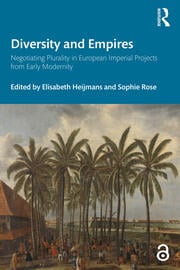
    Posthumus members Elisabeth Heijmans and co-editor Sophie Rose are the editors of Diversity and Empires Negotiating Plurality in European Imperial Projects from Early Modernity, published on 2 June 2023 with Routledge as an open-access book.

    Examining diversity as a fundamental reality of empire, this book explores European colonial empires, both terrestrial and maritime, to show how they addressed the questions of how to manage diversity. These questions range from the local to the supra-regional, and from the management of people to that of political and judicial systems. Taking an intersectional approach incorporating categories such as race, religion, subjecthood, and social and legal status, the contributions of the volume show how old and new modes of creating social difference took shape in an increasingly globalized early modern world, and what contemporary legacies these ‘diversity formations’ left behind. This volume shows diversity and imperial projects to be both contentious and mutually constitutive: on the one hand, the conditions of empire created divisions between people through official categorizations (such as racial classifications and designations of subjecthood) and through discriminately applied extractive policies, from taxation to slavery. On the other hand, imperial subjects, communities, and polities within and adjacent to the empire asserted themselves through a diverse range of affiliations and identities that challenged any notion of a unilateral, universal imperial authority.

    This book highlights the multidimensionality and interconnectedness of diversity in imperial settings and will be useful reading to students and scholars of the history of colonial empires, global history, and race.

    PUBLISHER’S INFO
     
    OPEN ACCESS VERSION

  • CAPASIA lectures on connected histories of capitalism (online / hybrid)

    CAPASIA lectures on connected histories of capitalism (online / hybrid)

    European Research Council project CAPASIA – The Asian Origins of Global Capitalism is organising a series of online/hybrid lectures dedicated to the connected histories of capitalism. The series is jointly organised with the European Research Council project ECOINT – a Twentieth-Century International Economic Thinking, and the Complex History of Globalization and the EUI Conversations on the New Histories of Capitalism Working Group. Download the poster via the button below to view the full program and access links to the respective lectures.

    PROGRAMME AND LECTURE LINKS (PDF)

  • Inaugural Lecture Professor Pepijn Brandon (VU Amsterdam)

    Inaugural Lecture Professor Pepijn Brandon (VU Amsterdam)

    On 26 May 2023 at 15:45 Professor Pepijn Brandon delivered his inaugural lecture as Professor of Global Economic and Social History in the Aula of the VU Amsterdam. The title of the inaugural lecture was: Elements of original accumulation: Dispossession, war, and slavery in the history of capitalism.

    You can find recordings of the inaugural lecture via the button below

    RECORDINGS (YOUTUBE VU AMSTERDAM)

  • PhDs cohort 2021 succesfully completed Basic Training Programme

    PhDs cohort 2021 succesfully completed Basic Training Programme

    We are happy to inform you the recent Posthumus Conference in Antwerp also marked the completion of the Basic PhD Training Programme of the N.W. Posthumus Institute for most PhD students of cohort 2021. Those attending the conference were handed their certificate during the conference dinner, those who completed the programme at another event, will receive their certificate by mail.

    The staff of the N.W. Posthumus Institute congratulates the PhD students with achieving this result!