Research School for Economic and Social History

Author: René van Weeren

  • Evenement ‘Collectieven en overheid: Genoeg geëxperimenteerd?!’

    Evenement ‘Collectieven en overheid: Genoeg geëxperimenteerd?!’

    ~ because of scope, in Dutch only ~

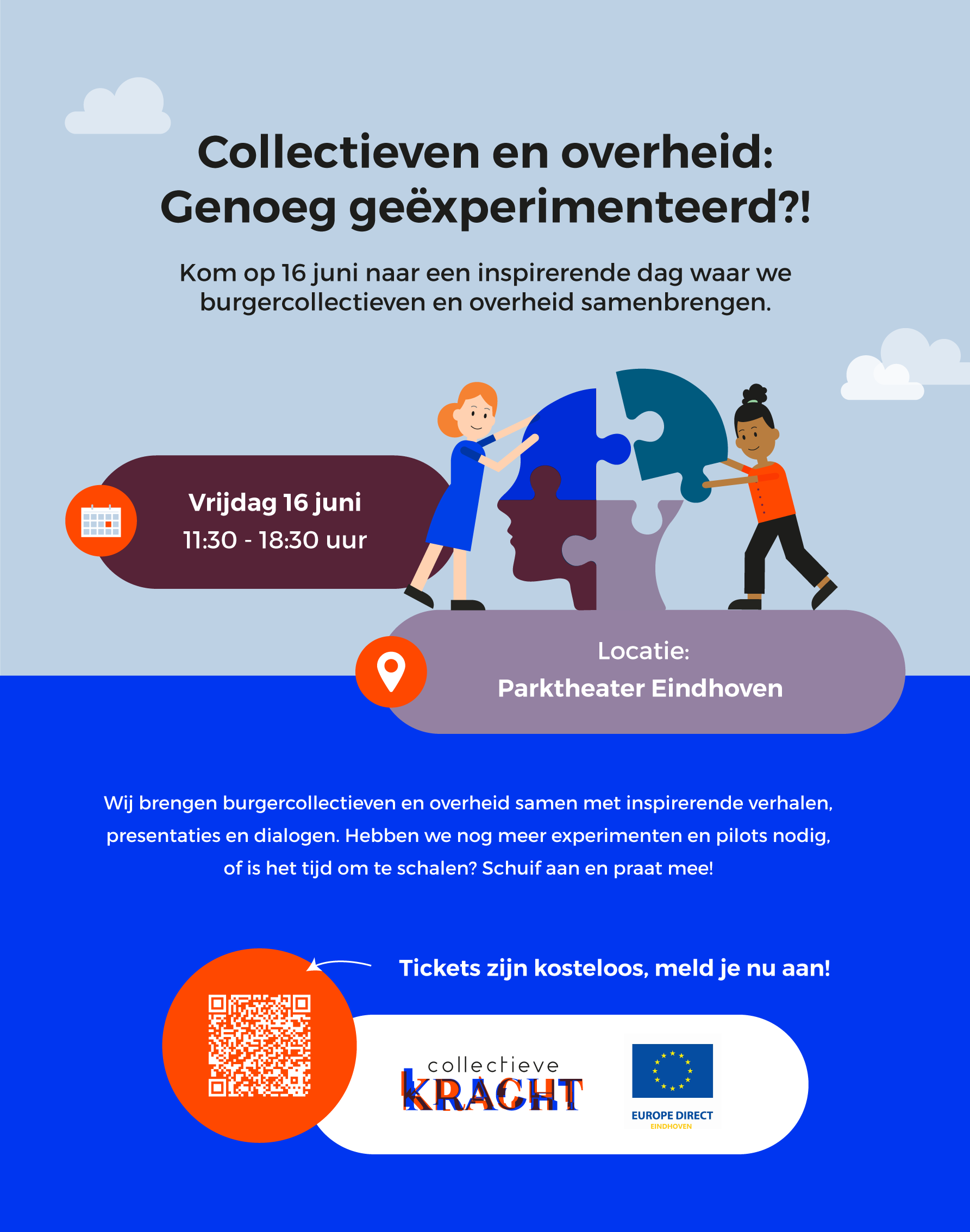
    Het onderzoeksteam achter het Kennisplatform Collectieve Kracht organiseert op 16 juni in Eindhoven een inspirerende dag waar burgercollectieven en overheid worden samengebracht. Beide partijen hebben in het verleden met elkaar samengewerkt, maar waar zal die samenwerking in de toekomst toe leiden en welke volgende stappen moeten genomen worden?

    Het evenement begint met een warm welkom door Lukas Held van Collectieve Kracht en Jacques Giesbertz van Europe Direct Eindhoven. Hierop volgen een keynote en tien sessies met elk hun eigen thema’s en sprekers. Het evenement wordt afgesloten met een panel en netwerkborrel. Welkomstconsumpties en consumpties tijdens de netwerkborrel zijn voorzien, de optionele lunch dient zelf betaald te worden. Toegang tot de bijeenkomst is verder vrij, reservering vooraf is echter nodig.

    MEER INFO EN RESERVEREN

  • Summer School CityLab IX: ‘Cities and states: exploring a complicated relationship’

    Summer School CityLab IX: ‘Cities and states: exploring a complicated relationship’

    Please note the deadline for applications has passed on 15 May 2023.

    Antwerp Summer University welcomes applications for the Summer School CityLab IX: ‘Cities and states: exploring a complicated relationship’, to be organised at the University of Antwerp in July 2023. In this CityLAB, a range of scholars from a variety of disciplinary backgrounds and focusing on cities and states in the North as well as the South will introduce the participants to their research. Urban professionals and high profile urban politicians will also discuss how they see the current position of cities in relation to national states. Participants will also have the opportunity to discuss their research with other participants and senior scholars.

    Through this interdisciplinary summer school, the organisers aim to bring junior and senior scholars from a variety of disciplines to explore and discuss how, when and why the relationships between cities and states have evolved and are still evolving. Particular interest is taken in how cities and state have differed and differ in the way they govern societies and with which impact on social inequality, power relations, socio-ecological flows and living in diversity.

    Applications should be submitted via the dedicated portal, the deadline for applications has been set at 15 May 2023. Those requiring visa to enter Belgium are advised to submit their application timely.

    FULL INFO

  • Kate Frederick awarded Keetje Hodshon Award 2023

    Kate Frederick awarded Keetje Hodshon Award 2023

    Dr Katherine Frederick, one of the Research Directors of the Posthumus Research Network ‘Societies in Context: Interactions between humans and rural-urban environments’, has been awarded the Keetje Hodshon Award 2023. Kate receives this award for her PhD thesis Deindustrialization in East Africa: Textile production in an era of globalization and colonization, c. 1830-1940, which she succesfully defended at Wageningen University in 2018. Previously, she was also awarded the Dissertation Award at WEHC2022.

    The Keetje Hodshon Award has been established by the  J.C. Ruigrok Stichting te Haarlem and is intended to support recently (< 5 years) promoted PhDs, based on their original research within the field of Humanities. The award is granted by the board of the Koninklijke Hollandsche Maatschappij der Wetenschappen and will be awarded at the award ceremony at the Hodshon huis of the KHMW.

    The N.W. Posthumus Institute staff congratulates Kate very much with winning this award.

    ANNOUNCEMENT KHMW (IN DUTCH)

  • PhD defence Posthumus alumnus Hugo La Poutré

    PhD defence Posthumus alumnus Hugo La Poutré

    On 5 June 2023, Posthumus alumnus Hugo La Poutré will defend his PhD thesis ‘English population 1086-1377: a modelling approach’ at the Faculty of Arts of the University of Groningen.

    Population size, food production, and consumption are closely related. Hugo La Poutré concentrates on this relationship in his doctoral research. He shows by the use of simulations that the English population tripled within two centuries, from two million in 1100 to over six million in 1300. Half a century later, the Black Death, the devastating plague epidemic of 1348-1349, caused more than three million deaths in England alone. During the following plague epidemics, the population declined even further.

    Amongst other things, these changes left their mark on the production and consumption of food. Pints of beer and hog roast might not have been uncommon at the end of the fourteenth century, but they were when the population peaked at the start of the fourteenth century. Then, it must have been pea soup with bread. After all, such a large population had to be fed, and arable land is simply more productive than pasture. La Poutré makes plausible that the common people must have lived on an almost vegan diet of cereals and legumes. To raise production, peasants spread as much manure on their land as possible, and let their land less often lie fallow. Making use of models, La Poutré calculates their production to have been 50 per cent higher than what was attained at their lord’s land. In this way, a population of six million could be fed.

    Promotors are Dr Richard Paping and Professor emeritus Maarten Duijvendak, both from the Faculty of Arts of the University of Groningen.

    The defence will also be streamed live via the link mentioned in the header section of this post. You can find more info and download the thesis via the button below.

    Please note that Hugo has connected his promotion to the charity programme of Tracing (Restoring Family Links), a programme of the international Red Cross to help find lost relatives in case of war, conflicts, natural disaster or migration. Donations are welcome.

    THESIS INFO
  • Workshop ‘Risk and Entrepreneurship – Old Discussions, Innovative Questions, New Insights’

    Workshop ‘Risk and Entrepreneurship – Old Discussions, Innovative Questions, New Insights’

    Gijs Dreijer, Lewis Wade, Mallory Hope, Cátia Antunes and Maria Fusaro kindly invite participants to join the workshop ‘Risk and Entrepreneurship – Old Discussions, Innovative Questions, New Insights’, to be held at Leiden University on 7 and 8 June 2023. The keynote lecture will be delivered by  Professor Anthony Hopkins, Emeritus Smuts Professor of Commonwealth History at Cambridge and an Emeritus Fellow of Pembroke College.

    This workshop has been made possible by contributions from Leiden University fund CWB (grant nr. W221373-3-1), University of Exeter European Network Fund 2022-2023 (grant nr. 6.4), the Roots and Routes Network of the Posthumus Institute, and the NWO VICI project Exploiting the Empire of Others (grant nr. VI.C.191.027).

    Introduction

    Entrepreneurs are often seen as either engines of economic growth or villains exploiting workers to make excessive profits. Yet historically, the role of entrepreneurs in adding value to society has been multifaceted, thus defying this dichotomy. This workshop brings together experts from the University of Exeter and Leiden University, as well as specialists from across the world, to analyse the historical role of the entrepreneur in a comparative and global-historical perspective, particularly in relationship to the management of risk and uncertainty. It compares the historical role of entrepreneurship in Europe, Asia, Africa and the Americas, moving away from a focus on Western firms and instead focusing on individual entrepreneurs, large and small, who through innovative strategies contributed to solving societal challenges.

    Confirmed speakers

    You can download the full (preliminary) programme here. Next to the keynote lecture by Professor Hopkins, the following lectures have been confirmed:

    • Dr Gijs Dreijer, Leiden University – Exploiting the Empire of Others: Dutch Entrepreneurs in the Scramble for Africa (1850s-1910s)
    • Dr Sarina Kuersteiner, Union College – From Divine Provision to Risk Commodity: Concepts of Future Profit in Geniza papers and Latin contracts, ca. 1000-155
    • Dr Rémi Dewière, Northumbria University – Failures and Successes of Canon Technology Transfer in the 18th-century Mediterranean World: Two French Entrepreneurs in North Africa (1771-1775)
    • Professor Lakshmi Subramanian, Centre for Social Studies Calcutta – Speculation or Risk Management? Changing Debates around “aunth” in Western India 1750-1920
    • Dr Lewis Wade, Institute of Historical Research – Nothing Ventured, Nothing Gained? Entrepreneurial Uncertainty in the Languedocian Cloth Industry, 1683–1700
    • Dr Noelle Richardson, Leiden University – Entrepreneurship and imperial transitions: Dutch merchants in the intra-Asian trade (1740s-1808)
    • Dr Sascha Klocke, Lund University – Rural Capitalists or Entrepreneurs? African Commercial Agriculture and Economic Development under Colonial Rule
    • Dr Edmond Smith, The University of Manchester – Working Between World Systems: The Experience of Globalisation for Akan Entrepreneurs from Eguafo to Bitu
    • Professor Maria Fusaro, University of  Exeter – Title TBC
    • Dr Audrey Gerrard, Norwegian University of Science and Technology – Between Private Affair and Government Control: The Queensland Plantation Labour Debate 1880-1890
    • Matthias Lukkes MA, Leiden University – Managing Risk for whom? Bomba Labour in the Dutch Transatlantic Slave Trade
    • Dr Mallory Hope, Harvard University – “To Conserve in their Integrity… The Assets and Rights of their Church”: Managing Water and Shared Resources on the Chapter of the Notre Dame’s Rural Domaine
    • {Professor Amy Froide, University of Maryland, Baltimore Country – Women, Risk, and Joint-stock Enterprise in Early Eighteenth-century London
    • Dr John Kegel, Leiden University – Risk, Entrepreneurship and Concessionary Companies
    • Professor William Deringer, MIT – Hazardous Nature: Coal Mining Engineers, Discounting Calculations, and the Price of Risk circa 1800

    How to participate

    Those interested to participate can e-mail Dr Gijs Dreijer

    FULL PROGRAM (PDF)

  • Conference ‘Gender discrimination in Modern Greece’

    Conference ‘Gender discrimination in Modern Greece’

    The organisers of the Conference ‘Gender discrimination in Modern Greece’ welcome proposals for this single-day conference, to be held at the Norwegian Institute at Athens.

    Recent research not only argues that female infanticide and the mortal neglect of female infants was more common in Modern Greece than previously acknowledged, but also that Greek parents continued to treat boys and girls differently throughout childhood (in terms of food and care). These discriminatory practices, arising from a strong son preference and girls’ inferior status, therefore unduly increased female mortality rates early in life and resulted in a significant number of ‘missing girls’ during the 19th century and the fist decades of the 20th century.

    The novelty of this argument, together with the problems that Greek historical sources pose, requires further research on these issues, so this conference invites proposals studying discriminatory practices against girls and women in general in Modern Greece. The organisers encourage interdisciplinary discussion, so contributions from a wide range of disciplines (historians, ethnographers, demographers, economists, sociologists, etc.) using both qualitative and quantitative materials are welcome.

    Please contact Eftychia Kalaitzdou MA if you are interested in submitting a proposal. All proposals should be submitted by 15 April 2023 (extended deadline).

    DOWNLOAD FULL CALL (PDF)

  • Workshop ‘Towards a Comparative History of Household Finance Before and After the Industrial Revolution’

    Workshop ‘Towards a Comparative History of Household Finance Before and After the Industrial Revolution’

    In the Fall of 2023 the Department of History at the University of Antwerp will host the workshop ‘Towards a Comparative History of Household Finance Before and After the Industrial Revolution’. The central questions in this workshop are very simple and empirical questions: how did households in the past organize their finances? How did people pay for food, clothing and housing? What did more affluent households do with the money they earned beyond what was needed for primary consumption? And for households living on the edge of subsistence: could they complement financial support from within their social networks with public welfare, private insurance, or more or less costly forms of credit?

    The organisers welcome any and all papers that analyse the financial behavior of households in the past and have a special interest in papers that explore continuity and change in financial arrangements across preindustrial and industrial societies. In Europe that would be the period of the late eighteenth and early nineteenth centuries; in the world outside Europe it would probably be later. Both descriptive papers that show what households and the suppliers of financial services did, and more analytic ones that try to determine the effect of socio-economic, political, cultural, or technological developments on the financial behavior of households are welcome.

    If you are interested in participating, send a 300 to 500-word abstract with your affiliation and contact details by e-mail to the organisers. The deadline for submission is 10 May 2023.

    FULL CALL

  • Dutch Carribean Research Week

    Dutch Carribean Research Week

    In the week of 26 June – 2 July 2023, NWO will organise the third Dutch Caribbean Research Week (DCRW 2023).

    The Dutch Caribbean Research Week 2023 is a free annual multiday conference aimed at providing a platform to bring researchers from the Caribbean science community together and will be held online mostly, in order to provide access for as many interested people as possible within and outside The Netherlands. Due to the time difference, the event will take place in the morning for the Caribbean region and in the afternoon for the Netherlands. This year complementary physical events will be organised in the Caribbean part of the Kingdom and in the Netherlands.

    FULL INFO

  • Registration for Posthumus Conference 2023 open now!

    Registration for Posthumus Conference 2023 open now!

    The N.W. Posthumus Institute is happy to announce that registration for the 2023 Annual Conference of the N.W. Posthumus Institute is open now.

    The 2023 conference will be held at and hosted by the University of Antwerp on 24 and 25 May 2023. Keynote lectures on the central theme ‘Food Inequalities’ will be delivered by Dr Susan Flavin, Associate Professor of History at Trinity College Dublin and Dr Peter Scholliers, Emeritus Professor with the Department of History at Vrije Universiteit Brussel.

    The conference programme includes presentations by the Posthumus PhD candidates as well as round table sessions organised by the various research networks within the network of the N.W. Posthumus Institute. The conference is freely accessible to all interested, but prior registration is required via the Conference website.

    CONFERENCE WEBSITE

  • Dr Peter Scholliers second keynote lecturer at Posthumus Conference 2023

    Dr Peter Scholliers second keynote lecturer at Posthumus Conference 2023

    The organisers are happy to announce that a second keynote speaker has been added to the programma of the Posthumus Conference 2023. In addition to Dr Susan Flavin, Associate Professor of History at Trinity College Dublin, a second keynote lecture will be delivered by Dr Peter Scholliers, Emeritus Professor with the Department of History at Vrije Universiteit Brussel.

    Registration for the Posthumus Conference 2023, to be held on 24-25 May 2023 at the University of Antwerp, has opened now via the conference website.

    CONFERENCE WEBSITE