Research School for Economic and Social History

Author: René van Weeren

  • News for our December newsletter? Make sure to let us know ultimately 14 December!

    News for our December newsletter? Make sure to let us know ultimately 14 December!

    Because of the rapidly approaching Christmas Holidays, the December issue of our Newsletter will appear a week earlier than usual.

    Do you have any news items, events, calls, or vacancies you want to share with our readers? Make sure to send in your news ultimately on 14 December 2022!

    E-MAIL US

  • PhD defence Bas Machielsen

    PhD defence Bas Machielsen

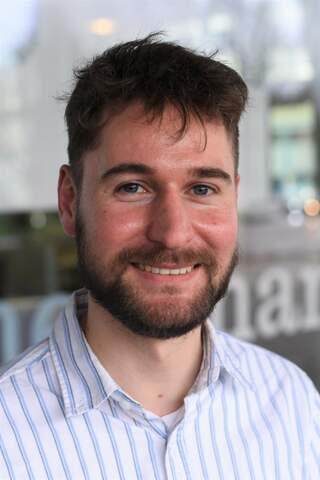
    On 18 january 2023, Posthumus alumnus Bas Machielsen will defend his thesis ‘The Political Elite, Self-Interest and Democratization’, in which he examines the influence of self-interest on the decision-making of political elites.

    Literature has already documented various ways in which actions of political elites can benefit themselves, possibly at the expense of the electorate or society. Bas Machielsen’s dissertation focuses on the personal wealth of politicians. How does their wealth develop in relation to their actions? Machielsen focuses on the Dutch political elite of the late nineteenth and early twentieth centuries, a period of economic growth and democratisation. Not only the wealth of MPs is examined, but also that of ministers and provincial deputies. Machielsen found the information on their wealth in estate inventories. In his thesis, Machielsen shows that politicians prioritised their own wealth when voting on bills that directly affected them. By looking at variations in expected inheritance, he shows that the link is causal.

    <p.Furthermore, Machielsen makes a comparison between the personal wealth of elected and just-not-elected candidates. He finds that politicians who did get elected to the representative body became significantly wealthier.

    Promotors are Professor Oscar Gelderblom (University of Antwerp / Utrecht University) and Professor Abe de Jong (Rotterdam School of Management, Erasmus University Rotterdam).

    The defence can be attended on-site, but also via live stream (see link in header).

    PERSONAL WEBSITE

  • Maartens van Sevenhoven medal awarded to Rozemarijn Moes

    Maartens van Sevenhoven medal awarded to Rozemarijn Moes

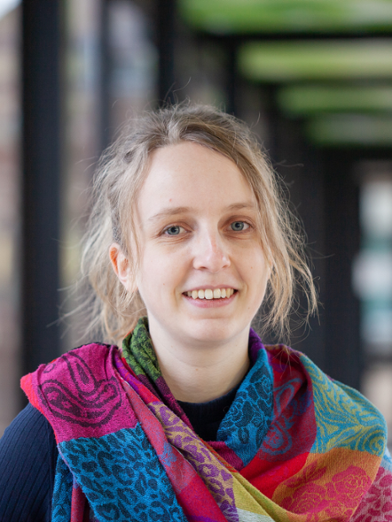
    At the Gelderse Landdag 2022, the 2022 edition of the annual meeting of Erfgoed Gelderland, the Maartens van Sevenhoven medal was awarded to Posthumus PhD Student Rozemarijn Moes for her research on the historical demography of Guelders from prehistorical times until now. The Maartens van Sevenhoven medal is awarded every second year to persons who have achieved remarkable results in the field of archival research, museums or heritage conservation.

    Rozemarijn Moes (1997) is a PhD candidate at Radboud University Nijmegen, specialized in social history, history of the nobility and museum education. Combining her interest in castles and socio-economic history, she is currently working on her PhD project: ‘Kitchen or Capital? Elite women’s role in financial household and estate management in eighteenth-century Guelders’. The project explores estate management by noble women in Guelders, with special attention to accounting skills, life course and estate-wide accounting systems.

    The Maartens van Sevenhoven medal takes its name from Jonkheer Anthony (Toon) Henrik Martens (1880-1952), master of the estate of Sevenhoven, who was a Dutch Keeper of the Public Records (rijksarchivaris), publicist and president of the Vereniging Gelre, an association promoting interest in and research on the history of the province of Guelders.

    The staff of the N.W. Posthumus Institute congratulates Rozemarijn with this award.


    LINKED-IN PAGE

  • NEW DATE Maddison Lecture Professor William Easterly – ‘Western Development Efforts: Altruism vs Self-Interest

    NEW DATE Maddison Lecture Professor William Easterly – ‘Western Development Efforts: Altruism vs Self-Interest

    This event, originally scheduled for 27 October, has now been rescheduled to 15 December 2022

    Annually, the Groningen Growth and Development Centre (GGDC) organises the Maddison Lecture at the University of Groningen. This year’s lecture will be delivered by Professor William Easterly, Professor of Economics at New York University and Co-director of the NYU Development Research Institute. The Maddison lectures have been organised since 2011. The aim of these lectures is to bring leading scholars from around the world to Groningen to present on major topics of economic growth and development in a historical and comparative perspective, thus following the footsteps of Angus Maddison, who laid the foundations of research in this discipline at our university. The event is sponsored by the GGDC and by the SOM Research School of the Faculty of Economics and Business. The event is freely accessible.

    About the speaker

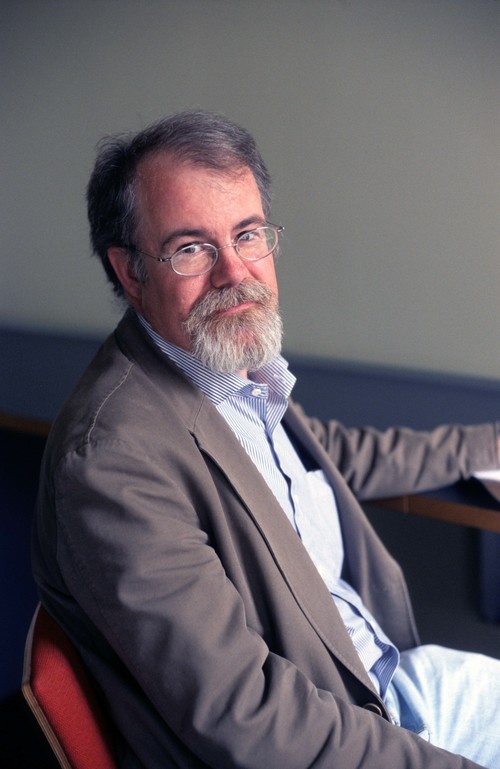
    William Easterly is Professor of Economics at New York University and Co-director of the NYU Development Research Institute. He is the author of three books: The Tyranny of Experts: Economists, Dictators, and the Forgotten Rights of the Poor (March 2014), The White Man’s Burden: Why the West’s Efforts to Aid the Rest Have Done So Much Ill and So Little Good (2006), which won the FA Hayek Award from the Manhattan Institute, and The Elusive Quest for Growth: Economists’ Adventures and Misadventures in the Tropics (2001). He has published more than 60 peer-reviewed academic articles, and has written columns and reviews for the New York Times, Wall Street Journal, Financial Times, New York Review of Books, and Washington Post. He has served as Co-Editor of the Journal of Development Economics and as Director of the blog Aid Watch. He is a Research Associate of NBER, and senior fellow at BREAD. Foreign Policy Magazine named him among the Top 100 Global Public Intellectuals in 2008 and 2009, and Thomson Reuters listed him as one of Highly Cited Researchers of 2014.

    More info

  • Maritime solidarity: Past and present

    Maritime solidarity: Past and present

    The Organising committee of the two-day conference (Posthumus board member Professor Pepijn Brandon (VU Amsterdam/IISH), Dr Niklas Frykman, Professor Marcus Rediker (both University of Pittsburgh), and Professor and activist Nandita Sharma (University of Hawai‘i at Manoa)) invite paper proposals. Papers can cover any period between roughly 1500 and the present, any group of people challenging authority from below, and all the world’s river systems, seas, and oceans.

    Ships and oceans, shorelines and harbors historically have been the theater of dramatic social struggles. The term “hydrarchy”, introduced a quarter century ago in The Many-Headed Hydra, tried to capture the double-edged nature of these struggles. The crucial place of the oceans in the development of a capitalist world market led states and ruling classes to launch determined struggles to own or control the waters, as well as the peoples who worked on and around them. At the same time, working classes of all hues and the seaborne populations they were part of devised new ways to exchange experiences, ideas, and forms of struggles, developing wide-ranging practices of solidarity in the process.

    While there is a thriving literature on the many historic examples of solidarity at sea, and between people ashore and afloat, there is still a lack of research that investigates concretely how, under what conditions, and with what lasting effects such solidarity comes about. This conference aims to bring together papers that focus on concrete histories of maritime solidarity, whether on board early modern slave ships or twentieth-century supertankers, in traditional sailortowns or contemporary container ports, and everywhere in between. The organisers intend to publish a select number of papers in the form of an edited book or special journal issue.

    Academic participants should send in proposals for papers consisting of an abstract of 150-250 words plus a short academic CV by 1 December 2022 by e-mail to the organisers.

    The organisers also wish to make space for an active dialogue between people studying maritime solidarity in the past and practitioners of maritime solidarity in the present (including, for example, migrant rescue workers, maritime trade unionists, stop the boat campaigners, and more). For this reason, the intention is to include one or two round tables, open to a public audience, where activists involved in maritime solidarity today reflect on connections to maritime solidarity in the past, based on the presentations at the conference. People who would be interested in joining the conference on the basis of their involvement in present-day maritime solidarity are invited to write a short e-mail to the conference organizers explaining the nature of their work.

    FULL INFO
  • CLARIAH & NDE Annual Conference 2022

    CLARIAH & NDE Annual Conference 2022

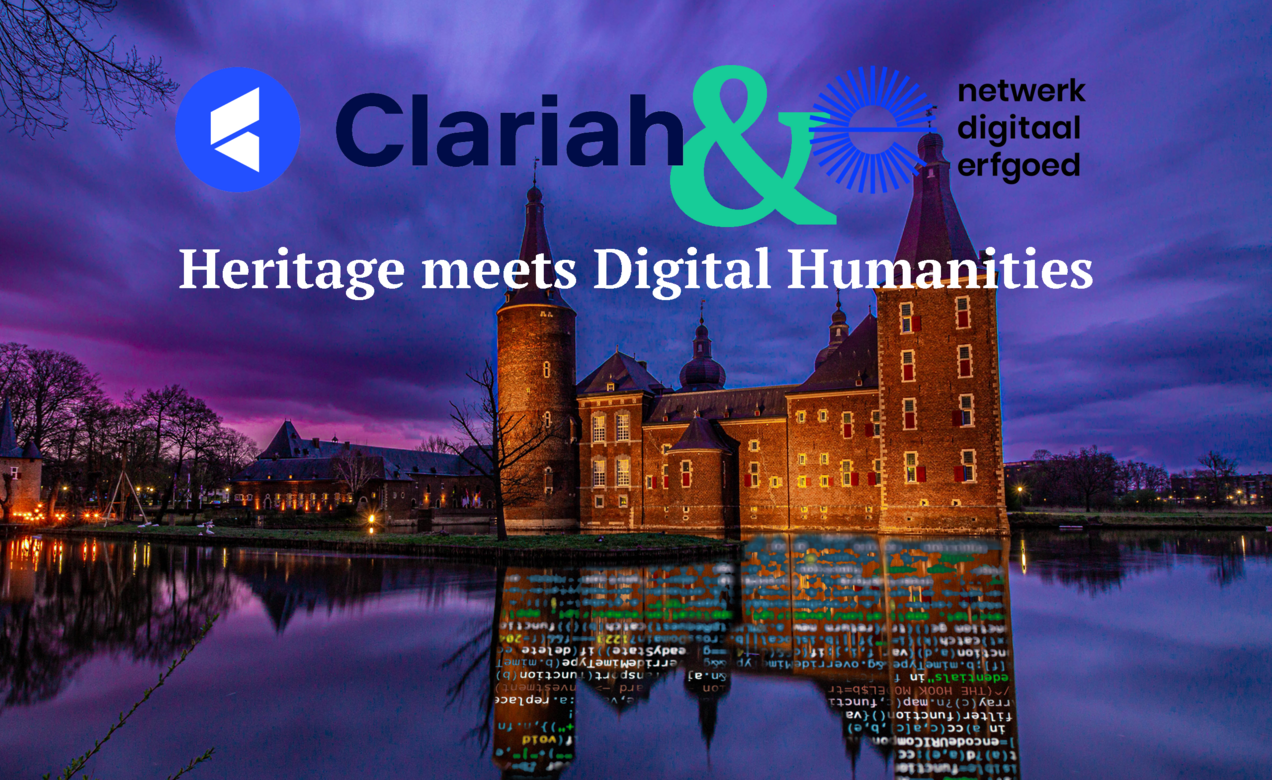
    On Thursday 24 November 2022, CLARIAH and Netwerk Digitaal Erfgoed (NDE) jointly organise their annual conference in Utrecht. This year’s theme will be ‘Heritage meets Digital Humanities’. The focus will be on the CLARIAH digital humanities infrastructure and its use by researchers and other professionals from the heritage field. The program includes lectures, debates, interactive presentations, workshops, poster sessions and networking opportunities.

    The conference will be led by chairperson Kirsten Paulus, TV presenter, presentation coach and chairperson. The keynote lecture will be delivered by Dr Kathryn Eccles, Senior Research Fellow at the Oxford Internet Institute and Pembroke College. She will talk about her work at the intersection of research and digital heritage.

    Free registration for the event has opened on a first come, first served basis, up to a maximum of 150 participants.

    FULL INFO AND REGISTRATION

  • Annual Report 2021 N.W. Posthumus Institute available

    Annual Report 2021 N.W. Posthumus Institute available

    The staff of the N.W. Posthumus Institute kindly presents to you the Annual Report 2021. This report provides a detailed insight in the activities and achievements of the N.W. Posthumus Institute over 2021, a year strongly affected by the COVID pandemic and its effects on academia and society.

    DOWNLOAD REPORT (PDF, 4 MB)

  • Datini-ESTER Advanced Seminar 2023: ‘Economic Exchanges’

    Datini-ESTER Advanced Seminar 2023: ‘Economic Exchanges’

    Fondazione Istituto Internazionale di Storia Economica “F. Datini” and the European School for Training in Economic and Social Historical Research (ESTER) will organise their sixth jointly-organized Datini-ESTER Advanced Seminar for economic and social historians on 14-20 May 2023, in Prato (Italy) on the theme of “Economic Exchanges”

    The organisers

    ESTER, established in 1991, is an international postgraduate network incorporating more than 60 European Universities. ESTER organizes research training in the form of both the annual Research Design Course for starting PhD-students and a series of Advanced Seminars on special themes within economic and social history.

    “F. Datini” International Institute of Economic History was founded in 1967 by Federigo Melis and Fernand Braudel. The aim of the Institute is the study of pre-industrial economic history (thirteenth-eighteenth centuries) and the creation on the topic of a space for historical culture, making comparison between different methodologies and schools of research easier and supporting young scholars during their formative years.

    Theme

    The topic of the seminar is closely related to the theme of the congress organized yearly by the “F. Datini” International Institute of Economic History, which in 2023 is devoted to ‘Alternative Currencies. Commodities and Services as Exchange Currencies in the Monetarized Economies of the 13th to 18th Centuries’. The 2023 Datini-Ester seminar will deal with Economic Exchanges. The organisers particularly welcome papers on the exchange of goods and services, on the role of markets, monies, trade, transaction costs and institutional contexts, which might foster market integration or, alternatively, constrain economic performance. Purpose is to clarify the role of the economic exchange and market in past economies. Papers can cover any relevant aspect and any period from Antiquity until today.

    More info

    Abstracts for the 2023 edition are due by 15 November 2022 (extended deadline). If accepted for participation, the final paper will be due on 15 March 2023. For info on the seminar in general, you may contact Dr Jaco Zuijderduijn (Lund University).

    The full call can be found as pdf via this link.

    APPLICATION FORM

  • Save the date! Inaugural Lecture Professor Hilde Bras

    Save the date! Inaugural Lecture Professor Hilde Bras

    On 26 May 2023, Professor Hilde Bras, Professor of Economic and Social History, with special attention to Global Demography and Health at the History Department of the University of Groningen, will deliver her inaugural lecture.

    More details will follow in due time, but do already save the date!

    PERSONAL WEBSITE

  • Terra Incognita Lecture by Professor Kapil Raj – Circulation as Relational History (Leiden, 6 December 2022)

    Terra Incognita Lecture by Professor Kapil Raj – Circulation as Relational History (Leiden, 6 December 2022)

    On 6 December 2022, the day before Professor Kapil Raj’s masterclass at the Institute for History at Leiden University, Professor Raj will deliver the Annual Terra Incognita Lecture, entitled ‘Circulation as Relational History’. This lecture will be open to all interested.

    About the keynote speaker

    Professor Kapil Raj, Research Professor at École des Hautes Études en Sciences Sociales in Paris, is an historian who writes on intercultural interactions and the making of scientific knowledge and the global dimensions of local knowledge production. His publications include Relocating modern science: circulation and the construction of knowledge in South Asia and Europe, 1650-1900 (2007), “Mapping knowledge go-betweens in Calcutta, 1770-1820” (2009), and “Thinking Without the Scientific Revolution: Global Interactions and the Construction of Knowledge” (2017).

    About the lecture

    Ever since its institutionalisation as a university discipline in the course of the 19th century, history — along with the vast majority of social sciences — have been entrapped in “methodological nationalism”, the assumption that nations are the natural units for study, thus equating society with the nation-state, and conflating national interests with the purposes of the social sciences. Questions thus very often get reduced to explanations limited to national parameters without taking account of broader dynamics. In the context of nations that gained independence from European colonialist in the post-WW II era, Postcolonial Studies have sought to engage with this nationalist straightjacket by attempting to situate their histories, especially during the colonial period, as a process of resistance to European imperial domination and imposition of the latter’s outlook and values. However, a number of questions and issues are thus blindsided in this systematically agonistic perspective, or for that matter in its opposite, a free-flowing diffusionist model based on a simple-minded Whiggish model of progress. In light of the fact that human societies, past and present, are constantly interacting with each other together with the phenomenon of human migrations, a number of new historiographical approaches that attempt to engage with these “relational” processes have emerged in the last decades.

    This talk will start with a presentation of some of the most prominent amongst such propositions – comparative history, histoire carrefour, histoire croisée, connected history, circulatory history… – before developing the last one, including its areas of applicability, in some detail. As an illustration of the workings of this approach, the talk will focus on a case-study in the context of the European encounter with South Asia – the making of the monumental Hortus Indicus Malabaricus commissioned in the 1670s by the military commander of the then Dutch colony of Kochi, and its iterations in subsequent Indo-European interactions.

    Download abstract as pdf