Research School for Economic and Social History

Author: René van Weeren

  • Public Lecture Beat Kümin: Managing Memory through Tower Ball Deposits in the German Lands

    Public Lecture Beat Kümin: Managing Memory through Tower Ball Deposits in the German Lands

    A day before Professor Beat Kümin’s Masterclass at the Vrije Universiteit Brussel, Professor Kümin will deliver a public lecture there, entitled ‘”To dear posterity”: Managing Memory through Tower Ball Deposits in the German Lands’.

    About the lecture

    Since the late Middle Ages, urban and rural communities of different confessions have marked the completion of prominent buildings by placing chronicles and objects into golden spheres located on top of towers. In this liminal position between earth and heaven, the archives remain inaccessible and sometimes forgotten until the next major repairs, when new items are often added by successive generations. How can we make sense of this peculiar, ‘bottom-up’ and regionally circumscribed custom and what can it tell us about local memory cultures more generally? A public lecture, just ahead of an important day of remembrance in Belgium and many other countries, investigates.

    About the speaker

    Beat Kümin is Professor of Early Modern European History at the University of Warwick and author of e.g. Drinking Matters: Public Houses and Social Exchange in Early Modern Central Europe and The Communal Age in Western Europe c. 1100-1800 , as well as ‘Nachrichten für die Nachwelt. Turmkugelarchive in der Erinnerungskultur des deutschsprachigen Europa’. He serves as an academic lead of Warwick’s interdisciplinary Global Research Priority on Food and coordinates the Warwick Network for Parish Research.

    How to participate

    This public lecture is open to all and free of charge. No prior reservation is required.
    FULL INFO

  • Boekpresentatie Marjolein ‘t Hart – ‘Oorlog en ongelijkheid’

    Boekpresentatie Marjolein ‘t Hart – ‘Oorlog en ongelijkheid’

    ~ because of scope only in Dutch ~

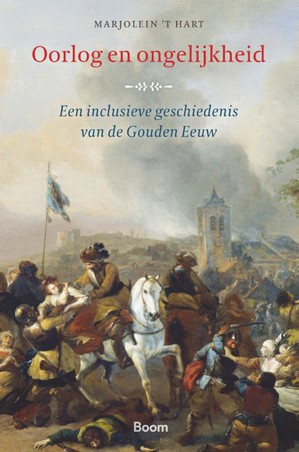
    Op zaterdag 29 oktober a.s. om 15.00 uur in Boekhandel Blokker, Binnenweg 138, 2101 JP Heemstede, vindt de presentatie plaats van het boek Oorlog en Ongelijkheid. Een inclusieve geschiedenis van de Gouden Eeuw, verschenen bij Uitgeverij Boom Amsterdam van Posthumus fellow emerita professor Marjolein ’t Hart. Roelof van Gelder, historicus en vroeger redacteur Boeken van de NRC, zal een vraaggesprek met haar houden.

    Over de publicatie

    Alle oorlogen in de zestiende en zeventiende eeuw leidden tot economische neergang, behalve de Tachtigjarige Oorlog. Deze leidde juist tot een periode van enorme bloei – zonder Tachtigjarige Oorlog geen Gouden Eeuw. Die grote rijkdom bereikte echter niet iedereen. In de wingewesten overzee werden mensen op grote schaal uitgebuit, en ook binnen de Republiek zelf groeide de ongelijkheid. Katholieken, plattelanders, vissers, de lagere en de middenklasse in de steden: allemaal gingen ze er tijdens de Gouden Eeuw op achteruit.

    Met het leger en de vloot was de overheid de grootste werkgever en de grootste consument. Door een efficiënte troepenmacht, een breed gedragen staatskrediet en een vergaande commercialisatie in de logistiek van oorlogvoering werd de Gouden Eeuw vooral een Hollandse Gouden Eeuw. Nog steeds profiteert de Nederlandse economie van de vermogens die toen zijn vergaard. Niet eerder is verklaard waarom vooral de Hollandse economie van de oorlog heeft geprofiteerd. Oorlog en ongelijkheid doet dat wel. Door systematisch te laten zien dat de glorie vele schaduwzijden kende, presenteert Marjolein ’t Hart de eerste inclusieve geschiedenis van de Gouden Eeuw.

    Meer info

  • Masterclass Beat Kümin ‘Remembering From Below’

    Masterclass Beat Kümin ‘Remembering From Below’

    The VUB research group Historical Research into Urban Transformation Processes (HOST) in collaboration with the N.W. Posthumus Institute and the Fernandes Fellowship scheme of the University of Warwick is hosting the masterclass ‘Remembering From Below: New Directions in Memory Studies’ delivered by Professor Beat Kümin (University of Warwick, UK) on 11 November 2022.

    About the speaker

    Beat Kümin is Professor of Early Modern European History at the University of Warwick and author of e.g. Drinking Matters: Public Houses and Social Exchange in Early Modern Central Europe and The Communal Age in Western Europe c. 1100-1800 , as well as ‘Nachrichten für die Nachwelt. Turmkugelarchive in der Erinnerungskultur des deutschsprachigen Europa’. He serves as an academic lead of Warwick’s interdisciplinary Global Research Priority on Food and coordinates the Warwick Network for Parish Research.

    How to participate

    Applicants should send an abstract (c. 300 words) with a brief biographical note to both Host and Dr Marjolein Schepers by 14 October 2022. All candidates will be notified of the outcome by 20 October. A full working paper should then be submitted no later than 4 November.

    FULL CALL (PDF)

  • Frank Veraart receives grant NWO Open Competition

    Frank Veraart receives grant NWO Open Competition

    Dr Frank Veraart (Eindhoven University of Technology), one of the directors of the Posthumus Research Network ‘Globalisation, Inequality and Sustainability in Long-Term Perspective’, together with PIs Professorr Jan-Pieter Smits (also Eindhoven University of Technology) and Professor Johan Schot (Utrecht University) (in cooperation with Wageningen University and Research, Statistics Netherlands (Centraal Bureau voor de Statistiek) and the SHT Institute for Transition Studies) was recently awarded funding by NWO in the Open Competition for the international project ‘Sustainability trade-offs in the Netherlands’ entangled modernisation, 1900-2020′.

    Imports of resources affect economic, social, and environmental conditions elsewhere in the world. Regarding sustainability trade-offs abroad, the Netherlands has the worst track record in Europe. Its performance has historical origins: over the past two centuries, scientific knowledge production, colonial developments, and industrial modernization have helped to create global production chains. Systematic science-based commodification attributed economic and use values to natural resources. This changed western perceptions of the natural environment. It had a severe impact on global environment and indigenous people’s livelihoods. Our research investigates this commodification process in conjunction with the development of global supply chains and their effect on sustainability. It traces the activities of global supply chain entanglers, the actors who constructed transnational socioeconomic systems. The research consists of four work packages. The first, conducted in collaboration with Netherlands Statistics, develops two databases: (1) on the import of commodities to the Netherlands, and (2) on the sustainability indicators for selected periods and regions. In conjunction, work packages two and three study qualitatively the processes of commodification, global system entanglement, and the distribution of these systems’ sustainability trade-offs in edible oils and metals. This enables a system comparison and analyses of cross-system dynamics in package 4. Findings will contribute to nascent academic fields of sustainability histories and deep transitions. Furthermore, this research will provide perspectives for contemporary policy initiatives in the field of sustainability transitions. The project is supported by an experienced multi-disciplinary team of scholars and relevant societal partners, ensuring broad dissemination of the knowledge gained.

    The N.W. Posthumus Institute congratulates Frank and his project partners with this grant.

    Profile

  • Erik van der Vleuten receives grant NWO Open Competition

    Erik van der Vleuten receives grant NWO Open Competition

    Posthumus General Board member Professor Erik van der Vleuten (TUE), together with Professor Jacqueline Broerse and Dr Evelien de Hoop (both VU Amsterdam) and Professor Claiton M. da Silva (Universidade Federal da Fronteira Sul, Brazil) was recently awarded funding by NWO in the Open Competition for the international 5-year project project ‘SOY STORIES: Connected sustainability histories and futures of the global Soyacene’.

    Different regions across the globe face grave sustainability challenges that may be at once highly diverse and highly interconnected. SOY STORIES investigates diverse Brazilian and Dutch sustainability histories connected by soy, and studies how a connected diversity perspective can contribute to imagining more inclusive sustainable futures. Since the 1970s, accelerating soy production in Brazil has been associated with challenges such as large-scale deforestation, land-grabbing, and child labor, while soy-based intensive animal farming in the Netherlands came with challenges such as a 4-decades-long national manure and nitrogen crisis, public health hazards, greenhouse gas emissions and animal welfare problems. This study is important because historiography currently lacks a convincing approach to investigate the connected histories of diverse sustainability challenges. In turn, this omission entrenches a similar lack of connected thinking in future imaginaries.

    To tackle this problem, SOY STORIES combines expertise in sustainability history and transnational history on both sides of the Atlantic (Eindhoven History Lab Eindhoven University of Technology and UFFS, Brazil) with expertise in transdisciplinary research (TDR) for sustainable futures (Athena Institute, VU, NL). We combine in-depth historical research based on written source analysis and oral history on both sides of the Atlantic with regular stakeholder interaction. We continuously monitor and evaluate the effects of this combination of methods and approaches to make novel contributions to the fields of sustainability history, soy historiography and TDR.

    The N.W. Posthumus Institute congratulates Erik and his project partners with this award.

    profile

  • Inaugural lecture Professor Jutta Bolt (University of Groningen)

    Inaugural lecture Professor Jutta Bolt (University of Groningen)

    On 4 November 2022, Professor Jutta Bolt, member of the General Board of the N.W. Posthumus Institute, will deliver her inaugural lecture as Professor in Global Economic History at the Faculty of Economics and Business of the University of Groningen, entitled ‘Living standards and wellbeing in Africa, an economic history perspective’.

    The lecture will also be streamed online, for the link check the full info via the button below.

  • IASC2023 Conference ‘The Commons We Want: Between Historical Legacies and Future Collective Actions’

    IASC2023 Conference ‘The Commons We Want: Between Historical Legacies and Future Collective Actions’

    The IASC has been shaping the debate on alternative development pathways by way of putting the commons center stage. In times of profound crises, we have seen states being caught up in emergency mode. This unfolds, among others, in a tendency to respond within national borders, and it has brought the importance of building genuine resilience that leaves no one behind.

    In all its diversity, the African continent is particularly exposed to shocks, and the risk of losing decades of development accomplishments is conspicuous. Therefore, in the context of the pandemic, building resilience for a broad range of society has become ever more pertinent, but the framework conditions to do so remain under-discussed. The global IASC conference will open up a space to mobilize this very debate. Taking place at the University of Nairobi, but co-organized with Centre for Integrated Training and Research in ASAL Development CETRAD, the University of Bern (Institute of Social Anthropology ISA, Centre for Development and Environment CDE), and the Swiss Tropical and Public Health Institute Swiss TPH, Basel, Switzerland) and the Swiss Society for African Studies (SSAS), the discourse on commons and commoning will be prominently staged so as to broadly explore the contributions of the concept of the commons to build resilience in and beyond crises.

    The conference provides a much-needed link to future-oriented research and practice perspective with a look back, since many legal and structural legacies predetermine possible development pathways. This reflection shall help to position the commons debate in the context of the Agenda 2030 and contribute to making the transformation towards the SDGs a more commons-oriented and participatory endeavor.

    full info

  • Book offers

    Book offers

    Although we generally do not include book offers in our website or newsletters, we thought it wise to make an exception for two book offers we received recently, because of their relevance for Posthumus affiliates. Please note that all contact regarding these offers are between you and the supplier, the N.W. Posthumus Institute is no party in this matter.

    Free copies Inequality and the City

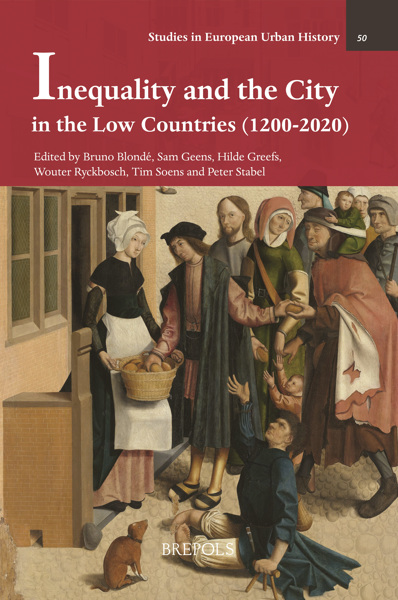
    The first offer concerns a limited number of free copies of the publication Inequality and the City in the Low Countries (1200-2020), eds. Bruno Blondé, Sam Geens, Hilde Greefs, Wouter Ryckbosch, Tim Soens, Peter Stabel.

    Social inequality is one of the most pressing global challenges at the start of the 21st century. Meanwhile, across the globe at least half of the world’s population lives in urban agglomerations, and urbanisation is still expanding. This book engages with the complex interplay between urbanisation and inequality. In doing so it concentrates on the Low Countries, one of the oldest and most urbanised societies of Europe. It questions whether the historic poly-nuclear and decentralised urban system of the Low Countries contributed to specific outcomes in social inequality. In doing so, the authors look beyond the most commonly used perspective of economic inequality. They instead expand our knowledge by exploring social inequality from a multidimensional perspective. This book includes essays and case-studies on cultural inequalities, the relationship between social and consumption inequality, the politics of (in)equality, the impact of shocks and crises, as well as the complex social relationships across the urban network and between town and countryside.

    A limited number of copies is available free of charge on the base of ‘first come, first served’. Please use the button below to access the order form.

    order form

    Offer from personal collection em. Professor Knotter

    The second offer is by emeritus Professor Ad Knotter, who offers some standard works form his own library to those interested free of charge. The offer concerns some standard works in Economic and Social History:

    • AAG-bijdragen 8-23 en 29-39
    • Economisch-Historisch Jaarboek VI-XVIII en XXX-LVI
    • NEHA-Jaarboek en NEHA-bulletin 1994-2002
    • Economic and Social History in the Netherlands (6 dln)

    For this offer, also based on ‘first come, first served’, you can contact professor Knotter directly via e-mail, please use the button below for this.

    MAIL PROF. KNOTTER

  • Workshop ‘Exploring the Links between Genetics and Historical Demography’ – deadline registration 30 September 2022

    Workshop ‘Exploring the Links between Genetics and Historical Demography’ – deadline registration 30 September 2022

    On 7 October 2022 the Nature & Nurture-workshop ‘Exploring the Links between Genetics and Historical Demography’ will take place in Leuven, Belgium. This workshop is made possible by funding from the HiDo Scientific Network for Historical Demography. The full program can be found here (pdf). Participation, either at location or online, in the workshop is free of charge, but registration is compulsory. You can register here. The deadline for registration is 30 September 2022.

    FULL INFO

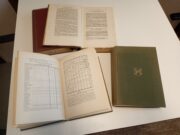
  • N.W. Posthumus Institute receives book collection from Posthumus family

    N.W. Posthumus Institute receives book collection from Posthumus family

    Just before the Summer holidays, the N.W. Posthumus Institute received a collection of books and documents, until then owned by relatives of N.W. Posthumus (1880-1960). Among them were some personal documents, the earliest of which dated from N.W. Posthumus’ times as student at the University of Amsterdam, and several of his later books and publications. As the N.W. Posthumus Institute’s seat changes every five years, with the approval of N.W. Posthumus granddaughter Jocelyn, we have found a sound and structural place for the personal documents within the archives of the International Institute of Social History in Amsterdam. The N.W. Posthumus Institute expresses its gratitude to the Posthumus family for this kind gesture.