There is a strong desire in the SSH field to assign part of the resources intended for the SSH Sector Plan of the Ministry of Education, Culture and Science (OCW) to a domain wide digital SSH plan. For this purpose, the SSH Council – which represents the SSH field – initiated the Platform for Digital Infrastructure for SSH (PDI-SSH). The platform is responsible for allocating resources to digital infrastructure facilities within the SSH domain, for coordinating digital infrastructures in the SSH domain and for strategy within that domain. The Platform Digital Infrastructure SSH has awarded ten grants (out of 47 applications) related to the Call Digital Infrastructure SSH. Among the grantees are Posthumus Board member Professor Jan Kokfor his proposed project “Diversity and dynamics. The population of Curacao 1839-1950” and Posthumus fellow Dr Auke Rijpmafor the proposal “HIP-NL: an Historical Income Panel for the Netherlands”. The Posthumus staff congratulates both grantees with this result.
Author: René van Weeren
-
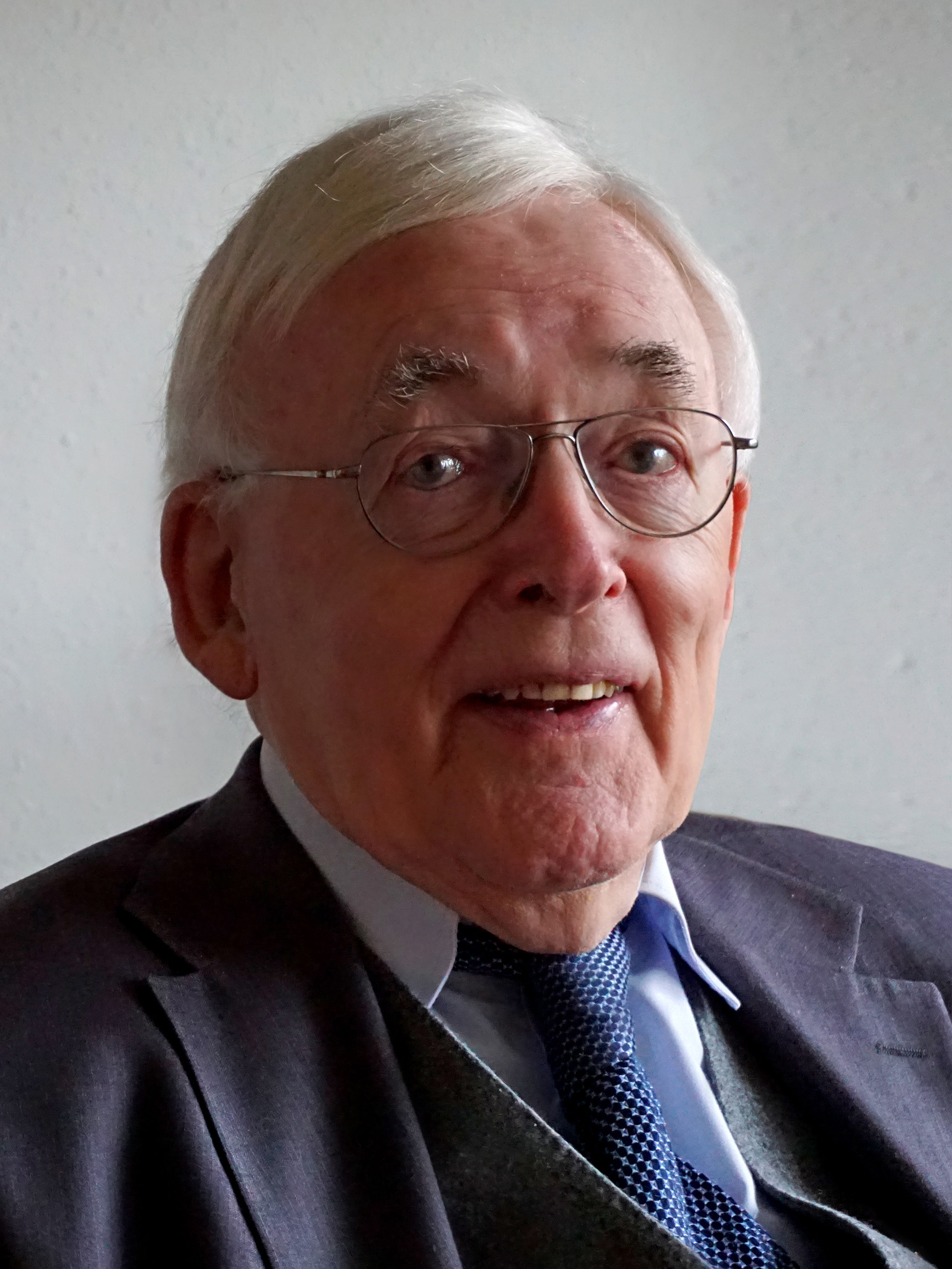
In memoriam: Prof. dr. Joh. de Vries (1927-2021)
 Prof. dr. Joh. de Vries (1927-2021)
Op 13 oktober 2021 overleed prof. dr. Joh. (Hans) de Vries. Hij werd 94 jaar. Hij was vijfentwintig jaar hoogleraar Economische Geschiedenis in Tilburg en wordt in Nederland gezien als wegbereider van bedrijfsgeschiedenissen die voldoen aan de normen van wetenschappelijke geschiedschrijving. In 1992 ging hij met emeritaat en in 2012 nam hij, zoals hij het noemde, ‘definitief afscheid’ van de wetenschap in een symposium dat door de Stichting Bedrijfsgeschiedenis voor hem was georganiseerd.
De Vries studeerde economie aan de UvA en promoveerde in 1959 cum laude op het proefschrift De economische achteruitgang der Republiek in de achttiende eeuw. Promotor was professor I.J. Brugmans. Het boek werd tweemaal herdrukt en is nog steeds relevant.
Vervolgens nam hij de ongebruikelijke carrièrestap om te gaan werken als freelance historicus. Dat avontuur slaagde wonderwel want hij kreeg opdrachten die onder andere leidden tot goed ontvangen gedenkboeken voor de Amsterdamse Kamer van Koophandel, de Volksuniversiteiten en de Hoogovens (Ontstaan en groei van een basisindustrie – 1968). Het laatste boek wordt genoemd als een wezenlijke vernieuwing op het gebied van de Nederlandse bedrijfsgeschiedenis.
Daarnaast werd hij in 1963 tekstbezorger van de Herinneringen en dagboeken van Ernst Heldring (1871-1954), een prominente reder en bankpresident met de bijnaam ‘onderkoning van Amsterdam’. De dagboeken beschrijven Heldrings jonge jaren en zijn leven tot 1948. Ze zijn door De Vries fraai en uitvoerig geannoteerd en geven een scherpzinnig en vaak onthullend beeld van de top van het bedrijfsleven, Heldrings contacten met Den Haag en het wel en wee van de hogere burgerij die destijds de Amsterdamse grachtengordel bewoonde. De dagboeken werden in 1970 in drie banden uitgegeven met totaal 1.900 pagina’s. Ze zullen nog veelvuldig door historici worden geraadpleegd. Gelukkig heeft de DBNL ze digitaal toegankelijk gemaakt.
Inmiddels was De Vries in 1967, 40 jaar oud, in Tilburg tot hoogleraar benoemd. Naast zijn onderwijstaken vond hij tijd voor het schrijven van gedenkboeken voor de boerenleenbanken, de Amsterdamse Effectenbeurs en de accountants in Nederland. Hij kreeg verder veel waardering voor De Nederlandse economie in de 20e eeuw. Een verkenning van het meest kenmerkende (1977). Het beleefde vier drukken en werd in het Engels vertaald. Het werd ook gebruikt in het onderwijs. In 1982 werd hij benoemd tot historicus van De Nederlandse Bank (DNB) met de titel onderdirecteur. Hij schreef er de gedenkboeken van de bank voor de tijdvakken 1917 – 1931 en 1931 – 1948. Vanaf 1982 was hij in Tilburg ook buitengewoon hoogleraar. De erkenning van zijn peers kreeg De Vries met zijn benoeming tot lid van de Koninklijke Nederlandse Akademie van Wetenschappen (KNAW) in 1979.
Behalve als hoogleraar en auteur van een omvangrijk oeuvre boeken, artikelen en recensies was De Vries ook bestuurlijk actief. Zo was hij van 1979 tot 1992 voorzitter van de Werkgroep Bedrijfsgeschiedenis die zorgde voor stimulansen in het vakgebied waaronder het Jaarboek voor de geschiedenis van bedrijf en techniek (later opgegaan in het NEHA Jaarboek). Hij was promotor bij zestien dissertaties, zat regelmatig in begeleidingscommissies en was gasthoogleraar in Leuven. Verder was hij lid van het bestuur van het NIAS en voorzitter van de sectie geschiedenis van het KNAW, alsmede van de Bond van Nederlandse Volksuniversiteiten. Door zijn grote netwerk in de academische wereld en het bedrijfsleven wist hij meermalen collega’s en studenten opdrachten of aanstellingen te bezorgen.
Hans de Vries was een vriendelijk en tactvol mens en een onderhoudend causeur. Hij lachte graag en hechtte aan vriendschappen. Ondanks zijn drukke werk vond hij tijd voor zijn gezin en een gevarieerd sociaal leven. Hij hield van zijn vakanties – vele jaren ’s zomers in Zuid Frankrijk, ’s winters in de bergen. Na zijn pensionering bleef hij schrijven, in opdracht van Wolters-Kluwer en van het Ministerie van Financiën, maar ook een thriller onder het pseudoniem S.T. Olivier die was gebaseerd op de Duitse roof van het Nederlandse goud tijdens de Tweede Wereldoorlog – Goud op het spoor (2000). In 2001 publiceerde hij zijn ‘bedrijfshistorische herinneringen’ die hij, typerend voor de man, met enige zelfspot de titel gaf: Hooggebergte der IJdelheid.
Cees de Voogd
Foto: Wikimedia Commons, Topper74~wiki, CC-BY-SA-4.0 licentie
-

Ewout Frankema appointed as new Chair of the General Board
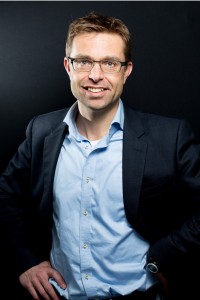 At the latest General Board meeting of the N.W. Posthumus Institute, chair of the General Board Professor Hilde Greefs announced the completion of her period as chair person. The General Board of the N.W. Posthumus Institute wants to express thanks to Hilde for her successful time as chair.
The General Board is also proud to announce that the new chair of the General Board will be Professor Ewout Frankema. Ewout Frankema is professor and chair of Rural and Environmental History at Wageningen University and research fellow of the UK Centre for Economic Policy Research (CEPR). His research agenda focuses on a deeper understanding of the long-term comparative economic development of developing regions (Africa, Latin America, Asia) and the historical origins and nature of present-day global inequality. Frankema has studied History, Economics and Philosophy at the University of Groningen, where he obtained his PhD in Economics in 2008. He has taught a broad range of courses in history, economics and development studies at the University of Groningen, Utrecht University, Wageningen University, and offered guest lectures at universities in Uruguay, Uganda, Benin, Spain, Sweden and the UK.
In 2012 he was awarded a VIDI-grant by the Dutch Science Foundation (NWO) for his project Is Poverty Destiny? Exploring Long Term Changes in African Living Standards in Global Perspective and a European Research Council Starting Grant for his project Is Poverty Destiny? A New Empirical Foundation of Long Term African Welfare Analysis. In 2013 he won the prestigious Arthur H. Cole Award for the best paper in the Journal of Economic History. He has been elected member of the Young Academy of the Royal Dutch Academy of Arts and Sciences (2014-19) and is currently acting as Chief Editor of the Journal of Global History. In 2019 he received the AMMODO Science Award for outstanding mid-career scholarship.
-
DATINI-ESTER Advanced Seminar 2022
Fondazione Istituto Internazionale di Storia Economica “F. Datini” and the European School for Training in Economic and Social Historical Research (ESTER) will organise their sixth jointly-organized Datini-ESTER Advanced Seminar for economic and social historians on 8-13 May 2022, in Prato (Italy) on the theme of “Economic Innovations”
The organisers
ESTER, established in 1991, is an international postgraduate network incorporating more than 60 European Universities. ESTER organizes research training in the form of both the annual Research Design Course for starting PhD-students and a series of Advanced Seminars on special themes within economic and social history.
“F. Datini” International Institute of Economic History was founded in 1967 by Federigo Melis and Fernand Braudel. The aim of the Institute is the study of pre-industrial economic history (thirteenth-eighteenth centuries) and the creation on the topic of a space for historical culture, making comparison between different methodologies and schools of research easier and supporting young scholars during their formative years.
Theme
The topic of the seminar is closely related to the theme of the congress organized yearly by the “F. Datini” International Institute of Economic History, which in 2022 is devoted to ‘The Knowledge Economy. Innovation, Productivity and Economic Growth’. The 2022 Datini-Ester seminar will deal with Economic Innovations. We particularly welcome papers on technical and institutional innovations and their impact on the economic output. The seminar will not deal directly with the production factors, but with the effects on the productivity and efficiency of the economic system deriving from changes in the mix of the inputs.
More info
The application deadline for the 2022 edition has passed. For info on the seminar in general, you may contact Dr Jaco Zuijderduijn (Lund University).
-
Annual Report N.W. Posthumus Institute 2020 online
The N.W. Posthumus Institute presents you its Annual Report over 2020. The report describes the activities, events, and results of both the N.W. Posthumus PhD Training Programme as well as the courses delivered within the Research Master programme of the N.W. Posthumus Institute over 2020. You can download the Annual Report 2020 via the button below or by clicking the cover image.
-

Workshop ‘Methods and data for longitudinal analysis of Institutions for Collective Action’ (The Hague, 8-10 Dec.)
The Research Group ‘Institutions for Collective Action’ at the Rotterdam School of Management at Erasmus University Rotterdam organises a specialised workshop dedicated to the study of institutions for collective action (ICAs), or institutional arrangements that are formed by groups of people in order to overcome certain common problems over an extended period of time by setting certain rules regarding access to the group (membership), use of the resources and services the group owns collectively, and management of these resources and services.
The goal of this workshop is to stimulate discussion on how existing methods in other disciplines can be used for the longitudinal study of ICAs, and how innovative methodological solutions can be developed for studying ICAs. During the workshop, (historical) databases of ICAs will be used on-site, to better grasp the challenges in this context.
-
4th Conference European Society of Historical Demography
The 4th ESHD conference leading theme is ‘Human–environmental nexus in the past: understanding links between demographic variability, ecology and disease’.
Participants are encouraged to engage with and link across three different streams of historical social science analysis:
- the diversity of historical demographic behaviour across space and time;
- the study of historical health, disease, and morbidity conditions;
- human-environmental interactions in the past.
Example research questions might be:
- How do environmental conditions affect demographic behaviour across space and time?
What was its mechanism, its major drivers, and the latter’s interaction with socioeconomic, cultural, and other factors? - How far does the demographic and environmental specificity of historical populations help us understand the different ways that they responded to external epidemiological stressors?
- Can the links between demographic variability, ecology and disease be explained in a universal model, or should we rather consider many geographically disparate relationship patterns and interactions?
-
Introducing the new Posthumus staff members
With the regular quinquennial transfer of the seat of the N.W. Posthumus Institute, now hosted by the Department of History and Art History at Utrecht University, we also would like to introduce to you the new staff members of the N.W. Posthumus Institute.
Scientific Director: Dr Jessica Dijkman
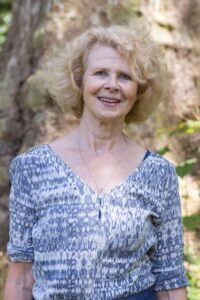
Jessica Dijkman (1960) is an associate professor in economic history. Her research focuses on the medieval and early modern era. Currently she studies the way societies in late medieval and early modern Europe coped with food crises and famines. In earlier research projects she investigated commodity market institutions in medieval Holland and compared the organization of labour, particularly craftsmanship, in the Middle Ages in Europe and the Islamic world.
Educational Programme Director: Dr Rogier van Kooten
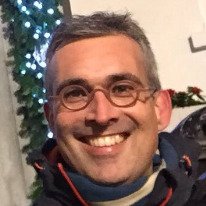
After initially obtaining a MSc <in Social Sciences from Tilburg University, Rogier van Kooten (1972) worked for about 20 years in IT and Consultancy. As of 2015, he returned to academia, obtaining his PhD in History from the University of Antwerp in juni 2021 on the research topic ‘Antwerp 1584. War and Inequality in Urban Space’. As of 1 September 2021, Rogier is affiliated with Utrecht University as Educational Programme Director of the N.W. Posthumus Institute.
Office Manager: René van Weeren BA
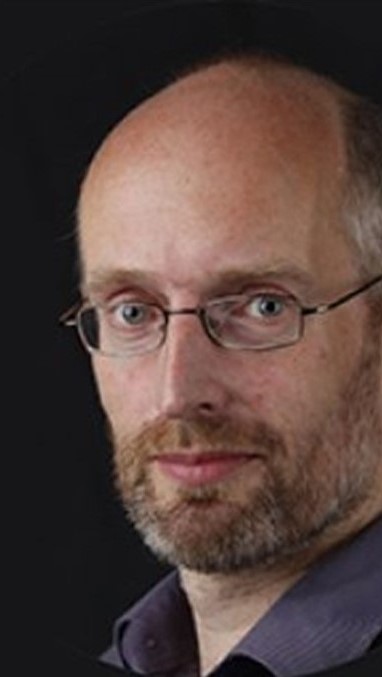
Prior to his activities in the field of History, René van Weeren (1967) has worked for years as a state registered nurse within Dutch healthcare and adjacent sectors. After obtaining his BA in History from Utrecht University, he has been involved in several NWO-/ERC-research projects. From 2015 until 2019, he was also Executive Director of the International Association for the Study of the Commons. Next to being Office Manager of the N.W. Posthumus Institute, René is also involved (from September 2020 onward) Work Package 4 (Socio-economic History) in the CLARIAH PLUS project.
-

Pepijn Brandon receives VIDI Grant
Dr Pepijn Brandon, Research Director of the N.W. Posthumus Institute Research Network ‘Economy and Society of the Pre-industrial Low Countries in Comparative Perspective’ and affiliated with both the International Institute of Social History and Vrije Universiteit Amsterdam has been awarded a VIDI Grant by the Dutch Research Council (NWO) for his project ‘Land Grabbing and Dutch Empire (16th-18th century)’.
Land Grabbing is an urgent global problem with deep historical roots. This project shows how the market-oriented early modern Dutch state encouraged large-scale dispossession of land as commercial strategy within and outside Europe. The Dutch example highlights the interplay between violence and markets in the development of agrarian capitalism.
The N.W. Posthumus Institute congratulates Dr Pepijn Brandon with this grant, which will enable him to develop an own innovative line of research and to set up an own research group.
-
WEHC 2022 Paris
The 19th World Congress will be held in Paris on July 25-29, 2022. The Congress will address “resources” as one of the main challenges of the contemporary world. The Congress will consider sessions on all the categories of resources, that is natural, material, immaterial and human (work and skill): water, air, energy, food products, raw materials, labour, capital, patents, etc.
The organizing committee welcomes a large set of approaches in economic history including social history, urban and rural history, history or economics of finance, sciences and technologies, gender history, cultural history, etc. – and crossovers with other disciplinary fields, including management studies, demography, geography, environment, anthropology, sociology, socio-psychology etc. It also invites panels about methods in economic history, history of economic thought or economic theory, as well as innovative discussion of new sets of data and archives, or public communication of new (or renewed) results in economic history.