Research School for Economic and Social History

Blog

  • Conference ‘Migration and Societal Change’ – Call for proposals – deadline 5 February 2023

    Conference ‘Migration and Societal Change’ – Call for proposals – deadline 5 February 2023

    The Utrecht University Focus Area Migration & Societal Change welcomes proposals for a panel or an individual paper for the conference ‘Migration and Societal Change’, to be held on 22 and 23 June 2023. The Focus Area promotes interdisciplinary collaboration between Utrecht University researchers, students, and societal stakeholders. Thematically, the focus is on various topics related to migration to and between European countries in the 20th and 21st century. But this theme is placed into a larger historical framework (to include e.g. (post)colonial constellations) and approaches from a transnational perspective that understand Europe as co-constituted by and entangled with other parts of the world. The conference will provide opportunities for researchers from around the globe to present and discuss their work.

    Applicants are welcomed to submit a proposal for a panel consisting of 5 papers maximum, and/or an abstract for an individual paper. Abstracts of papers should have a maximum of 300 words and for panel proposals panel organisers are asked to submit the entire set of abstracts including short bios of presenters. Contributions that address various topics regarding migration and societal change will be accepted.

    Registration for both presenters and non-presenters to the conference is mandatory, but free of charge. You will be able to register your participation from 5th of January 2023. For proposals, please submit your abstract no later than 1 February 2023 by e-mail. By 15 April 2023 all applicants will be notified on whether their proposal has been accepted.

    DONWLOAD CALL AS PDF

  • Summer school Socioeconomic diplomacy and global empire building, 16th-19th centuries – Call for papers – deadline abstracts 15 February 2023

    Summer school Socioeconomic diplomacy and global empire building, 16th-19th centuries – Call for papers – deadline abstracts 15 February 2023

    On 26-28 June, 2023, Leiden University’s Institute for History will host a summer school on Socioeconomic diplomacy and global empire building, 16th-19th centuries, in collaboration with the N.W. Posthumus Institute and the Global Diplomacy Network. The summer school will bring together approximately 10-15 advanced students or young academics and a team of experts at the crossroads of (new) diplomatic history, the history of empires, and global history. We will discuss and present content, historiography, concepts and methodology in these innovative fields. We aim for a stimulating programme consisting of lectures, interactive workshops, and thorough discussions of the participants’ work.

    Themes, discussions and questions

    This summer school will explore the concept of socioeconomic diplomacy in the context of global empire building (16th-19th centuries). The main questions to be assessed are:

    • In the context of empire building, where political and economic aims closely interrelate, how do we distinguish between ‘traditional’ political diplomacy and economic diplomacy? Is there even a distinction?
    • What purposes did socioeconomic diplomacy serve in empires?
    • How applicable are the general historiographical definitions of ‘commercial’, ‘economic’, ‘business’, ‘social’ and ‘cultural’ diplomacy to specifically global contexts?
    • What sources, methodologies and framings are best suited to approach these questions?

    These questions will be explored by comparing cases with a wide temporal, spatial and cultural (western and non-western) spread, to properly gauge the diversity but also commonalities found in socioeconomic diplomacy in empires, and especially the concepts and methodologies to assess it.

    Content

    The summer school will engage with several historiographical debates. Firstly, we touch upon new diplomatic history by moving beyond the political dimension, and also look at the socioeconomic aspects of diplomacy – both socioeconomic diplomacy in itself, and the social and economic effects of ‘political’ diplomatic activity on societies. Secondly, we assess debates in empire formation and stakeholdership, where non-state actors such as entrepreneurs/companies/bankers are increasingly recognized to have assumed a pivotal role at the intersection of the public and the private as contractors and ‘agents’ of imperial power, gaining diplomatic capital in the process. Lastly, we look at more methodological debates on source evaluation in global history, and how to account for fundamental imbalances and biases in western sources, and incorporate other types of sources into the corpus (in this case pertaining to diplomacy).

    Participation

    The summer school is open to 10-15 (advanced) Research Master’s/MPhil students, PhD candidates, and early career scholars. Precedence will be given to applicants affiliated with the N.W. Posthumus Institute or the Global Diplomacy Network.
    The participants will work and discuss the themes together with at least seven distinguished experts on diplomacy in global settings, affiliated with the Global Diplomacy Network. The experts’ specializations vary from imperial China, to the Ottoman empire, to the Spanish Atlantic, and much more. Participation is free of charge and refreshments (lunch/coffee/tea/snacks) will be provided. Participants are expected to make their own travel arrangements.

    How to apply

    Applicants are encouraged to submit a (short) cv and a 500 word abstract of their paper by 15 February 2023. Submissions should be sent by e-mail to Drs Tessa de Boer. Participants will be informed about their selection by the end of February. Accepted participants are expected to write and present a paper of approx. 5,000 words, to be discussed in depth by an expert and the group as a whole. The organisers explicitly encourage contributions of a wide temporal, geographical or type-of-empire spread and are open to different types of contributions: papers with more empirical or methodological discussions are very welcome too.

    Timeline

    • 15 February 2023: deadline for applications
    • 28 February 2023: applicants informed about selection
    • 26 May 2023: paper draft due
    • 26-28 June 2023: summer school

    Contact

    For questions regarding content and/or practical information, please contact the summer school coordinator Drs Tessa de Boer.

    Assessment and accreditation

    Upon completion of the summer school, participants affiliated with the N.W. Posthumus Institute will receive a certificate of participation. Successful participation will merit 4 EC.

    Sponsors

    The summer school is made possible though contributions by the N.W. Posthumus Institute, the Leiden University Fund (LUF, the Dutch Research Council (NWO)and the Linnaeus University Center for Concurrences in Colonial and Postcolonial Studies (Sweden).

    DOWNLOAD CALL AS PDF
  • Publication and database on 16th-century merchants’ letters and merchants’ marks available online

    Publication and database on 16th-century merchants’ letters and merchants’ marks available online

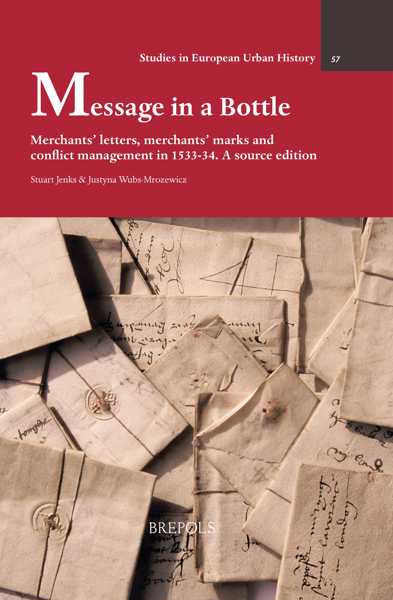
    Posthumus fellow Dr Justyna Wubs-Mrozewicz (University of Amsterdam) and emeritus Professor Stuart Jenks (Friedrich-Alexander-Universität Erlangen-Nürnberg) are the editors of Message in a Bottle: Merchants’ letters, merchants’ marks and conflict management in 1533-34. A source edition, published this fall with Brepols.

    The publication is based on a batch of merchants’ letters to be delivered from Antwerp to London that reached its destination, but ended up as part of a booty taken in the English Channel in August of 1533 by Lübeck privateers, only to be opened again in a Hanseatic archive almost 500 years later. The letters offer a fascinating glimpse into the world of the early 16th century, from hard-nosed business and prices in code sent to a wife, to the fond greetings of an English father to his three young sons or a secretive message of a grandmother from Antwerp. At the backdrop, war was looming: Henry VIII of England exploded with rage and restitution claims were made. Soon after, Lübeck realized the potential political cost of the action and an administrative machinery for the return of the booty was set in motion. Extensive documentation was produced under the eye of notaries, providing an overview of properties of the involved parties, including many merchant marks. The combination of unique letters and administrative documents offers new openings into the study of economic, political and social history of pre-modern northern Europe.

    The book is available as open access online publication with Brepols. In addition, the database this publication is based on, is also available online.

    PUBLICATION
     
    DATABASE

  • Valedictory speech Professor Kees Mandemakers

    Valedictory speech Professor Kees Mandemakers

    Posthumus fellow emeritus Professor Kees Mandemakers, professor of Large Historical Databases at Erasmus School of History, Culture and Communication, will present his public valedictory lecture on Friday 20 January 2023, entitled ‘“You Really Got Me”. Development and Future of Historical Databases with Microdata’.

    The ceremony will begin at 16:00 hours promptly in the Aula, Erasmus (A) building, of the Erasmus University Rotterdam. If you are unable to attend in person, you can also watch the valedictory lecture via livestream. The reception will take place in the same building afterwards.

    LIVESTREAM

  • New book publication by Maarten Prak and Jan Luiten van Zanden

    New book publication by Maarten Prak and Jan Luiten van Zanden

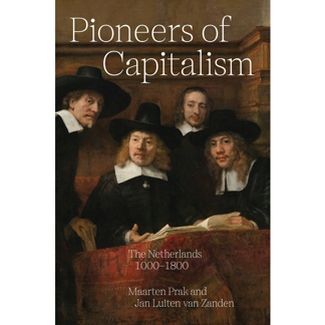
    Posthumus fellows Emeritus Professors Maarten Prak and Jan Luiten Zanden have published a new book with Princeton Universiyt Press, entitled Pioneers in Capitalism: The Netherlands 1000-1800.

    The Netherlands was one of the pioneers of capitalism in the Middle Ages, giving rise to the spectacular Dutch Golden Age while ushering in an era of unprecedented, long-term economic growth across Europe. Pioneers of Capitalism examines the informal institutions in the Netherlands that made this economic miracle possible, providing a groundbreaking new history of the emergence and early development of capitalism.

    Drawing on the latest quantitative theories in economic research, Maarten Prak and Jan Luiten van Zanden show how Dutch cities, corporations, guilds, commons, and other private and semipublic organizations provided safeguards for market transactions in the state’s absence. Informal institutions developed in the Netherlands long before the state created public safeguards for economic activity. Prak and van Zanden argue that, in the Netherlands itself, capitalism emerged within a robust civil society that constrained and counterbalanced its centrifugal forces, but that an unrestrained capitalism ruled in the overseas territories. Rather than collapsing under unrestricted greed, the Dutch economy flourished, but prosperity at home came at the price of slavery and other dire consequences for people outside Europe.

    Pioneers of Capitalism offers a panoramic account of the early history of capitalism, revealing how a small region of medieval Europe transformed itself into a powerhouse of sustained economic growth, and changed the world in the process.

    PUBLISHER’S PAGE

  • 5th Conference Of The European Society Of Historical Demography

    5th Conference Of The European Society Of Historical Demography

    From the prehistorical migrations to our globalized world, humankind has always been confronted with “others”, who are spontaneously compared to “us”. First, it usually implies a fascination for differences, often – but not always followed by a discovery of commonalities. Demographic thought has been, and still is, heavily influenced by the Malthusian discourse that insisted on the differences be-tween Europeans and the others, and the superiority of the former over the latter. Conversely, almost two centuries later the nuclear hardship theory suggested a greater efficiency of the complex family systems over the nuclear model predominant in Europe. It is now time for new approaches that challenge the past narratives. New approaches that, instead of binary oppositions and hypothetical hierarchies, consider equally similarities and dissimilarities, recognize the ambiguity of borders, reciprocal influences, and the importance not only of external but also internal diversity within the compared populations. Ultimately such studies contribute to a better understanding of demographic regimes and family dynamics.

    With this in mind, the 5th ESHD conference leading theme is ‘The Challenge of Comparing Across Space and Time’. Participants are encouraged to engage with and link across three different streams of historical social science analysis:

    • Data and methods for comparative approaches in historical demography and family history
    • Benefits and pitfalls of comparisons
    • The diversity of demographic behaviours and Family dynamics across space and time

    FULL INFO

  • News for our December newsletter? Make sure to let us know ultimately 14 December!

    News for our December newsletter? Make sure to let us know ultimately 14 December!

    Because of the rapidly approaching Christmas Holidays, the December issue of our Newsletter will appear a week earlier than usual.

    Do you have any news items, events, calls, or vacancies you want to share with our readers? Make sure to send in your news ultimately on 14 December 2022!

    E-MAIL US

  • PhD defence Bas Machielsen

    PhD defence Bas Machielsen

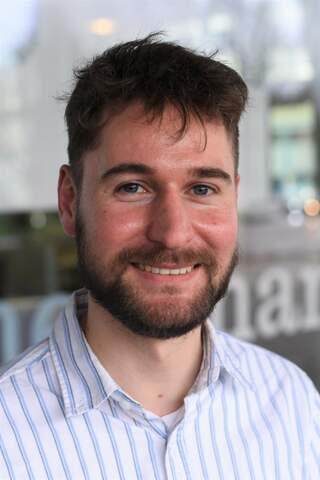
    On 18 january 2023, Posthumus alumnus Bas Machielsen will defend his thesis ‘The Political Elite, Self-Interest and Democratization’, in which he examines the influence of self-interest on the decision-making of political elites.

    Literature has already documented various ways in which actions of political elites can benefit themselves, possibly at the expense of the electorate or society. Bas Machielsen’s dissertation focuses on the personal wealth of politicians. How does their wealth develop in relation to their actions? Machielsen focuses on the Dutch political elite of the late nineteenth and early twentieth centuries, a period of economic growth and democratisation. Not only the wealth of MPs is examined, but also that of ministers and provincial deputies. Machielsen found the information on their wealth in estate inventories. In his thesis, Machielsen shows that politicians prioritised their own wealth when voting on bills that directly affected them. By looking at variations in expected inheritance, he shows that the link is causal.

    <p.Furthermore, Machielsen makes a comparison between the personal wealth of elected and just-not-elected candidates. He finds that politicians who did get elected to the representative body became significantly wealthier.

    Promotors are Professor Oscar Gelderblom (University of Antwerp / Utrecht University) and Professor Abe de Jong (Rotterdam School of Management, Erasmus University Rotterdam).

    The defence can be attended on-site, but also via live stream (see link in header).

    PERSONAL WEBSITE

  • Maartens van Sevenhoven medal awarded to Rozemarijn Moes

    Maartens van Sevenhoven medal awarded to Rozemarijn Moes

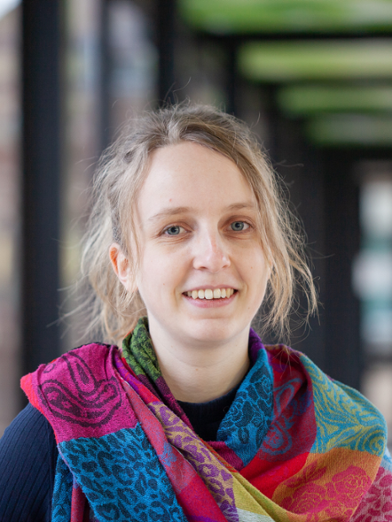
    At the Gelderse Landdag 2022, the 2022 edition of the annual meeting of Erfgoed Gelderland, the Maartens van Sevenhoven medal was awarded to Posthumus PhD Student Rozemarijn Moes for her research on the historical demography of Guelders from prehistorical times until now. The Maartens van Sevenhoven medal is awarded every second year to persons who have achieved remarkable results in the field of archival research, museums or heritage conservation.

    Rozemarijn Moes (1997) is a PhD candidate at Radboud University Nijmegen, specialized in social history, history of the nobility and museum education. Combining her interest in castles and socio-economic history, she is currently working on her PhD project: ‘Kitchen or Capital? Elite women’s role in financial household and estate management in eighteenth-century Guelders’. The project explores estate management by noble women in Guelders, with special attention to accounting skills, life course and estate-wide accounting systems.

    The Maartens van Sevenhoven medal takes its name from Jonkheer Anthony (Toon) Henrik Martens (1880-1952), master of the estate of Sevenhoven, who was a Dutch Keeper of the Public Records (rijksarchivaris), publicist and president of the Vereniging Gelre, an association promoting interest in and research on the history of the province of Guelders.

    The staff of the N.W. Posthumus Institute congratulates Rozemarijn with this award.


    LINKED-IN PAGE

  • NEW DATE Maddison Lecture Professor William Easterly – ‘Western Development Efforts: Altruism vs Self-Interest

    NEW DATE Maddison Lecture Professor William Easterly – ‘Western Development Efforts: Altruism vs Self-Interest

    This event, originally scheduled for 27 October, has now been rescheduled to 15 December 2022

    Annually, the Groningen Growth and Development Centre (GGDC) organises the Maddison Lecture at the University of Groningen. This year’s lecture will be delivered by Professor William Easterly, Professor of Economics at New York University and Co-director of the NYU Development Research Institute. The Maddison lectures have been organised since 2011. The aim of these lectures is to bring leading scholars from around the world to Groningen to present on major topics of economic growth and development in a historical and comparative perspective, thus following the footsteps of Angus Maddison, who laid the foundations of research in this discipline at our university. The event is sponsored by the GGDC and by the SOM Research School of the Faculty of Economics and Business. The event is freely accessible.

    About the speaker

    William Easterly is Professor of Economics at New York University and Co-director of the NYU Development Research Institute. He is the author of three books: The Tyranny of Experts: Economists, Dictators, and the Forgotten Rights of the Poor (March 2014), The White Man’s Burden: Why the West’s Efforts to Aid the Rest Have Done So Much Ill and So Little Good (2006), which won the FA Hayek Award from the Manhattan Institute, and The Elusive Quest for Growth: Economists’ Adventures and Misadventures in the Tropics (2001). He has published more than 60 peer-reviewed academic articles, and has written columns and reviews for the New York Times, Wall Street Journal, Financial Times, New York Review of Books, and Washington Post. He has served as Co-Editor of the Journal of Development Economics and as Director of the blog Aid Watch. He is a Research Associate of NBER, and senior fellow at BREAD. Foreign Policy Magazine named him among the Top 100 Global Public Intellectuals in 2008 and 2009, and Thomson Reuters listed him as one of Highly Cited Researchers of 2014.

    More info