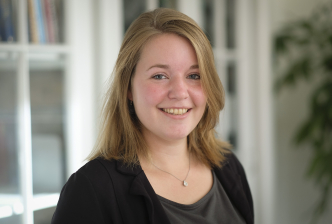
On 31 January 2023, Posthumus alumna Mayra Murkens succesfully defended her PhD thesis ‘Unequal paths to the grave? Time lags and inequalities in the Dutch health transition, the case of Maastricht, 1864-1955’ at the University of Maastricht. Mayra’s research focusses upon the health transition in Maastricht during the late nineteenth and early twentieth century. The research is part of a joint project from Maastricht University and the Center for the Social History of Limburg (Dutch: Sociaal Historisch Centrum Limburg, SHCL). Her supervisors were Professor Angélique Janssens and Dr Willibrord Rutten.
Blog
-
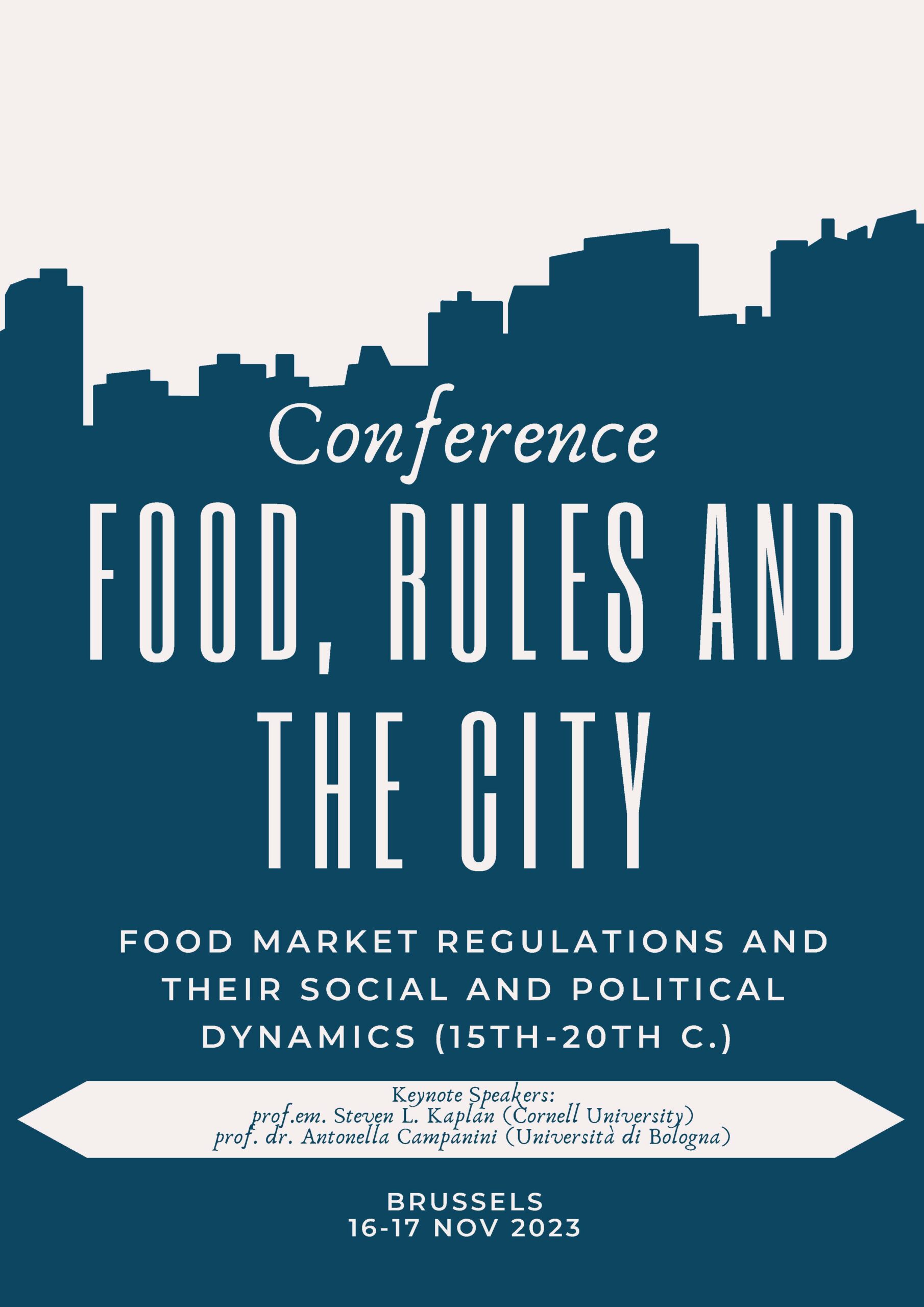
Conference ‘Food, Rules and the City’
On 16 and 17 November 2023, Posthumus alumni Dennis De Vriese (Vrije Universiteit Brussel), Nicholas Brunmayr (Université Libre de Bruxelles) and Robin Rose Southard (VUB) organise an international conference, entitled ‘Food, Rules and the City: Food Market Regulations and Their Social and Political Dynamics (15th-20th C.)’. Keynote speakers are emeritus Professor Steven L. Kaplan (Cornell University) and Professor Antonella Campanini (Università di Bologna).
Seeking to adopt such a long-term perspective and to explore more fully than before the social and political dynamics underlying these regulations, this conference will bring together recent research into motivations, reasoning and strategies applied by economic actors in the making of food market regulations in European cities from the 15th to the 20th century. Through its wide chronological and geographical scope, the conference seeks to confront different methodologies to study the ever-present matter of food market regulation as well as different approaches of various historical actors, institutions, and contexts in handling
enduring concerns.For the program and registration, please visit the conference website via the button below.
-
Conference ‘Making Households Count’
The organisers of the two-day conference ‘Making Households Count’ invite paper proposals. This conference is also the closing event for the ERC-funded project ‘Race to the bottom? Family labour, household livelihood and consumption in the relocation of global cotton manufacturing’, led by Professor Elise van Nederveen Meerkerk (Utrecht University). The conference will be hosted by the Koninklijke Nederlands Instituut Rome.
Most scholars researching historical living standards have used men’s urban wages as a proxy for household income because they are globally available for the past 500 years and thus allow for regional and temporal comparisons. However, focusing on urban male breadwinners for research on household living standards is misleading for at least three reasons. First, access to subsistence resources, notably land, has historically been the most important determinant of living standards. Second, women and children in most world regions worked for wages, among others in the rapidly expanding textile industries of the nineteenth and twentieth centuries. Third, households rarely relied on wages alone. Households’ income composition depended on local labour market structures, access to land, social norms, life-cycle changes, and wage rates.
This conference aims to move beyond the use of men’s real wages and instead use household income to reconstruct historical living standards, and to bring together scholars from different disciplines working on household income diversification during the past 250 years. In our contemporary world, the estimation of the “informal” part of the economy, is a particular challenge, as looking at formal national accounts and aggregate per capita income may not capture actual standards of living and economic development. The organisers want to explore how our historical and present-day images of economic growth and inequality within and between societies changes when looking at total household income as opposed to formal, full-time male wages. We encourage contributions from both the Global North and the Global South that approach this topic from a comparative perspective.
The organisers welcome contributions on household income diversification, the combination of textile/craft work and/or other crafts and services with other forms of labour and more generally on gender relations and labour allocation between different generations. This workshop aims to bring all these elements together to generate fruitful discussion between historians, (development) economists, anthropologists, sociologists, and others working on these topics with an interdisciplinary publication as the end result.
Applicants should send their abstract (circa 400 words) before 30 January 2023 (EXTENDED deadline) to Dr Sarah Carmichael.
-

Symposium: ‘From science to society: evidence-based lessons for (cooperative) social enterprises’
Preceding the inaugural lecture by Professor Tine De Moor, the Research Team Institutions for Collective Action, based at the Erasmus School of History, Culture and Communication, organises the Symposium: ‘From science to society: evidence-based lessons for (cooperative) social enterprises’.
The team has invited eleven fellow-scientists from various universities and different disciplines to talk about their research findings. What is the meaning of their research for society, particularly for citizen collectives, commons, and cooperative social enterprises. What insights from science can people put into practice on a daily basis?
The team kindly invites you to attend the symposium. Prior registration (free of charge) is requested, use the button below to obtain your tickets.
-
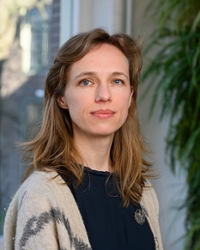
ERC Starting Grant awarded to Dr Fenneke Sysling
Dr Fenneke Sysling, one of the research directors of the Posthumus Research Network ‘Routes and Roots in Colonial and Global History’ was recently awarded an ERC Starting Grant for her research on what medical ethics was like in colonial times.
In her research, she focuses on medical experiments carried out in colonised areas without the explicit consent of the test subject. Data are collected from historical medical records. Questions on the unequal balance of power between coloniser and the local population, as well on the current use of data collected in the past without consent, will be addressed.
We congratulate Fenneke with this achievement!
-

Online History of Medicine and Health Seminar Series
The Groningen Centre for Health and Humanities and the Research Centre for Historical Studies of the University of Groningen jointly organise an online seminar series on ‘History of Medicine and Health’.
The series consist of four separate online monthly seminars (February-May 2023) and will be concluded by the inaugural lecture delivered by Professor Hilde Bras on 26 May 2023. Scheduled are:
- 21 February 2023: Dr Tizian Zumthurm (University of Bern) – Practicing Biomedicine at the Albert Schweitzer Hospital 1913-1965: Ideas and Improvisations
- 20 March 2023: Dr Samuël Coghe (Humboldt-Universität zu Berlin) – Population Politics in the Tropics: Demography, Health and Transimperialism in Colonial Angola
- 17 April 2023: Dr James Akpu (Dublin City University) – Catholic Relief Services and Nutrition in Northern Nigeria, 1955-1966
- 15 May 2023: Professor Sowande’ Mustakeem (Washington University in St. Louis) – Slavery at Sea and the Future of
Medical Education - 26 May 2023: Professor Hilde Bras (inaugural lecture, University of Groningen) – African Population and Health: A Plea for an Integrated Historical Perspective
All seminars will be hosted via Zoom 16:00-17:00 CET. For link, please email Dr James Kennaway.
-

Research School Political History Seminar ‘Applied History and Current Affairs’
On 24 February 2023, the Research School Political History (RSPH) organises the seminar ‘Applied History and Current Affairs’. This seminar has a dual goal. First of all, it invites PhD candidates to reflect on the links between their research project, their research methodologies, and current affairs. Students are asked to rethink the relevance and the methodologies of their project from the perspective of current social and political concerns. What is the ‘big question’ that you are trying to respond to? Second, in interaction with people working in the sphere of policy-making, heritage, the press and think tanks candidates reflect on how they can develop methods of ‘applied history’, how their research can be considered ‘usable history’ for others outside academia, and/or how they may present their academic skills and knowledge to the world beyond academia, also with an eye towards their post-PhD-career.
Supervisors of and speakers at this seminar will be Dr Harm Kaal, Dr Stefan Couperus and Professor Beatrice de Graaf. PhD participants are expected to write a short statement (1 A4) and a short paper (800-1000 words) to be discussed at this seminar. Details on the content, deadlines and how to submit are to be found in the leaflet (pdf; see button below).
Participants need to register by e-mail via the secretariat of the RSPH before 2 February 2023. If registration exceeds the group limit, third-year PhD candidates will have priority.
-
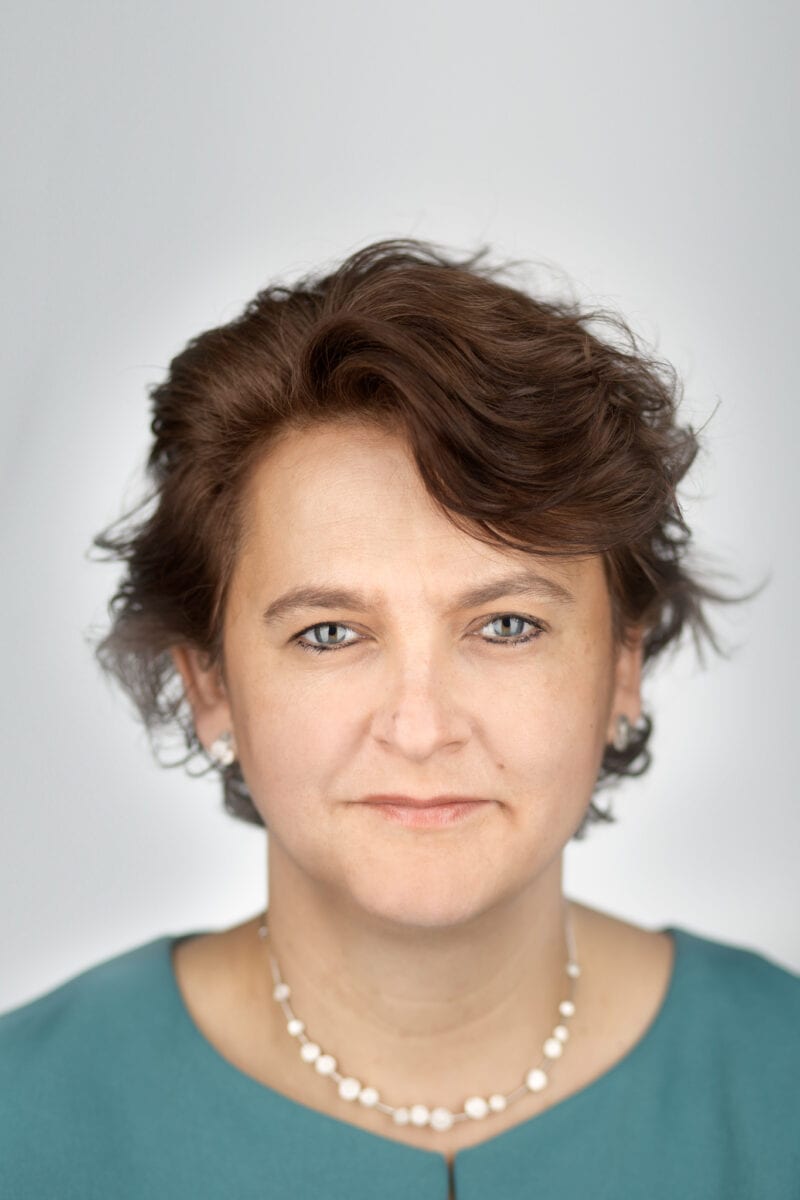
Invitation to inaugural address Professor Tine De Moor (Erasmus University Rotterdam)
The rector magnificus of the Erasmus University Rotterdam announces that Professor Tine De Moor, appointed as professor of Social Enterprises and Institutions for Collective Action at Rotterdam School of Management, Erasmus University (RSM) will publicly accept her appointment on Friday 17 February 2023 with an inaugural lecture entitled Shakeholder society? Social Enterprises, citizens and collective action in the community economy.
Professors are invited to participate with a gown in the academic procession and are kindly requested to be present from 15:30 hrs on the first floor of the Erasmus (A) Building, near the rector’s room. The ceremony will start promptly at 16:00 hrs in the Aula of the university (Erasmus building), Burgemeester Oudlaan 50 Rotterdam. The reception will take place in the same building afterwards.
If you are unable to attend, you can also attend the inaugural lecture via livestream.
The rector magnificus invites you to attend this ceremony and the reception. If you wish to attend the lecture in person, you are kindly requested to register via this link.
Professor De Moor’s inaugural address will be preceded at 11:00 on the same day by a public seminar with international scholars presenting their research results as solutions to tackle societal challenges. You are asked to register for this event.
-
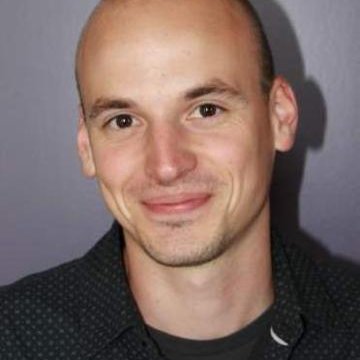
PhD Defence Sam Geens
On 23 January 2023, Posthumus alumnus Sam Geens succesfully defended his doctoral thesis Een Gouden Eeuw voor arbeid? Inkomen en rijkdom voor en na de Zwarte Dood in de Zuidelijke Nederlanden en de Florentijnse Republiek (1275-1550). Supervisors were Professors Tim Soens, Bruno Blondé, and Peter Stabel
The Black Death and subsequent plague waves killed millions in the fourteenth and fifteenth centuries. Although these traumatic events unsettled social relations, economic production, and cultural values, scholars have also stressed their positive impact on living standards. Already from the nineteenth century on, scholars have characterised the period as the Golden Age for labour. Yet, some historians have been more sceptical about the evidence. This thesis takes these comments at heart by critically examining income, work time, and wealth to determine the true scope of the Golden Age across time, space, and social groups. Thanks to a comparison between the Republic of Florence and the Southern Low Countries, Geens shows that the plague pandemic did not result in a universal increase in living standards. In the last-mentioned region, the income and wealth of most households reached unprecedented heights because of a type of industrious revolution. In stark contrast, such a positive evolution was absent in the Republic of Florence outside the capital. Here, only the ruling elites were able to increase their fortunes due to protectionist measures, the spread of exploitive forms of urban landownership, and increasing fiscal pressure to finance the many wars.
We congratulate Sam with this achievement!
-
Swedish Research Council awards grant to Dr Daniel Gallardo and Professor Jutta Bolt
Dr Daniel Gallardo Albarrán (Wageningen UR) and Professor Jutta Bolt (University of Groningen and Lund University) were awarded a research grant of c. 400,000 euro by the Swedish Research Council for their project proposal ‘Unhealthy development: the origins of health inequalities in Sub-Saharan Africa, 1900-1960’. Co-applicant was Dr Jeanne Cillier of Lund University.
Millions of deaths occur each year from preventable diseases. Most of these deaths occur in Sub-Saharan Africa (henceforth Africa), where many citizens still lack access to basic sanitation and healthcare. In 2015, there were on average only 1.35 hospital beds available per 1,000 people on the continent, and only 24 % of the population had access to clean drinking water. At the same time, variation between countries is immense: Zambia, for example, has more than 4 times the number of hospital beds per population than Benin; and in the Gambia twice as many people have access to basic sanitation services compared to Burkina Faso. The historical roots of these low health-related investments in Africa have long been recognized, yet little care has been taken to understand and explain the differential spread of healthcare across the continent.
The objective of this project is to investigate the uneven establishment of healthcare and sanitation in colonial Africa, ca 1900-1960. Using largely unexplored primary sources for both former British and French colonies, this research will map and explain the spatial and temporal distribution of healthcare and sanitation infrastructures during the first half of the 20th century, when state-funded healthcare was established on the continent. The project will provide the first-ever comprehensive empirical account of healthcare interventions and outcomes in Sub-Saharan Africa before 1960, thus filling a substantial knowledge gap in comparative studies of historical health inequality.