Research School for Economic and Social History

Blog

  • Masterclass Professor Carl Nightingale at ESHCC (Rotterdam)

    Masterclass Professor Carl Nightingale at ESHCC (Rotterdam)

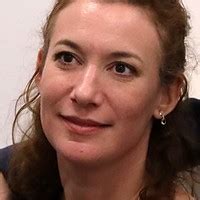
    The Erasmus Initiative ‘Vital Cities and Citizens’ invites graduate and doctoral students, post-docs, or young scholars working on urban inequality to participate in our master class with Professor Carl Nightingale, to be held at the Erasmus School of History, Culture and Communication of Erasmus University Rotterdam on 23 August 2022.

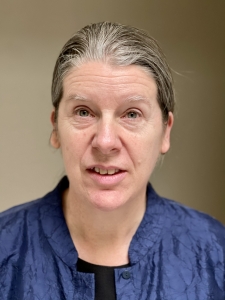
    About the speaker

    Although Nightingale was trained as an historian, his work is also interesting for researchers from other fields in the social sciences. Carl has an interdisciplinary approach and tries to show how long term developments have impact on current societies. In his seminal book Segregation: A Global History of Divided Cities (2012), Carl Nightingale argues that Western expansion depended on global production of inequality and segregated urban spaces. Inequality and segregation are, therefore, serious challenges since the origin of urban  settlements in world history. Nightingale shows that segregation should always be studied in their local and global context. Racial segregation can be traced to a certain point in global history as a product of transnational intellectual networks. The scale and intensity of segregation did not result in similar patterns globally. Local conditions mattered and each case needs to be assessed in its own context.

    About the Masterclass

    This masterclass invites PhDs and young scholars to reflect on how patterns of exclusion of all kinds – social, racial, religious, or economic – and of urban segregation do appear in their own work.

    How to apply

    The deadline for presenting participants has passed. There is however limited room for non-presenting participants. Those who want to use this opportunity, should send an e-mail expressing their interest to Burak Fici.
    Full info

  • Inaugural lecture Professor Elise van Nederveen Meerkerk

    Inaugural lecture Professor Elise van Nederveen Meerkerk

    On 8 September 2022, Professor Elise van Nederveen Meerkerk will deliver her inaugural lecture ‘Where did all the workers go? Women, industrialization, and the decline of hand spinning in Europe and Asia’ at Utrecht University. Professor Elise van Nederveen Meerkerk is Professor of Economic and Social History at Utrecht University since 1 February 2020 and works in the field of Gender and work in comparative historical perspective.

    Attending the inaugural lecture at Utrecht University Hall (Academiegebouw) is on invitation only; the lecture will also be streamed, URL link to the live-stream will be available in due time.

    More info

  • Applied History Conferentie 2022

    Applied History Conferentie 2022

    ~ because of scope, in Dutch only ~

    Dankzij de Toegepaste Geschiedenis kunnen we hedendaagse gebeurtenissen en ontwikkelingen beter begrijpen. Om dit vakgebied een podium te geven, organiseert het Departement Geschiedenis en Kunstgeschiedenis van de Universiteit Utrecht op 24 september 2022 een conferentie over Applied History.

    Tijdens de dag kan men deelnemen aan verschillende panels, voorgezeten door prof. dr. Annelien de Dijnprof. dr. Beatrice de Graafdr. Saskia Stevensdr. Sanne Frequinprof. dr. Joost Dankersprof. dr. Leen Dorsman en dr. René Koekkoek.

    Deelname is kosteloos, maar vanwege het beperkte aantal plaatsen is reservering vooraf noodzakelijk.

    Volledige info en reserveren
     
    Programma (pdf)

  • Kate Frederick awarded Dissertation Award at WEHC2022

    Kate Frederick awarded Dissertation Award at WEHC2022

    Dr Katherine Frederick, one of both Research Directors of the Posthumus Research Network ‘Societies in Context: Interactions between humans and rural-urban environments’, has been awarded the IEHA Dissertation Award in the WEHC 2022 Dissertation Competition in the category ’20th-21st century’ at the WEHC2022 in Paris.

    Kate Frederick was one of the final three nominees and was selected for her PhD thesis Deindustrialization in East Africa: Textile production in an era of globalization and colonization, c. 1830-1940, which she succesfully defended at Wageningen University in 2018.

    The N.W. Posthumus Institute staff congratulates Kate very much with winning this award.

  • Boek ‘De grootste slavenhandelaren van Amsterdam’ (Ramona Negrón & Jessica den Oudsten)

    Boek ‘De grootste slavenhandelaren van Amsterdam’ (Ramona Negrón & Jessica den Oudsten)

    ~ because of scope, in Dutch only ~

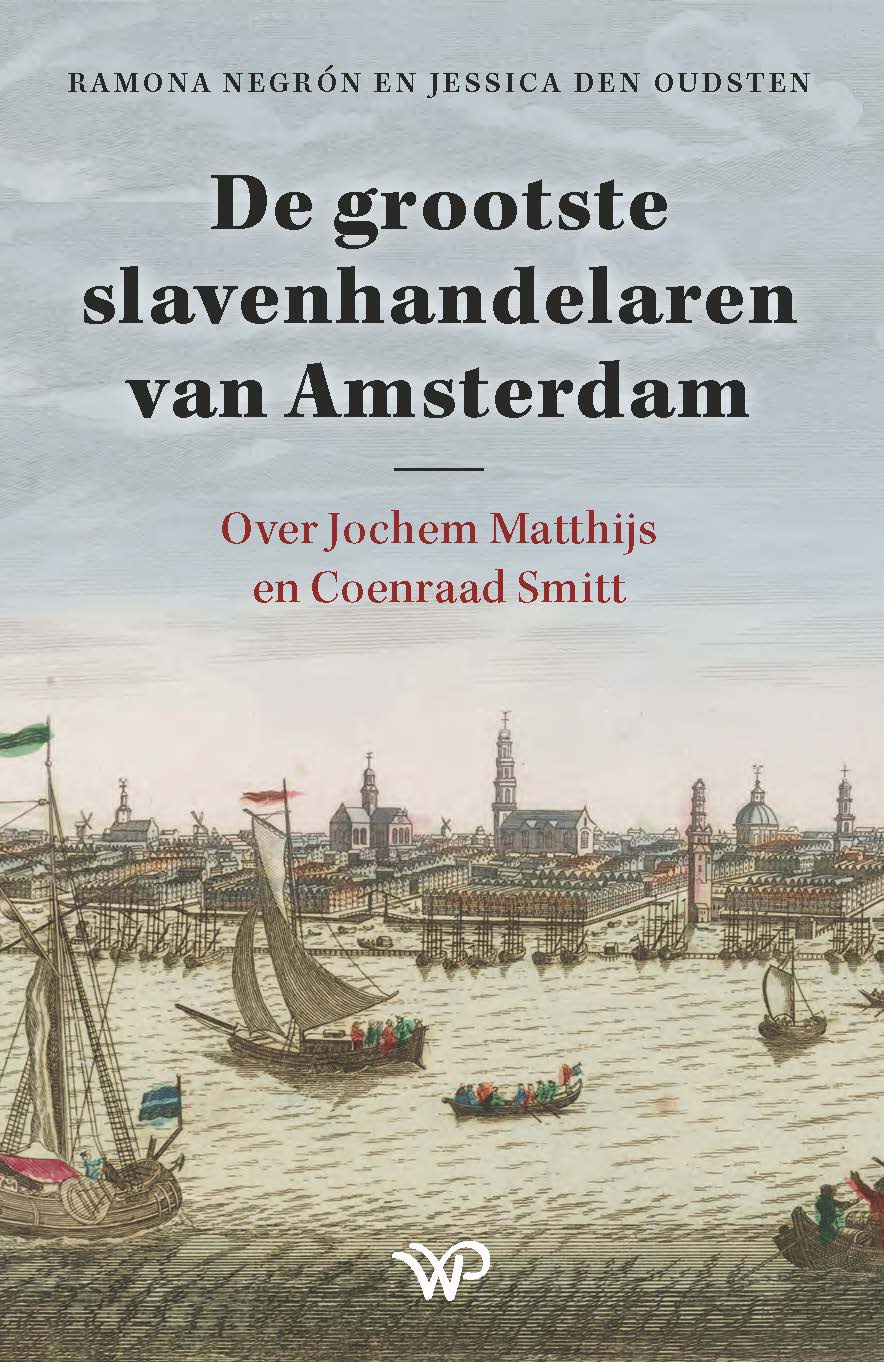
    Op 23 augustus 2022 is bij Walburg Pers het boek De grootste slavenhandelaren van Amsterdam. Over Jochem Matthijs en Coenraad Smitt van Posthumus-promovendi Ramona Negrón en Jessica den Oudsten verschenen.

    De jaren 1730-1740 vormen een keerpunt in de Nederlandse slavernijgeschiedenis: de West-Indische Compagnie verliest haar monopolie op de trans-Atlantische slavenhandel, waarop verschillende handelaren in de Republiek besluiten hun schepen in te zetten voor de private slavenhandel. Zo ook Jochem Matthijs en Coenraad Smitt. In ruim dertig jaar tijd verschepen ze tussen 11.000 en 13.000 tot slaaf gemaakte mensen van West-Afrika naar de Cariben.

    Ramona Negrón en Jessica den Oudsten vertellen aan de hand van de reis van een van de eerste private slavenschepen, ’t Gezegende Suikerriet (1743-1745), het tot nu toe onbekende verhaal van de slaafgemaakte mensen en de bemanningsleden aan boord, de betrokken plantage-eigenaren in Suriname en de werkwijze van Amsterdams grootste slavenhandelaren.

    Het N.W. Posthumus Instituut complimenteert beide auteurs van harte met het verschijnen van deze publicatie.


    Uitgeversinfo

  • Masterclass ‘Between Integration and Expulsion’ with Beate Althammer

    Masterclass ‘Between Integration and Expulsion’ with Beate Althammer

    The Ghent University Research Group “Social History since 1750” in collaboration with the N.W. Posthumus Institute is hosting the masterclass ‘Between Integration and Expulsion: Actors, Practices and Subjects of Migration Control in 19th- and 20th-century Europe’, delivered by Dr Beate Althammer (Institut für Asien- und Afrikawissenschaften, Humboldt Universität zu Berlin) on Friday 30 September 2022 at Ghent University.

    About the speaker

    Dr Beathe Althammer is a postdoctoral researcher at the Institute of African and Asian Studies at Humboldt Universität zu Berlin and specialises in the history of migration, migration control, crime, poverty and social policies. She is currently leading the research project The Borders of the Welfare State: Migration, Social Rights and Expulsion (1850-1933). She is author of Das Bismarckreich 1871-1890 (2009), co-editor on the volumes Bettler und Vaganten in der Neuzeit (1500-1933) (2013), The Welfare State and the ‘Deviant Poor’ in Europe, 1870-1933 (2014) and Rescuing the Vulnerable. Poverty, Welfare and Social Ties in Modern Europe (2016).

    Aims of the masterclass

    The masterclass ‘Between Integration and Expulsion: Actors, Practices and Subjects of Migration Control in 19th- and 20th-century Europe’ offers PhD candidates and early-stage post-docs the opportunity to discuss their research with an expert in the field. During the masterclass a maximum of 6 participants can present their work on the basis of a pre-submitted paper (with a maximum of 6,000 words) and discuss difficulties and opportunities of their research. To engage in a productive discussion, all participants are invited to read each other’s papers in advance.

    How to participate

    Researchers working on migration, migration control and mobility in nineteenth and twentieth century Europe are invites to apply by sending an abstract (c. 300 words) before 15 August 2022 (extended deadline) to organiser Maïté Van Vyve MA, Posthumus PhD candidate at Ghent University.

    Selected candidates will be notified by Friday 19 August 2022. A full working paper should be submitted no later than Monday 1 September. The paper can be a chapter section of the PhD, an article in preparation, or the presentation of the whole project. Participants are expected to briefly present their work (maximum of 5 minutes) and mainly focus on formulating some concrete questions for input and feedback.

    Mail organiser

  • VIDI grant awarded to Matthias van Rossum

    VIDI grant awarded to Matthias van Rossum

    In the most recent round of VIDI grants, Posthumus-fellow Dr Matthias van Rossum (IISH) was awarded a VIDI Grant for his research project Differences in enslavement. This project researches how the ways in which people were enslaved (for example by war, debt or birth) influenced life under slavery and resistance to it by enslaved. The research compares the impact through personal narratives from court records from the entire early modern Dutch colonial empire in the Indonesian archipelago, Indian and Atlantic Ocean. The N.W. Posthumus Institute congratulates Matthias with this achievement!

  • N.W. Posthumus Institute congratulates graduates PhD Basic Training

    N.W. Posthumus Institute congratulates graduates PhD Basic Training

    At the Posthumus Conference 2022, held on 30 June and 1 July at the Erasmus School of History, Culture and Communication of Erasmus University Rotterdam, the PhDs present received their Certificate obtained for completing the Basic PhD Training Programma of the N.W. Posthumus Institute. On behalf of the N.W. Posthumus Institute, the staff wants to congratulate these and all other graduates with this result.

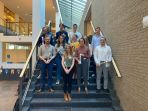
    Graduates N.W. Basic Phd Training Programme at the Posthumus Conference 2022

  • Masterclass Professor Eithne Luibhéid

    Masterclass Professor Eithne Luibhéid

    On 14 July 2022, Professor Eithne Luibhéid will give a masterclass at Leiden University. This masterclass is organised by Posthumus PhD candidate Jamel Buhari MA and Professor Marlou Schrover and forms a unique opportunity for PhD students working to interact on a personal level with this important author. Professor Eithne Luibhéid is Professor of Gender and Women’s Studies at the University of Arizona and a key author on the connections among queer lives, racialization processes, state immigration controls, and citizenship.

    At this masterclass, you will able to present your research in progress and receive feedback on this from both Professor Luibhéid and fellow participants. Participating in a masterclass is also one of the requirements for the Posthumus Advanced Training Programme. If you want to join, please send an e-mail to the organisers via the button below.

    E-mail organisers

  • Workshop ‘Digital mapping for historians with QGIS’

    Workshop ‘Digital mapping for historians with QGIS’

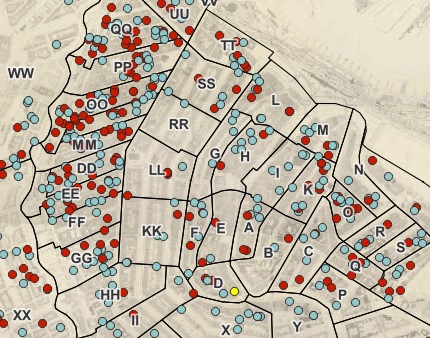
    A map can be an excellent way to visualize your research, but only a small percentage of people know how to make them. Have you been wanting to learn more about digital mapping for your research, but do not know where to start? Or struggle to make time to teach yourself? This workshop may be for you!

    In this workshop, which is made possible by the N.W. Posthumus Institute, the HiDo Scientific Network for Historical Demography, and the Quetelet Center, attendees will be taught the essentials of digital mapping using the world’s most popular open source application QGIS. By the end of this two half-day hands-on workshop, you will be able to combine different types of data to create your own historical maps for use in papers, presentations and other sessions.

    Attendance is free of charge. We can host a maximum of 15 participants for this hands-on workshop, so signing up is necessary. Preference will be given to Posthumus-students and fellows, a wait list will be used in case interest exceeds the number of spaces available. Applicants should provide a brief motivation (a few sentences in English or Dutch) on how the workshop might be useful or interesting for your research.

    Applicants should provide a brief motivation (a few sentences in English or Dutch) on how the workshop might be useful or interesting for your research ultimately 15 July 2022 via e-mail to the organisers (see button below). Please make sure to include information on 1) your institutional affiliation, 2) your position (which year of the PhD or (for ECR) role within university), and 3) brief motivation of the reasons why you are interested in attending.

    E-mail organisers

    Full info (pdf)