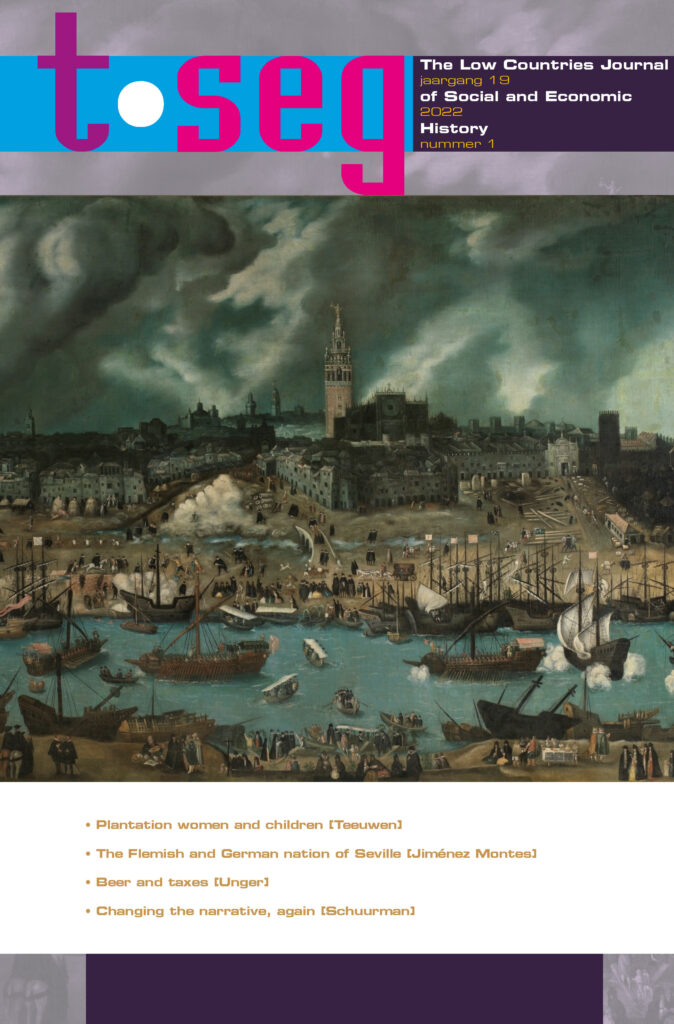
Recently, the first 2022 issue of the The Low Countries Journal of Social and Economic History has been published. The Low Countries Journal of Social and Economic History is the Dutch-Flemish journal of social and economic history. It is an open access, peer-reviewed, scientific journal which was granted A status/ INT 1 by the European Science Foundation. The journal contains a wide variety of research and opinion articles (some of which authored by Posthumus affiliates), as well as interesting reviews.
Blog
-
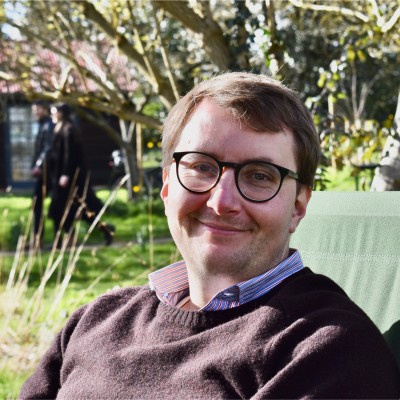
NWO Veni Grant Awarded to Posthumus alumnus Dr Joris van den Tol
Posthumus alumnus Dr Joris van den Tol was recently awarded a Veni Grant by the Dutch Research Organisation (NWO). Dr Joris van den Tol’s project will investigate how it is possible that while the ‘Golden Age’ came to an end after about 1670, the share of the colonial processing industry in the economy quadrupled. This project looks beyond the role of merchants and traders in the economy, but focuses on the role of production (nijverheid) and processing industry (traffieken). Joris is currently a Marie Curie Fellow at Cambridge University and Postdoctoral Research Associate at Queens’ College, Cambridge and from September 2022 Assistant Professor of Economic History at Radboud University
The N.W. Posthumus staff congratulates Joris with this achievement!
Profile page University of Cambridge
News release Radboud University -
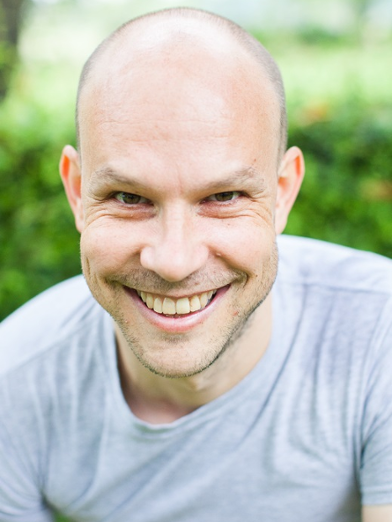
Oratie Professor Jelle van Lottum (Radboud Universiteit) 20 mei 2022 – registreer voor 9 mei
~ because of scope only in Dutch ~
Op 20 mei 2022 zal professor Jelle van Lottum, hoogleraar aan de Radboud Universiteit / Faculteit der Letteren met de leeropdracht Geschiedenis van arbeidsmigratie in vergelijkend perspectief zijn ambt aanvaarden met het uitspreken van de rede Structuur en empathie:
de geschiedenis van arbeidsmigratie naar Nederland in vergelijkend perspectief.Indien u deze oratie wilt bijwonen, dient u zich voor 9 mei 2022 aan te melden via onderstaande link. De oratie zal ook per livestream te volgen zijn.
-
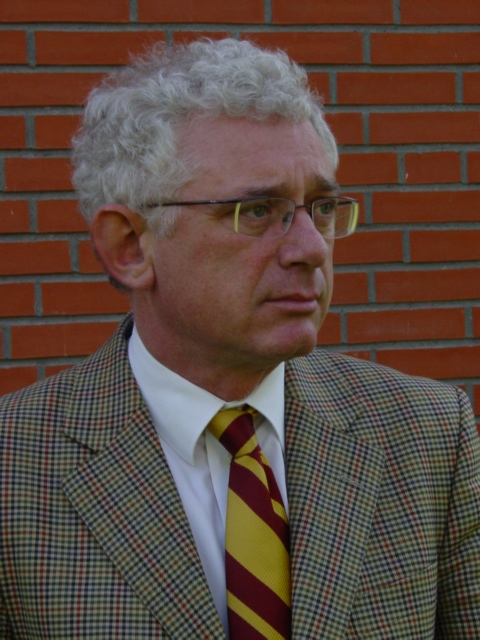
Farewell Seminar Dr Willem Jongman
On 19 May 2022, a one-day farewell seminar will be held in honour of Dr Willem Jongman, on Archaeology and Ancient and Comparative Economic History at the Faculty of Arts of the University of Groningen. The programme will consist of a morning session on archaeology and an afternoon session on Comparative Economic History, two fields of research in which Wim was active as a teacher and researcher. The day will conclude with a lecture by Wim himself and a reception in the van Swinderen huys. Please find the programme for this festive day via the button below.
In case you want to attend in person, you are asked to register before 12 May 2022. Please indicate whether you will attend all day, morning session only, afternoon session only or valedictory lecture and reception only (or any combination) via the button below. The meeting will be hybrid. Here is the link for people who can only attend online. Instead of presents, Wim would like to receive donations for the University Aid Fund. A link will be made available soon and sent to you separately.
Registration in person attendance
Link for online attendance
Programme (pdf) -
Symposium ‘Voices in the Justice System: Agency of Victims, Plaintiffs, Witnesses and the Accused in Global Perspective’
The research group Tolerant Migrant Cities? The Case of Holland 1600-1900 organises in collaboration with the N.W. Posthumus Institute a symposium on agency in the justice system in global perspective on 9 June 2022 at the International Institute of Social History (IISG) in Amsterdam.
This symposium is preceded on 8 June by a Masterclass by Professor Robert Shoemaker, follow this link for more info.
Topic
The aim of this symposium is to connect scholars working on the history of crime and justice across various chronological periods and geographic regions. In doing so we hope to open up the theme of crime and justice into a global perspective. By focusing on how historians approach criminal justice sources to better understand the daily lives and agency of those who came into contact with various courts and legislations through time, the aim is to facilitate discussion and exchange of global sources and methodologies between historians from different networks and disciplines. In doing so, the difficulties and opportunities in using legal source material in order to reveal something about the agency and daily lives of those who came into contact with the justice system will form the central theme.
Aim
The symposium aims to broaden the knowledge of (early career) researchers by inviting presentations by experienced scholars in the subject of legislation, crime and justice in a global perspective, as well as offering a platform for post-doctoral researchers, PhD-candidates, and ReMA students to share their own research and connect with other researchers working on similar subjects or source types.
Program
You can download the program, including abstracts of the lectures, as pdf via this link.
12:00-12:45 Walk-in and drinks 12:45-13:00 Opening 13:00-13:45 Professor Robert Shoemaker (University of Sheffield)
Victims in the English Criminal Courts, 1674 to the Present: From Obligations to ‘Rights’13:45-14:15 Dr Marjolein Schepers (KU Leuven)
Navigating the justice system: changing trajectories in sex work and migration in 19th-century Antwerp14:15-14:30 Coffee break 14:30-15:00 Dr Dries Lyna (Radboud University)
The Hindu merchant and the Dutch paper fetish: Examining civil suits in 18th-century colonial Sri Lanka15:00-15:30 Karlijn Luk MA en Samantha Sint Nicolaas MA (Leiden University & International Institute for Social History)
Tolerant Migrant Cities? The Case of Holland, 1600-190015:30-15:45 Coffee break 15:45-16:30 Professor Nandini Chatterjee (University of Exeter)
The price of a life: diya or compensation for loss of life and limb in late Mughal (early 18th century) India16:30-17:00 Sophie Rose MA(Leiden University)
Voices from the archives: excavating non-elite perspectives on sex and marriage from Dutch colonial court cases, 1700-180017:00-18:00 Drinks reception How to participate
Those who wish to attend but not present can sign up for the symposium by sending a quick email to the organisers stating name, affiliation and topic of research.
-
Posthumus Conference website online now!
On 30 June and 1 July 2022, the Posthumus Conference 2022 will be hosted by the Erasmus School of History, Culture and Communication of Erasmus University Rotterdam. This year’s theme will be ‘Humanomics’, with the keynote lecture by Professor Deirdre McCloskey. The conference website has just been launched at https://posthumusconference.org.

We are looking forward to meet you all at this event, where the Posthumus PhD students will present their research findings and our Research Networks will organise several interesting sessions on their respective fields of expertise.
The Posthumus Conference will be on-site this year and is open to all interested. There is no conference fee, but for logistic and catering reasons, registration via the conference website is however required. In the rare case the number of registrants exceeds the limits set by accommodations, preference will be given to Posthumus students and fellows.
-
Selin Dilli receives NWO Veni Grant
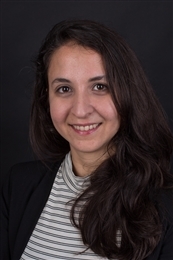
Posthumus alumna and current member of the Education Committee of the N.W. Posthumus Institute Dr Selin Dilli (Utrecht University) was awarded a Veni Grant by the Dutch Research Council (NWO) for her project ‘The Missing Entrepreneurs? The Diversity of Female Entrepreneurship in Europe, 1900-2020’. Female entrepreneurship is not a recent phenomenon. Nevertheless, we still know little about the historical development of female entrepreneurship, let alone about the explanations behind it. This project will collect new comparable time-series data on female business-owners and innovators in Europe since 1900. Based on this evidence, it will demonstrate the factors that explain the change in female entrepreneurship.
The N.W. Posthumus Institute congratulates Selin with this achievement!
-
Posthumus-alumnus Michiel de Haas receives Veni Grant
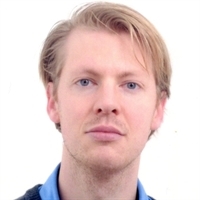
Posthumus alumnus Dr Michiel de Haas, currently assistant professor at the Rural and Environmental History Group of Wageningen University & Research was awarded a Veni Grant by the Dutch Research Council (NWO) for his project ‘A good crisis gone to waste? The 1930s Great Depression and primary export dependence in Africa’.
African economies are vulnerable to unpredictable global demand for agricultural and mineral commodities. This causes boom-bust cycles en complicates poverty reduction. Studying historical crises and their consequences can improve our understanding of this persistent pattern. The 1930s Great Depression signifies the deepest global economic crisis since the Industrial Revolution. Prices for Africa’s export commodities collapsed. Why did Africa’s dependency on such exports increase nonetheless? Using colonial archives, newspapers, and historical statistics, Michiel studies the reactions of colonial administrators, farmers and workers in Central and East Africa to explain the impact of the Depression and its consequences for development.
The N.W. Posthumus Institute congratulates Michiel with this achievement!
News release WUR
Profile Page (WUR) -
Public Event on Trend Reversals in the Public Health of Limburg, Past and Present – deadline registration 27 April 2022
On 29 April 2022, the Centre for the Social History of Limburg and Maastricht University organise a public event on trend reversals in the public health of Limburg, in the past and present. Posthumus PhD candidate Mayra Murkens is co-organiser of the event and will present her findings on the historical trend reversal in the high infant and adult mortality in early twentieth-century Maastricht, which is part of her dissertation on socioeconomic and gender inequalities in the course of the health transition in Maastricht.
Theme
The province of Limburg is known for its historical and present-day lower life expectancy compared to other Dutch regions. Speakers from various backgrounds will elaborate on how trend reversals in this disadvantageous position in public health have been or should be accomplished. What were the causes of the lagging position of Limburg? And how has this position been reversed? Which parallels and differences can be found between the historical lag in public health and the present-day one?
How to participate
The event is open to everyone interested, although the working language will be Dutch. Please register before 27 April 2022 by sending an email to the organisers.
-
Promotion Wout Vande Sompele (University of Antwerp)
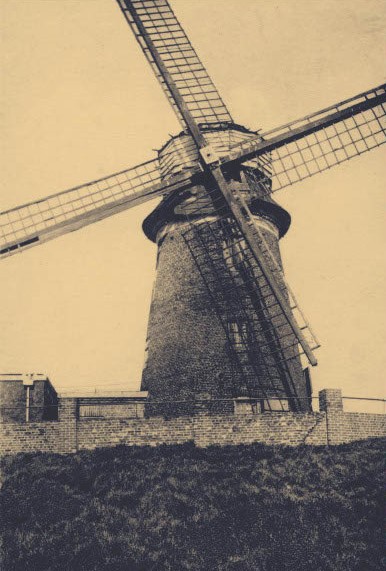
On 11 March 2022, Posthumus-alumnus (cohort 2017) Wout Vande Sompele successfully defended his PhD thesis ‘Tussen landbouw en de markt. De rurale middenstand in Doel, 1614-1900’ at the Department of History of the University of Antwerp. Promotors were Professor Tim Soens and Professor Greet De Block (both University of Antwerp) In his thesis, Wout sheds new light on the social and economic situation of rural retailers thrugh a case study of the polder village Doel (Flanders, Belgium). It showed that the spatial and social organisation of the polder both were strong factors in the development of Doel into a particularly strong centre of craftsman, merchants and servicemen. Success could be achieved both through specialisation in craft or services, as well as through succesfully combining activities in the secundary and tertiary sectors. His doctoral research forms part of the larger project ‘Vijf Eeuwen Doel’ [Five centuries Doel].
The N.W. Posthumus Institute congratulates Wout with this achievement!