Research School for Economic and Social History

Blog

  • Call for papers 2026 Special Issue Journal for the History of Environment and Society – deadline 31 August 2026

    Call for papers 2026 Special Issue Journal for the History of Environment and Society – deadline 31 August 2026

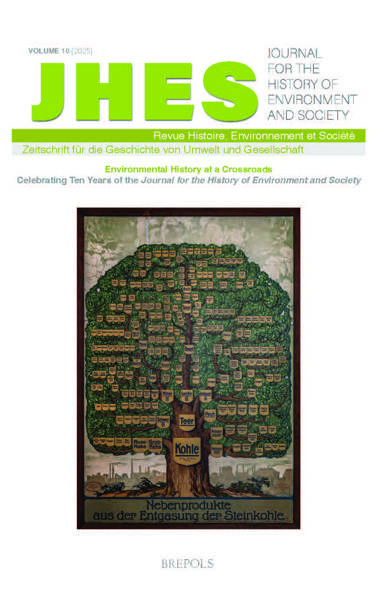
    The editorial board of the Journal for the History of Environment and Society (JHES), among whom a large number of Posthumus fellows, invites submissions for its 2026 Special Issue, dedicated to exploring the role of the Low Countries as both a place and an actor in global environmental history.

    Welcomed are contributions that illuminate how local environments, knowledge, institutions, ecologies, and material flows in the Low Countries were shaped by — and in turn shaped — distant environments around the globe. Inspired by the concept of the glocal, we encourage articles that reveal how local and global scales were continuously intertwined.

    Papers should be in English and have a length of 8,000–10,000 words and will be double-blind peer reviewed. Papers should be submitted ultimately by 31 August 2026 via e-mail to Maïka De Keyzer and Tim Soens, both members of the JHES editorial board.
    TO CALL (LINKEDIN)

  • Successful PhD Defence Posthumus alumna Alessandra De Mulder

    Successful PhD Defence Posthumus alumna Alessandra De Mulder

    On 27 March 2026, Posthumus alumna Alessandra De Mulder (University of Antwerp) successfully defended the thesis ‘Embedding a consumer revolution: Shifting values in the language of London auction advertisements, c. 1730-1830’ at the FelixArchief in Antwerp. Supervisors were Professor Bruno Blondé and Professor Ilja Van Damme (both University of Antwerp.

    Alessandra’s dissertation examines the emergence of modern consumer culture through the language of eighteenth-century London auction advertisements. By combining digital humanities methodologies with traditional historical analysis it uncovers what values actually mattered to Georgian consumers and shows that everyday linguistic practices of buying and selling played a crucial role in the consumer revolution. Alessandra’s research nuances our understanding of the so-called consumer revolution by demonstrating that consumer culture emerged not simply through grand economic or social transformations but through everyday practices of buying, selling, and describing material goods; practices that were fundamentally linguistic by design. The study demonstrates that auctioneers functioned as active ‘arbiters of taste’ rather than passive intermediaries. By bridging the gap between theoretical frameworks about consumer values and the actual linguistic evidence of marketplace practices, this study offers new perspectives on how Georgian Londoners navigated an increasingly complex material world, constructed meanings around household goods, and participated in the birth of modern consumer society through the language they used to describe, desire, and acquire objects.

    The N.W. Posthumus Institute staff congratulates Alessandra with obtaining the Ph!

    MORE INFO

  • Summer School ‘Tensions of Europe 2026’ (Dordrecht, 6-7 July 2026)

    Summer School ‘Tensions of Europe 2026’ (Dordrecht, 6-7 July 2026)

    The Tensions of Europe Early Career Scholars Network welcomes applications from both PhDs and Postdocs for the Summer School ‘Tensions of Europe 2026’ on 6-7 July 2026, which is organised in connection to the XII Tensions of Europe Conference ‘The meaning of the past in sustainable futures’, which will be held on the next days (8-10 July 2026) at the Eindhoven University of Technology.

    The summer school will take place in Dordrecht, the Netherlands, July 6-7, 2026. It aims at introducing early career scholars to the Tensions of Europe community as well as to facilitate networking between scholars across borders, and support the consolidation and building of new academic skills.

    The summer school is organised to a large extent around workshops and group discussions. Participants will be asked to do some preparatory readings (3 to 5 papers), to write a short text on their research which will be circulated before the summer school (300-500 words), and to prepare a very brief presentation on it (2-3 minutes). Additional information and materials will be provided after the notification of acceptance.

    Confirmed guests include Professor Ruth Oldenziel (Eindhoven University of Technology), Professor Nina Wormbs (KTH Royal Institute of Technology), Dr Anna Aberg (Chalmers University of Technology), Dr Emily Clark (University of Amsterdam), and Dr Anne Helmond (Utrecht University).

    For accepted participants, a participation fee of 50 euros (including welcome dinner, summer school lunches and coffee breaks, and the field trip) applies. Applications should be sent ultimately by the extended deadline of 20 April 2026, 23:59 (CET) via the dedicated registration form.

    FULL INFO

  • Conference ‘Households as Coercive Labour Regimes II’ (Bonn, 15-17 Jan 2027)

    Conference ‘Households as Coercive Labour Regimes II’ (Bonn, 15-17 Jan 2027)

    On 15 and 16 January 2027, the international coe ‘Households as Coercive Labour Regimes II’ will be jointly organised by the Bonn Center for Dependency and Slavery Studies (BCDSS) of the University of Bonn and the International Institute of Social History (IISH). Organisers of this event are Stephan Conermann (BCDSS) and Posthumus fellows Ulbe Bosma and Gijs Kessler (both IISH).

    During the conference, the organisers would like to focus on larger household-type organizations, including the private households of the military, political and economic elites, but also, for example, army barracks or ships, plantations, prisons, labour camps, haciendas and estates. Such households represent labour regimes based on an asymmetrically dependent work force consisting of servants, peasants, enslaved and other coerced labourers. Various forms of such labour regimes have existed throughout human history in all parts of the globe. This is why the organisers start out from the hypothesis that they are without exception formative for societies. Against this backdrop, they aim to cross the usual historiographical divides between modern and pre-modern and would like to inquire into the various forms, functions, developments, justifications and changes of the different types of coerced labour can be identified in these households.

    Participants who want to participate, should submit an abstract (which should not exceed 300 words) ultimately by 15 April 2026 via an e-mail to Stephan Conermann.
    FULL CALL (PDF)

  • Valedictory lecture Professor Marlou Schrover

    Valedictory lecture Professor Marlou Schrover

    On 6 March 2026, Professor Marlou Schrover, who has been a member of the N.W. Posthumus Institute from the very start, delivered her valedictory lecture at Leiden University, titled Verleden, heden en toekomst: hoe we het verleden kunnen gebruiken om het hedendaagse migratiedebat en -beleid te begrijpen, en bij te sturen. With her retirement, Marlou also ended her board membership with the N.W. Posthumus Institute. The N.W. Posthumus Institute is very grateful to all the efforts Marlou made over the year for the N.W. Posthumus Institute.

    The lecture can be downloaded as pdf. Also, Leiden University published an interview with Marlou on te occasion of her retirement.

    VALEDICTORY LECTURE (PDF, IN DUTCH ONLY)
     
    INTERVIEW (ENGLISH)

  • Lecture ‘A colonialism of good intentions’ by Professor Geertje Mak

    Lecture ‘A colonialism of good intentions’ by Professor Geertje Mak

    On 1 April 2026, Geertje Mak, History Professor at the University of Amsterdam and senior researcher at KNAW-NL-Lab, will talk about the open access-book Geertje authored on Dutch missionary couples in Papua New Guinea, late 19th and early 20th centuries (Huishouden in Nieuw-Guinea. Zending en het kolonialisme van goede bedoelingen, Walburg Pers 2024).

    Attendance is free of charge, prior registration is however requested.

    FULL INFO AND REGISTRATION

  • Book launch ‘Lives, Land, and Labour: A Social History of Eighteenth-Century Sri Lanka’ by Posthumus fellow Luc Bulten

    Book launch ‘Lives, Land, and Labour: A Social History of Eighteenth-Century Sri Lanka’ by Posthumus fellow Luc Bulten

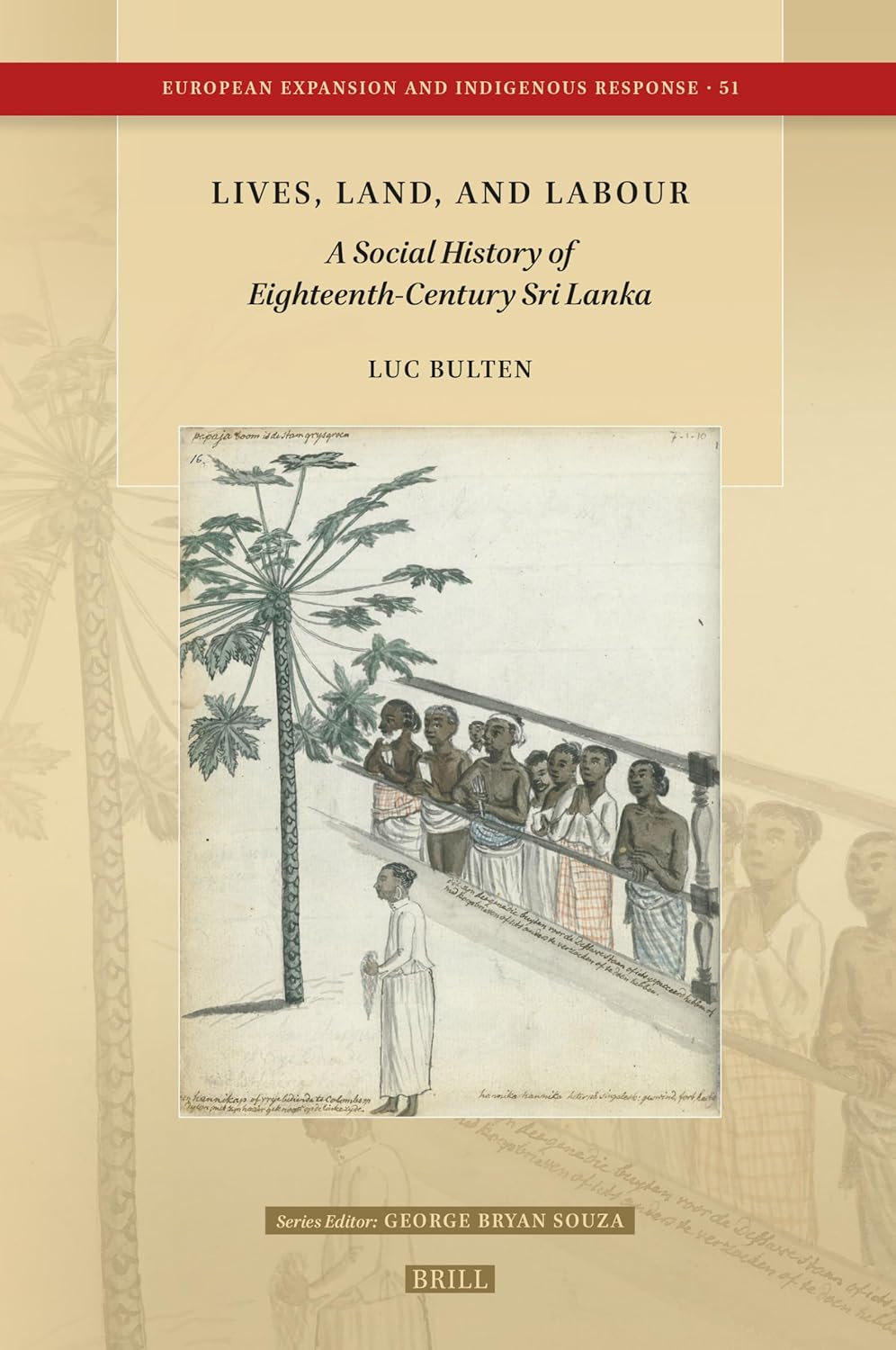
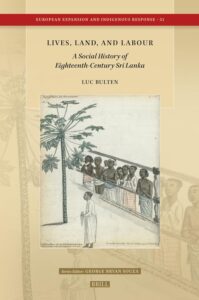
    Cover book Lives, Land, and Labour by Luc Bulten

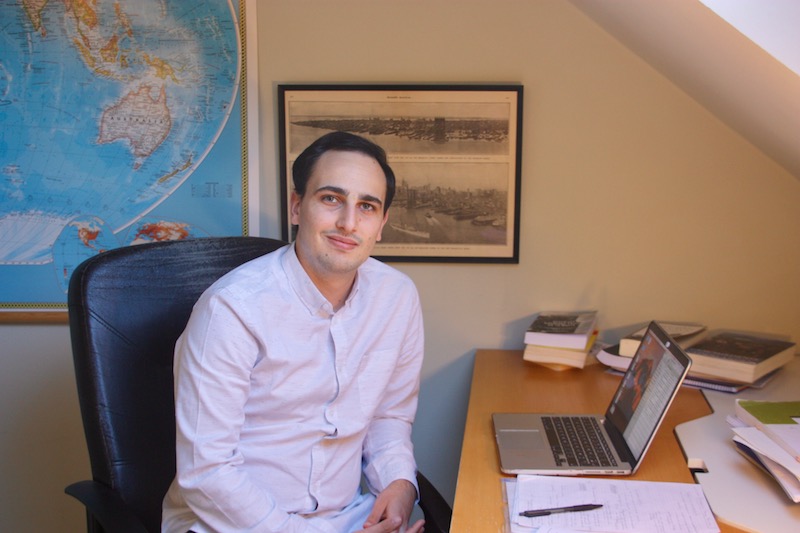
    On 15 April 2026, the Stichting Nederland-Sri Lanka in collaboration with the Research Network ‘Routes and Roots in Colonial and Global History’ of the N.W. Posthumus Institute will organise a book launch event for Lives, Land, and Labour. A Social History of Eighteenth-Century Sri Lanka (Leiden: Brill, 2026), authored by Posthumus fellow Luc Bulten. The launch will take place in the Belle van Zuylenzaal of Utrecht University Hall (Academiegebouw).

    The book is based on the ‘Thombos”, a rather unique collection of eighteenth-century land and population registers detailing the lives lived, lands held, and labour provided by tens of thousands of people inhabiting the coastal regions of Sri Lanka that were colonised by the Dutch East India Company. Turning this archive inside out by highlighting both the indigenous and colonial roots of this administrative system, Luc Bulten presents a gateway into everyday social realities surrounding caste, conjugality, (forced) work, and land tenure. In doing so, he demonstrates how both European expansionism and local agency reciprocally affected the ways such social realities were shaped.

    During the launch, Luc will discuss some of the main takeaways of his book, and will then be joined by a junior Posthumus fellow (Pouwel van Schooten, Leiden University) and senior Posthumus fellow Filipa Ribeiro da Silva (International Institute of Social History), who will share their thoughts on the work. Afterwards there is room for a Q&A followed by drinks at the same venue.

    Attendance is free of charge, but because of limited seating, prior registration is requested.

    REGISTRATION FORM

  • Changes in General Board

    Changes in General Board

    Recently, there have been some changes in the General Board of the N.W. Posthumus Institute.

    Because of her retirement, Professor Marlou Schrover also retired from the General Board as well as from the Executive Committee of the N.W. Posthumus Institute. Her place as representative of Leiden University in the General Board has now been taken by Professor Manon van der Heijden, her position as member of the Executive Committee has now been taken by Professor Elise van Nederveen Meerkerk.

    After serving several years as member of the Executive Committee, Professor Thijs Lambrecht decided to step down; he has found Professor Wouter Ryckbosch willing to become member of the Executive Committee, which appointment was approved by the General Board in its most recent meeting.

    The N.W. Posthumus Institute thanks Marlou and Thijs for all their efforts on behalf of the N.W. Posthumus Institute.

  • Successful PhD Defence Posthumus alumnus Yannis Skalli-Housseini

    Successful PhD Defence Posthumus alumnus Yannis Skalli-Housseini

    On 11 March 2026, Posthumus alumna Yannis Skalli-Housseini successfully defended the thesis ‘In the Name of Distributive Justice: Debating Fiscal Reform in 18th-Century Flanders’ at the Vrije Universiteit Brussel. Supervisor were is Professor Wouter Ryckbosch (Ghent University) and Dr Klaas Van Gelder (VUB).

    Yannis’ dissertation contributes to the recent historiographical re-evaluation of the rise of the fiscal state that aims to overhaul this dominant political-economic paradigm. For this purpose, inspired by the literature on inequality studies, it introduces the concept of a ‘fiscal inequality regime’. Addressing the factor of historical change, the dissertation begins by investigating the negotiations between the Flemish rural administrations of Aalst and Veurne with the central state’s fiscal reform commission (the Jointe). In contrast to what the literature suggests, the role of subaltern administrations in these reforms was not merely one of ‘resistance’ and keeping the tax burden low: implementing their own ambitious policies led them to increase the tax burden, nullifying government efforts.

    Yannis demonstrates how the connection between ideological and material factors within the concept of the ‘fiscal inequality regime’ allows for a better understanding of Early Modern tax debates. Specifically, the discourses and practices of fiscal contestation against the Castellany tax on cattle in Aalst during the 17th and 18th century are argued to have been essential in shaping the major peasant uprisings in Flanders’ revolutionary 1780s. Moreover, the dissertation shows how ideas within the realm of political economic convinced reformers that lowering the tax burden was a desirable goal.

    The N.W. Posthumus Institute congratulates Yannis with obtaining the PhD!

  • PhD positie FWO Project ‘Labore et Constantia. Continuïteit en verandering in de werkritmes in de Plantijnse drukkerij (ca. 1580-1840)’ (UA) – deadline 1 juli 2026

    PhD positie FWO Project ‘Labore et Constantia. Continuïteit en verandering in de werkritmes in de Plantijnse drukkerij (ca. 1580-1840)’ (UA) – deadline 1 juli 2026

    ~ because of scope an required proficiency in Dutch only ~

    Het Departement Erfgoedstudies van de Faculteit Ontwerpwetenschappen aan de Universiteit van Antwerpen zoekt een voltijdse (100%) doctoraatsbursaal in het kader van het FWO project ‘Labore et Constantia. Continuïteit en verandering in de werkritmes in de Plantijnse drukkerij (ca. 1580-1840)’.

    Hoeveel uur werkten vroegmoderne mensen eigenlijk gedurende een dag, een week of een jaar? Hoewel de vraag ogenschijnlijk eenvoudig is, heeft ze één van de langstlopende discussies in sociaaleconomische geschiedenis in gang gezet. Experts hebben een reeks bronnen aangeboord – waaronder ooggetuigenverslagen, loonlijsten, regels en voorschriften en zelfs egodocumenten, maar veel van dat bewijs blijft indirect en gericht op de Angelsaksische wereld. Bovendien beslaat dit type onderzoek vaak maar een relatief korte periode. Het project ‘Labore en Constantia’ zal de discussie heropenen door nieuwe gegevens over arbeidsritmes te putten uit de – uiterst gedetailleerde en langlopende (eind 16e-begin 19e eeuw) – bedrijfsadministratie van de Antwerpse drukker en uitgever Platin-Moretus. De bedrijfsarchieven van de Officina Plantiniana stellen onderzoekers niet alleen in staat om de arbeidsinput op dagelijkse, wekelijkse en jaarlijkse basis tot op een ongekend niveau te reconstrueren, maar ze verschaffen ook gegevens over sociale variaties (beroep, leeftijd, geslacht) in de werkroutines. Tot slot helpen ze om vast te stellen of de industriële revolutie daadwerkelijk plaatsvond in de (zuidelijke) Nederlanden – en zo ja, wanneer – of niet.

    Gegadigden kunnen tot uiterlijk 1 juli 2026 solliciteren via het online sollicitatieplatform van de Universiteit Antwerpen.

    MEER INFO