Research School for Economic and Social History

Blog

  • Successful PhD Defence Posthumus alumnus Junhao Cao

    Successful PhD Defence Posthumus alumnus Junhao Cao

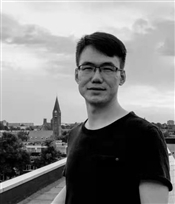
    On 25 February 2026, Posthumus alumnus Junhao Cao sucessfully defended the PhD thesis ‘Property Rights and Agricultural Growth in Northwestern Europe, 1300-1800’ at Utrecht University. Supervisors were Professor Bas van Bavel and Dr Jessica Dijman (both Utrecht University).

    Junhao Cao’s research seeks to explain the agricultural growth in the Low Countries and England over the period 1300–1800. This study investigates whether the transition towards private and secure land property rights drove agricultural growth, and through what mechanisms such impact occurred. The study employs regional, long-term and comparative approaches. Five case studies—the two main cases being Holland and Norfolk and the three minor ones inland and coastal Flanders and the South Midlands—serve as representatives of the advanced agriculture in the Low Countries and England, and broader in northwestern Europe. The study demonstrates that the favourable development of land property rights formed a precondition for and drove agricultural growth under certain conditions, but the extent of this growth varied, and in some cases stagnation occurred. The crucial points were as follows: free, private and secure property rights increased the transferability of land; land was transferred to dominant social groups which were different across regions; this gave rise to different strategies of land management and different farm size distribution; which in turn shaped labour input patterns and land use models, and thus determined agricultural growth in terms of labour productivity.

    The N.W. Posthumus Institute staff congratulates Junhao Cao with obtaining the PhD!
    THESIS INFO

  • ESSHC 2027 (Lyon, France, 21-24 April 2027)

    ESSHC 2027 (Lyon, France, 21-24 April 2027)

    The International Institute of Social History (IISH), in cooperation with the École normale supérieure de Lyon (ENS Lyon), welcomes paper and session proposals for the 16th edition of the European Social Science History Conference (ESSHC 2027), to be held at ENS Lyon on 21-24 April 2027.

    The aim of the ESSHC is bringing together scholars interested in explaining historical phenomena using the methods of the social sciences. The conference welcomes papers and sessions on any historical topic and any historical period and is organised in 28 thematic networks.

    Proposals should be submitted ultimately by the extended deadline of 22 April 2026 via the dedicated Oxford Abstracts Platform of the IISH.

    FULL INFO

  • 5th Doctoral School in Medieval Economic History

    5th Doctoral School in Medieval Economic History

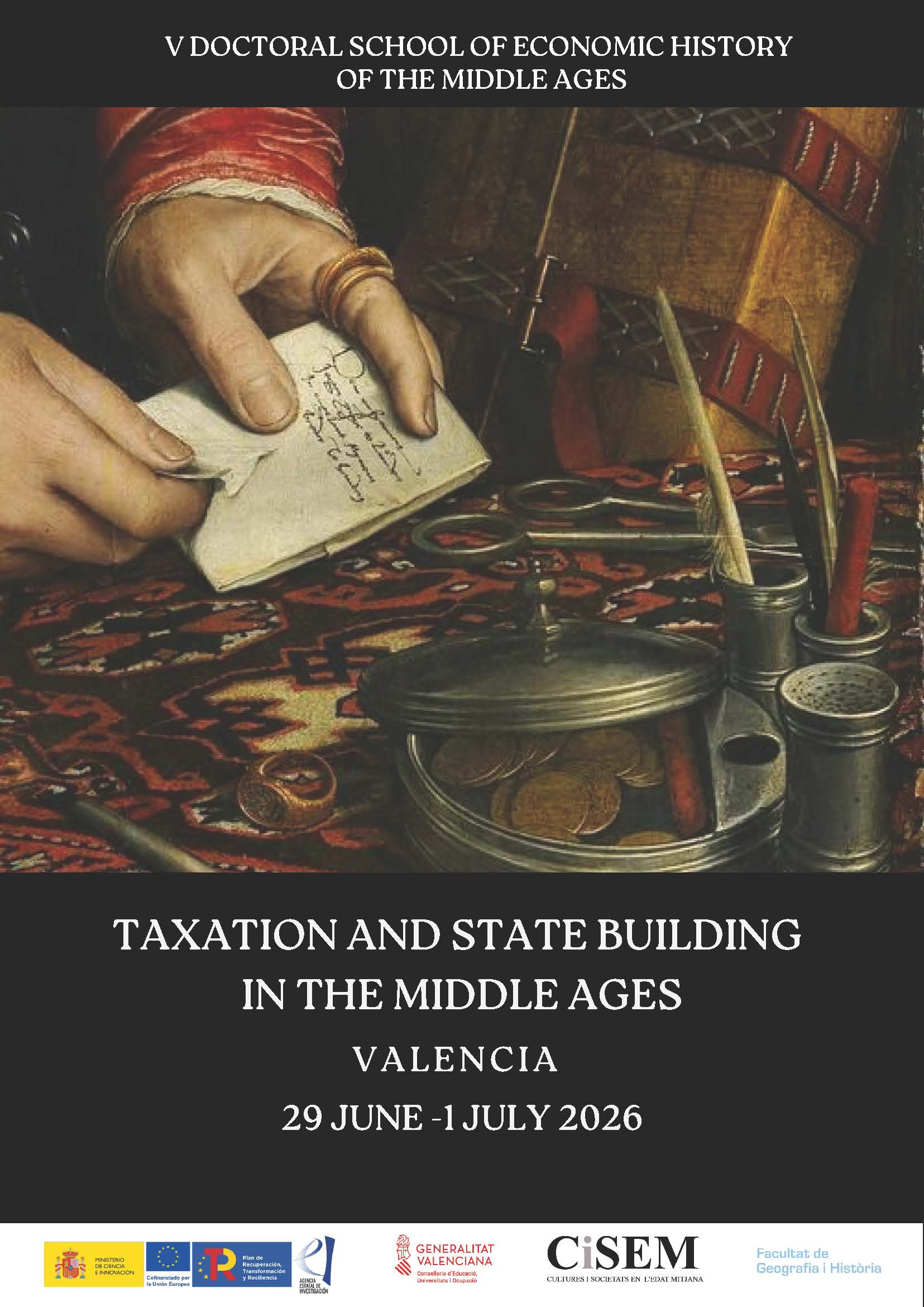
    The research group Cultures i Societats de l’Edat Mitjana (CiSEM) at the University of Valencia is organizing the 5th Doctoral School in Medieval Economic History, to be held from 29 June to 1 July 2026. In this fifth edition, the School will focus on ‘Taxation and State Building in the Middle Ages’.

    The Doctoral School will address the most recent research on public finances, taxation, and state building, with particular attention to the theoretical and methodological training of doctoral candidates and early career researchers. Papers and communications will serve as the main mechanism for understanding the relationship between state formation and the history of taxation, thus offering a more comprehensive view of the deep interconnection between both elements and their impact on the broader history of medieval society and economy.

    Keynote lectures will be delivered by Wim Blockmans (Emeritus Professor at Leiden University), Leonor Freire Costa (Professor at the Universidade de Lisboa) and Armand Jamme (Professor at the Centre national de la recherche scientifique).

    This course is supported by the Spanish Ministry of Science and Innovation research project ‘Mercados, instituciones e integración económica en el Mediterráneo occidental (siglos XIII-XVI)’ (PID2021-128038NB-I00) and the Generalitat Valenciana excellence project ‘Rompiendo jerarquías. Movilidad social, dinamismo económico y desarrollo institucional en el Mediterráneo Occidental (siglos XIII-XVI)’ (CIPROM/2022/46). In addition, it is part of the research group Cultures i Societats de l’Edat Mitjana (CiSEM) and of the Arca Comunis network on fiscal history.

    PhD students and early-career researchers interested in the topic are invited to submit their proposals. Submissions should be sent ultimately by 30 April 2026. Specifications on how to submit are to be found in the full call (see button below).

    DOWNLOAD FULL CALL (PDF)

  • Posthumus fellow Pepijn Brandon receives ERC Synergy grant

    Posthumus fellow Pepijn Brandon receives ERC Synergy grant

    Professor Pepijn Brandon, fellow and also subsitute member of the General Board of the N.W. Posthumus Institute, recently was awarded, together with three other researchers a Synergy Grant of 10 million euros to investigate these questions within the TASTADE (The Trans-Atlantic Slave Trade and the Development of Europe) project by the European Research Council (ERC).

    Together with William Pettigrew (University of Lancaster), Silvia Marzagalli (Université Côte d’Azur, Nice) and Leonardo Marques (Universidade Federal Fluminense, Rio de Janeiro) (each experts on the history of the slave trade, but combining specialisms on different regions, periods, types of historical sources and approaches), Pepijn Brandon will lead the TASTADE project (The Trans-Atlantic Slave Trade and the Development of Europe). A large team of junior researchers, PhD students, postdoctoral researchers and data specialists will collect, compare and analyse data on investors in the slave trade within this six-year project.

    The ERC Grant will enable them to coordinate archival work in a wide range of languages and national contexts. One of the major innovations in their approach is that they do not focus specifically on the Dutch, English, French, Spanish or Portuguese slave trade, but on the transnational networks that linked investors in all parts of Europe.

    The N.W. Posthumus Institute congratulates Pepijn and his fellow researchers with this grant!.

    NEWS ITEM VU WEBSITE

  • Posthumus fellow Alicia Schrikker appointed Professor of Dutch History in the World at Leiden University

    Posthumus fellow Alicia Schrikker appointed Professor of Dutch History in the World at Leiden University

    The Executive Board of Leiden University has appointed Dr Alicia Schrikker, fellow of the N.W. Posthumus Institute, as Professor of Dutch History in the World, effective 1 January 2026. The chair is based at the Institute of History (Faculty of Humanities).

    Alicia Schrikker is Director of Research at the Leiden University Institute for History. She is interested in society-state interaction in colonial contexts in Asia in the eighteenth and nineteenth century. She supervises BA, MA and Phd research in the fields of socio-legal history, history of disasters and colonial mentality. Her regions of expertise are Sri Lanka, Indonesia and to some extent, South Africa and India.

    The N.W. Posthumus Institute congratulates Alicia with this appointment!

    NEWS ITEM LEIDEN UNIVERSITY

  • Seminar and Workshop ‘Trust, institutions and capitalism in early modern Europe’ – keynote Prof. Craig Muldrew

    Seminar and Workshop ‘Trust, institutions and capitalism in early modern Europe’ – keynote Prof. Craig Muldrew

    On Thursday 23 April and Friday 24 April 2026, the section Economic, Social and Demographic History of Radboud University, supported by the N.W. Posthumus Institute, will host the international seminar and workshop on “Trust, institutions, and capitalism in early modern Europe”. The keynote lecture at this event will be delivered by Professor Craig Muldrew (University of Cambridge).

    Thursday 23 April: Keynote lecture

    On the first day of the event, Professor Craig Muldrew will present his new book The Capitalist Self: the Social Origins of Financial Capitalism in Early Modern Britain (Cambridge University Press, 2025), at the ESDG seminar of Radboud University in room 9.14 of the Erasmus building from 15:30-17:00. The seminar will be followed by drinks and dinner with the speaker.

    Friday 24 April: Workshop

    The workshop on the second day of the event is open to early-career researchers (MA/PhD/Postdoc) who wish to receive feedback on their (ongoing) research. The workshop wants to explore the relationship between the behaviours and norms of economic actors and the accumulation of credit and capital in early modern Europe.

    The organisers call for papers to be presented at the workshop: four participants will be invited to present their work in short presentations, after which the floor is open for feedback and discussion. Please consult the Call for Papers for more information on participation in the workshop.

    Participation

    Participation in the seminar and the workshop is free of charge. Participants are welcome to attend only one of the events, but participants in the workshop are especially encouraged to also attend the lecture during the seminar. For further details or questions about participation, please contact organiser Marte Stoffers.

    For participation in the seminar on Day 1, you can register via the button below

    For submitting a paper proposal, make sure to submit your abstract (500 words max.) and a one-page CV to organiser Marte Stoffers ultimately by 6 March 2026.

    FULL INFO

  • Workshop and Conference ‘Sowing the Seeds VIII’ (London, UK, 5-6 Nov 2026) – deadline 31 March 2026

    Workshop and Conference ‘Sowing the Seeds VIII’ (London, UK, 5-6 Nov 2026) – deadline 31 March 2026

    On 5 and 6 November, the Department of Economic History of the London School of Economics (LSE) and the Centre for Late Antique and Medieval Studies will jointly organise the workshop ‘Swoing the Seeds VIII’; this workshop will also act as the 13th Annual Conference of the Research Group for Late Medieval Economic History. The first day will be hosted at the premises of LSE, the second day will take place at King’s College in London.

    The conference brings together two research communities: the UK-based Sowing the Seeds network and the Continental European Research Group for Late Medieval Economic History, creating a space for dialogue concerning the range of sources and methodologies used in medieval economic history. As a conference shared between LSE and KCL, the organisers also aim to bridge generalist history departments and specialised economic history programs, to foster interdisciplinary conversation and support innovative (and collaborative) scholarship.

    This conference will provide a supportive environment for presenting work-in-progress and workshopping new methodologies, where participants can receive constructive feedback from scholars working across diverse theoretical and methodological approaches. The event is designed to foster lasting research networks between UK and Continental European scholars, facilitating the kind of focused, cross-regional and interdisciplinary discussions that deepen our understanding of medieval economies and societies and build opportunities for collaboration. The keynote lecture will be delivered by Professor Oliver Volckart (London School of Economics).

    Proposals (300 words max.) for attending this conference should be sent ultimately by 31 March 2026 to Spike Gibbs at LSE.

    FULL INFO

  • International conference ‘Studying Non-Elites in the Medieval Caucasus’ – register before 11 March 2026

    International conference ‘Studying Non-Elites in the Medieval Caucasus’ – register before 11 March 2026

    The SHOC Research Group at Vrije Universiteit Brussel, in association with the Medieval Caucasus Network and the National Association for Armenian Studies and Research, will organise the international conference ‘Studying Non-Elites in the Medieval Caucasus’ on 13 and 14 March 2026 at the premises of the VUB Campus in Elsene, Belgium. The conference can also be attended online.

    The conference features two days of papers on a variety of topics, from the Caucasian slave trade, to the place of women in medieval Armenian society, to the bioarchaeology of the medieval Caucasus. The keynote speakers are Nik Matheou (University of Edinburgh) and Irina Arzhantseva (Insitute of Archaeology, Russian Academy of Sciences). The organisers welcome anyone, including academics, students and members of the public, with an interest in the history of the Caucasus or in methodologies for studying the experience of non-elite groups, such as women, peasants, or enslaved people.

    Registration is now open until 11 March 2026 via the online registration form. A participation fee of 20 euros applies for postdoctoral and permanent staff members, for members of the public, students, and PhD candidates a reduced fee of 10 euros applies.

    FULL INFO

  • Verwacht: Boekpresentatie ter gelegenheid van 100 jaar UHSK

    Verwacht: Boekpresentatie ter gelegenheid van 100 jaar UHSK

    ~ because of scope in Dutch only ~

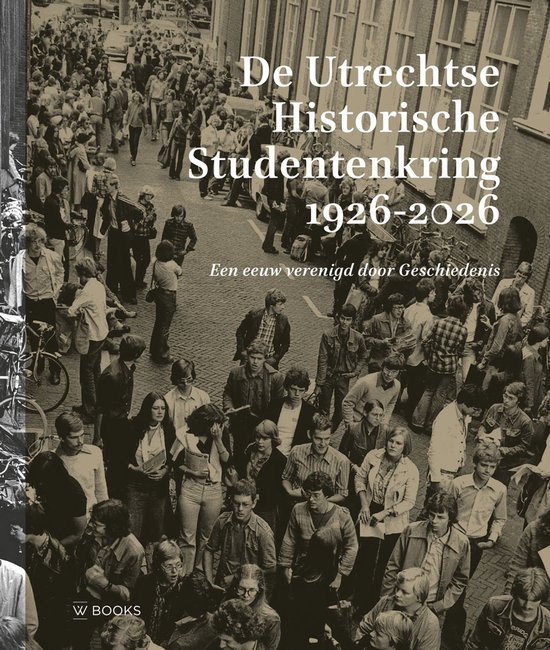
    Omslag boekIn 2026 viert de Utrechtse Historische Studentenkring (UHSK) het honderdjarig bestaan. Ter gelegenheid hiervan verschijnt in maart van dit jaar bij uitgeverij WBooks de publicatie De Utrechtse Historische Studentenkring 1926 – 2026: Een eeuw verenigd door Geschiedenis. Aan deze jubileumpublicatie werkten naast Posthumus fellow Elise van Nederveen Meerkerk als auteurs Mette Bruinsma en Jorrit Steehouder en twee redactieassistenten van de UHSK, Jasmijn Cox en Chiara Evans mee, ondersteund door drie stagiairs voor de dataverzameling voor het boek: Lieke Loman, Aigui Thewissen en Zita Zwart.
    Op 14 maart 2026 vindt de boekpresentatie plaats in de Theaterzaal van de Neudebibliotheek (Neude 11, Utrecht). Vanwege de beschikbare ruimte wordt belangstellenden gevraagd zich vooraf aan te melden.

    MEER INFO EN AANMELDEN

  • Posthumus Board Member Jutta Bolt receives ERC Consolidator Grant

    Posthumus Board Member Jutta Bolt receives ERC Consolidator Grant

    In December 2025, the European Research Council (ERC) awarded an ERC Consolidator Grant to Jutta Bolt, Professor of Global Economic History at the University of Groningen and Board Member of the N.W. Posthumus Institute for her research proposal Africa@Work (AWORK). Through Consolidator Grantsm the ERC aimt to support cutting-edge research at universities and research centres.

    Through this research project, Jutta aims to examine how work and livelihoods in Sub-Saharan Africa have evolved over a century of profound economic, demographic, and social change. Focusing on 33 countries shaped by different colonial legacies and post-independence trajectories, the project reconstructs detailed occupational structures from 1920 to 2020. It addresses a longstanding empirical gap: although Africa’s workforce is expanding and diversifying, long-run data on employment structures — especially for the early and mid-20th century — are fragmented or unavailable. This limits our understanding of how labour markets developed, how opportunities emerged, and how structural constraints took shape.

    AWORK aims to reconstruct detailed occupational structures from 1920 to 2020 using colonial censuses, labour surveys, and post-independence microdata. The resulting database will capture trends by gender, sector, location, and employment type, enabling analysis of when workers shifted out of agriculture, how informal and formal employment evolved, and how economic change varied across regions.

    The N.W. Posthumus Institute congratulates Jutta with this Consolidator Grant!

    MORE INFO