Research School for Economic and Social History

Blog

  • NEW: Research Master brochure 2023-2024

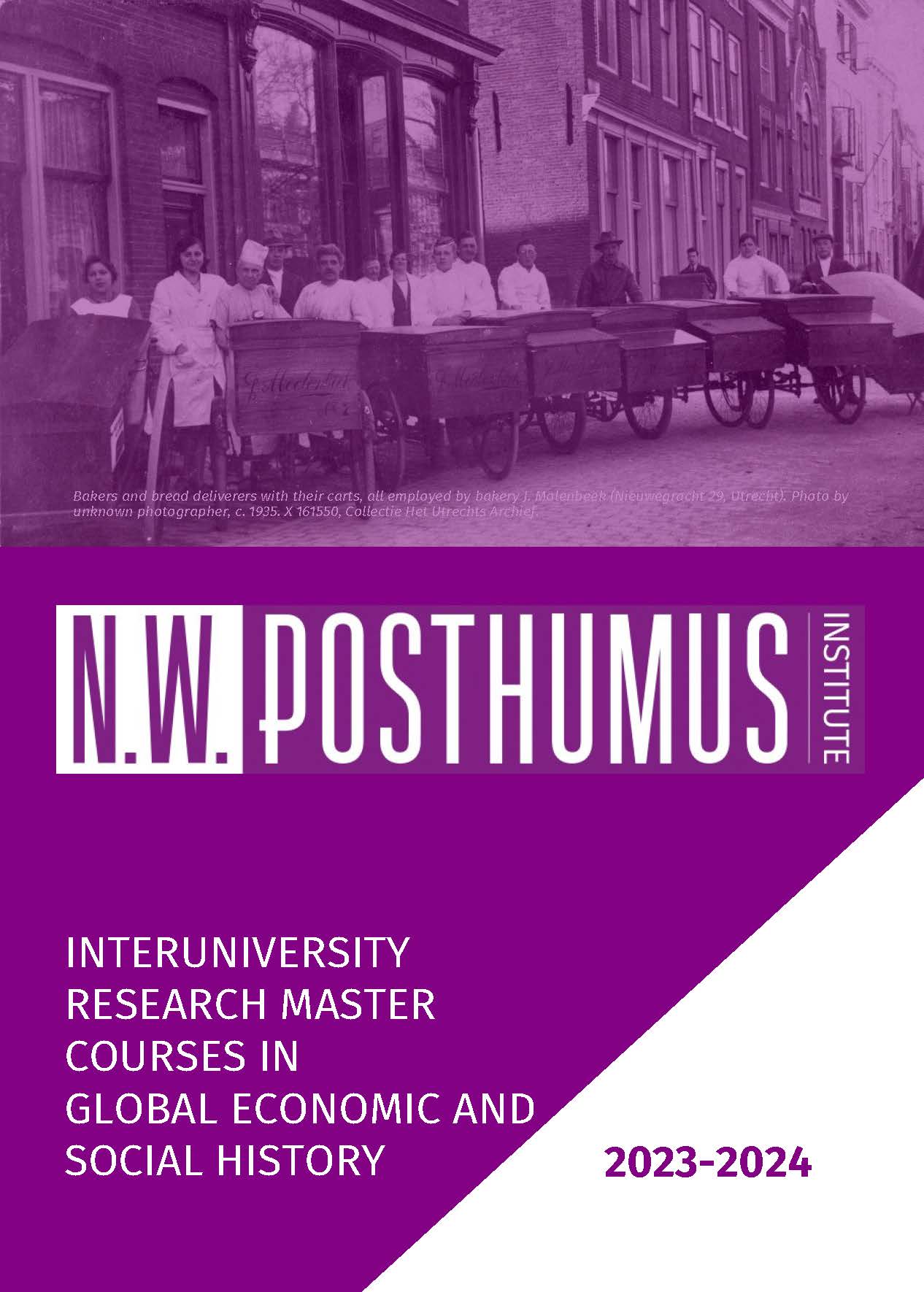
    NEW: Research Master brochure 2023-2024

    The N.W. Posthumus Institute is proud to present the new Research Master brochure with the info on the 2023-2024 Interuniversity Research Master courses.

    New this year is the Summer School Crises and History, which will be hosted by Utrecht University on 1-5 July 2024.

    The full programme includes the following courses:

    Please note that the course ‘Keys to the Treasure Trove’ will not be offered anymore as of the academic year 2023-2024.

    You can download the online version as pdf below.

    DOWNLOAD BROCHURE (PDF)

  • 13e Jacob van Lenneplezing – ‘De ontdekking van Insulinde: op reis in Nederlands-Indië in de negentiende eeuw’

    13e Jacob van Lenneplezing – ‘De ontdekking van Insulinde: op reis in Nederlands-Indië in de negentiende eeuw’

    ~ because of scope in Dutch only ~

    Op 5 oktober 2023 vindt bij SPUI25 in samenwerking met de Werkgroep de Moderne Tijd en de Faculteit Geesteswetenschappen van de Universiteit van Amsterdam de 13e Jacob van Lenneplezing plaats. Spreker Rick Honings zal dan spreken over het onderwerp ‘De ontdekking van Insulinde: op reis in Nederlands-Indië in de negentiende eeuw’.

    In de vroege negentiende eeuw, na de ondergang van de VOC, werd Indië voor het eerst een echte kolonie van Nederland. Vanaf dat moment gingen allerlei soorten reizigers op pad om de binnenlanden van Java, Sumatra en de ‘buitengewesten’ te verkennen: natuuronderzoekers, predikanten, zendelingen, taalgeleerden, ambtenaren, militairen en gelukszoekers, en later ook vrouwen en toeristen. Zij schreven volop reisverhalen om het ‘moederland’ te informeren over het koloniale project. Hoe reisden ze in die periode in Indië?

    In deze lezing volgt Rick Honings drie negentiende-eeuwers op hun reis door de kolonie. De natuuronderzoeker Caspar Georg Carl Reinwardt was een van de eersten die na het Engels Tussenbestuur in 1816 de Indonesische archipel verkende. De Oostenrijkse wereldreiziger Ida Pfeiffer begaf zich met gevaar voor eigen leven tussen de ‘koppensnellers’ op Borneo. En de sigarenfabrikant en schrijver Justus van Maurik bezocht Java als een vroege toerist. Welke woorden gebruikten ze om uiting te geven aan hun ervaring van de tropen? Hoe presenteerden ze zichzelf in hun werk? En wat zeggen de publicaties van deze negentiende-eeuwers over hun manier van denken?

    De lezing is vrij toegankelijk, maar aanmelding vooraf via de website van SPUI25 is gewenst. De Jacob van Lennep-lezing keert jaarlijks op de eerste donderdag van oktober terug en beoogt de Nederlandse literatuur en cultuur van de negentiende eeuw onder de publieke aandacht te brengen.

    MEER INFO

  • Workshop ‘Future Thinking and Practices in Premodern Economy, Society, and Culture’

    Workshop ‘Future Thinking and Practices in Premodern Economy, Society, and Culture’

    The organisers of the workshop ‘Future Thinking and Practices in Premodern Economy, Society, and Culture’, to be held at the University of Antwerp on 23 and 24 November 2023, call for additional papers, exclusively for (max. 6) participants of Dutch National Research Schools (in addition to other participants already invited).

    This November, The ‘Back to the Future’ research team organises a two-day international workshop that welcomes PhD students who deal with past futures from social, cultural and socioeconomic perspectives to apply. Focus is the pre-modern world. The organisation aims to unite diverse perspectives on the history of the time to come. To create a collaborative platform where various ideas converge, researchers from European universities outside of the Benelux will participate as well.

    This workshop forms part of the research project ‘Back to the Future. Future Expectations and Actions in Late Medieval and Early Modern Europe, c.1400-c.1830’ at the Centre for Urban History of the University of Antwerp. The event is also made possible by contributins from the Huizinga Institute and the N.W. Posthumus Institute.

    Theme and content

    Conducting research on historical future thinking and practice sheds light on how people in the past conceptualised and coped with what lay ahead. Exploring this facet offers insights into how individual and societal perspectives, aspirations, and concerns were projected onto the future.

    In recent decades, the theme of time, temporality and the future has gained significant popularity within various academic disciplines. Understanding how different cultures and eras perceive and manipulate time enhances our comprehension of historical context. It enables us to grasp how people structured their narratives of development, anticipated change and grappled with uncertainty.

    Programme

    The event offers a platform for PhD students to showcase their work through 25 to 30-minute presentations, followed by engaging group discussions. Each PhD participant will give a presentation and participate in the round table discussions. 1.5 hours are reserved for every two attendees, ensuring a thoughtful and engaging experience. The tentative programme can be found below:

    Thursday, 23 November
    09:30 – 10:00 Coffee & Tea
    10:00 – 10:30 Welcome
    10:30 – 12:00 2 Speakers & Roundtable
    12:00 – 13:00 Lunch
    13:00 – 14:30 2 Speakers & Roundtable
    14:30 – 15:00 Break
    15:00 – 16:30 2 Speakers & Roundtable
    16:30 – 17:00 Conclusions / Summary of the Day
    19:00 – 21:00 Workshop Dinner (optional)
    Friday, 24 November
    09:30 – 10:00 Coffee & Tea
    10:00 – 10:30 Presentation by ERC Project ‘Back to the Future’
    10:30 – 12:00 2 Speakers & Roundtable
    12:00 – 13:00 Lunch
    13:00 – 14:30 2 Speakers & Roundtable
    14:30 – 15:00 Break
    15:00 – 16:30 2 Speakers & Roundtable
    16:30 – 17:00 Conclusions / Summary of the Day


    DOWNLOAD CALL AS PDF

  • Online Summer School ‘Exploring Open Large-Scale Historical Demographic Databases’

    Online Summer School ‘Exploring Open Large-Scale Historical Demographic Databases’

    The Italian Society of Historical Demography (Società Italiana di Demografia Storica; SIDeS) organises an online summer school on ‘Exploring Open Large-Scale Historical Demographic Databases’. The sessions are scheduled for 8 September, 15 September, 22 September, 29 September, 6 October 2023. All sessions will be held online from 3 pm until 5 pm (UTC+2).

    About the summer school

    This online summer school is aimed at scholars (junior and senior), doctoral students and anyone with research interests in the field of historical demography. This year’s edition will focus on sources that have been (or are in the process of being) made into large-scale databases that are or will be publicly available for research. At the end of the course, participants will understand the challenges of creating large-scale databases using diverse types of sources that are suitable for research, understand their potential for allowing new research topics to be studied and will have acquired some preliminary information on how to work with them. The course will feature experts (among whom several Posthumus fellows) discussing several projects that illuminate different contexts, needs, challenges and opportunities using European sources, and a final session focusing on the Italian case.

    How to participate

    To enroll, participants must be a member of the Italian Society of Historical Demography. Those not yet member of SIDeS can simultaneously apply to join our society and attend the summer course. Registration requests must be received by 5 September 2023. For more information, contact the SIDeS secretary, Gabriele Ruiu.

    DOWNLOAD PROGRAM (PDF)
     
    WEBSITE SIDES

  • Masterclass with Thomas Safley: ‘Actors and institutions in the pre-Modern Economy’

    Masterclass with Thomas Safley: ‘Actors and institutions in the pre-Modern Economy’

    VUB research group HOST (Historical Research into Urban Transformation Processes) in collaboration with the N.W. Posthumus Institute is hosting the masterclass ‘Actors and institutions in the pre-Modern Economy’ with Professor Thomas Safley on 2 October 2023.

    About the speaker

    Thomas Max Safley is Professor of Early Modern European History (Emeritus) at the University of Pennsylvania. He specialises in the economic and social history of early modern Europe between 1450 and 1750, on which he has published extensively. His publications include Matheus Miller’s Memoirs: A Merchant’s Life in the Seventeenth Century (Palgrave Macmillan, 2000) and Family Firms and Merchant Capitalism in Early Modern Europe: The Business, Bankruptcy and Resilience of the Hoechstetters of Augsburg (Taylor & Francis, 2019).

    About the Masterclass

    The masterclass ‘Actors and Institutions in the Pre-Modern Economy’ offers PhD candidates and early career researchers the opportunity to present and discuss their work with an expert in the field. It focusses on the actors (specifically merchants and families) and institutions (the state/authorities and households) that shaped the pre-modern economy of the Low Countries. During the masterclass a maximum of 6 participants will offer 10-minute presentations based on a pre-submitted project outline such as a paper/chapter abstract. Afterwards, Professor Safley and the participants will be able to provide detailed feedback on the presentation/proposal and discuss the topic. The goal is to help the researcher as well as the other participants in shaping/developing an argument or theory.

    How to participate

    Researchers working on Actors and Institutions in the Pre-Modern Economy are invited to send an abstract (c. 300 words) with a brief biographical note to both HOST and organiser Yannis Skalli Housseini by 1 September 2023. All candidates will be notified of the outcome by 7 September.

    DOWNLOAD CALL (PDF)

  • Save the date: Posthumus Writing Retreat 2024 scheduled for 24-29 June 2024!

    Save the date: Posthumus Writing Retreat 2024 scheduled for 24-29 June 2024!

    The annual Posthumus Writing Retreat 2023 took place from 12 – 17 June, this year in the beautiful Abbey of Berne in Heeswijk-Dinther in the province of North Brabant. Eught PhD-students worked undisturbed for a week on writing an article or a chapter of their thesis. One of them even managed to write more than 8000 words(!). For 2024 the retreat has been scheduled for 24-29 June, again in Heeswijk-Dinther. PhD-students in their second to fourth year, be sure to mark it in your agenda’s! More info will follow in due time on the Posthumus website and via our Posthumus newsletter.

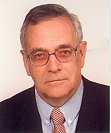
  • In Memoriam: Professor Peter Hertner (1942-2023)

    In Memoriam: Professor Peter Hertner (1942-2023)

    Recently, we were informed that Professor Peter Hertner, member of the ESTER network, passed away on 26 April 2023.

    Born in 1942 in Ulm, Southern Germany, he studied in Heidelberg, Besançon, Basel, Strasbourg, Paris, and Marburg where he was awarded his diploma in Economics in 1968, and he also obtained his PhD in 1971, with a dissertation on the economic and social history of Strasbourg, 1650-1715.

    He was an Assistant Professor at the Department of Social and Economic History in Marburg, from 1970 until 1977. From 1977 until 1981 he was a Junior Professor (Akademischer Rat) at the Institut für Geschichte der Technischen Hochschule in Darmstadt. He joined the European University Institute in 1981, first as a Research Assistant in the HEC Department until 1986, and subsequently as a full Professor until 1988, after he received his habilitation in Darmstadt in 1986, with a thesis on the German capital export to Italy and the development of the Italian economy, 1861-1894. Between 1981 and 1989 Hertner held various teaching positions in Italy, at the Università L’Orientale, Naples, the universities of Ancona and Genoa, and at the Bocconi Business School in Milan. He was named Director of the EUI library in 1988 until 1995 and remained as an external Professor in the EUI History Department.

    In April 1995, he was appointed Professor of Economic and Social History at the Martin-Luther-Universität in Halle-Wittenberg. He was a member of the editorial board and co-editor of Italian economic history journals, a member of the Scientific Board of the German Historical Institute in Rome, of the Comité pour l’histoire de l’electricité in Paris, of the Gesellschaft für Unternehmensgeschichte and of the European Association for Banking and Financial History (EABH) both in Frankfurt and Main.

    On behalf of the ESTER network, the staff of the N.W. Posthumus Institute expresses its condolences to Professor Peter Hertner’s family, his colleagues and all that were close to him.

    This in memoriam is based on the extended obituary by Serge Noiret, Visiting Fellow at the EUI History Department.

    OBITUARY BY S. NOIRET (EUI)
  • Tweets not showing due to changes Twitter

    Tweets not showing due to changes Twitter

    As you may have noticed, the Twitter feed on our homepage shows the message ‘Nothing to see here – yet’. It appears that recent changes in Twitters management and policy are the cause of this; many other websites experience the same problem.

    Want to keep updated? Then follow us directly via our Twitter account at https://twitter.com/nwp_esh. Logging in may be required as a result of Twitter’s new policy.


    TO OUR TWITTER PAGE

  • NEW: New version of PhD brochure out now!

    NEW: New version of PhD brochure out now!

    The staff of the N.W. Posthumus Institute is happy to inform you that an updated and revised version of the PhD Training Programme oF the N.W. Posthumus Institute has just been released. In this brochure, (prospective) PhD participants will find all relevant info on the current Posthumus PhD Training Programme.

    Feel free to download the brochure and/or to distribute the link, to be found under the button below. If you want some printed copies to distribute, please contact the Posthumus secretariat by e-mail, stating your address and desired number of copies.

    DOWNLOAD PHD BROCHURE (PDF)

  • Datini-ESTER Advanced Seminar 2024: ‘Social and Geographical Mobility

    Datini-ESTER Advanced Seminar 2024: ‘Social and Geographical Mobility

    Fondazione Istituto Internazionale di Storia Economica “F. Datini” and the European School for Training in Economic and Social Historical Research (ESTER) will organise their seventh jointly-organized Datini-ESTER Advanced Seminar for economic and social historians on 12-18 May 2024, in Prato (Italy) on the theme of ‘Social and Geographical Mobility’

    The organisers

    ESTER, established in 1991, is an international postgraduate network incorporating more than 60 European Universities. ESTER organises research training in the form of both the annual Research Design Course for starting PhD-students and a series of Advanced Seminars on special themes within economic and social history.

    “F. Datini” International Institute of Economic History was founded in 1967 by Federigo Melis and Fernand Braudel. The aim of the Institute is the study of pre-industrial economic history (thirteenth-eighteenth centuries) and the creation on the topic of a space for historical culture, making comparison between different methodologies and schools of research easier and supporting young scholars during their formative years.

    Theme

    The topic of the seminar is closely related to the theme of the congress organized yearly by the “F. Datini” International Institute of Economic History, which in 2024 is devoted to ‘Social Mobility in pre-industrial societies: tendencies, causes and effects (13th-18th centuries)’. The 2024 Datini-Ester seminar will deal with Social and Geographical Mobility.

    More info

    Deadline for submitting abstracts for the 2024 edition closed on 15 October 2023. If accepted for participation, the final paper will be due on 15 March 2024. For info on the seminar in general, you may contact Dr Jaco Zuijderduijn (Lund University).

    DOWNLOAD FULL CALL (PDF)