Research School for Economic and Social History

Blog

  • Wageningen University – RHI Seminars – every 2nd Thursday of each month – registration appreciated

    Wageningen University – RHI Seminars – every 2nd Thursday of each month – registration appreciated

    How and why have economies grown historically? Why and how did worldwide inequalities come into being? How have people all over the world in the past up to the present dealt with the issue of providing a living for themselves and their families? To what extent did they do so either in harmony or in conflict with their surrounding natural environments? And how did this all develop over time?

    The RHI seminar aims to address these and other questions by organizing monthly lectures and papers on concrete empirical case studies from economic and social history. The organisers explicitly welcome a lively debate on the presented work, and therefore usually distribute the papers beforehand. RHI seminars in principle take place every second Thurday of the month (see below for actual scheduled dates). They are open to the public, but with regard to accommodation and distribution of the paper in advance, prior notice of attention to the Economic and Environmental History Group is appreciated.
    MORE INFO

  • NEW: PhD Cohort pages launched on Posthumus website

    NEW: PhD Cohort pages launched on Posthumus website

    We are happy to announce the launch of the PhD cohort pages on our website.

    On these pages, you will find the PhDs currently following the PhD Training Programme of the N.W. Posthumus Institute. Thinking about joining this programme? Find all info about the programme here.

    You will find the cohort pages here:

    PhDs Cohort 2020

    PhDs Cohort 2021

    PhDs Cohort 2022

  • New publication by Posthumus members Elisabeth Heijmans and Sophie Rose

    New publication by Posthumus members Elisabeth Heijmans and Sophie Rose

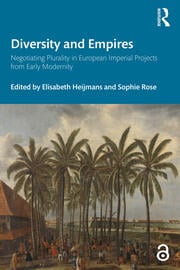
    Posthumus members Elisabeth Heijmans and co-editor Sophie Rose are the editors of Diversity and Empires Negotiating Plurality in European Imperial Projects from Early Modernity, published on 2 June 2023 with Routledge as an open-access book.

    Examining diversity as a fundamental reality of empire, this book explores European colonial empires, both terrestrial and maritime, to show how they addressed the questions of how to manage diversity. These questions range from the local to the supra-regional, and from the management of people to that of political and judicial systems. Taking an intersectional approach incorporating categories such as race, religion, subjecthood, and social and legal status, the contributions of the volume show how old and new modes of creating social difference took shape in an increasingly globalized early modern world, and what contemporary legacies these ‘diversity formations’ left behind. This volume shows diversity and imperial projects to be both contentious and mutually constitutive: on the one hand, the conditions of empire created divisions between people through official categorizations (such as racial classifications and designations of subjecthood) and through discriminately applied extractive policies, from taxation to slavery. On the other hand, imperial subjects, communities, and polities within and adjacent to the empire asserted themselves through a diverse range of affiliations and identities that challenged any notion of a unilateral, universal imperial authority.

    This book highlights the multidimensionality and interconnectedness of diversity in imperial settings and will be useful reading to students and scholars of the history of colonial empires, global history, and race.

    PUBLISHER’S INFO
     
    OPEN ACCESS VERSION

  • CAPASIA lectures on connected histories of capitalism (online / hybrid)

    CAPASIA lectures on connected histories of capitalism (online / hybrid)

    European Research Council project CAPASIA – The Asian Origins of Global Capitalism is organising a series of online/hybrid lectures dedicated to the connected histories of capitalism. The series is jointly organised with the European Research Council project ECOINT – a Twentieth-Century International Economic Thinking, and the Complex History of Globalization and the EUI Conversations on the New Histories of Capitalism Working Group. Download the poster via the button below to view the full program and access links to the respective lectures.

    PROGRAMME AND LECTURE LINKS (PDF)

  • Inaugural Lecture Professor Pepijn Brandon (VU Amsterdam)

    Inaugural Lecture Professor Pepijn Brandon (VU Amsterdam)

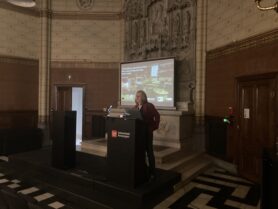
    On 26 May 2023 at 15:45 Professor Pepijn Brandon delivered his inaugural lecture as Professor of Global Economic and Social History in the Aula of the VU Amsterdam. The title of the inaugural lecture was: Elements of original accumulation: Dispossession, war, and slavery in the history of capitalism.

    You can find recordings of the inaugural lecture via the button below

    RECORDINGS (YOUTUBE VU AMSTERDAM)

  • PhDs cohort 2021 succesfully completed Basic Training Programme

    PhDs cohort 2021 succesfully completed Basic Training Programme

    We are happy to inform you the recent Posthumus Conference in Antwerp also marked the completion of the Basic PhD Training Programme of the N.W. Posthumus Institute for most PhD students of cohort 2021. Those attending the conference were handed their certificate during the conference dinner, those who completed the programme at another event, will receive their certificate by mail.

    The staff of the N.W. Posthumus Institute congratulates the PhD students with achieving this result!

  • Launch research website CAPASIA Project

    Launch research website CAPASIA Project

    Recently, the CAPASIA (The Asian Origins of Global Capitalism) project has launched its new Research Website where you will find updates and highlights on the project’s activities.

    CAPASIA is a five-year ERC-funded project hosted at the European University Institute in Florence from 2022 to 2027. The project aspires to provide a polycentric history of early modern capitalism, with the factories of maritime Asia as its focal point. With Professor Giorgio Riello as Principal Investigator, the CAPASIA team consists of four research fellows working on a variety of topics related to European and Asian commercial life in the early modern Indian Ocean.

    Working with collaborators from across the globe, CAPASIA will produce an extensive body of scholarship and host a variety of events dedicated to its research agenda. The project’s overarching ambition is to construct a website that integrates the archives of the European East India companies with various Asian archival repositories. To that end, the site will serve as the basis for the ‘decolonization’ of the history of capitalism.

    PROJECT WEBSITE

  • Successful Posthumus Conference 2023 in Antwerp

    Successful Posthumus Conference 2023 in Antwerp

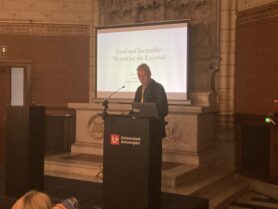
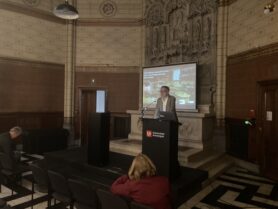
    On 24 and 25 May 2023, the Posthumus Conference 2023 was held at the University of Antwerp. This year’s central theme was ‘Food Inequalities’, a thema that was also the main topic of two highly interesting keynote lectures, delivered by Dr Susan Flavin (Trinity College Dublin, The University of Dublin and Principal Investigator of the ERC Funded Project FoodCult and emeritus Professor Peter Scholliers (Vrije Universiteit Brussel).

    The conference comprised presentations of PhDs currently involved in the PhD Training Programme of the N.W. Posthumus Institute as well as meetings and presentations of the Research networks of the N.W. Posthumus Institute.

    The N.W. Posthumus Institute wants to express its warmest thanks to all participants, but particularly to our keynotes and the hosts team at Antwerp University, Professor Tim Soens and Dr Stef Espeel for making this conference such a wonderful event.

    The N.W. Posthumus Institute staff hopes to see you all at the Posthumus Conference 2024, which will be held on 23 and 24 May 2024 and will be hosted by the Fryske Akademy in Leeuwarden.

    Keynote lecture by Susan Flavin
    Keynote lecture by Susan Flavin
    Keynote lecture by Peter Scholliers
    Keynote lecture by Peter Scholliers
    Welcome by Tim Soens
    Welcome by Tim Soens

  • Project Great Leap Network Radboud University selected as COST-Action

    Project Great Leap Network Radboud University selected as COST-Action

    The European Cooperation in Science and Technology (COST) has chosen the Great Leap Network, an ambitious research initiative led by Radboud University with Posthumus fellows Professor Angelique Janssens and Dr Tim Riswick as main proposers, as a COST-Action. Over the next four years, the network aims to unravel the historical origins and driving factors behind health inequalities across regions and countries in Europe and beyond. This multidisciplinary endeavor comes at a crucial time, with persistent health disparities and recent events like the COVID-19 pandemic underscoring the urgent need for comprehensive research, insights, and action.

    The Great Leap Network, as a newly selected COST-Action, will adopt a unique approach by examining health inequalities from a historical standpoint. This interdisciplinary research network, comprising experts from various fields, including history, social sciences, life sciences, and epidemiology, will collaborate to gain a profound understanding of the roots and drivers of health disparities across Europe and other regions.

    COST-Actions are renowned for bringing together senior and young researchers to delve into specific topics of their choice over a four-year period. Such networks typically consist of participants from academia, small and medium-sized enterprises (SMEs), public institutions, and other relevant organisations.

    The N.W. Posthumus Institute congratulates the proposers with this recognition.

    FULL INFO

  • FWO Grant awarded to Stef Espeel

    FWO Grant awarded to Stef Espeel

    On 24 May 2023, Posthumus alumnus and fellow Stef Espeel was awarded a FWO Research Grant for junior postdoc researchers. Stef Espeel, having obtained his PhD from the University of Antwerp in 2021 with a dissertation entitled “Prices and Crises. The Grain Economy in Fourteenth-Century Flanders”, currently works as a postdoctoral senior researcher with the Department of History of the University of Antwerp. His research focus lies with the topic of plague in the late Middle Ages at the University of Antwerp.

    With the FWO fellowships, the FWO wants to support researchers in developing an independent, international research career. They will receive funding for three years.

    The Posthumus staff congratulates Stef with his grant.